

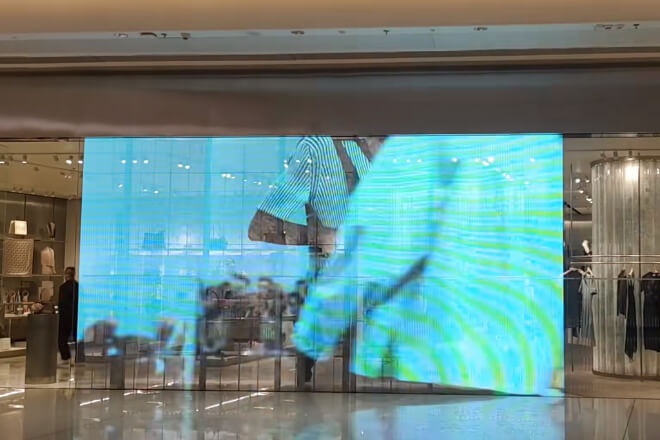
Previously, what might have stopped a customer while shopping was a new product displayed in a window.
But now, when consumers pass by a boutique, they look not only at the merchandise but also at the overall feel of the store.
A static window display might showcase a new product for a few months, but brand stories, seasonal themes, and marketing campaigns change daily.
출현 LED 스크린 transforms shop facades from mere display windows into constantly updated “digital windows.”
For example, a luxury brand store can play new product collections, design concepts, and brand stories during the day;
At night, it can switch to dynamic lighting effects, giving the entire building a sense of life and making it more eye-catching in a commercial street.
For boutique coffee shops, beauty stores, or trendy retail stores, LED screens can also help create a unique atmosphere.
Displaying product visuals when launching new products, switching themed animations during holidays.
And even creating store exteriors suitable for taking photos and sharing can all increase customer dwell time and interaction.
Compared to traditional window displays that require rearrangement, transportation, and installation.
LED wall screens can quickly change the display effect through content updates, making brand marketing more flexible.
After all, today’s store competition is not just about “how beautifully the merchandise is displayed.”
But also about who can leave a lasting impression on customers in the few seconds they pass by.
A creative LED wall screen might be the small opportunity that makes a customer stop, take a photo, and walk into the store.
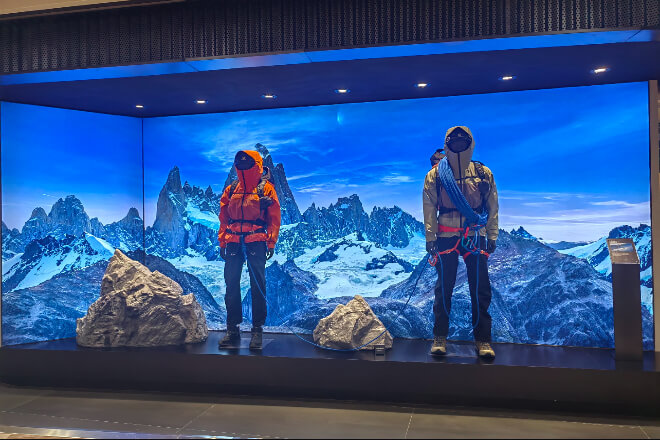
For boutique stores, the window display is like the brand’s “business card.”
Before even opening the door, customers may have already judged from the window whether the store is special enough and whether the brand’s image matches their expectations.
Traditional window displays rely on merchandise display and lighting design to create effects, but their biggest limitation is a relatively slow rate of change.
Even the most exquisite display can become monotonous and familiar to passersby if left unused for too long.
LED 스크린 on a curtain wall, however, offer greater flexibility than shop windows. They can showcase new products, brand stories, and themes, and quickly switch visual effects based on different times and events, ensuring a fresh expression every day.
For example, when a high-end jewelry store launches a new collection, it can use an LED screen to display the gemstone cutting process, design inspiration.
Or brand history, presenting customers not just with a product, but with a story about craftsmanship and value.
For fashion brands, LED windows can create even stronger visual appeal. During new product launches, dynamic displays by models can be shown;
During holidays, exclusive themes can be switched; and when the commercial street lights up at night, a stylish and dynamic window display is likely to become a popular spot for passersby to stop, take photos, and share.
Ultimately, LED screens on a curtain wall change more than just the form of a shop window; they change how customers first encounter a brand.
They transform the shop window from a simple display of merchandise into a brand experience portal that tells a story, creates an atmosphere, and encourages interaction.
After all, high-end retail competition isn’t just about “selling a product,” but about making customers feel the brand value from the very first second they see it.
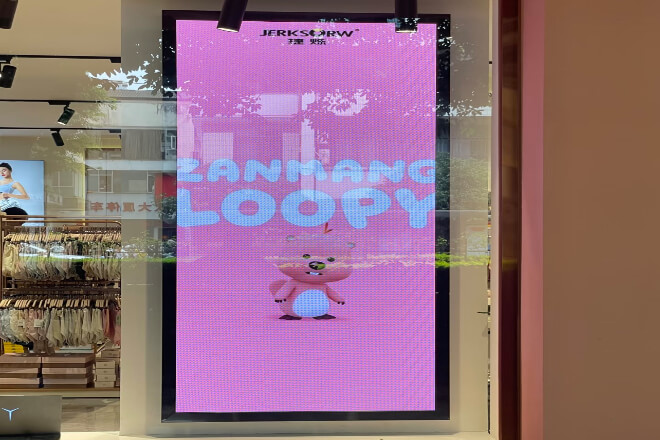
If a traditional window display is like a meticulously designed poster, then an LED wall display is more like a “digital window that never changes.”
Today it displays new products, tomorrow it switches to a different event, and the day after it can be changed to a brand story—no need to disassemble and reassemble the entire display.
The biggest limitation of traditional window displays is their slow update speed.
From design to implementation, a theme often requires material production and installation arrangements, making it difficult to quickly respond to market changes.
On the other hand, an LED wall display only needs to adjust the content played to quickly refresh the store’s appearance.
For example, when a high-end sportswear brand launches new shoes and apparel, the traditional approach might require creating new posters and changing displays;
However, with an LED wall display, it can directly play dynamic displays of new products and videos of sports scenes, allowing passersby to see not just product photos, but the feeling of the products being used.
During holidays and marketing campaigns, the advantages of LED screens are even more pronounced.
Valentine’s Day can feature romantic themes, Christmas can showcase festive animations, and new product launches can be synchronized with the content, keeping stores constantly “fresh.”
Meanwhile, nighttime is also the prime time for LED screen facades.
Compared to static shop windows, dynamic visuals are more likely to attract attention in the brightly lit commercial streets.
A well-designed LED facade can even become a popular spot for customers to take photos and share online.
More importantly, LED screens provide more opportunities for interaction between brands and consumers.
Consumers aren’t just passing by a store; they’re receiving the story and emotions conveyed by the brand as they pass by.
After all, the competition in boutique retail isn’t just about “whose products look better,” but also “who can keep customers lingering for a few more seconds.”
And those few seconds could be the start of a store visit, a purchase, or even the beginning of brand recognition.
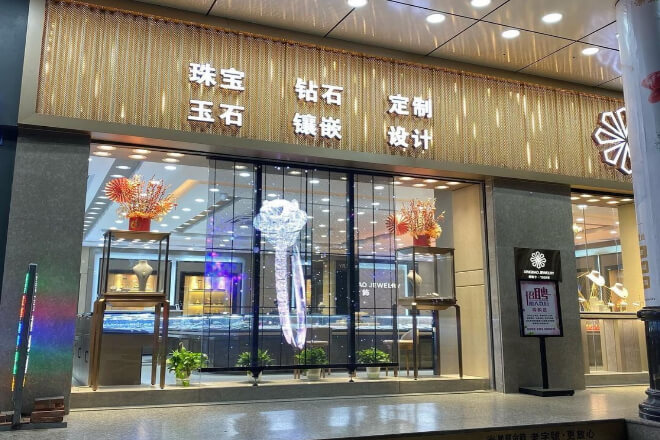
A good LED screen facade doesn’t just make a store “look brighter,” but more importantly, it successfully attracts attention in the few seconds people pass by.
For some boutique stores, the facade itself is part of the brand’s presentation.
In luxury stores, LED screens on facades can be a crucial tool for conveying brand identity. High-end brands sell not only products, but also design philosophies and lifestyles.
For example, a jewelry store can use LED screens to display the gem-cutting process, details of craftsmanship.
Or promotional videos for new products, allowing customers to experience the brand’s sophistication even before entering the store.
For shops on commercial streets, attracting customers to stop is the first step. Compared to ordinary storefront signs, dynamic LED displays are more likely to stand out in a crowd.
For example, a trendy clothing store can change its visual themes according to the season.
Showcasing new products during the day and playing design-driven dynamic effects at night, making passersby want to take a second look.
~ 안에 쇼핑몰 street-facing shops, LED screens on facades can also help brands increase exposure.
Especially at night, with surrounding shop lights and billboards densely packed, a unique LED facade acts as a “visual signal” on the commercial street, more easily attracting consumer attention.
For car, jewelry, and fashion brands, LED screens are better suited for telling the story behind the products.
For example, car brands can showcase their vehicles’ performance in different scenarios, and fashion brands can play new product trailers.
Allowing customers to see not just a product, but a brand experience.
After all, competition among boutiques is no longer just about “whose products are displayed more beautifully.”
But about who can capture a customer’s interest the moment they pass by the store. LED screens on storefronts are a crucial way for brands to turn this moment into a memorable one.
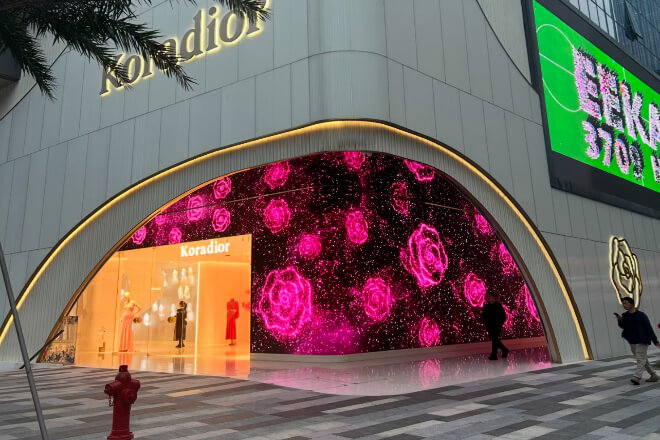
For boutiques, a larger or brighter LED screen isn’t necessarily better.
It’s more like an “outer garment” for the store; it needs to attract attention while also complementing the brand’s image.
An inappropriate choice might result in a situation where “the screen is impressive, but the merchandise is overlooked.”
First, it’s important to consider whether the transparency affects window lighting and merchandise display.
This is especially true for luxury stores, jewelry stores, or high-end fashion boutiques, where the window itself is a display space.
If the LED screen obstructs customers’ view of the products inside, it may lose its original value.
For example, a jewelry store installing a 투명 LED 스크린 can both display the brand story and allow passersby to vaguely see the jewelry displayed in the window.
Creating an effect more in line with its high-end positioning than a completely obscured screen.
둘째로, 명도 must be suitable for both daytime and nighttime environments.
During the day, in strong sunlight, the screen needs to remain clear so that passersby can see it;
At night, the image cannot be too glaring like a regular outdoor billboard, otherwise it will disrupt the upscale commercial atmosphere.
Simultaneously, the display effect needs to match the brand positioning.
High-end brands often showcase product details and visual aesthetics, so image quality, color reproduction, and smoothness are all crucial.
For example, when a car brand showcases a new model, the body lines, metallic texture, and lighting effects all need to be presented through high-definition images.
Furthermore, the installation structure and long-term maintenance cannot be ignored.
LED screens are installed on the exterior of buildings for extended periods, requiring consideration of secure fixing, ease of maintenance, and convenient content updates.
If each content change requires complex operations, long-term operating costs will increase.
After all, high-end stores pursue a sense of “prestige,” not simply “presence.”
A truly suitable LED screen for storefronts should attract customers while maintaining the focus on the brand and merchandise.


 English
  Español
  简体中文
简体中文  Français
  日本語
日本語  한국어
한국어  العربية