
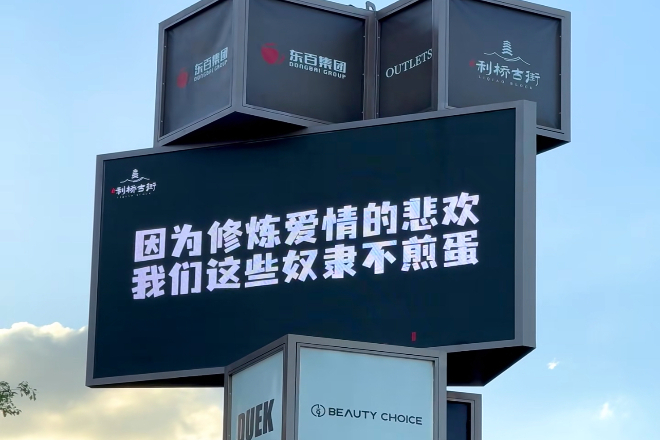
Many businesses encounter the same problem when undertaking LED表示 projects: a limited budget, but without compromising on performance.
After all, a screen isn’t just something you buy to display. From showcasing your brand and attracting customers to improving operational efficiency, it carries real value.
The question is, how can you choose a solution that truly suits your needs while spending less money?
Many businesses’ first reaction when purchasing LED displays is often: “How much does this screen cost?”
Price is certainly important, but focusing solely on the purchase price easily overlooks the various costs incurred during subsequent use.
The true value of an LED display isn’t determined at the moment of installation, but rather gradually manifests over the next few years of operation.
For example, for the same 屋外用 LED ディスプレイ, a lower-priced product might save some budget during the initial purchase.
But if problems such as decreased 輝度, module failure, and frequent repairs occur later, it will not only affect normal display but also increase labor and maintenance costs.
Conversely, some more stable LED displays, while potentially requiring a higher initial investment, offer reduced downtime risks.
Maintain better display quality, and are more likely to achieve a higher return on investment in the long run.
For example, if a commercial center installs a large LED screen for advertising, frequent blackouts or image malfunctions not only negatively impact customer experience.
But may also damage advertisers’ trust in the venue, ultimately resulting in losses far exceeding repair costs.
Therefore, when choosing an LED display, businesses need to comprehensively consider brightness, stability, energy consumption.
Maintenance difficulty, lifespan, and after-sales service, rather than simply comparing the numbers on the price list.
Purchasing an LED display is not just buying a “screen,” but choosing a display system that will operate continuously for several years.
The truly cost-effective solution is often not the cheapest, but the one that creates the greatest long-term value within the budget.
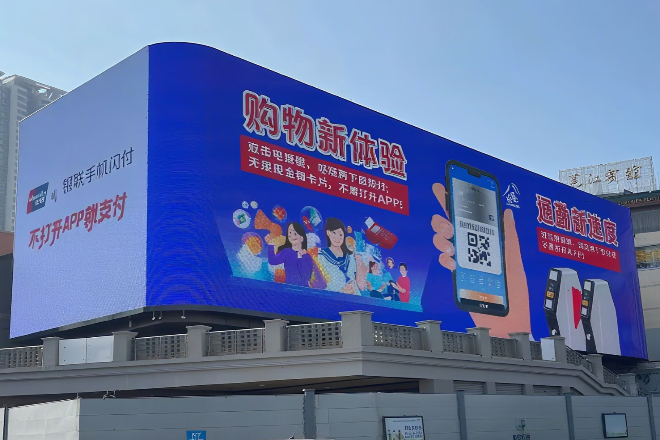
Many businesses fall into a misconception when choosing LED displays: looking at product specifications first and then considering where to install them.
However, in reality, different scenarios have completely different requirements for LED displays.
A screen suitable for a showroom might not perform well in an outdoor advertising space;
Similarly, an outdoor screen suitable for a commercial street might not be suitable for a conference room.
In corporate showrooms, LED displays primarily serve a brand presentation role. Here, the focus is typically on image sharpness and visual experience.
For example, when playing corporate promotional videos, product demonstrations, or project case studies, clients need to see clearer, more textured images.
In conference rooms, LED displays prioritize communication efficiency.
Whether it’s a remote meeting, a presentation, or data analysis, clear text and stable images are crucial to prevent glare or blurriness from hindering communication.
For retail stores, the goal of LED displays is more direct—to attract customer attention and drive sales.
For example, clothing stores can play videos showcasing new product styling, car dealerships can display vehicle highlights, and restaurants can display popular products, making it easier for passersby to become interested.
Outdoor applications, however, require consideration of more practical challenges, such as environmental factors like sunlight, rain, and temperature variations.
アン 屋外用LED広告スクリーン not only needs to look bright but also needs to operate stably over a long period.
For example, while both are LED displays, a high-definition, small-pixel pitch LED screen might be more suitable for a ショッピングモール entrance to create a brand experience.
While an advertising screen along a highway requires higher brightness and stronger protection to ensure clear visibility from a distance.
When choosing an LED display, there is no such thing as the “best model,” only the “most suitable solution for the scenario.”
What businesses really need to consider is: who will the screen face daily, what content will be displayed, and what value do they hope it will bring?
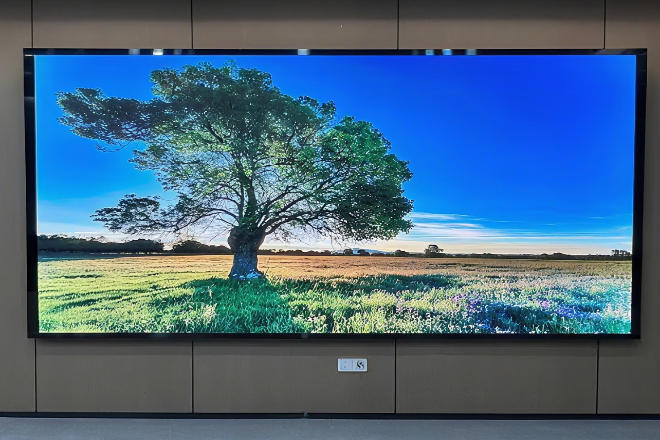
Many businesses fall into a misconception when purchasing LED displays: higher parameters necessarily mean better results.
However, in reality, higher configurations are not always more suitable for LED displays.
Choosing a screen far exceeding actual needs not only increases procurement costs but may also lead to wasted resources.
The truly high-return solution is to choose the appropriate configuration based on the actual usage scenario.
Viewing distance is a crucial factor.
For example, in conference rooms or corporate showrooms, viewers are usually closer to the screen and require a more detailed image effect;
Small-pixel pitch LED displays can make text, images, and videos clearer.
In large-scale outdoor advertising scenarios, where viewers are at a greater distance.
Excessively high pixel density may not provide a significant improvement in experience, but rather increase budget pressure.
そのほか ピクセルピッチ, businesses need to focus on parameters that truly impact user experience.
For example, when commercial stores play promotional videos, content update speed and color performance may be more important than maximum resolution;
When using LED screens in sports stadiums, refresh rate, stability, and 輝度 are more critical.
For instance, if a company is building a customer experience center and chooses a screen with a pixel pitch far exceeding viewing requirements simply to play promotional videos.
The investment may increase significantly, but the actual improvement perceived by customers will be very limited.
Conversely, investing the budget in better display effects, stability, and content management systems often yields more significant value.
LED display procurement is not a “parameter race,” but an investment plan. Choosing the right configuration ensures that every penny is spent on what truly impacts the experience.
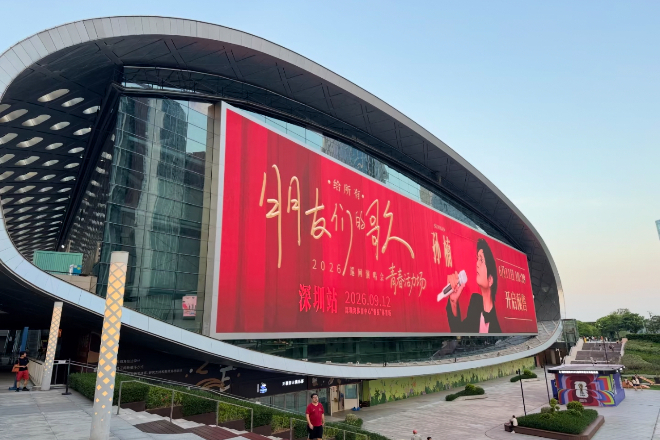
Many companies initially consider installing LED displays with a simple idea: “Find a screen and put content on it.”
However, after actually using them, they discover that the value of LEDディスプレイ goes far beyond simply “playing images.”
It’s more like a long-term operational tool within the corporate space, helping brands showcase themselves, attract customers, and create more business opportunities.
First, it makes brand presentations more attractive.
For example, when receiving clients in a company showroom, instead of having them flip through thick product brochures.
A large LED screen can display project case studies, production processes, and product application scenarios.
Dynamic visuals convey a company’s strength more quickly and make it easier for customers to remember brand characteristics.
In marketing scenarios, LED displays also offer flexibility that traditional promotional materials cannot match.
For example, retail stores can play product videos when new products are launched and switch promotional content during holidays;
ショッピングモール can adjust advertising visuals according to different events.
One screen can continuously participate in corporate marketing without needing to recreate materials for every event.
Simultaneously, LED displays can enhance the customer experience.
Car dealerships can use large screens to showcase vehicle intelligent features, hotels can play local tourism recommendations, and corporate reception areas can display brand stories.
Customers see more than just a product; they see a more complete brand experience.
More importantly, the value of LED displays can be continuously realized.
For example, after an 展示, companies can reuse the displays in their headquarters showrooms, meeting rooms.
Or training spaces, allowing equipment that was originally only used for a few days to continue functioning.
For businesses, LED displays are not just “walls that play content,” but digital assets that can help with brand display, marketing, and communication in the long term.
Choosing the right solution can bring returns far exceeding the initial display needs.
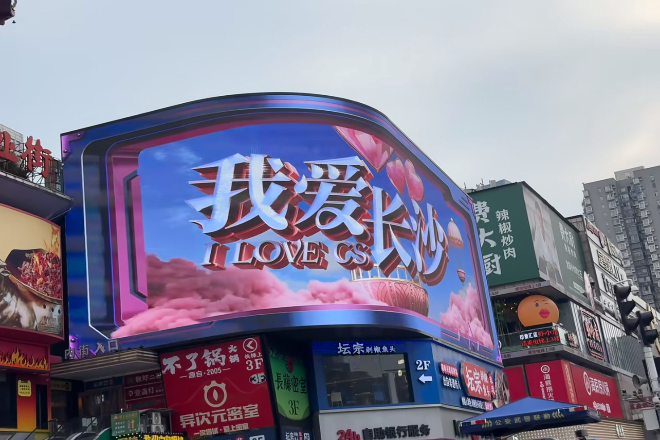
Many companies tend to focus on the procurement phase when undertaking LED表示 projects: “How much does this screen cost?”
However, after it is actually put into use, the cost is often not affected by the purchase price, but by the subsequent operation, maintenance, and management costs.
An LED display operates for several hours a day, or even continuously throughout the year. If the product’s stability is insufficient, small problems can accumulate over time.
For example, frequent module failures on advertising screens in commercial centers require maintenance personnel.
Increasing maintenance costs and potentially affecting advertising playback and business revenue.
Therefore, choosing a stable and reliable product solution is the first step in reducing long-term costs.
Besides product quality, energy consumption is another factor that businesses need to consider.
For LED displays that operate for extended periods, energy-efficient design can help reduce ongoing electricity costs.
For example, outdoor advertising screens and airport information screens operate for long hours each day.
もしも 輝度 control is reasonable and heat dissipation design is excellent, high operating costs can be saved over several years.
Maintenance methods also affect the overall investment.
Some intelligent LED display systems support remote monitoring, which can detect abnormal brightness, module malfunctions.
And other problems in advance, preventing small issues from becoming major failures.
Compared to emergency repairs after problems occur, proactive management ensures more stable equipment operation.
Of course, after-sales service is also crucial. An experienced supplier not only provides the equipment but also offers support during installation.
Commissioning, and maintenance, helping businesses reduce unnecessary trouble later on.
For businesses, the true cost of an LED display project is not just the initial purchase price, but the investment required over the next few years.
Choosing a more stable and efficient solution ensures the investment yields longer-term value.


 English
  Español
  简体中文
简体中文  Français
  日本語
日本語  한국어
한국어  العربية