
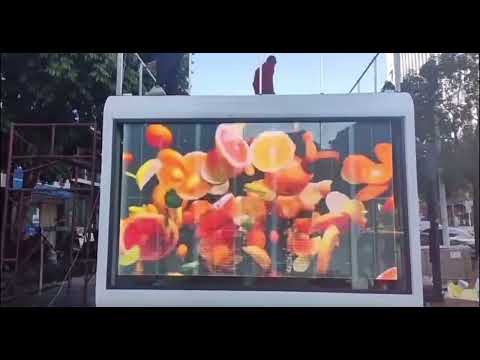
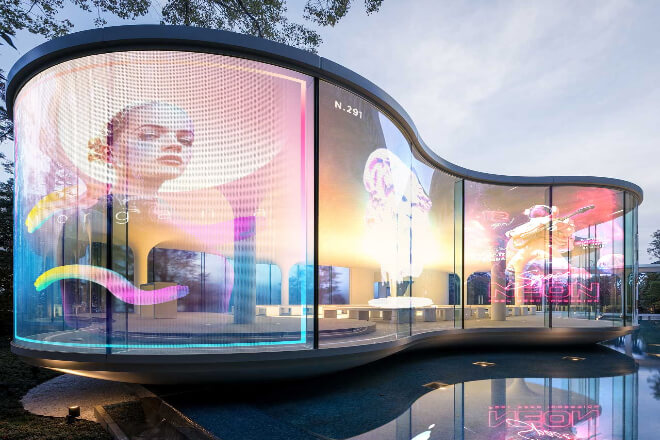
In the design of modern commercial buildings and high-end office buildings, a common contradiction exists:
The desire for informational and digital displays without sacrificing the building’s inherent transparency and lighting. Transparent LED displays perfectly solve this problem.
First, maintaining the building’s natural transparency and lighting.
Unlike traditional enclosed LED screens, 透明LEDスクリーン have high light transmittance, allowing natural light to enter the interior while displaying content.
This avoids affecting indoor lighting and prevents the building facade from appearing “closed and oppressive.”
For example, a glass curtain wall office building using a regular large screen would block a significant amount of natural light;
However, using transparent LEDs allows it to remain bright and transparent during the day while simultaneously displaying dynamic information.
Secondly, it balances the functionality of the glass curtain wall with information display, achieving a seamless integration of the two.
Transparent LEDs can be directly attached to or embedded in the glass curtain wall, enabling advertising, brand display, or information dissemination without altering the building structure.
The building facade is no longer just a “wall,” but a “media interface” that can dynamically express content.
Simply put, in the past, glass curtain walls were merely “for viewing scenery”; now, they can also “speak to the outside world.”
Furthermore, it is suitable for commercial buildings and high-end office buildings, meeting both image and functional needs.
For corporate headquarters, high-end office buildings, or commercial complexes, a professional and modern visual image is required.
Along with flexible information display capabilities. Transparent LEDs allow both to be achieved simultaneously without conflict.
To put it more interestingly: Office buildings used to be “transparent buildings,” only meant to be seen.
Now they are “expressive buildings,” capable of both letting in light and displaying content.
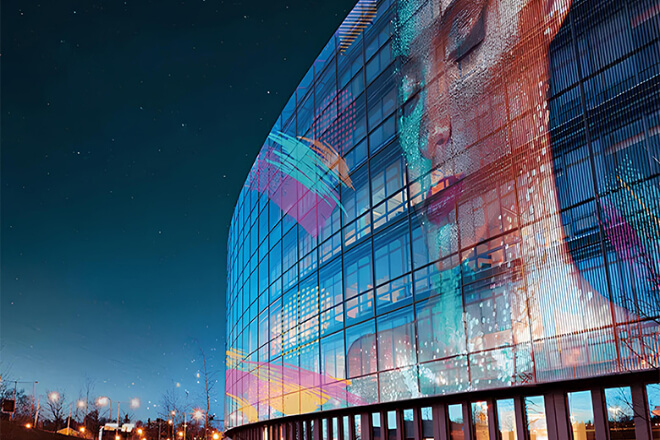
In today’s increasingly “visualized” urban architectural competition, a building’s prominence often depends not only on its height and shape, but also on its strong visual expressiveness.
The emergence of transparent LED displays has upgraded building facades from “static existence” to “dynamic display interfaces.”
Firstly, dynamic content enhances the building’s presence at night.
During the day, glass curtain walls and structural design convey quality, but at night, without lighting and content expression, the building easily “fades into the background.”
Transparent LED displays can, at night, use dynamic images, lighting effects, and brand content to make the building a visual center again.
For example, an ordinary office building is simply lit up for work at night, but after installing transparent LED displays.
It can play flowing light and shadow, corporate image videos, or holiday-themed animations, instantly bringing the entire building to life.
Secondly, creating a landmark visual effect for the city gives buildings a distinctive identity.
When a building’s facade continuously displays visually appealing content, it transcends its functional space, becoming part of the city’s visual identity.
Many “Instagrammable” buildings in cities owe their success to their strong, visually expressive facades.
Simply put: it’s not about making buildings taller, but about making them “easier to remember.”
Simultaneously, enhancing the overall recognizability of the building makes brands and spaces more easily identifiable.
For commercial buildings or corporate headquarters, a unified visual style and dynamic content display can strengthen brand impressions.
Even if passersby don’t enter, they will remember “what the building looks like” and “what it’s showcasing.”
To put it more interestingly: Previously, buildings in cities were “backdrops”; now, more and more buildings are becoming “shining city business cards.”
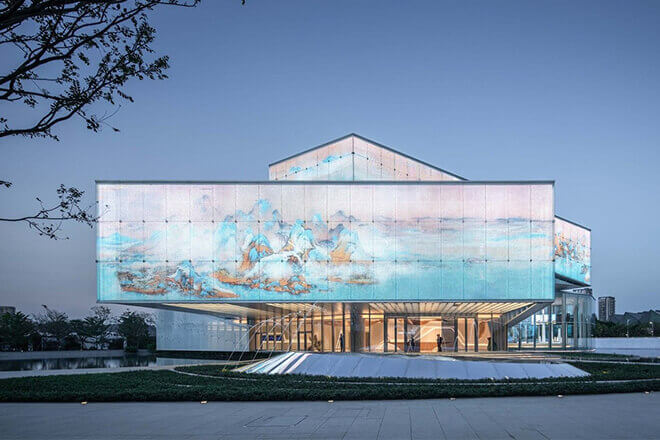
In urban commercial buildings, an increasingly important trend is that advertising cannot be “pasted on the building,” but rather “grown into the building.”
Transparent LED displays are the key technology for achieving this integrated expression, making advertising no longer obtrusive but an integral part of the architecture.
First, the advertising content blends naturally with the glass curtain wall, achieving “implicit expression.”
Transparent LED displays can be attached to the glass curtain wall, displaying dynamic content while maintaining spatial transparency.
In this way, advertising no longer “covers the building” like traditional light boxes or large screens, but rather becomes integrated with the building structure.
For example, a large billboard directly hanging on the facade of an office building would appear jarring;
However, with transparent LED displays, the brand content can be presented like “light and shadow floating on the glass,” looking more natural and sophisticated.
Second, it does not disrupt the overall aesthetic design of the building, balancing commerce and aesthetics. High-end buildings typically emphasize design unity and visual order, while traditional advertising can easily disrupt this overall style.
The advantage of transparent LEDs lies in “having content without obscuring the structure,” satisfying commercial display needs without affecting the building’s design language.
Simply put: advertising is no longer an “add-on,” but a visual expression that is part of the building.
Simultaneously, it enhances commercial value and communication efficiency, transforming buildings into media platforms. When a building’s facade can accommodate dynamic advertising content, it inherently possesses media attributes.
Brands can leverage buildings for long-term exposure, event promotion, or image display, achieving a stable communication channel.
To put it interestingly: previously, advertising was “posters hanging outside the building”; now, advertising is “light shining from inside the building.”
This change essentially represents an upgrade from “covert communication” to “integrated communication.”
Finally, for commercial real estate, this approach also enhances overall asset value, making buildings not only spatial assets but also media assets.
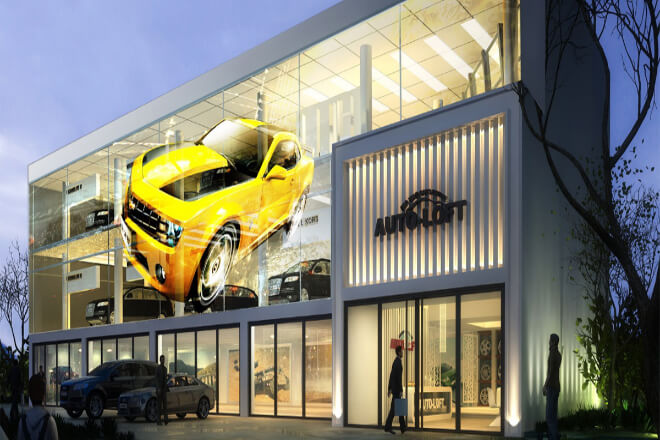
In the operation of commercial buildings and high-end spaces, content display is no longer a “one poster for a year” model but has become an information system that constantly changes with time, scenario, and event.
The advantage of 透明LEDディスプレイ lies in making the expression of building facades as flexible as a “programmable interface.”
Firstly, commercial promotions, brand displays, and event information can be updated at any time. A single transparent LED screen can serve completely different purposes at different times:
Showcasing corporate brand image in the morning, playing commercial advertisements at noon, switching to event previews in the afternoon, and transforming into a festive light show in the evening.
For example, a commercial complex might use it to publish investment information during the day and switch to holiday-themed animations.
Or brand collaboration content at night, with the entire building’s “expressive content” constantly changing over time.
Secondly, it meets the needs of different time periods and operations, achieving precise content matching.
Pedestrian traffic distribution varies throughout the day: peak commuting hours are suitable for displaying corporate image and concise information.
Midday is suitable for commercial promotions and sales content; and nighttime is suitable for more visually appealing brand displays and lighting content.
Transparent LED displays can automatically switch content strategies based on time, making the display effect more suitable for the current audience’s state.
Simply put, it’s not one screen playing all content, but rather the same screen “saying different things at different times.”
At the same time, it improves operational flexibility and efficiency, and reduces content update costs.
Compared to traditional advertising changes that require construction or material production, transparent LED displays only require a back-end system to complete content updates.
Whether it’s temporary event adjustments or changes in brand partnerships, it can respond quickly.
To put it more interestingly: Previously, building facades resembled “fixed poster walls.”
Now they’re more like “digital information windows,” capable of changing themes, content, and modes of expression at any time.
Finally, this flexibility upgrades building operations from “static management” to “dynamic operation,” giving the space true media attributes and commercial adaptability.
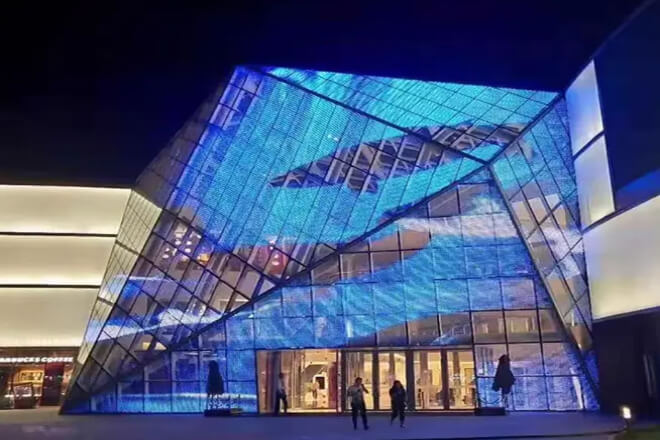
In the context of rapid スマートシティ development, buildings are no longer just “spatial containers,” but are gradually becoming perceptible, interactive, and operational digital carriers.
The application of transparent LED displays is essentially a key step in propelling buildings from “physical buildings” to “digital buildings.”
Firstly, it integrates smart building systems with digital media systems to achieve unified expression.
Transparent LED displays are no longer independent display devices, but can be linked with the building’s intelligent systems, such as energy management, security systems, wayfinding systems, and even visitor systems.
In this way, the content on the building facade can be displayed in conjunction with the internal operational status.
For example, when a building hosts an important event, its facade can automatically switch to the event’s visual theme;
When a brand moves in or a press conference is held, the facade can also simultaneously display relevant information.
Secondly, it enhances the building’s technological and modern feel, giving the space a futuristic quality.
Transparent LEDs offer more than just a “display function”; they represent an upgrade in visual language.
They transform buildings from static structures into dynamic interfaces with “information expression capabilities.”
Simply put: previously, buildings were “for viewing”; now, they are “for display.”
Simultaneously, they align with future smart city development trends, becoming part of the city’s digital nodes.
In the future urban system, buildings will increasingly assume the functions of information dissemination and data display.
Transparent LED displays make building facades part of the city’s information network, giving buildings stronger digital connectivity.
In a more interesting way: the city of the future may not be “screens everywhere,” but rather “every building itself is a screen.”
Finally, this upgrade not only improves the building’s technological level but also enhances its comprehensive value in commerce, branding, and urban image, truly integrating it into the smart city ecosystem.


 English
  Español
  简体中文
简体中文  Français
  日本語
日本語  한국어
한국어  العربية