
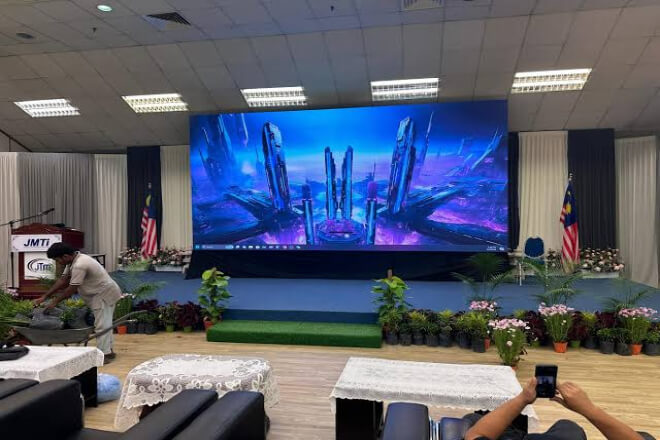
When purchasing an LED表示, many businesses face a dilemma: given a limited budget, should they opt for a lower-priced product, or invest a bit more to secure superior image quality and a longer lifespan?
While these three factors may appear independent, they collectively influence the return on investment (ROI) for the entire project.
A poor choice can quickly turn initial procurement savings into significant long-term maintenance costs.
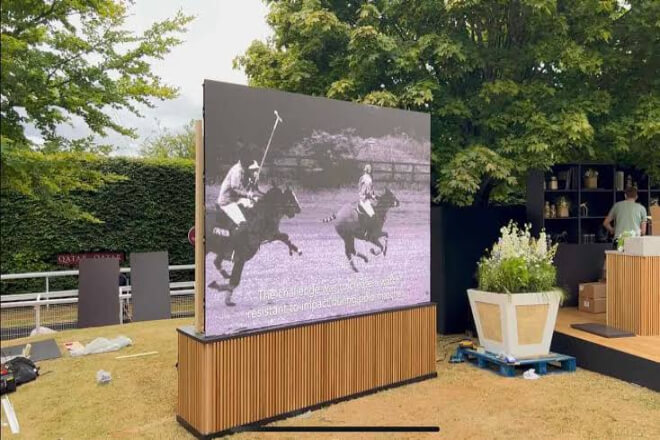
For corporate procurement professionals, price is often the first factor considered. Quotes for LED displays of the same size can vary significantly between different suppliers.
In such cases, choosing the lowest-priced option might seem like the most straightforward way to save money.
However, an LED表示 is not a disposable consumer good; it is equipment designed for long-term operation.
The purchase price is only one component of the total cost—ongoing electricity consumption, maintenance, component replacements, and losses incurred during downtime must also be factored in.
For instance, consider two suppliers offering LED displays of the same size. One offers a lower price but uses standard-grade power supplies and driver components.
While the other charges a bit more but invests more heavily in high-quality LED beads, efficient thermal management, and rigorous production testing.
If a low-cost display frequently develops dead pixels, color inconsistencies, or power supply failures, the business will be forced to deal with constant repairs.
This is especially critical for displays used in ショッピングモール advertising, conference centers, or outdoor commercial settings;
A malfunction not only disrupts operations but also negatively impacts the customer experience and advertising revenue.
It is much like buying a printer: a low initial price tag does not guarantee low costs for subsequent consumables and maintenance.
Therefore, while price is an important consideration when purchasing an LED display, it should not be the sole criterion.
Businesses should examine the product specifications behind the quotes and evaluate the actual value under comparable conditions, rather than simply hunting for the lowest price.
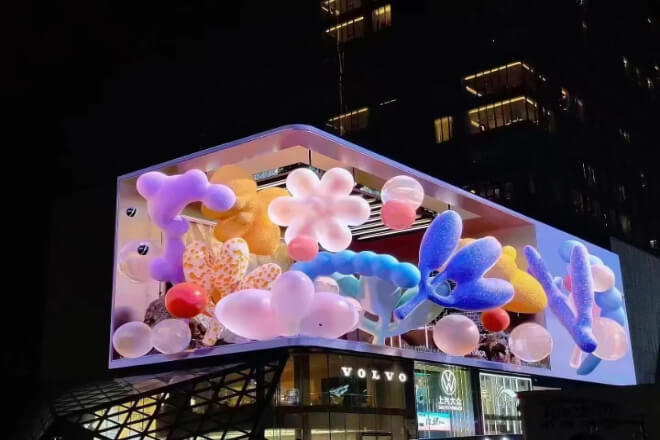
If price dictates the size of the budget, then image quality determines the actual visual impact that budget will ultimately deliver.
The image quality of an LED display is not merely a matter of brightness; it encompasses several factors, including pixel pitch, 輝度, contrast, refresh rate, grayscale levels, and color consistency.
画素ピッチ, for instance, directly influences the level of detail in an image.
A smaller pixel pitch means a higher density of pixels per unit area, making it generally better suited for close-range viewing.
In a corporate conference room, for example, viewers may need to examine data charts, product images, or presentation slides from a short distance.
If the pixel pitch is too large, the edges of text may appear coarse, and fine details may be lost.
In such cases, even a large screen size may fail to provide an optimal viewing experience.
Conversely, for large-scale outdoor advertising, where the viewing distance is typically greater, the focus shifts toward brightness, contrast, and long-range legibility.
In these scenarios, pursuing an unnecessarily small pixel pitch may simply lead to inflated procurement costs.
Furthermore, refresh rate and color consistency are equally critical. In environments like television studios or live-streaming setups.
Where screens are captured by cameras—an inadequate refresh rate can result in visible flickering or scanning lines.
Additionally, if there is a noticeable color discrepancy between different display modules, the entire screen will resemble a poorly assembled jigsaw puzzle.
Therefore, when purchasing an LED display, businesses should first define the intended use case and then determine the required level of image quality.
The “ideal” image quality is not necessarily defined by the highest possible technical specifications.
But rather by how well the display meets the needs of the specific 視聴距離, content type, and presentation requirements.
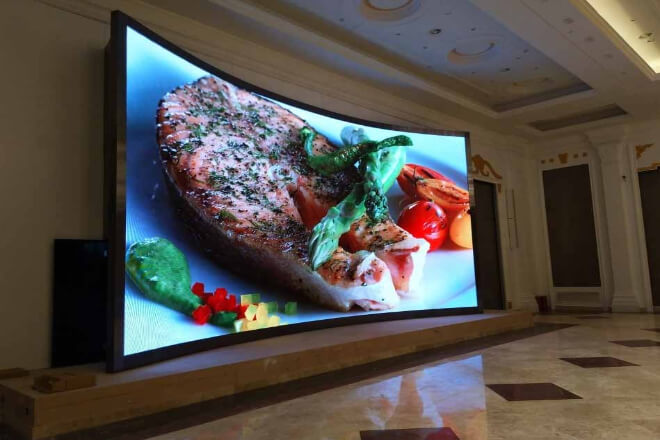
Since an LED表示 may be required to operate continuously for several years, its lifespan is a crucial factor that cannot be overlooked during the procurement process.
However, the lifespan of an LED display is not determined solely by the operating hours of the individual LED beads;
It also depends on the power supply, driver system, thermal management structure, encapsulation materials, and the operating environment.
An LED display can be thought of as a team: the LED beads provide the light, the driver system handles control, the 電源 delivers energy, and the thermal management structure ensures stable operation.
A failure in any one of these components can compromise the performance and user experience of the entire display. For instance, 屋外用 LED ディスプレイ are exposed to sunlight and rain over long periods.
If the enclosure lacks sufficient protection, moisture and dust can gradually compromise internal components;
Similarly, if the thermal management design is inadequate, prolonged operation at high temperatures can accelerate the aging of electronic components.
For indoor 狭ピッチLEDディスプレイ, the consistency of the LED beads, the stability of the drive system, and the quality of the modules are equally critical.
Because viewers are often positioned close to the screen, even a few malfunctioning pixels can detract from the overall visual quality.
When procuring such displays, enterprises should focus on the following aspects:
The quality of the LED beads and packaging materials, as well as the results of reliability testing.
The specifications of core components, such as driver ICs and power supply units.
The product’s thermal management design and its operating environment requirements.
Whether the product has undergone aging tests and comprehensive quality inspections.
The supplier’s ability to provide long-term access to spare parts and after-sales support.
It is important to note that the theoretical lifespan—whether for the product as a whole or for individual LED beads—does not guarantee that the entire LED display will achieve the same service life in every environment.
The actual lifespan is influenced by factors such as brightness settings, duration of use, ambient temperature, and the level of maintenance.
For an enterprise, the true priority should be the equipment’s ability to operate reliably over the long term, rather than focusing solely on a lifespan figure listed in a product specification sheet.
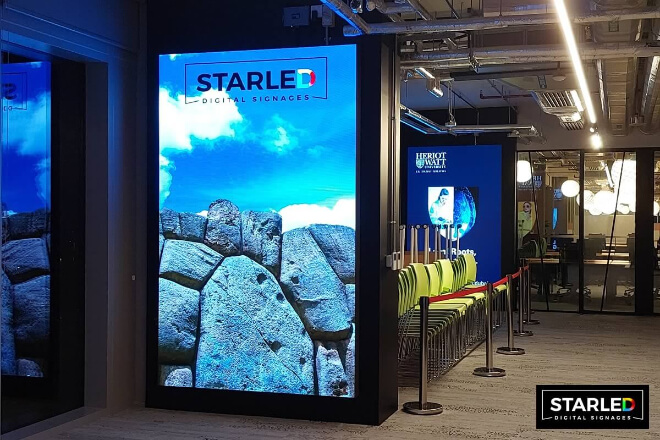
Price, image quality, and lifespan are not entirely independent factors. Often, improving one aspect requires additional investment during the product’s design and manufacturing phases.
For example, higher-quality LED beads and more precise packaging processes can lead to better color consistency and reliability.
While a more sophisticated thermal management structure may increase design and production costs.
However, a higher price does not automatically guarantee superior image quality or a longer lifespan.
Enterprises must evaluate whether a product’s configuration is appropriate for their specific project requirements.
Different application scenarios may warrant different priorities.
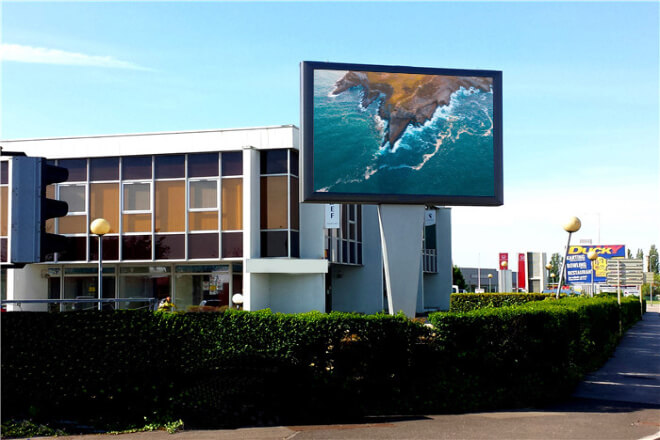
To avoid costly mistakes, organizations should establish a clear evaluation process before finalizing a supplier.
First, define project requirements.
This includes the installation location, 視聴距離, intended duration of use, type of content to be displayed, and environmental conditions.
Understanding the specific tasks the screen must perform is essential for determining the necessary technical specifications.
Second, establish a realistic budget.
The budget should encompass more than just the LED display itself;
it must also account for installation structures, control systems, transportation, construction, 電源, maintenance, and spare parts.
Next, compare product configurations across suppliers.
Do not rely solely on the total price quoted. Instead, examine the specific components—such as LED beads, driver ICs, power supplies.
And module construction—along with 輝度, ピクセルピッチ, and warranty terms. Products with different configurations cannot be compared based on size alone.
Additionally, it is advisable to conduct sample testing or view the equipment in person before making a purchase.
By displaying actual text, images, videos, and dynamic content, you can evaluate the screen’s uniformity of brightness, color reproduction, and level of detail.
Where feasible, you may also want to look into the product’s aging test results and long-term operational records.
Finally, evaluate the supplier’s after-sales service capabilities.
LED displays are modular systems; over time, you may need to replace modules, power supplies, or other components.
The stability of spare parts supply, the timeliness of responses to malfunctions, and the technical team’s proficiency in on-site commissioning—all of these factors will impact the long-term operation of your project.
Ultimately, purchasing an LED display is not about picking a single “winner” from three options, but rather finding the right balance among them that best suits your specific project.
Products that are cheap but unreliable may end up costing a business more in the long run, while products with unnecessarily high specifications can lead to budget waste.


 English
 Español
 简体中文
 Français
 日本語
 한국어
 العربية