

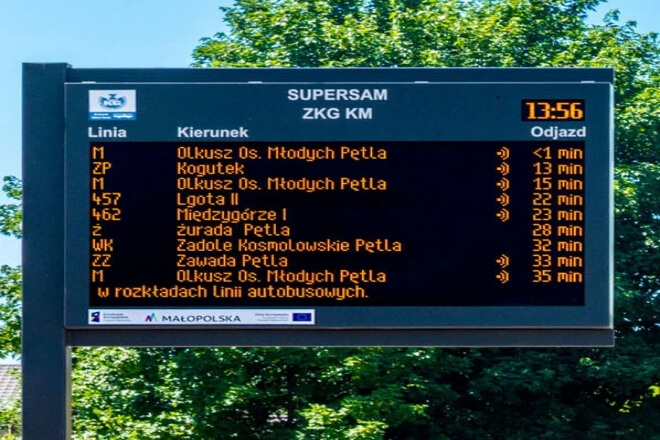
In the context of bus stops, the greatest value of LEDディスプレイ is transforming the act of “waiting for the bus” from uncertain to rhythmic.
Previously, bus stops were more like “static information zones,” with a fixed sign telling you which routes were available, but when the bus would arrive depended entirely on experience and luck.
With LED displays, the bus stop becomes an “updated window.” Arrival times and route information scroll in real time, like reminders: Don’t rush, there are still 3 minutes left, or—hurry up, we’re almost there.
This dynamic information essentially transforms waiting into a “predictable process.”
Passengers no longer need to repeatedly look into the distance or waste time agonizing over whether to wait a little longer.
Instead, they can make more informed decisions based on the information on the screen.
Even more interestingly, the LED screen adds a touch of “interactivity” to the platform. It’s no longer just a passive waiting area.
But rather a communication window—clearly indicating when to wait and when to prepare to board.
This also subtly improves travel efficiency. The clearer the information, the simpler the decision-making process.
Passengers can better manage their time and even do more during short waits, instead of constantly “passively watching the bus.”
Simply put, at bus stops, LED displays act like a “time-telling travel assistant”—not necessarily making the bus arrive faster.
But giving you more confidence and a more measured approach to your wait.
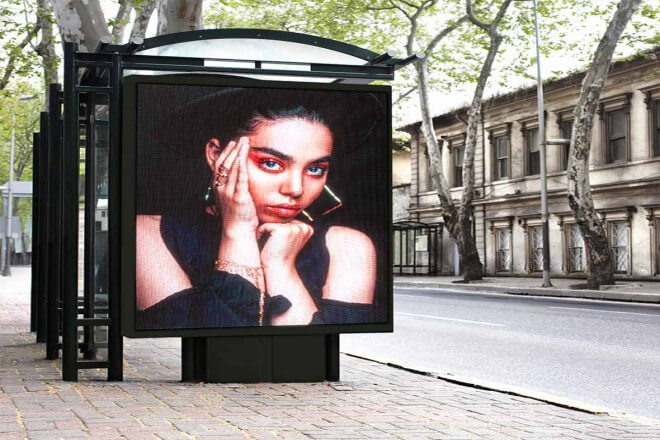
In outdoor environments like bus stops, LED displays have a very significant advantage—regardless of the lighting conditions, they consistently display information clearly, ensuring visibility at all times.
This is especially noticeable in strong daylight. Open-air bus stops often face direct sunlight, easily making ordinary information boards appear washed out and illegible.
However, high-輝度 LED displays adapt well to this environment. Even under direct midday sun.
Passengers can still clearly see key information such as arrival times and route details, without needing to repeatedly check or rely on experience.
At night, the situation is completely different. If the screen remained bright, it would be glaring and negatively impact the viewing experience.
Therefore, LED displays typically automatically adjust their brightness to create a softer, more comfortable image while maintaining clear readability.
This ability to “resist glare during the day and reduce brightness at night” keeps the screen in a perfectly balanced state.
More importantly, this all-weather stable display ensures consistent readability at all times of day. Whether commuting in the morning, traveling at midday.
Or returning home at night, passengers can enjoy the same clear information experience, unaffected by changes in lighting.
Simply put, the LED displays at bus stops are like a “particularly environmentally savvy watchdog”—unafraid of sunlight during the day.
Not glaring at night, and always perfectly presenting information whenever you look at them.
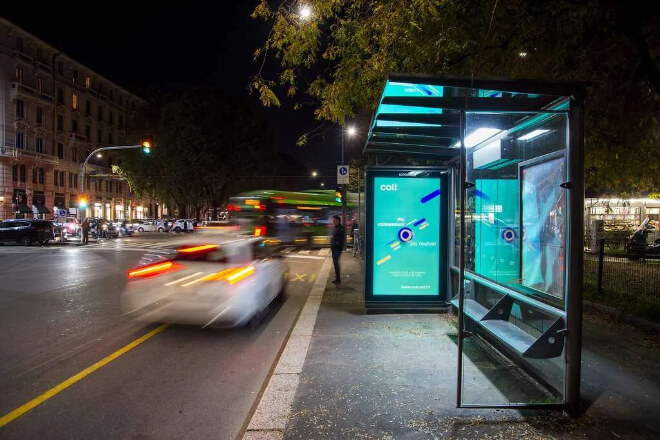
In high-frequency public spaces like bus stops, LEDディスプレイ play a crucial role—making urban information reach people faster and more accurately.
For example, weather forecasts, temporary announcements, and emergency information can all be published in real-time on the LED screens at the bus stop.
Passengers can simply glance up while waiting for the bus to get the day’s weather changes or important reminders without needing to search separately.
When there are temporary traffic adjustments, such as route changes, stop alterations, or sudden congestion, LED displays act as “instant reminder providers.”
As soon as the information is updated, passengers on-site immediately know how to adjust their travel plans, rather than discovering they’ve “gone to the wrong stop” after boarding.
At the same time, this continuously updated urban service information also subtly enhances the service experience of the public transportation system.
The bus stop is no longer just a “waiting place,” but a small window to access information, making urban services more accessible to everyone traveling.
Simply put, at bus stops, LED displays act like “on-time information broadcasters”—delivering important information precisely to you during your few minutes of waiting.
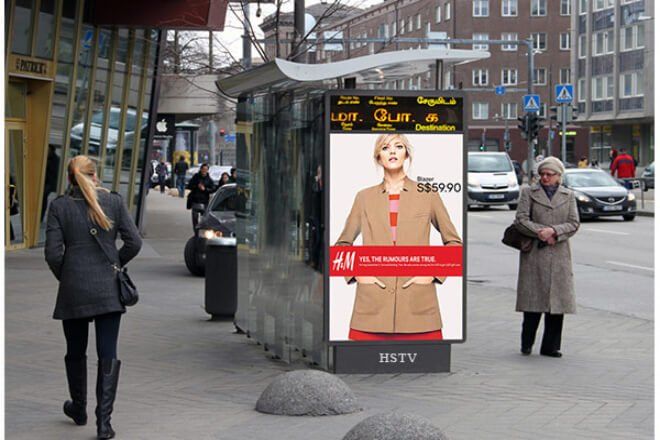
In high-traffic areas like bus stops, the commercial value of LEDディスプレイ lies in being seen while you wait for the bus.
Compared to traditional lightbox advertising, the biggest change with LED displays is their “movement.”
Dynamic visuals attract attention more easily, like a subtle greeting in a crowd, prompting passersby to take a second look.
For those waiting for the bus, those few minutes become a window of opportunity to be “influenced by the content.”
Furthermore, it supports time-segmented and content-switching, which is crucial. During the morning rush hour, it can display information about restaurants and transportation.
At midday, it can switch to advertisements for shopping districts or lifestyle services; and in the evening, it can transform into entertainment or brand content.
The same screen “plays different roles” at different times, making it far more efficient than traditional lightboxes with fixed content.
This flexibility directly improves advertising exposure efficiency. Instead of repetitive, single-message displays, LED screens now offer multi-brand, multi-content rotation, ensuring every moment is fully utilized.
For advertisers, this translates to more precise reach; for operators, it means more efficient resource utilization.
Overall, LED displays are also enhancing the monetization capabilities of bus stop media.
It’s not just about “displaying ads,” but about generating more value from a single screen through dynamic content, time allocation, and matching with pedestrian flow.
Simply put, at bus stops, LED displays are like “scheduled advertising spaces”—the same location, different messages at different times, making perfect use of every minute of pedestrian traffic.
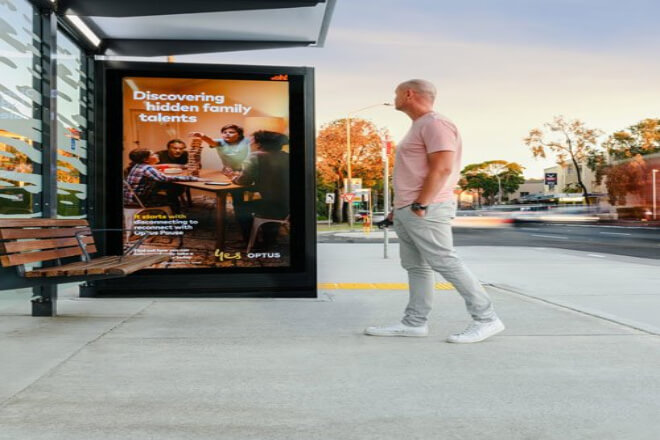
At bus stops, LED displays are more than just “clearly visible” information boards; they are like “little helpers” for the intelligent transportation system, silently making city operations smoother behind the scenes.
By connecting to the bus dispatch system, the screen can display real-time vehicle arrival information, route adjustments, or temporary notices.
Passengers no longer need to stare into the distance like detectives trying to guess when the bus will arrive.
The screens tell you everything—like a helpful assistant whispering in your ear, “The next bus will arrive in three minutes.”
Even more interestingly, these screens can be remotely managed centrally. Back-end operators, like conductors of a traffic orchestra, can synchronize information updates across multiple displays citywide with a simple tap.
Whether it’s route changes during the morning rush hour or emergency notices of temporary road closures, the screens reflect these changes instantly, keeping passengers, drivers, and operators informed.
In this way, LED displays not only make travel information clearly visible but also subtly improve the efficiency of the public transportation system, becoming an indispensable part of smart city construction.
They are both “eyes,” seeing the latest data, and “mouths,” delivering information quickly to everyone waiting for the bus.
Simply put, the LED displays at bus stops are like a smart yet unobtrusive assistant—always telling you when the bus is coming, making the entire city’s traffic smarter and smoother.


 English
  Español
  简体中文
简体中文  Français
  日本語
日本語  한국어
한국어  العربية