
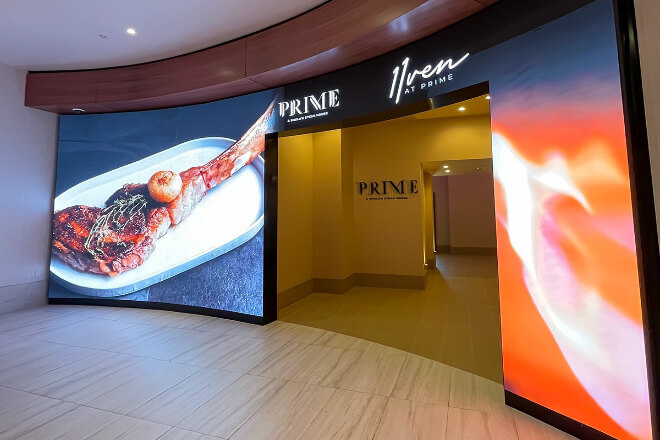
The advertising industry is undergoing a clear transformation: media is no longer merely “carrying information,” but redefining how information is presented.
From static posters to dynamic screens, from fixed content to real-time updates, LEDディスプレイ are gradually entering more spaces that were originally traditional media.
But a question arises: is it replacing form or value?
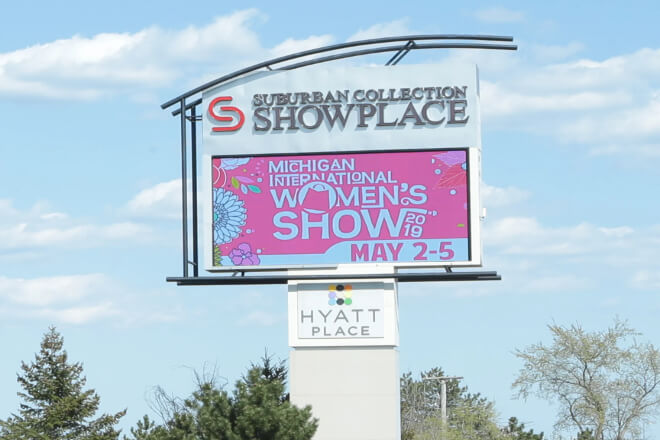
Advertising spaces in cities are quietly “getting a makeover.” In the past, static printed posters were up for months at a time.
Now, more and more locations are being replaced by LED displays, and the images are changing from “fixed” to “continuously updated.”
The biggest change is that the content has gone from “once it’s up and doesn’t move” to “can be changed at any time.”
Today it’s a new product launch, tomorrow it can switch to promotional information, and the day after it can become holiday-themed content.
Advertising spaces are no longer one-time uses but have become sustainably operated “content windows.”
At the same time, dynamic images themselves are more likely to attract attention. In information-dense areas like main urban roads or commercial districts.
A dynamic, changing, and switching screen is more likely to “linger for an extra second” in the eyes of passersby than a static banner.
Another very real change is the “improved resource utilization efficiency.” The same advertising space can support multiple brands rotating their ads.
No longer “one sign occupying a month,” but rather “one location serving multiple contents,” amplifying the value of the space.
To give a vivid example: Previously, when you drove through a commercial district, you saw a static poster that flashed by.
Now you see constantly changing dynamic images, even changing brand content every few seconds, significantly increasing the frequency of information exposure without you even realizing it.
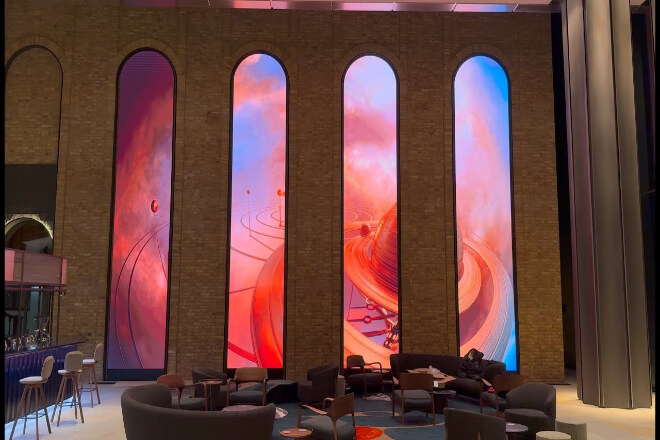
Lightbox advertising used to be part of the urban nightscape: a fixed, quiet, and stable illuminated image.
But also “unchanging.” Now, this “static illumination” is gradually being replaced by the dynamic expression of LED displays.
The biggest change is the upgrade from “still lit” to “moving and talking.” LED screens don’t just illuminate images.
They directly play videos, animations, and rhythmic content, transforming advertising from a fleeting glance to something that lingers in the mind.
In terms of visibility, they are more flexible. During the day, high 輝度 counteracts sunlight, ensuring clarity.
At night, they blend with ambient lighting for a stronger visual presence, remaining “online” all day.
More importantly, content updates have become incredibly flexible. While light boxes might require manual disassembly and reassembly to change images, LED screens only require backend updates for real-time replacement.
They can even switch content according to time periods, such as different information during rush hour, lunchtime, and evening.
For a clear example, in subway passages, what used to be a static poster that passengers would simply glance at and move on to.
Now, with LED screens, the images loop rhythmically and dynamically, making even brief visits more memorable.
This replacement trend is becoming increasingly apparent in high-traffic areas like ショッピングモール.
Subway stations, and streets, where “quietly glowing light boxes” are gradually being replaced by “moving content screens.”
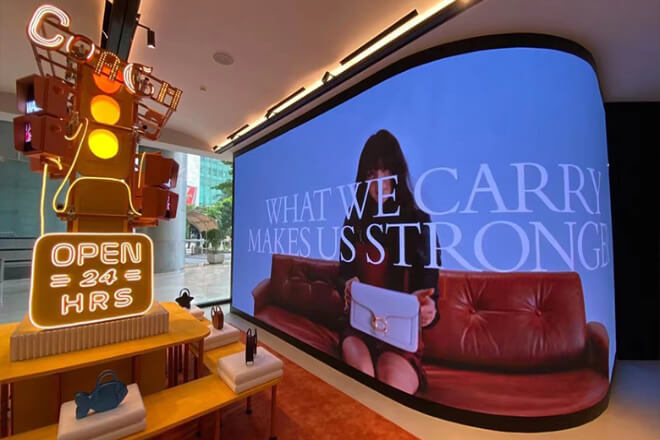
Previously, store materials were like “photos taken and then frozen in time”—once pasted up, they essentially remained static—the promotion ended, but they were still trying to fulfill their purpose.
But now, with the addition of LEDディスプレイ, the landscape has changed: storefronts are starting to “update their content.”
The most obvious change is the digitalization of storefront windows and in-store displays. Previously, changing a poster required design, printing.
And finally, mounting it on the wall—a process that could take until the promotion was almost over.
Now, a simple backend update instantly switches the display, so fast it’s almost like “it’s playing the moment I thought of it.”
For example, the window might be displaying a “limited-time promotion,” and the next second.
The backend switches to show a new product launch, all without any need for ladders or tape—the whole process is quiet and efficient.
Even more interestingly, it can “operate in shifts.” During the day, it can showcase new products to attract passersby.
At night, it switches to promotional information, reminding customers to “come in now for a better deal.” The same screen seems to be working with different personalities.
And there’s another practical advantage: less frequent printing of posters. Before, it was “heartbreaking to print the wrong poster.”
Now it’s “correcting a mistake means correcting it again,” significantly reducing the psychological burden.
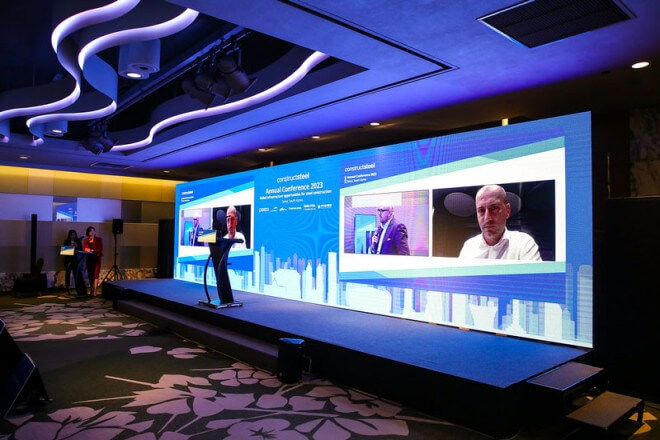
Information dissemination methods in cities are also quietly upgrading: previously, they were “fixed and unchanging,” now they are increasingly becoming “updated and changing in real time.”
The most obvious change is the digitization of bus stop signs and bulletin boards.
In the past, you could only see a static timetable at the bus stop, and if there were last-minute changes, you had to rely on “luck and experience.”
Now, with LEDスクリーン, information can be updated in real time; vehicle arrival times and route adjustments are directly displayed.
To give a vivid example: before, waiting for the bus, people basically relied on “guessing how much longer.”
Now, looking up at the screen, it directly shows “3 minutes until arrival,” making the entire waiting process more controllable and reducing the “anxiety of waiting blindly.”
Similar changes are happening with bulletin boards. Previously, a notice might be posted there for days or even longer.
Digital screens can now quickly switch information, ensuring timely updates of important notices, temporary announcements.
And event reminders, eliminating the worry of “posting but no one seeing the latest version.”
More importantly, efficiency is improved. Information has shifted from “static display” to “real-time publishing.”
Meaning faster, less error-prone, and more direct communication of public information in the city.
This upgrade is becoming increasingly common at transportation hubs, subway entrances, and public squares.
Information is no longer just “posted there,” but “continuously reminding you through dynamic updates.”
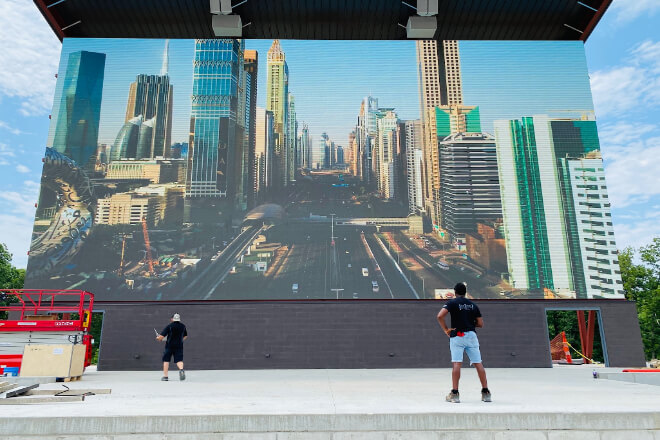
If previous outdoor advertising was like “standing on the roadside constantly talking,” then today’s LED displays are more like—not only speaking, but also learning to “speak to people.”
It’s no longer just replacing traditional advertising; it’s upgrading the entire outdoor media landscape.
Static posters are responsible for “being seen,” while LED screens are responsible for “being remembered, and even interacting with.”
The most obvious change is that advertising is no longer just a one-way display. Some content allows users to scan codes to participate, jump to activities, and receive discounts.
What was once just a glance while passing by has now become “convenient participation.” Advertising has evolved from “background information” to “entry buttons.”
To illustrate, consider this scenario: Previously, passing a billboard was essentially a matter of “saw it, then walked away.”
Now, passing an LEDスクリーン might prompt you to scan a QR code for a coupon, participate in a prize draw.
Or even click through to an event page—advertising has suddenly become more “engaging.”
Furthermore, it has become “smarter.” It can adjust content based on time, foot traffic, and context: focusing on information in the morning, branding in the afternoon.
And promotions in the evening, much like an “outdoor content operator” that adjusts its tone according to the atmosphere.
Even more interestingly, it’s beginning to influence conversion logic. Advertising is no longer just about “getting more people to see it.”
But about “getting more people who are more likely to be interested to see it at the more appropriate time,” making the path shorter and more direct.


 English
  Español
  简体中文
简体中文  Français
  日本語
日本語  한국어
한국어  العربية