
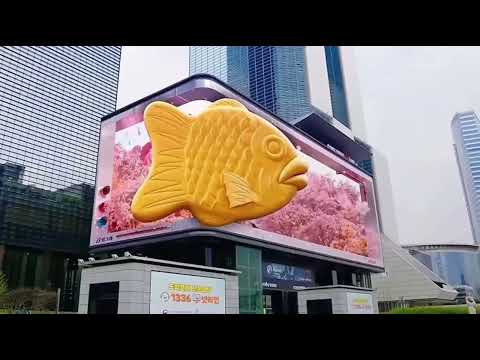
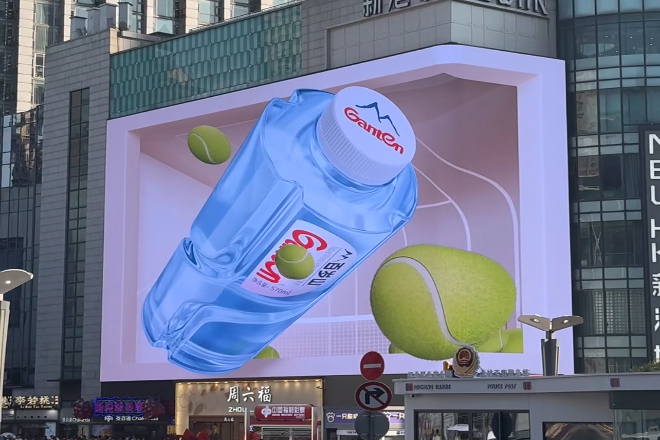
Getting passersby to stop in city streets, ショッピングモール, or brand showrooms isn’t easy.
People see various advertisements and information every day, and ordinary images are easily overlooked.
The charm of 3D LEDディスプレイ lies in their ability to make a flat image appear to “jump out,” creating an immediate sense of surprise.
However, a 3D effect isn’t simply about enlarging a regular video onto the screen.
Truly engaging 3D content needs to be designed based on the screen structure, viewing angle, and the surrounding space, allowing the image to interact with its environment.
For example, a 3D LED screen installed at a building corner can use visual illusions to make cars drive off the screen, waves crash onto the street, or present brand products in a more three-dimensional way.
Passersby may simply be walking by, but seeing these interesting images, they often can’t help but stop and watch for a few more seconds, or even take out their phones to record it.
For brands, this opportunity to be “actively viewed” is extremely valuable.
Compared to traditional advertising that directly tells consumers information, creative 3D content is more like creating a small visual event, making the brand easier to remember and easier to share on social media.
Of course, the focus of 3D LED displays is not simply to pursue “shock.” If the content and space don’t match, even the coolest effect may only be a fleeting novelty.
Truly excellent creativity needs to combine brand story, product features, and visual effects.
Today, attracting attention has become a major challenge in commercial displays.
3D LED displays are helping brands move from “displaying content” to “creating experiences,” turning a passerby’s stop into a lasting brand impression.
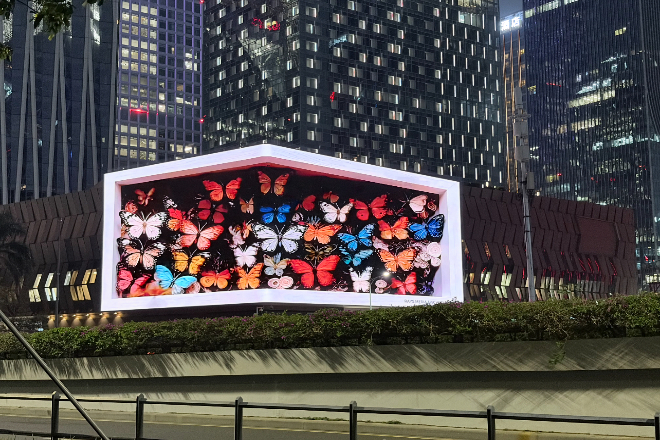
Why do some 3D LED screens always attract passersby to stop and take photos? The reason is simple—they create the feeling that “what’s on the screen is about to come out.”
Compared to ordinary advertising images, the spatial sense provided by 裸眼3D is more likely to create surprise and leave a lasting impression.
The key to this effect lies in redefining the relationship between the screen and real space using visual illusions.
Through clever design of foreground, background, and object movement, the image can produce a stronger sense of depth, making viewers feel that the content is not just displayed on the screen, but extending outwards.
For example, near a ショッピングモール exterior or city landmark, a giant whale may appear to swim out of the building, a sports car may seem to be rushing into the street, or a virtual storm may appear in the real city.
These images often make passersby stop and take out their phones to record the moment.
Of course, naked-eye 3D effects are not “the more exaggerated the better.” Screen size, installation location, and viewing distance all affect the final experience.
Excellent 3D content needs to find the optimal viewing angle based on the actual space, making the visual effect look more natural, rather than making the audience try to “find where the 3D is.”
For commercial spaces and brands, the value of this immersive experience goes beyond simply attracting attention.
More time spent on display and more opportunities to take photos and share mean more natural dissemination of brand content.
Today, 3D LED displays are transforming advertising from simply “being seen” to “being experienced.”
When a screen can create a memorable moment, it transcends being merely a display tool, becoming a visual focal point in urban spaces.
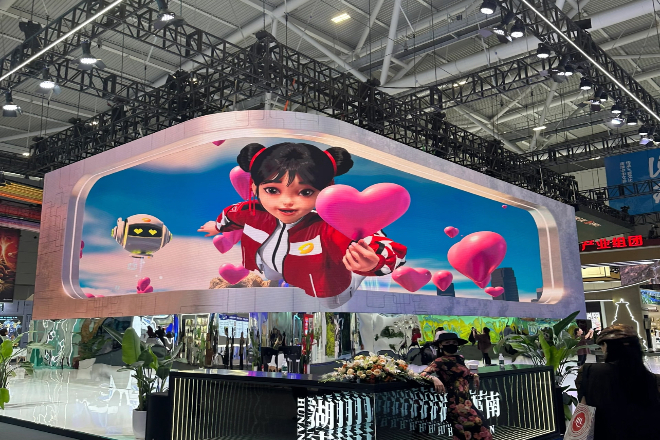
In the past, the goal of brand advertising was simply “to get more people to see it.” But now, merely being seen is no longer enough; consumers are more easily drawn to interesting, creative, and shareable content.
The value of 3D LEDディスプレイ lies in their ability to transform an ordinary display into an experience that compels people to stop and watch.
In commercial streets and urban landmark areas, 3D LED displays can help brands create a stronger presence.
A creatively designed 3D image might make someone who was just passing by stop, take out their phone to take a picture, and share it on social media. This natural dissemination is often more memorable than traditional advertising.
For shopping malls, 3D LED displays are not just advertising spaces; they can also become “attraction points” within the space.
For example, a unique naked-eye 3D image can transform a mall entrance or atrium into a popular photo spot for visitors, increasing foot traffic and enhancing the visual value of the entire commercial space.
In new product launches and brand marketing campaigns, 3D effects also offer more creative possibilities.
A simple product introduction can be transformed into a mini “visual show” through stereoscopic visuals.
Automotive, electronics, and fashion brands can all utilize 3D content to showcase product features, allowing consumers to more intuitively experience the brand’s intended message.
Of course, truly valuable 3D LED content isn’t simply about creating a “spectacular” experience.
Good ideas need to be integrated with brand positioning, ensuring that viewers not only find the visuals interesting but also remember the underlying brand information.
Today, business competition is increasingly resembling a “battle for attention.” 3D LED displays are helping brands move beyond simple exposure to experiential marketing.
Enabling a screen to not only attract attention but also generate discussion, sharing, and longer-lasting brand influence.
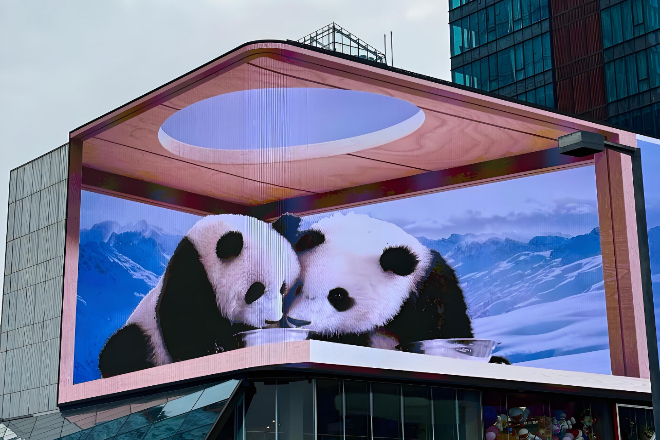
Many brands are now facing a challenge: getting ads seen isn’t difficult; the challenge lies in getting people to actively share them.
In an era of ubiquitous smartphone recording and social media, a video spontaneously shared by users often has a greater impact than a simple advertisement.
The advantage of 3D LED displays lies in their ability to create these “want to capture” moments.
By incorporating interactive and creative content, the screen transcends simply displaying information; it becomes an experiential element within the urban space.
For example, during holidays, brand events, or trending topics, 3D LEDディスプレイ can quickly change their content.
The Spring Festival can feature themed visuals, sporting events can incorporate elements of the competition.
And new product launches can feature custom visual content, ensuring viewers discover something new every time they pass by.
Some commercial spaces also incorporate interactive elements, transforming viewers from bystanders into participants.
For instance, scanning QR codes to participate in mini-games, interacting with screen content, or having user-generated content appear on the large screen all increase on-site engagement.
When an interesting 3D image appears on a city street corner, many people’s first reaction isn’t “watch and leave,” but rather to take out their phones, capture the moment, and share it on social media.
This user-driven dissemination helps brands transcend the limitations of a physical location, transforming a single display into a larger online buzz.
For shopping malls and city landmarks, a successful 3D LED display project is not just about attracting attention for a few seconds.
But more importantly, about making people want to remember, share, and even come specifically to experience it.
Today, good digital displays are shifting from “telling people what to see” to “getting people actively involved.”
3D LED displays are helping brands and spaces create more interactive opportunities, making every view a potential catalyst for sharing.
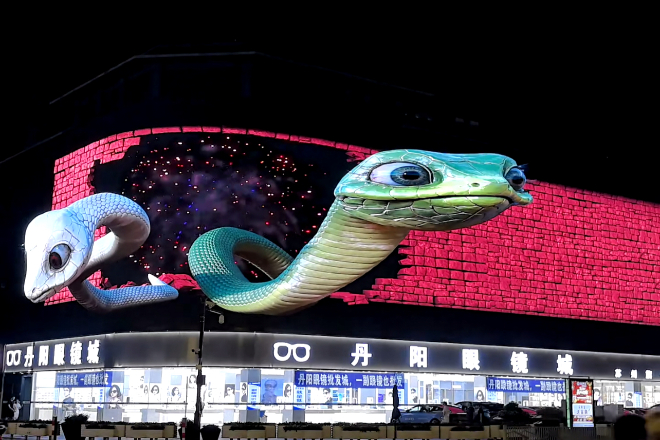
Many 3D LED displays become “Instagrammable” spots when they first appear in cities. People stop to take photos, share videos, and even make special trips to experience them.
But the problem is: after a few months, if the same image is played every day, even the most stunning effect can become commonplace.
Therefore, the true value of 3D LEDディスプレイ lies not just in generating initial attention upon launch, but in maintaining a sense of novelty.
First, the content needs constant updating. Holidays, seasons, brand events, and city hotspots are all excellent sources of creative inspiration.
For example, ショッピングモール can change their themes for Christmas, Chinese New Year, or anniversaries;
Brands can also create exclusive 3D visuals for new product launches, ensuring the screen continuously delivers new experiences.
Secondly, playback strategies need to adapt to operational needs. During peak hours, more attractive content that encourages sharing and photos can be played;
At different times, content can be combined with brand promotions and event announcements to maximize the screen’s commercial value.
Of course, besides content, the display effect itself needs to remain consistently high. Whether the brightness is suitable for the environment.
Whether the colors are stable, and whether the image is clear all affect the viewer’s first impression. After all, a faded 3D effect is unlikely to continue to create excitement.
For operators, a 3D LED display is more like a long-term digital asset than a one-time decoration.
Only by continuously updating content, analyzing user feedback, and constantly optimizing the display method can it transform from “amazing at first sight” to “a reason to stop and look every time you pass by.”


 English
  Español
  简体中文
简体中文  Français
  日本語
日本語  한국어
한국어  العربية