
The first impression a ホテル gives a guest is often not the room itself, but rather the feeling they get in those first few seconds upon entering.
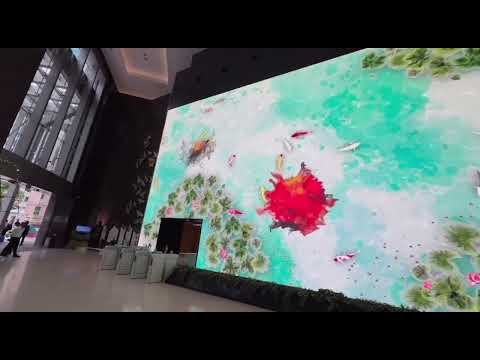
The LED display screen in the lobby plays the crucial role of “setting the tone from the start.”
First, it creates a high-end, modern spatial image. Traditional lobbies may rely on decoration and lighting to create atmosphere, but adding a large screen instantly adds a sense of “modernity” and “sophistication.”
For example, as a guest pushes open the door, a soft animation of a city night scene appears on the screen, accompanied by the hotel’s brand logo slowly appearing.
Even before checking in, the guest might already be thinking, “Hmm, this hotel is quite upscale.”
Second, it strengthens the customer’s first impression upon entering the hotel. Many experiences actually begin before the front desk greeting.
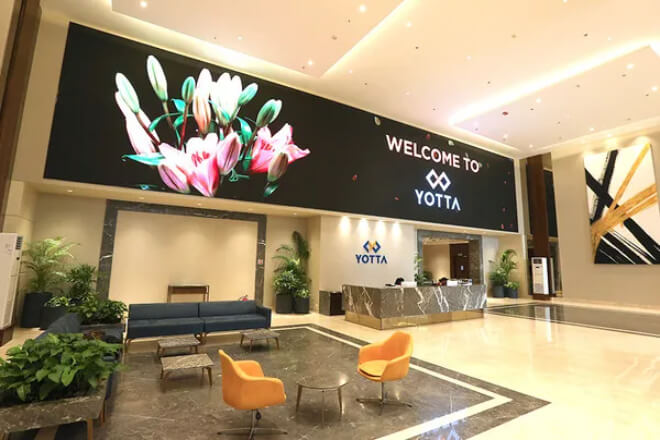
Large screens can display welcome messages, brand stories, and featured services, transforming guests from simply “walking in” to “being welcomed.”
For example, during holidays, the screen can display a dynamic message like “Welcome to Tokyo, have a pleasant trip!”
Even a simple sentence conveys, “This hotel really knows how to cater to your mood.”
More importantly, it enhances brand recognition. While interior design styles may be similar across hotels, screen content can be personalized.
Brand colors, brand stories, and city elements can all be showcased on the screen, making it easier for guests to remember the brand.
When staying at a hotel, the worst thing isn’t queuing, but getting lost.
Where’s the breakfast restaurant?
Where’s the gym?
How do I get to the meeting rooms?
Often, guests enter a hotel with a string of questions in their minds.
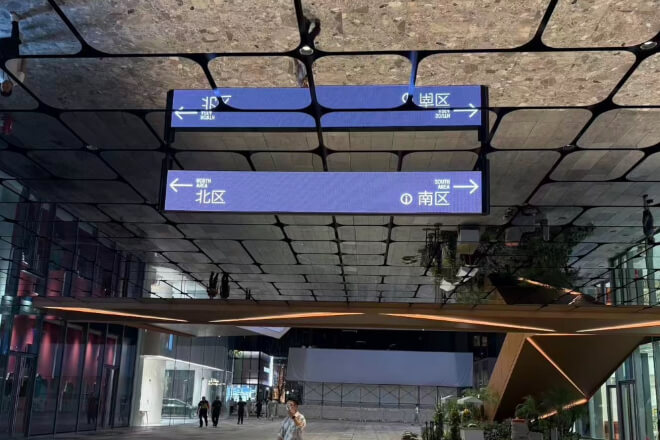
This is where a digital wayfinding screen comes in handy.
First, floor navigation and event information are clearly displayed. Guests don’t need to look down at signs or ask the front desk; a glance at the screen is usually enough to know where to go.
For example, in a large resort hotel, after check-in, guests see a screen displaying: “Pool → 2nd Floor, Children’s Playground → B1, Afternoon Tea → Lobby Bar.”
The route is immediately clear, making things much easier. At least they won’t be standing at the elevator, silently wondering, “Should I go upstairs or downstairs?”
第二に、 LEDディスプレイ makes the experience smoother. Clear information saves guests from taking unnecessary detours, and hotel staff answer fewer repetitive questions, making things easier for everyone.
For example, during peak breakfast hours, a large screen might display: “The restaurant on the 3rd floor currently has an approximately 15-minute wait.
We recommend dining on the 2nd floor.” Guests can then directly change their route, instead of arriving at the door to find themselves 28th in line.
Another important point: it makes the hotel seem more “reliable.” Not in an artificial sense of luxury, but in a way that makes people feel—”This hotel is very well organized.”
Guests might not specifically compliment, “Your wayfinding is really good,” but they’ll feel: the stay is comfortable, and there’s not much anxiety about finding their way.
Hotel banquet halls are becoming increasingly compact, and the competition isn’t just about size and ceiling height.
Many clients care more about one thing: “Does the venue look authentic and engaging?” LEDスクリーン are often the easiest way to elevate this “feeling.”
First, the visual effect of weddings, conferences, and banquets will be significantly upgraded.
Previously, people relied on backdrops and banners; now, a large screen can basically meet most visual needs, and it can even be animated, instantly changing the atmosphere.
For example, at a wedding, the large screen can display photos of the couple from childhood to the present, then switch to a romantic animation during the entrance.
Before the applause even begins, some guests might already be secretly grabbing tissues.
Second, one venue can serve multiple scenarios. A corporate meeting in the morning, a new product launch in the afternoon.
And a wedding banquet in the evening—simply change the content, without the hassle of completely reorganizing the setup.
For example, the screen might display “Annual Strategic Conference” in the morning and “Happy Wedding” in the evening—the same hall, but with a completely different “personality.”
More importantly, it adds a strong selling point for the hotel. When clients come to choose a venue and see a large screen in the banquet hall, their first reaction is usually, “This should be great for photos.”
Now, whether it’s a wedding or a corporate event, everyone cares about the “photo quality”—how well the photos turn out can sometimes influence booking decisions.
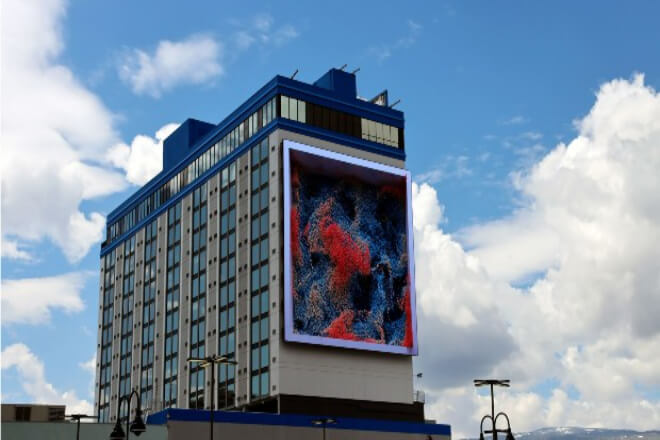
Many hotels have a “small goal”—to ensure that guests, after leaving, don’t just remember “the bed was comfortable,” but rather, “
Oh, that’s the hotel with a great vibe.” LEDスクリーン are a great way to help hotels “improve their impression score.”
First, they showcase the brand story and service philosophy. Hotels sell more than just rooms.
They sell an atmosphere, an experience, and even a “lifestyle.” LED screens can gradually convey these elements.
For example, a resort-style hotel that continuously plays images of beach sunsets, pool parties.
And terrace dinners on its lobby screen might make guests think, “I haven’t even checked in yet, and they’re already thinking about vacationing!” upon entering.
Second, they project a unified visual image. From the brand logo to the welcome screen and event information, a consistent style creates a more cohesive feel to the entire hotel, preventing a disjointed aesthetic.
For example, if screens maintain the same brand colors and visual language from the lobby to the elevators, guests will think, “This hotel is quite sophisticated; even the screens look like they’re wearing uniforms.”
Furthermore, it can subtly promote hotel services. Many guests who initially just want to stay one night are suddenly drawn in by advertisements for the spa, afternoon tea, and rooftop bar.
For instance, someone might be heading straight to their room but then see a screen in the lobby displaying a loop of “Today’s Limited-Time Dessert.”
And suddenly find themselves drawn to the coffee shop—this is the screen’s “silent marketing.”
Finally, it enhances brand recall. After staying in many hotels, people may not remember their room numbers, but they easily remember a particular image.
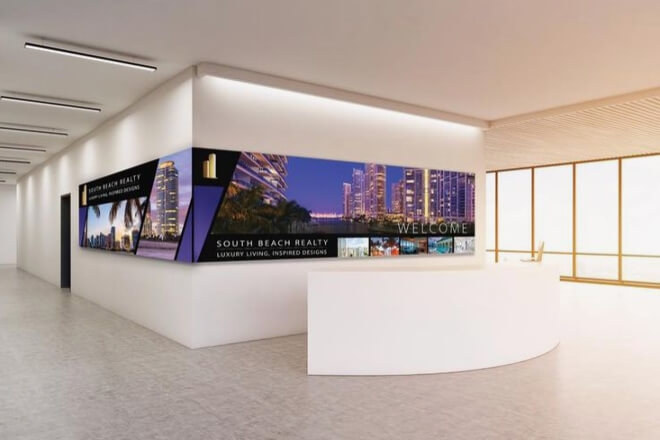
Many hotels are beautiful, but there’s a difference between being beautiful and making people want to take photos and post them on social media.
To make guests exclaim “This design is amazing!” the moment they walk in, creative LEDスクリーン often add a significant advantage.
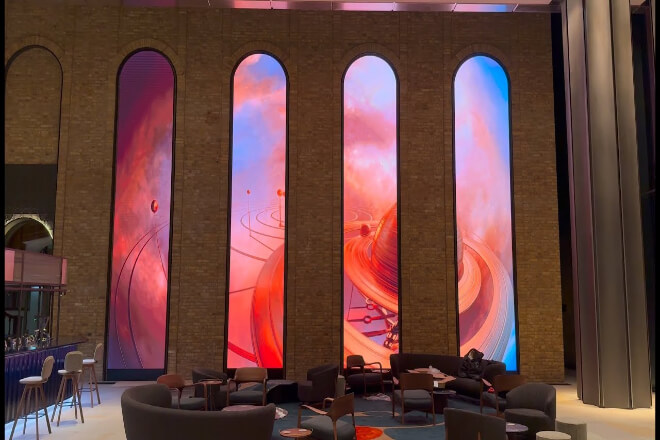
Firstly, irregularly shaped and artistic screens can create distinctive spaces. It doesn’t have to be a regular large screen.
It could be curved, round, or even “hidden” in the wall or ceiling, looking more like an art installation.
For example, some hotel lobbies have a “digital waterfall wall,” where the image flows gently like water.
Guests might not even reach the front desk before they’ve already raised their phones—check-in can wait, photos must be taken first.
Secondly, it adds depth to the space. Previously, a wall might just be a “background,” but now, with creative screens, it becomes the “protagonist.” The space is no longer static, but “changing.”
例えば、 ホテル bar area, during the day the screen displays soft artistic images, and at night it switches to a city night view or a starry sky. Guests sitting there feel like they’ve entered a completely different environment.
More importantly, it helps hotels differentiate themselves. With so many hotels now, rooms and services may be similar, but a unique spatial design makes it easier for guests to remember you.
It’s quite possible that guests will leave saying, “I almost forgot the hotel’s name, but I remember that moving ceiling.” – That’s what makes a hotel memorable.


 English
  Español
  简体中文
简体中文  Français
  日本語
日本語  한국어
한국어  العربية