

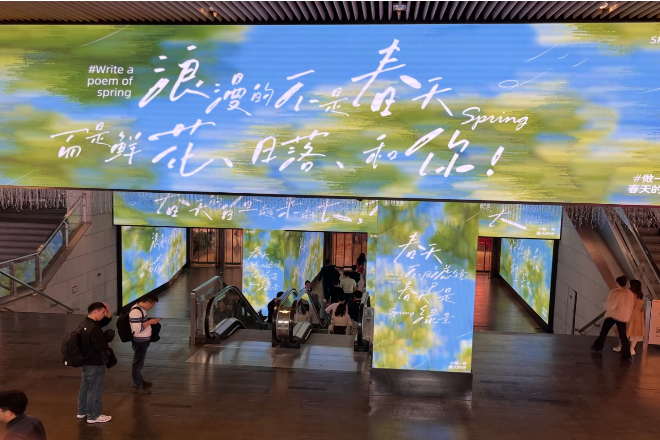
What ages a city isn’t just the building exteriors, but also how people interact with the space. In the past, urban display relied more on static forms like walls, signs, and posters.
But today, people expect more than just usability from urban spaces; they want them to be more distinctive and memorable.
This is why more and more urban renewal projects are focusing on new visual expression methods.
El surgimiento de pantallas LED transforms buildings and public spaces from fixed backdrops into constantly evolving windows for the city.
Through dynamic visuals, real-time information, and creative content, ordinary walls, plazas, or commercial areas can have more opportunities for expression.
For example, urban blocks can use LED displays to showcase local culture and special events; commercial areas can adjust content according to festivals and brand activities;
And public spaces can also promptly release city information, transforming spaces from “static existence” to “active communication.”
Compared to traditional display methods, the biggest feature of LED displays is that the content can constantly change according to the city’s needs.
Today it can showcase city events, tomorrow it can present cultural stories, and it can quickly switch themes for festivals, keeping the space constantly fresh.
Urban renewal truly changes not only the appearance of buildings, but also the experience of people living, staying, and interacting there.
LED displays are helping cities have more “ways of expression,” allowing even inanimate buildings to tell their own stories.
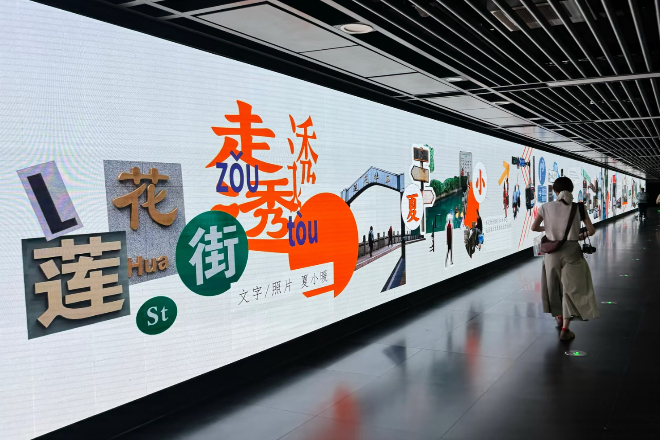
How can an old building or an old street regain people’s attention after renovation?
Often, space upgrading is not just about changing the appearance, but about creating a reason for people to stop and participate.
pantallas LED are becoming an important element in the revitalization of urban spaces. They can give ordinary areas a new visual focus, bringing attention back to dormant spaces.
For example, older commercial streets can use LED displays to showcase special events, brand content, and neighborhood stories, increasing foot traffic.
Public squares can utilize dynamic visuals to create a festive atmosphere, offering citizens more interactive experiences during their leisure time.
Some city landmarks can also create unique visual memories through creative displays.
Unlike traditional walls and signs, the biggest advantage of LED displays is their constantly changing content.
Today it can showcase urban culture, tomorrow it can complement commercial activities, and for special holidays, it can quickly switch themes, keeping the space fresh.
This also changes people’s understanding of urban spaces. In the past, a place might just be a “road to pass by” or a “shopping area.”
But now it can become an experiential scene worth lingering in, taking photos, and sharing.
The ultimate goal of urban renewal is not just to make spaces look more beautiful, but to reconnect them with people.
LED displays, through dynamic content, add a new form of expression to the city, allowing more spaces to move from being “used” to being “experienced.”
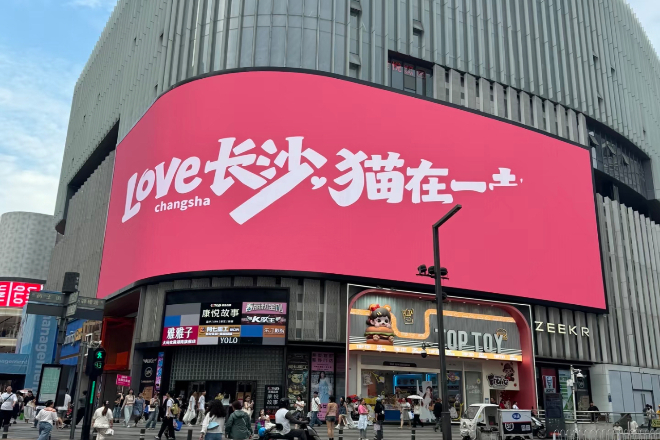
In the past, urban information dissemination often relied on posters or bulletin boards.
Once the content was posted, changing the time or updating the notice often required remaking and replacing everything.
However, cities are changing rapidly. Today it might be an event announcement, tomorrow a traffic alert, and the day after that new public information. Cities need a way of expression that keeps pace.
The emergence of LED displays has given public spaces more flexible information dissemination capabilities.
Through digital content management, information on the screens can be updated quickly, ensuring that urban information is no longer “half a step behind.”
Por ejemplo, aeropuertos and train stations can display real-time flight and train schedule changes; commercial districts can adjust their displays according to holidays and events;
City squares can also promptly publish public notices and cultural activities, making it easier for residents and tourists to access information.
Más importante, pantallas LED are transforming urban spaces from simply “displaying information” into windows for communication between people and the city.
Residents can more easily stay informed about urban developments, tourists can discover more of the city’s unique features, and commercial activities can gain better exposure.
Behind urban renewal, it’s not just about new buildings, but also about an upgrade in the way the city communicates with its people.
LED displays are like “electronic bulletin boards” for the city, making information transmission faster and urban life more convenient.
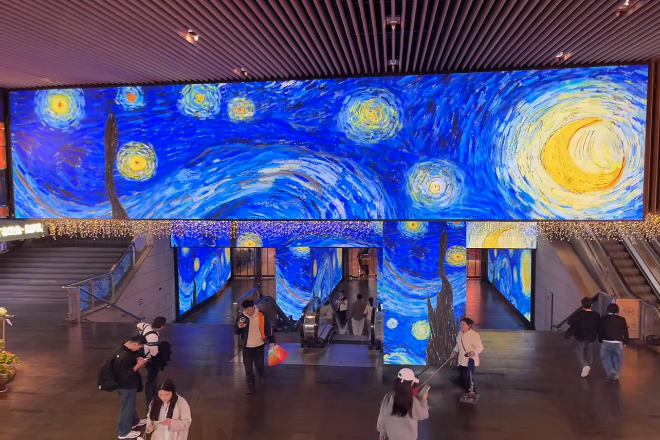
For a city to be remembered, a beautiful building alone may not be enough.
What truly leaves an impression are often those urban moments with stories, unique features, and the ability to interact with people.
pantallas LED are becoming a new way for cities to tell their stories. They are not just tools for displaying advertisements or information, but also “digital canvases” showcasing urban culture.
For example, old neighborhoods can use LED displays to showcase the city’s past, bringing historical stories back to life.
City squares can switch themes during festivals, creating a unique atmosphere for the city; commercial areas can also incorporate local characteristics to create distinctive visual scenes.
Compared to fixed walls and signage, the biggest feature of LED displays is their “changeability.”
Today they can tell the city’s history, tomorrow they can showcase cultural activities, and on important holidays, they can quickly transform into part of the city’s celebrations.
And a pantalla LED creativa space is more likely to become a symbol of the city in people’s memories.
Tourists might stop to take photos because of a stunning visual, and residents might feel a greater sense of belonging because of familiar city stories.
Urban culture doesn’t have to be confined to books and museos; it can also appear on the street corners we pass every day.
Through LED displays, cities can express themselves in a more vivid and modern way, making spaces not only “beautiful to look at,” but also “memorable.”
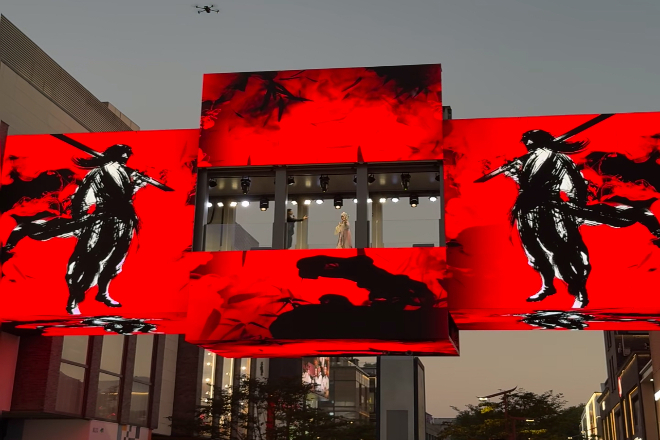
What’s the biggest fear in urban renewal? It’s not that the completed space isn’t beautiful enough, but that after a few years, it slowly loses its appeal.
For a city space to remain vibrant, it needs to be able to constantly “renew” itself over time.
This is why pantallas LED are gaining increasing attention. Unlike traditional decorations that are fixed in place, they are a continuously updated “digital space.”
Today it can showcase city events, tomorrow commercial content, and themes can be quickly switched during holidays, giving the same place a different look.
For example, commercial districts can adjust their content based on promotional activities to attract more people; public squares can publish city news and cultural events;
And cultural tourism projects can continuously create new experiential scenarios by updating digital content.
Beyond its flexible content, LED displays can meet diverse needs across various scenarios.
A single screen can serve as a brand showcase, disseminate public information, and create unique visual effects for large-scale events, enhancing the value of the space.
From a long-term operational perspective, digital content updates also reduce the pressure of frequent renovations.
Compared to completely renovating a space, simply adjusting the screen content can revitalize the environment.
Future urban spaces shouldn’t just be “built and placed there,” but rather be constantly evolving and responsive to people’s needs.
LED displays are like a constantly evolving window to the city, keeping spaces fresh and allowing for greater imagination.


 English
  Español
  简体中文
简体中文  Français
  日本語
日本語  한국어
한국어  العربية