
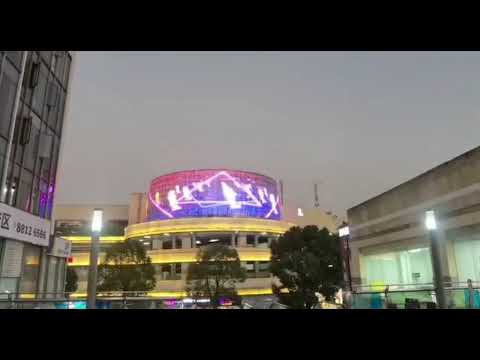
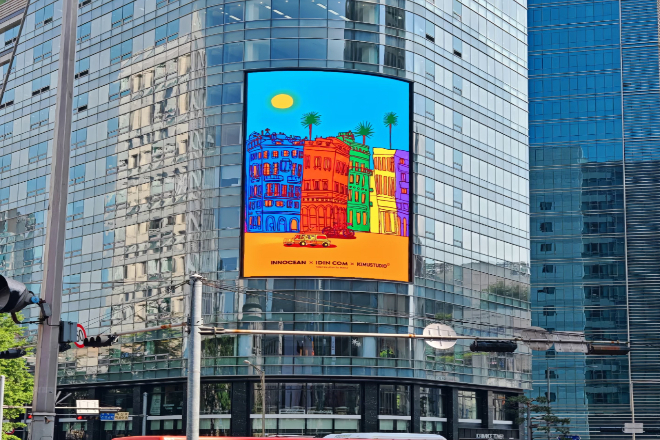
High-rise building exterior walls are important display locations for outdoor advertising.
Commercial complexes, hoteles, office buildings, and urban landmarks can all use LED displays to display brand advertisements, event information, or dynamic visual content.
However, the appearance of large blank areas on building exterior walls does not mean that these locations are suitable for installing displays.
First, the building’s structural conditions must be assessed.
Large LED displays not only have their own weight but also require supporting frames, connectors, and related supporting equipment.
After installation, these loads will be transferred to the main building through the fixed structure.
Therefore, it is essential that qualified professionals assess whether the walls, beams, columns, and connection points meet the requirements.
Especially for existing buildings, installation conditions cannot be determined solely based on the original drawings.
After years of use, the actual structural condition, exterior wall modifications, and existing equipment layout can all influence the installation plan.
Secondly, the exterior wall materials must be examined.
Different buildings may use glass curtain walls, metal curtain walls, concrete walls, or other exterior wall systems.
Their load-bearing methods, fixing conditions, and construction limitations differ.
For example, while glass curtain walls offer visual transparency, they cannot be simply considered structures capable of directly supporting the weight of a large LED display.
The project team needs to confirm the existence of suitable connection points with the main structure and whether the installation will affect the existing curtain wall system.
Thirdly, the building’s purpose and surrounding environment must be considered.
If the building is a hotel or office building, it may be necessary to minimize the impact on normal operations during construction;
If it is a commercial complex, construction isolation and security management in high-traffic areas must also be considered.
In addition, the project should verify local requirements regarding outdoor advertising, building facade renovation, urban landscaping, and construction permits in advance.
For LED displays on the exterior walls of high-rise buildings, the screen size should not be decided first, and then the building design should be adjusted accordingly.
The correct order is to first assess the building conditions, and then determine the screen design.
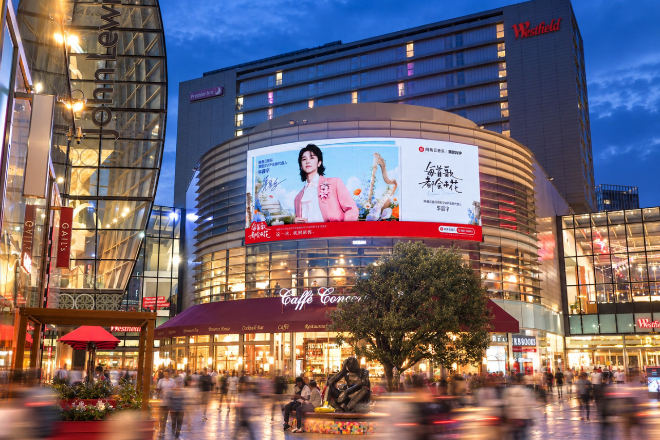
While ground-level advertising screens mainly need to consider sun and rain, LED displays on the exterior walls of high-rise buildings must also face a more complex wind environment.
The taller the building, the more complex the surrounding airflow conditions may be. The screen will not only be directly affected by the wind.
But may also be affected by local wind effects from building corners, surrounding tall buildings, and the shape of the exterior wall.
Therefore, structural design should not only consider the weight of the LED display, but also focus on assessing wind loads.
First, design conditions must be determined based on the building height and the project location.
Professional designers need to determine design requirements based on applicable codes, local basic wind conditions, building height, topography, and installation location.
For areas with frequent typhoons or strong winds, structural safety under extreme weather conditions should be given even greater attention.
Secondly, the connection method between the screen and the building must be considered.
Large LED displays typically require a support frame and connection system to be fixed to the building.
The location of the fixing points, the connection method, and the load transfer path all require professional design.
If the connection structure is unreasonable, even if the screen itself and the steel frame appear very sturdy, the safety of the entire installation system cannot be guaranteed.
Thirdly, the screen area and structural form must be considered.
The larger the screen area, the larger the windward area. Different cabinet structures, installation spacing, and support methods will also affect the overall stress distribution.
If the project uses irregularly shaped, curved, or other special shapes, the corresponding structural complexity must be assessed; the construction plan cannot be determined solely based on visual renderings.
In addition to wind loads, heavy rain, temperature changes, and prolonged exposure to sunlight cannot be ignored.
Pantallas LED para exteriores need to have protective capabilities matching the actual environment, and the metal support structure should have appropriate anti-corrosion measures based on environmental conditions.
If the building is located in a coastal area, the corrosive effect of salt on metal components and connection points should be further assessed.
For project decision-makers, the value of structural design lies not in making the screen appear sturdy, but in ensuring that the screen, support system, and main building function safely as a unified whole.
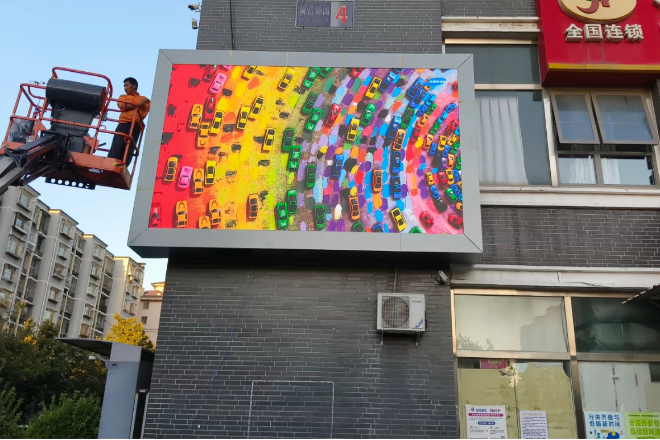
High-rise building facades offer good long-distance visibility, leading project owners to easily assume that a larger screen equates to better advertising.
However, this isn’t always the case.
If the screen is too small, distant pedestrians may not be able to see the image clearly; if it’s too large, it can increase structural load, construction difficulty, and operating costs, even disrupting the building’s original proportions.
First, analyze the target audience’s viewing location.
Si el Pantalla LED primarily faces vehicles and pedestrians on city roads, planning must consider road direction, traffic flow, and actual viewing distance.
If it mainly serves surrounding commercial areas, the presence of nearby buildings obstructing the view must also be considered.
Second, determine the screen size and proportions appropriately.
The screen area should match the building’s facade, available installation area, and advertising content.
Simply having enough wall space doesn’t mean converting all blank areas into display areas.
For some buildings, preserving some exterior wall space can actually make the screen stand out more and help maintain the overall architectural design harmony.
Third, tamaño de píxel should be selected based on distancia de visualización.
Pixel pitch is the distance between the centers of adjacent pixels.
All other things being equal, a smaller pixel pitch generally results in a more detailed image, but the procurement cost may also be higher.
If the high-rise building’s exterior wall screen is primarily intended for long-distance viewing, a suitable pixel pitch can be selected based on the actual distance;
If there are nearby viewing locations at close range, further checks are needed to ensure the clarity of text, patterns, and image details.
Además, brillo and ambient light must be considered.
During strong sunlight, the screen needs appropriate brightness to ensure the advertising content is easily visible;
At night, the brightness should be adjusted appropriately to avoid excessive glare and to comply with local regulations.
Therefore, when selecting an LED display screen for a high-rise building’s exterior wall, one should not only compare screen size, brightness.
And pixel pitch, but also consider these parameters in conjunction with the actual viewing environment.
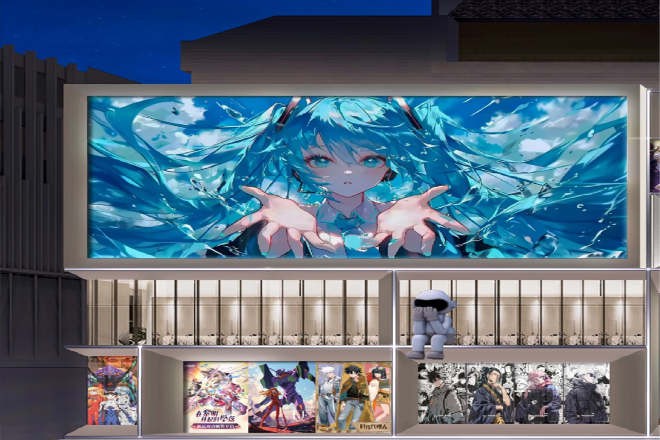
One of the most easily underestimated issues with pantallas LED installed on the exterior walls of high-rise buildings is subsequent maintenance.
When a ground-mounted screen malfunctions, maintenance personnel can usually access the equipment quickly.
However, if the screen is installed tens of meters or even higher, replacing a module, fuente de alimentación, or connecting component may involve specialized high-altitude work arrangements.
Therefore, maintenance conditions must be considered during the design phase.
First, the type of maintenance method for the screen must be clearly defined.
Some LED displays support front maintenance, allowing for disassembly and replacement of components from the front; others require inspection from the back.
If the screen is directly against a building’s exterior wall, or if the supporting structure does not provide sufficient space, back maintenance can be extremely difficult.
The suitability of the maintenance method should be confirmed based on the actual installation location before procurement.
Second, safe maintenance routes must be planned.
Maintaining the exterior walls of high-rise buildings may involve building maintenance platforms, specialized hoisting facilities, or other high-altitude work equipment.
Specific plans need to be developed by a professional team, taking into account building conditions and applicable safety requirements.
It’s crucial not to wait until the screen malfunctions to discover that maintenance personnel cannot safely access the equipment.
Third, spare parts replacement and maintenance efficiency must be considered.
Before purchasing, understand the replacement methods for modules, power supplies, and control components, confirm the supplier’s availability of commonly used spare parts, and ensure timely maintenance response.
For commercial advertising screens requiring long-term operation, maintenance efficiency directly impacts equipment downtime and advertising playback schedules.
Fourth, develop a regular inspection plan.
Maintenance may include screen modules, cabinet connections, power supplies, cables, waterproofing, and support structures.
After strong winds, heavy rains, or other extreme weather, necessary inspections should be scheduled according to the project maintenance plan.
Simultaneously, pay attention to the anti-corrosion layer and connections of the steel structure, and address any problems promptly.
For project investors, a truly easy-to-maintain high-rise building exterior LED display screen is not one that never malfunctions, but one that allows for safe inspection and timely repair when problems occur, minimizing downtime.
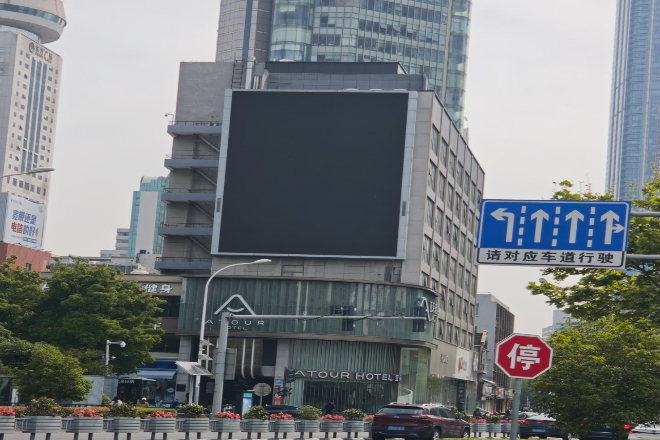
High-rise building exterior LED display screen projects typically involve multiple stages, including equipment procurement, structural design, building assessment, construction and installation, and post-operation.
Therefore, comparing only the price per square meter of the screen can easily underestimate the actual investment.
First, calculate the complete installation cost.
In addition to the pantalla LED itself, costs should also be considered for supporting steel structures, connectors, transportation and hoisting, electrical systems, lightning protection.
And grounding, installation and commissioning, and necessary building modifications.
If the building requires localized reinforcement, or the installation plan involves complex high-altitude construction, these should also be assessed during the budgeting phase.
Secondly, maintenance costs must be considered.
High-altitude maintenance may require professional personnel, specialized equipment, and additional safety measures.
If the screen design does not include adequate maintenance space, future maintenance costs can increase significantly.
Therefore, during procurement, maintenance methods, spare parts availability, after-sales response, and warranty coverage should be compared simultaneously, rather than solely focusing on the initial equipment price.
Thirdly, energy consumption should be considered.
The actual el consumo de energía of an LED display screen is affected by factors such as screen area, brightness settings, content displayed, and daily operating time.
The project team can estimate long-term electricity costs based on the projected operating schedule and analyze them in conjunction with local electricity prices.
Fourthly, the impact of equipment downtime must be assessed.
If the screen handles significant commercial advertising, equipment failure could affect advertising schedules and client contracts.
Product stability, repair response speed, and spare parts availability can all impact the project’s actual operational performance. Finally, long-term operational value must be considered.
A device with a low initial price but difficult maintenance may not necessarily have lower long-term costs;
Conversely, a device with a reasonable installation plan, structural safety, and reliable after-sales support, even with a higher initial investment, may be more suitable for long-term operation.
For project decision-makers, a reasonable investment plan should simultaneously consider advertising effectiveness.
Structural safety, construction conditions, maintenance convenience, and overall operating costs.


 English
 Español
 简体中文
 Français
 日本語
 한국어
 العربية