

The same video or set of images can sometimes be stunning on one Pantalla LED, but appear unremarkable on another.
The content remains the same; what changes is the “way it’s presented.”
This raises an often overlooked question: why does content that looks the same appear completely different on different LED screens?
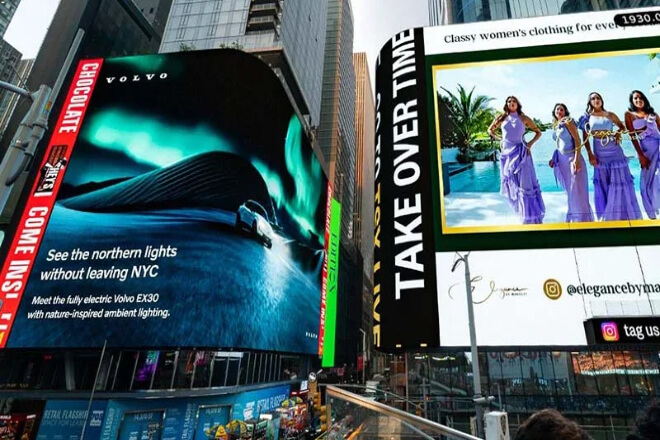
An LED display is like the viewer’s “eyes,” and resolution is like the quality of their vision. The smaller the pixel pitch, the more detailed the image.
The larger the tamaño de píxel, the more grainy the image becomes, with details blurred like looking at sand with a magnifying glass.
For example, imagine watching a new product advertisement video in a centro comercial. If the screen resolución is low, the small details on the shoes or watch might be blurry.
Even the brand logo might look like it’s been pixelated—the viewer can only think, “Hmm, looks good,” losing all memory.
On a high-resolution LED screen, every detail—the stitching on the shoe, the markings on the watch, the brand logo—is clearly presented.
Viewers find it comfortable and memorable and are more likely to be attracted to place an order. Resolution not only affects the viewing experience but also directly impacts information delivery and brand image.
High-definition images make advertising content crystal clear, ensuring no score, data, or product details are missed; low-resolution images easily distract viewers, causing them to miss key information.
Simply put, LED screen resolution is the “first impression weapon”—a sharp image catches the eye, while a blurry image only diminishes the viewer’s impression, instantly reducing memorability.
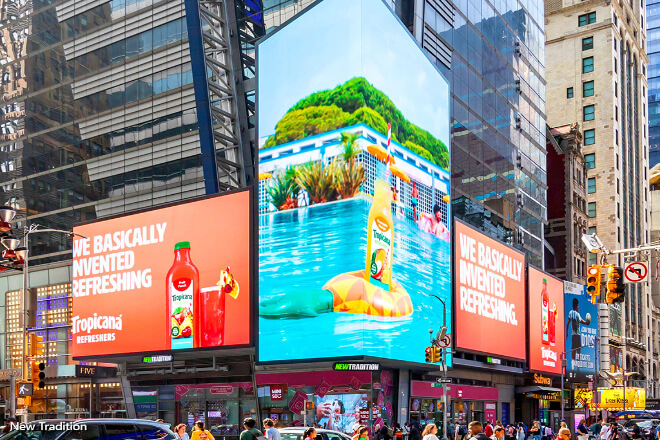
LED displays are like spotlights on a escenario; incorrect brillo immediately ruins the viewer’s experience.
Indoor and outdoor lighting differ significantly, so screen brightness must be adjusted accordingly; otherwise, the image will easily become distorted.
For example, if you’re watching an advertising video in a centro comercial and the screen brightness is too low, the image will appear foggy.
With dim colours and blurry details. Viewers will have to squint, remembering very little information.
Imagine an outdoor sports field under the blazing sun. If the LED screen isn’t bright enough, scores, advertisements, and rankings will be impossible to see, forcing viewers to squint or take photos with their phones.
Conversely, if the brightness is set too high, highlights will be washed out, resulting in lost details.
For example, product textures will disappear, and logos on athletes’ clothing will become blurry in the sun, negatively impacting the viewing experience.
Brightness also affects colour performance: too dark, and colours will appear dull and lack impact; too bright, and highlights will distort, losing all sense of depth.
Scientifically adjusting brightness is like giving the screen “magic glasses,” ensuring clear and comfortable images in shopping malls.
Conference rooms, stadiums, and outdoor events, allowing information to be instantly transmitted to the audience.
Simply put, brightness is the screen’s “expression switch”: too dark, and it’s hard to see; too bright, and it’s blinding; just right, and it’s pleasing to the eye, enjoyable to watch, and memorable.
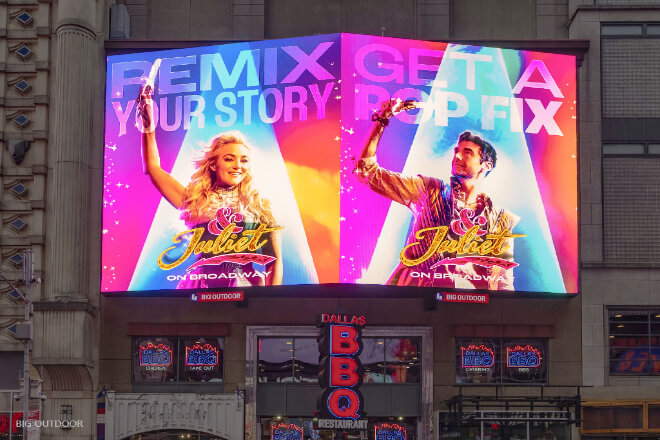
LED displays are like a painter’s palette; colour performance capability determines whether the image can faithfully reproduce the content. The wider the colour gamut, the richer the colours.
Large differences in colour calibration mean the same image may appear colour-shifted or distorted on different screens, leaving viewers confused.
For example, when you see a high-end cosmetics advertisement in a centro comercial, the model’s red lips are originally vibrant and full.
However, if the screen’s colour reproduction is insufficient, the red might appear orange or dull, making the whole image look like it’s missing a magic filter and lacking impact.
Or, in a live sports broadcast, if the team uniform colours are off, viewers might momentarily mistake one team, drastically reducing the viewing experience.
Colour performance not only affects aesthetics but also directly impacts information delivery and brand recognition. High colour fidelity makes advertisements, live broadcasts, or demonstrations vivid and memorable.
Conversely, colour deviation or distortion can cause viewers to miss the key points, diminishing both the experience and memorability.
Simply put, colour performance is the “face value” of the screen: accurate and rich colours catch the viewer’s eye, making information and brands easier to remember.
Colour deviation is like a filtered image, compromising both visual appeal and overall experience.
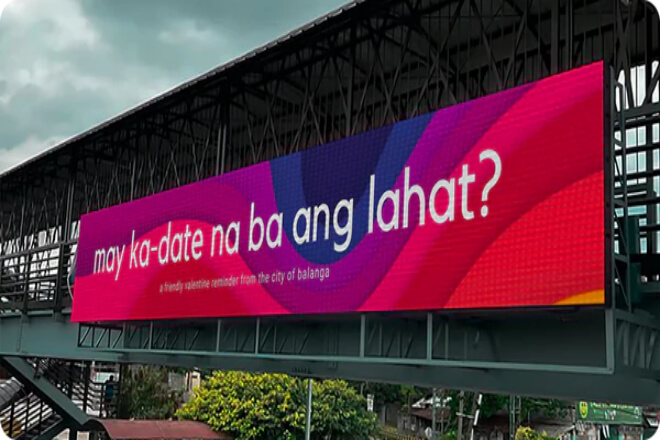
LED displays are like escenario scenery; the position of different viewers determines the effect they see.
Viewers at a distance need large screens and strong contrast to quickly grasp key information, while viewers at close range can see more detail. If the image is too blurry or cluttered, it can easily cause eye strain and dizziness.
For example, in a stadium, if the LED screen at the finish line is too small, viewers at the far end might only be able to guess the score and player status, significantly reducing information delivery.
En exhibición halls or Centros comerciales, if the screen resolución is insufficient or the content design is too simplistic, small fonts and details become illegible, causing viewers to miss key information.
Therefore, content design must match the viewing scenario: screens at a distance need to be “large and clear,” with large fonts and strong contrast to ensure key information is immediately visible.
Screens at close range can be “small and refined,” with high resolution and rich detail so viewers can focus easily without strain.
Simplemente pon, distancia de visualización is the “viewer’s perspective switch”: at a distance, the image needs to be large and eye-catching; at a close distance, details need to be clear and rich.
Mastering the relationship between distance and image quality ensures accurate information delivery and a comfortable and natural viewing experience.
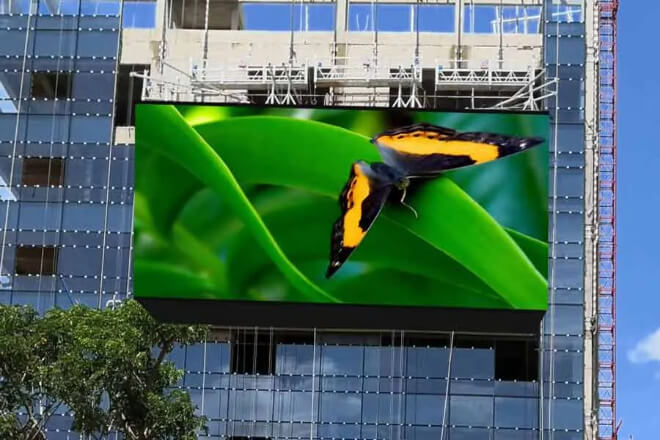
El frecuencia de actualización and processing power of an LED screen are like the rhythm controller of an advertisement—if it’s slow, the overall effect is diminished.
Low refresh rates or insufficient processing power will cause dynamic advertisements to stutter, skip frames, or lag, significantly reducing the creative effect and leaving viewers feeling “uncomfortable.”
Por ejemplo, en un centro comercial advertisement for dynamic shoes, if the screen refresh rate is low.
The shoe rotation display and cool special effects will be intermittent, instantly reducing the trendiness and impact the advertisement should deliver.
The same applies to brand videos at outdoor bus stops; a low refresh rate will cause dynamic logos and text to lag, affecting brand recognition.
High refresh rate, high-performance screens are like a DJ with a high-energy rhythm, ensuring smooth and continuous advertising animations, with special effects, transitions, and video content presented steadily.
Viewers are not only captivated but also more likely to remember brand information and advertising creative ideas.
In short, refresh rate and processing power are the “heartbeat” of an advertisement: smooth visuals make ads impactful, enjoyable for viewers.
And memorable; stuttering and skipped frames are like off-beat drumbeats, rendering even the most brilliant ideas useless.


 English
  Español
  简体中文
简体中文  Français
  日本語
日本語  한국어
한국어  العربية