
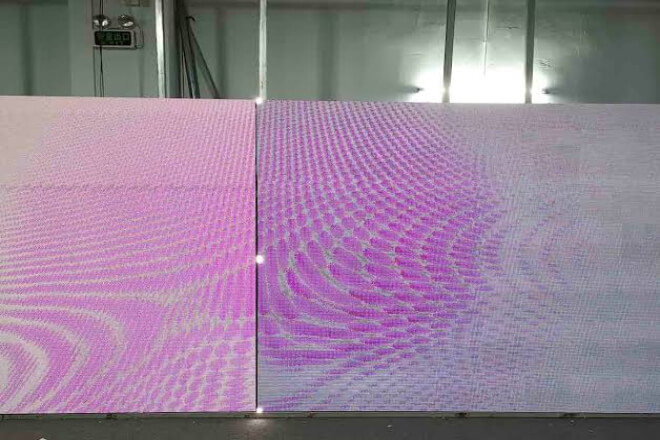
Even though the image on an LED display is clear, why does it still feel uncomfortable to watch?
Sometimes there’s flickering, ghosting, or black horizontal lines appearing in photos taken with a mobile phone. The problem might lie in an easily overlooked parameter: the frecuencia de actualización.
For enterprise buyers, the refresh rate not only affects the smoothness of the image but also impacts advertising displays, on-site photography, and long-term viewing experience.
So, just how important is the refresh rate of an Pantalla LED?
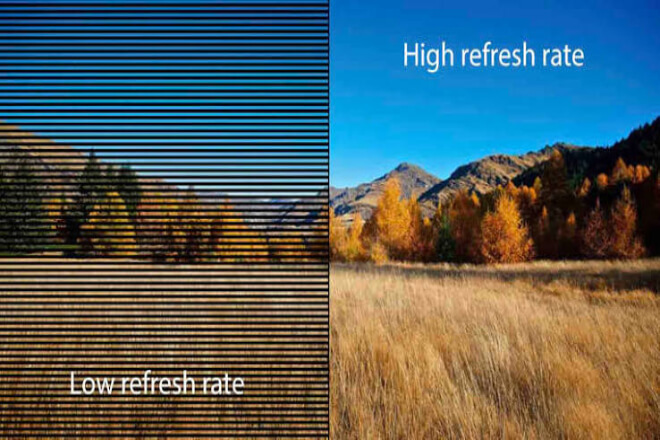
Simply put, the refresh rate refers to the number of times the Pantalla LED refreshes its image per second, usually measured in Hertz (Hz).
Por ejemplo, una frecuencia de actualización of 1920 Hz means the screen refreshes 1920 times per second.
You can think of an LED display as a rapidly flipping animated book.
Each page represents a picture, and if the page-turning speed is fast enough, the human eye can perceive continuous dynamic effects.
The refresh rate relates to the stability of the screen’s image updates and display.
It’s important to note that refresh rate is not the same as video frame rate. Frame rate refers to the number of frames per second in a video, such as 24 or 60 frames per second;
Refresh rate describes the number of times a display device refreshes the screen per second. These are different aspects and cannot be directly equated.
So, does a higher refresh rate always mean a smoother picture?
Not entirely. The video’s frame rate, signal processing capabilities, drive system, and dynamic response all affect the final result.
A high refresh rate provides better conditions for stable display, but it doesn’t add extra information to the video.
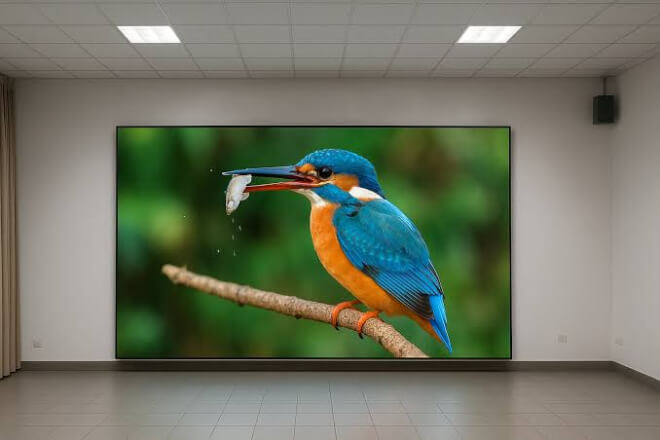
Differences in frecuencia de actualización sometimes don’t directly appear in static images, but can be noticeable in dynamic content and specific viewing environments.
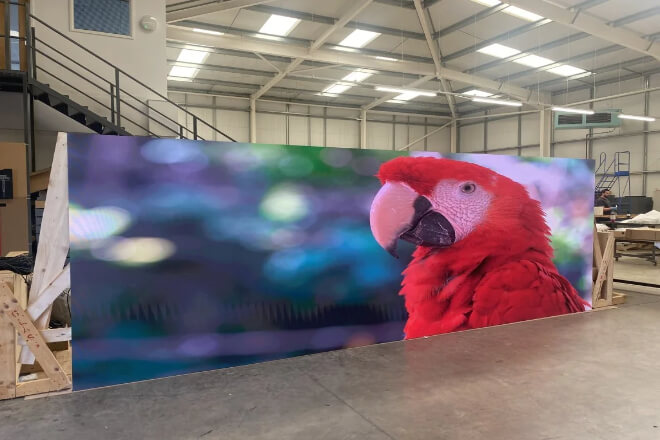
Different scenarios have different requirements for LED displays, and the value of refresh rate varies accordingly.
- Commercial advertising and brand showrooms:
Centros comerciales, car showrooms, and brand experience spaces frequently play product promotional videos and dynamic visual content.
A higher refresh rate helps improve image display stability and provides better conditions for on-site shooting, allowing brand content to appear more natural on camera.
- Deportes venues and events:
Live sports events often involve fast running, ball movement, and camera cuts.
LED displays must not only ensure stable dynamic images but also consider video frame rate, signal transmission.
And processing capabilities to avoid unsatisfactory display effects during exciting moments.
- Studios and Live broadcast spaces:
This is an application scenario with high requirements for display systems. LED background screens may need to appear in camera shots for extended periods.
So refresh rate, scanning method, and brillo adjustment must be matched with the shooting equipment.
Simply choosing a high refresh rate value will not solve all shooting problems.
- Conference rooms and control centers:
These scenarios typically require viewing text, charts, and data for extended periods.
In addition to refresh rate, attention should be paid to display stability at low brightness, grayscale performance.
And color consistency to ensure a comfortable viewing experience under different brightness conditions.
Por lo tanto, frecuencia de actualización is not an isolated technical indicator, but rather a display performance that needs to be evaluated based on the actual application scenario.

Many buyers, upon seeing product specifications, naturally assume that a higher refresh rate equates to better product performance. However, the reality is not so simple.
Primero, frecuencia de actualización needs to be considered in conjunction with other display parameters.
For example, grayscale levels determine the number of brightness levels the screen can display, the scanning method affects the display control process, and the driver chip relates to the pixel control capabilities.
If there are shortcomings in these aspects, even a high refresh rate may not guarantee the desired image quality.
Second, performance at low brillo must also be considered.
Some displays appear stable at high brightness, but when the brightness decreases, uneven grayscale, loss of detail, or flickering may occur.
Therefore, refresh performance cannot be judged solely based on a single brightness condition.
Furthermore, refresh rate must also consider actual usage requirements.
The requirements for display performance differ significantly between general information displays, commercial advertising, escenario rentals, and professional studios.
For projects requiring frequent shooting, in addition to refresh rate, image performance at different shutter speeds should also be tested.
When purchasing LED displays, businesses should prioritize real-world testing over simply focusing on specifications.
Instead, they should request suppliers to provide actual playback and shooting tests, allowing the equipment to be validated under real-world usage conditions.
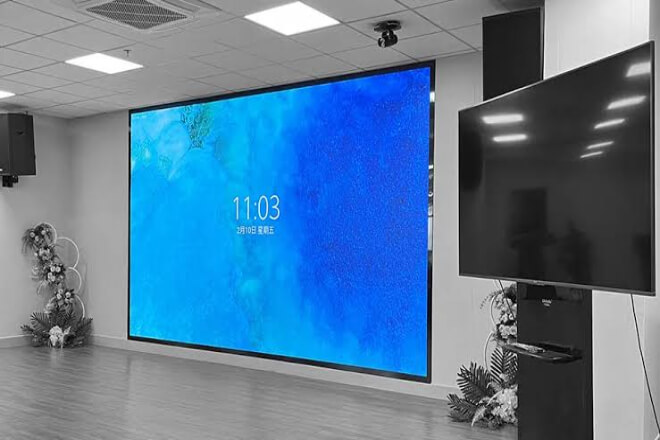
For business decision-makers, choosing the right refresh rate hinges on ensuring that technical specifications serve project needs. The following aspects deserve close attention:
First, define the primary usage scenario.
If the screen is primarily used for static information display, the focus may be on text clarity and long-term viewing experience.
If used in a studio, for live broadcasts, or large events, greater emphasis should be placed on shooting compatibility and dynamic display effects.
Second, understand the actual testing conditions for the frecuencia de actualización.
Don’t just look at the numbers on the product brochure; understand the brightness, grayscale, scanning method, and equipment configuration used during testing.
If necessary, request a live demonstration from the supplier.
Third, check the control system and driver configuration.
The refresh rate is not solely determined by the display module. The driver chip, receiver card, video processor, and control system can all affect the final display performance.
The compatibility of the entire system should be confirmed during procurement.
Fourth, conduct real-world testing.
If the project involves live streaming or filming, use actual cameras to test under different shutter speeds, brightness levels, and playback content.
For conference rooms or control centers, focus on observing low brightness, text display, and long-term operating performance.
Fifth, consider long-term operating costs.
Besides refresh rate, evaluate equipment stability, maintenance difficulty, spare parts availability, and future upgrade capabilities.
The most suitable LED display for a business doesn’t necessarily have the highest specifications, but rather the ability to stably meet project needs within the budget over the long term.


 English
 Español
 简体中文
 Français
 日本語
 한국어
 العربية