
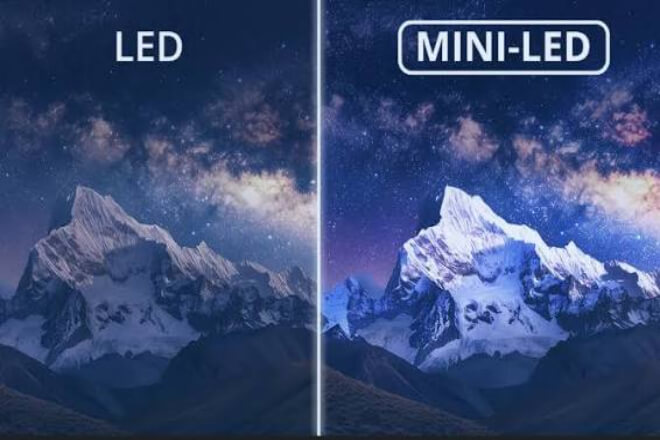
LED display technology is becoming increasingly sophisticated, ranging from ordinary commercial advertising screens to high-end conference display equipment.
With various new technologies emerging constantly. Among them, Mini LED is gradually becoming a hot technology in the market.
Some say it has higher brightness, some say it has a more delicate picture, and some believe it can completely replace traditional LED displays. So, what exactly makes Mini LED so special?
For companies planning commercial display projects, how should they choose between the two?
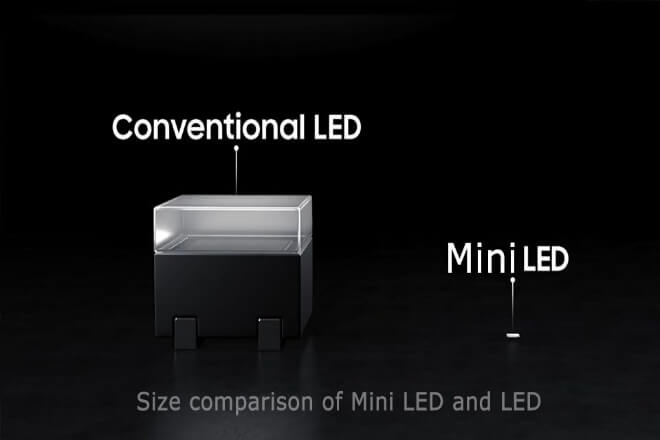
First, we need to understand one question: what are the differences between Mini LED and traditional LED?
Traditional LED displays typically use SMD (Surface Mount Device) packaging methods to encapsulate red, green, and blue light-emitting chips into individual LED beads, which are then mounted on a circuit board.
Each pixel consists of a corresponding light-emitting unit, and by controlling the brightness of different colors, a complete image is formed.
This technology has become very mature.
For example, large advertising screens in shopping malls, outdoor building facade displays, and stage background screens often use traditional LED display technology.
So, what are the differences in Mini LED?
The core characteristic of Mini LED is the use of smaller LED chips as light-emitting units. Its size typically falls between that of traditional LED displays and Micro LED displays, but the specific size range varies depending on industry definitions and product roadmaps.
It’s important to note that Mini LED primarily describes the size of the light-emitting chip, not that all Mini LED products use the same display structure.
Currently, common Mini LED products on the market can be broadly categorized into two application approaches:
First: Mini LED backlit display
This method is typically used in LCD displays.
The Mini LED chip does not directly function as pixels in the final image; instead, it acts as a backlight source, illuminating the LCD panel.
It allows for more precise division of the backlight area, enabling local dimming to control the brightness of different areas.
Second: Mini LED direct display
This method differs; the Mini LED chip directly performs the task of emitting light and forming the displayed image.
Like traditional LED direct displays, it is a self-emissive display technology, but it uses smaller light-emitting chips, providing new possibilities for higher pixel densities.
Therefore, when comparing Mini LED displays and traditional LED displays, it’s crucial to first determine whether the product uses Mini LED backlighting or a direct Mini LED display.
Their working principles differ.
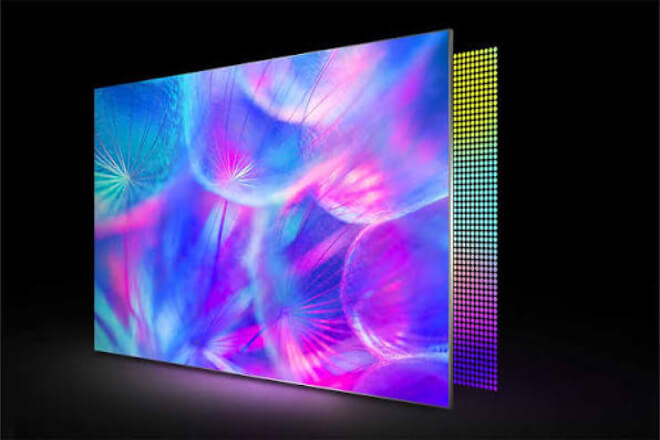
If display technology ultimately aims to solve a problem, the answer is undoubtedly related to image quality.
For commercial display projects, image clarity, color naturalness, and richness of detail in both light and shadow all significantly impact the final display effect.
Mini LED does have advantages in some aspects.
1) More precise local dimming
This is a very important feature of Mini LED backlighting technology.
Traditional LCD displays typically illuminate the entire display area through a backlight system, then use liquid crystals to control the degree of light transmission.
Mini LED backlighting, however, can divide the backlight into more independently controllable areas.
Imagine traditional backlighting as a room with only one large light, causing the entire room to brighten or dim simultaneously;
Mini LED local dimming is like dividing the room into multiple zones, each of which can be individually controlled.
For example, when a screen simultaneously displays a nighttime scene and bright city lights, Mini LED backlighting allows for more flexible brightness in different areas, thus improving the contrast between light and dark areas of the image.
2) Greater potential for contrast and shadow detail
Contrast is crucial when watching movies, cityscapes at night, and high dynamic range (HDR) videos.
Mini LED backlighting, through more precise local dimming, can help reduce backlight interference in some shadow areas, making the image appear more layered.
However, actual performance is also affected by the LCD panel type, dimming algorithm, and optical structure.
For Mini LED direct-view displays, evaluation needs to consider aspects such as the light-emitting chip, pixel pitch, and drive control;
The advantages of local dimming in backlight products cannot be directly applied.
3) Brightness performance can meet higher-brightness display needs
Mini LED backlighting products can provide high backlight brightness through a large number of miniature light sources.
This is valuable for video displays in bright environments, commercial information playback, and HDR content.
Traditional LED direct-view displays can also achieve very high brightness, especially outdoor LED advertising screens.
Therefore, it cannot be simply assumed that Mini LED is always brighter than traditional LED.
4) Color performance also depends on the overall display system
Mini LED does not automatically make colors richer.
Color gamut performance is also related to the LCD panel, color filter, color management, and display system.
Traditional LED direct-view displays can also achieve excellent color effects through high-quality light-emitting chips and calibration technology.
When purchasing, it is best to compare with real-world images, rather than just looking at the technical name.
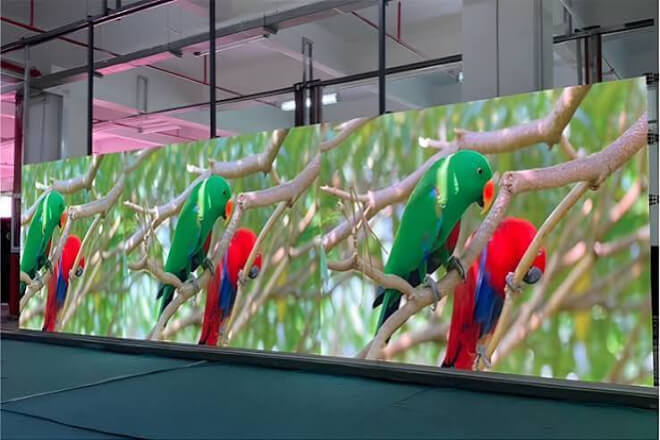
Besides image quality, companies also need to consider product stability, energy consumption, installation, and maintenance.
While these factors are not as immediately apparent as image quality, they will affect the operating costs of the project over the next few years.
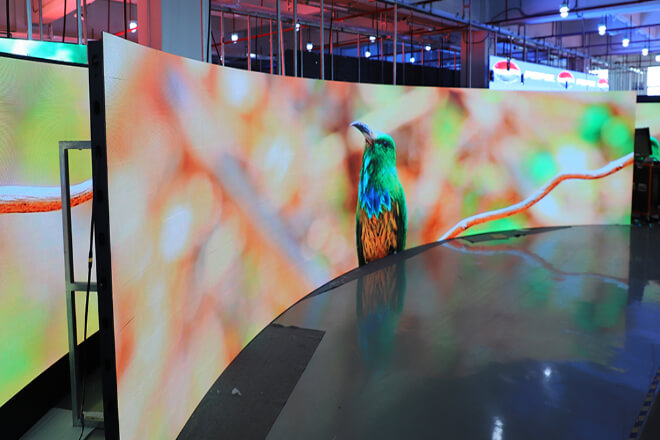
There is no absolute good or bad technology, only suitability.
Comparing Mini LED and traditional LED in different commercial projects makes their value easier to understand.
1) High-end conference rooms:
High-end conference rooms typically require displaying text, data, product images, and high-definition videos.
Using Mini LED backlit displays provides better brightness and contrast control.
If the project requires a large, seamless splicing display wall, then Mini LED direct-view displays and traditional small-pitch LED displays should be compared.
The final choice depends on screen size, viewing distance, and budget.
2) Commercial showrooms:
For example, automotive brand showrooms need to display vehicle details, exteriors, and dynamic videos.
Using Mini LED backlit displays can highlight the brightness and contrast of high dynamic range content.
If creating a large display wall or irregularly shaped display space, LED direct-view displays may be more flexible.
3) Outdoor advertising:
Outdoor advertising screens typically require large display areas, high brightness, and good environmental adaptability.
Traditional outdoor LED displays have a mature product system, allowing for selection of different protection levels and brightness configurations based on the installation environment.
Mini LED backlit displays are generally not a direct replacement for these large-scale outdoor advertising projects.
4) Broadcast studios:
Broadcast studios need to consider not only the live viewing experience but also the image performance during camera shooting.
Mini LED backlit displays can be used for some monitoring and high-quality video display scenarios.
If a large LED backdrop needs to be built, the refresh rate, grayscale, color, and actual shooting effects of the direct-lit displays should be carefully compared.
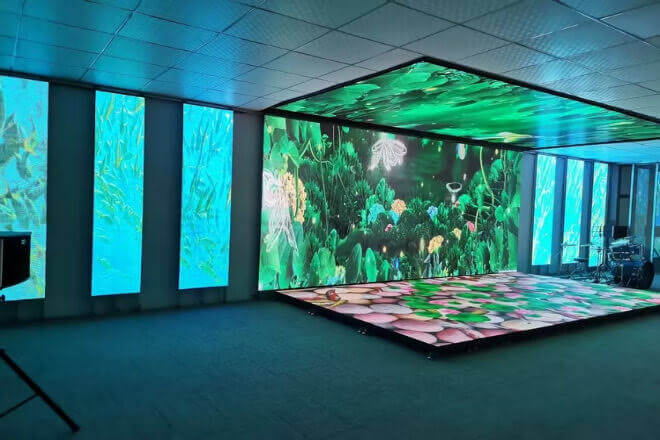
5) Digital art spaces:
Immersive digital art spaces typically require large screen areas, dynamic images, and flexible spatial design.
Traditional LED direct-lit displays have extensive application experience in these projects.
Mini LED direct-lit displays can also be a technology option for high pixel density projects, but product maturity, installation structure, and overall budget need to be considered.
Having understood the differences between the two technologies, we must ultimately return to the purchasing decision.
If the project requires high-quality LCD displays and fine-tuned local dimming, Mini LED backlighting products can be considered.
If a large, seamless commercial display wall is needed, the focus should be on comparing Mini LED direct-view displays and traditional LED direct-view displays, rather than conflating them with Mini LED backlighting products.


 English
 Español
 简体中文
 Français
 日本語
 한국어
 العربية