

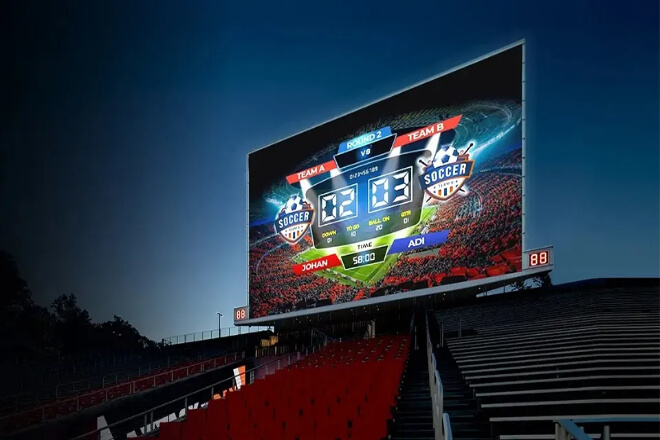
At a large-scale sporting event, spectators see more than just players and the game; every LED screen in the venue is a window for brand communication.
Primero, pantallas led can cover the line of sight of both the live audience and viewers watching the broadcast.
Compared to traditional static billboards, LED screens can display dynamic images, making the content more noticeable and easier to spread through live broadcasts.
For example, in a football match, the LED advertising screens on the sidelines continuously display sponsor brands.
As the camera follows the game, these brand images repeatedly appear before a global audience, reaching far more than just the tens of thousands of people at the stadium.
Second, LED screens allow sponsors more flexible display methods. Brands are no longer just displaying a fixed logo;
They can now play different content depending on the stage of the game, such as pre-game promotions, goal celebration animations, and interactive activities.
For example, during timeouts in a basketball game, LED screens can play interactive brand games, encouraging audience participation and integrating the brand with the event’s atmosphere.
Furthermore, LED screens create high-frequency exposure scenarios. Brand content can be continuously displayed before the game starts, during timeouts, after exciting moments, and even during audience entry and exit.
For event organizers, this continuous exposure enhances commercial appeal, attracting more brands to sponsor the event.
In short, LED screens transform the event from simply “having people watch” into a platform for continuously disseminating brand value.
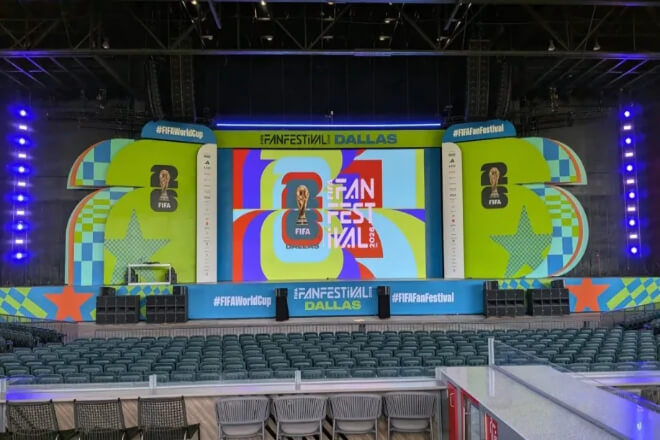
En sporting events, advertisements that are merely displayed are easily overlooked by the audience. But LED displays change this: advertisements can “move” along with the game.
First, LED screens allow brand displays to go beyond just a fixed logo. Dynamic images, videos, and animations make brand content more engaging.
For example, during a football match, the LED screens on the sidelines don’t just display car brand names;
They play dynamic footage of a car driving through a city skyline at night. Even if viewers aren’t specifically looking for the ads, the changing visuals will leave an impression.
Secondly, LED screens can adjust their advertising content according to the pace of the game. As the audience’s emotions shift at different stages of the match, the ads can appear in different ways.
For example, before the match, the LED screens can play brand promotional videos; during halftime, they can showcase promotional offers;
And after a team scores a goal, the screens can incorporate brand elements into the celebration animation, instantly linking sponsors and the game.
Furthermore, LED screens can make advertising more interactive. Some sporting events now use large screens to launch polls, mini-games, or on-site challenges, allowing viewers to participate rather than just “watch ads.”
For example, during a basketball game pause, the large screens can launch a “three-point challenge,” allowing viewers to participate by scanning a QR code, thus making the brand memorable through interaction.
For sponsors, this exposure value is even higher. A single Pantalla LED faces tens of thousands of spectators at the stadium and also appears before a global audience through live broadcasts, effectively achieving multi-scenario dissemination with a single investment.
In short: LED screens transform sports advertising from “a sign on the sidelines” into a brand stage that creates memories alongside the game.
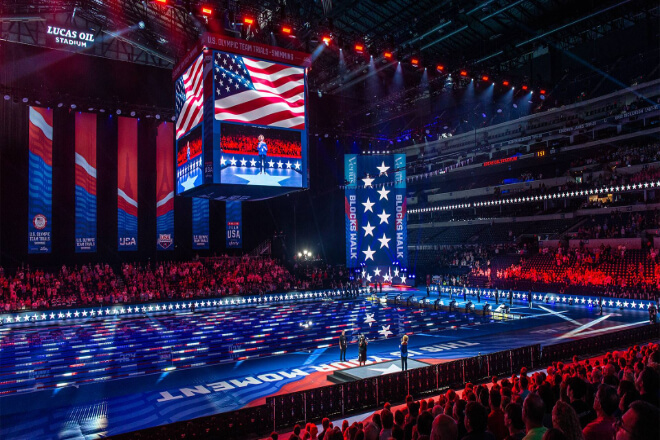
Many people’s attention isn’t just on the score during a match. What they eat, buy, and participate in throughout the event also contributes to the venue’s revenue.
LED displays act as an “on-site consumption guide.”
First, LED screens can showcase merchandise and event information. After entering the venue, spectators can learn about team merchandise, souvenirs, limited-edition events, etc., attracting those who were previously unaware of these items.
For example, before a football match, an LED screen might display information like “Limited-edition jerseys for this match are on sale” or “Fan souvenir area open,” prompting many fans to purchase a souvenir.
Second, pantallas led can also guide spectators to participate in on-site interactive activities. Compared to simply waiting for the match to start.
Interactive content allows spectators to immerse themselves in the event atmosphere beforehand, increasing the opportunity for consumption.
For example, a fan challenge zone can be set up in the stadium, with LED screens displaying participation methods and rankings in real time.
After playing the games, spectators might then purchase drinks, souvenirs, or participate in other activities.
Simultaneously, LED screens can also promote the stadium’s catering and commercial services.
During the match, spectators may not know where restaurants or hot food are located, but LED displays can provide timely reminders.
For example, during halftime, a screen displaying “New set meals added to the North Zone catering area” or “Enjoy limited-time discounts with your ticket” can guide spectators from their seats to the consumption area.
Ultimately, it extends the spectator’s consumption path.
Previously, it might have been “buy a ticket → watch the match → leave,” but now it can become “buy a ticket → interact → shop → eat → share,” connecting the event experience with commercial revenue.
In short: LED screens not only allow spectators to see the game but also make it easier for them to discover more consumer experiences within the stadium.
For a large-scale event, the tens of thousands of people on-site are only the “first scene,” while the actual viewers are likely hundreds of millions worldwide.
LED displays play a crucial role in bringing the stadium atmosphere to the live broadcast.
Primero, pantallas led appear on camera alongside the live broadcast. Brand content on the LED advertising screens around the field and the screens surrounding the stadium isn’t just for the spectators; it gets seen by a wider audience through the broadcast.
For example, in a football match, when the camera pans across a player celebrating a goal, the LED advertising screen behind them also appears in the frame.
Viewers focus on the goal, but the brand is subtly getting exposure.
Second, LED screens enhance the live broadcast’s atmosphere.
Scores, team logos, entrance animations, and interactive content can all be displayed on LED screens, allowing viewers at home to experience the atmosphere of the event.
For example, before the final, stadium LED screens display a countdown, team introductions, and themed animations.
Combined with lighting effects, making even those watching from home feel the excitement of the event.
Furthermore, LED screens help generate more promotional material for the event.
Highlights, interactive elements, and audience reactions can all be displayed on large screens and then further disseminated through the live broadcast and social media.
For instance, if a player scores a winning goal, the LED screens simultaneously display the celebration, which could easily become a popular clip in post-match short videos.
In short: LED screens not only “display content” in stadiums, but also help events deliver the atmosphere, brand exposure, and exciting moments to a global audience.
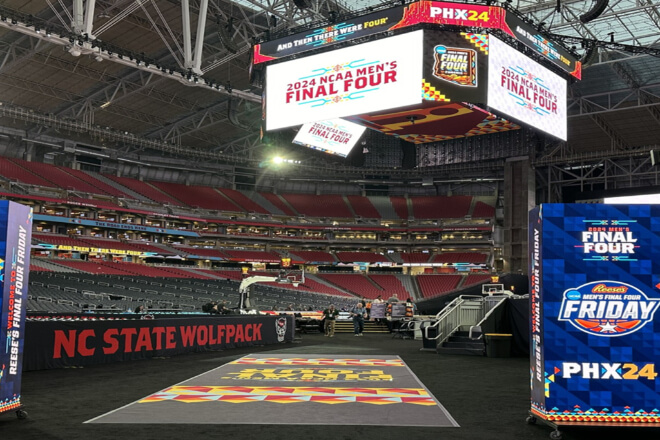
The end of a match doesn’t mean the end of the event’s value. Truly mature events find ways to maintain a continuous connection between the venue, the brand, and the audience, and LED displays are a crucial tool in this process.
First, LED screens help events cultivate a unique visual brand image. The logo, theme animation, entrance visuals, and lighting effects of each event can all be presented through an LED system, gradually forming “event symbols” in the audience’s memory.
For example, in international events like the World Cup and the Olympics, the visual design of each opening ceremony and award ceremony becomes part of the event’s brand. Years later, audiences remember not only the results but also those iconic moments.
Second, LED screens also enhance the long-term operational value of venues. In the past, stadiums might only generate revenue on the day of the match.
But with a sophisticated LED system, venues can host concerts, exhibiciones, commercial events, and other diverse activities.
For example, even on days without matches, a football stadium can use its LED screens to host brand launches, music events, or city activities, allowing the venue to continuously generate value.
Furthermore, LED screens support more diverse business collaborations.
Beyond traditional advertising space, brands can participate in events through interactive content, themed activities, and digital displays, enriching the forms of cooperation.
For instance, a car brand sponsoring an event can do more than just purchase sideline advertising;
It can also showcase new product interactive content on LED screens and even create exclusive fan events, enhancing brand engagement.
Ultimately, LED screens help events generate more than just one-time advertising revenue; they help create a long-term operational model.
Event brands, venue resources, sponsors, and audience experiences can be continuously connected, bringing more stable commercial returns.
Simply put: LED screens transform events from “a single match” into a commercial platform that can be continuously operated and generate value.


 English
  Español
  简体中文
简体中文  Français
  日本語
日本語  한국어
한국어  العربية