

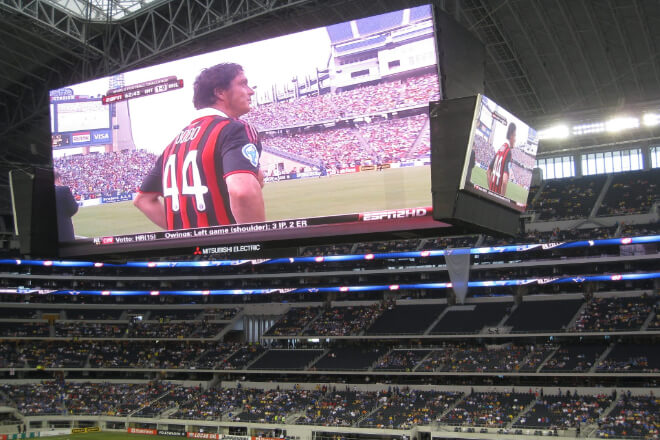
At large sporting events, the main screen is essentially the “visual centre” of the entire stadium.
It solves a simple problem: ensuring that spectators sitting at a distance can clearly see the game and keep up with the pace.
First, the main screen plays live broadcasts and highlight reels. Often, while spectators can see the game unfolding, the distance makes details unclear. The LED main screen can then magnify key moments.
For example, in a football match, when a player makes a brilliant shot, the main screen immediately replays the shot in slow motion.
Allowing the entire audience to see the shooting angle, the player’s movement, and the moment of the goal again.
Secondly, the main screen is also the central display area for event information.
Scores, match times, player data, and statistics are updated in real time, eliminating the need for viewers to wait for live commentary.
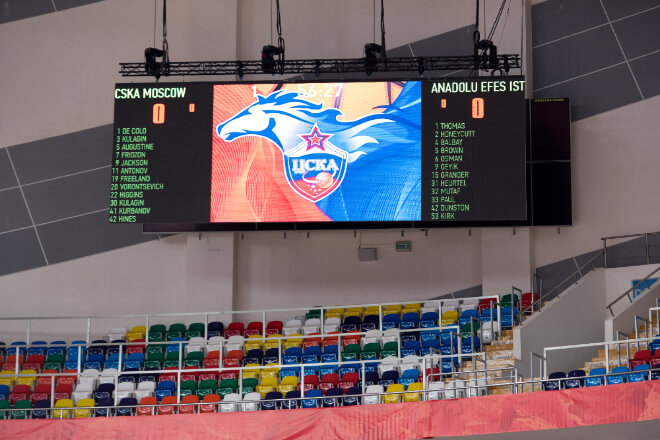
For example, in the final minutes of a basketball game, the main screen displays the score, number of fouls, and remaining time, allowing viewers to intuitively feel the tension of the game.
Furthermore, the main screen plays a crucial role in creating the atmosphere of the event.
Opening countdowns, team entrance animations, and event promotional videos are all displayed on the large LED screen, getting the game into action before it even begins.
For example, in major events like the World Cup and the Olympics, the pre-match visual show on the main screen is often combined with lighting and music to build anticipation throughout the stadium.
In short: the LED main screen is not just a device for displaying images, but a core component that makes the game “clear, understandable, and more exciting.”
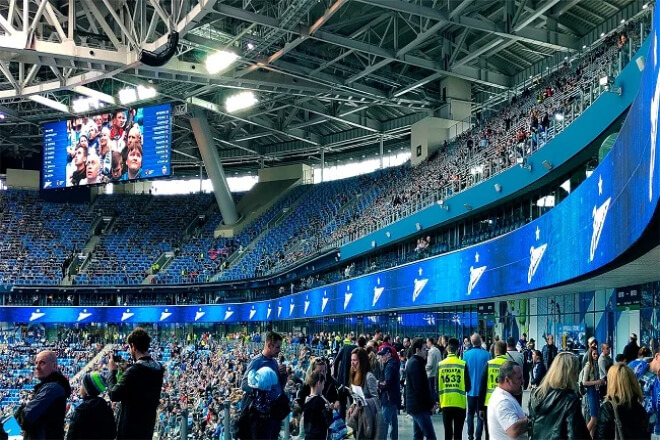
In large stadiums, the circumferential LED screens serve more than just “displaying advertisements”; they act as a dynamic display area connecting the game, the audience, and the brand.
Firstly, the circumferential screens can play event-related content in real time.
For example, score changes, player information, goal animations, and match prompts can be quickly switched according to the situation on-site.
Allowing spectators, even those seated to the side or at a distance, to feel the rhythm of the game.
For instance, in a football match, after a goal, the pantallas LED around the field can immediately switch to celebration animations, amplifying the atmosphere in sync with the cheers.
Secondly, the LED displays around the field create a more unified visual effect for the stadium.
Compared to traditional static billboards, LED displays can play dynamic images, adjusting content to different stages such as the opening, timeouts, and award ceremonies, keeping the entire stadium constantly vibrant.
For example, when players enter the field, the displays show team logos, themed animations, and welcome messages, allowing spectators to immediately feel the atmosphere of the event upon entering.
Furthermore, the displays are an important component of the event’s commercial operations.
They can switch between sponsor advertisements, brand promotions, and event information according to different time periods, making advertising displays more flexible.
For example, in major events such as the World Cup and the Champions League, the LED advertising screens on the sidelines will rotate different brand content according to the escenario of the match.
And these images will be seen by a global audience through live broadcasts, bringing greater exposure to sponsors.
In short: The stadium-wide LED display screen serves as both a visual tool to enhance the atmosphere and a crucial platform for increasing the commercial value of the event.
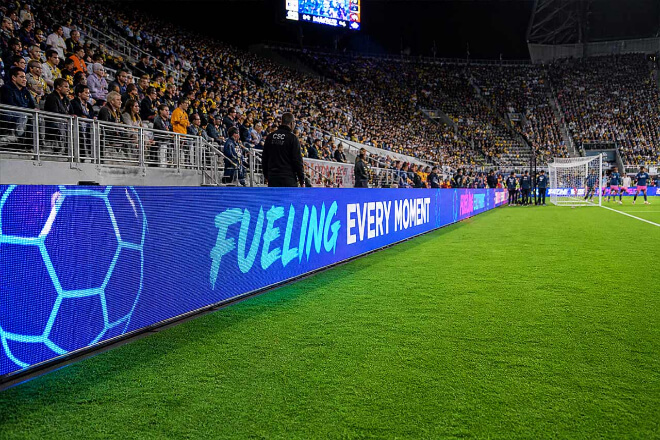
If the main screen is responsible for letting the audience “watch the game,” then the sideline LED display screens are more like “information assistants” at the match.
It may not be the most eye-catching screen in the stadium, but it’s indispensable at many crucial moments.
First, the perimeter pantallas LED can quickly display player information and match updates.
Player substitutions, number information, match reminders, technical data, etc., can all be updated promptly as the game progresses.
For example, in a football match, after the referee raises the board to make a substitution, the perimeter LED screen immediately displays “Number 7 off, Number 18 on,” so the audience doesn’t have to guess and won’t miss any changes on the field.
Second, it helps the audience understand the details of the game more quickly.
Beyond the score, many other pieces of information are also important, such as player statistics, number of fouls, and match stages.
Displaying this information on an LED screen is more intuitive than live commentary.
For example, in a basketball game entering the final minute, the perimeter LED displays simultaneously show the number of timeouts, fouls, and score difference for each team, making it easier for spectators to feel the tension of the game.
Furthermore, perimeter LED displays make the event appear more professional.
In large-scale events, every aspect, from the score system to the on-site display, needs to be synchronised quickly and accurately, and LED displays are a crucial component of this.
Simply put: perimeter LED displays act as a “real-time information manager” at the game, ensuring that players, referees, and spectators can keep up with the pace of the game.
The audience experience for a large-scale event begins the moment they enter the venue.
Besides the game itself, the ability to quickly find the entrance and understand the event schedule also affects the overall experience.
LED displays at entrances and in public areas are important tools to help spectators “less get lost and less wait.”
Firstly, they can display event schedules and venue directions.
For example, game times, entrance locations, seating areas, and ticket information can all be displayed in real-time on LED screens, allowing first-time visitors to quickly find their way.
For international events like the World Cup or the Olympics, large screens at stadium entrances display information such as different entrance areas.
Security procedures, and match times, preventing large crowds from standing around asking for directions.
En segundo lugar, pantallas LED can also showcase event promotions and on-site service information.
Besides match content, they can play match previews, information on peripheral activities, souvenir sales.
And dining areas, allowing spectators to learn about the various services available in the venue beforehand.
For example, if spectators arrive half an hour early, the entrance LED display will announce, “Pre-match interactive activities will begin in the East Plaza,” encouraging many to participate instead of waiting in their seats.
Simultaneously, in the waiting areas, LED displays can alleviate boredom during waits.
Playing highlights, athlete introductions, and match clips allows spectators to immerse themselves in the match atmosphere from the moment they enter.
In short: entrance and public area LED displays not only provide information but also help spectators enter the event experience from the moment they arrive at the venue.
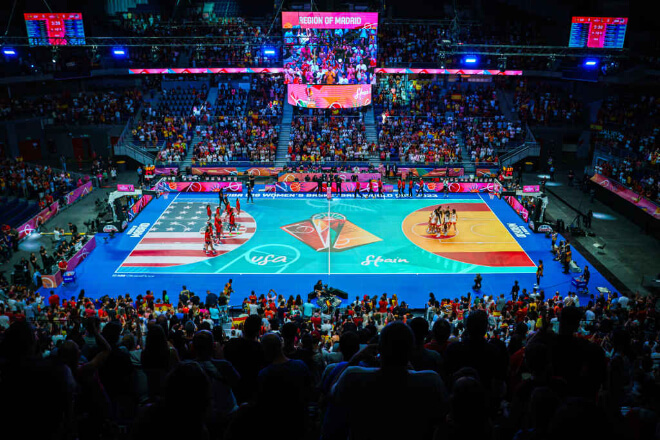
Modern Deportes venues are no longer just places to “watch a match.” Many venues are starting to consider: can they leave a lasting impression on visitors, both before and after they leave?
This is where specialised LED displays, such as pantallas LED de suelo y pantallas LED transparentes, come in.
First, LED displays are no longer just large “TVs” mounted on the wall; they can be integrated into the entire space. For example, entrance floors, corridor glass, and rest areas can all become part of the displayed content.
Imagine this scenario: fans walk into the stadium, and the floor LED screens under their feet suddenly light up, displaying team logos, grass textures.
And even “energy ripples” following their footsteps—it feels like entering a ritualistic entrance to the game.
Second, specialised LED displays can create more interactive experiences. Transparent LED screens and interactive screens can not only display images but also connect with the audience.
For example, an interactive LED screen at the entrance of a basketball arena can automatically generate a “virtual player avatar” when a fan stands on it.
Even simulating a shooting motion. Many passersby will stop to try it out and take a video to share on social media.
Furthermore, some large stadiums utilise LED displays to create nighttime visual effects.
When there are no matches, the entire building can display team-themed animations and city cultural content, transforming the stadium from a mere “match venue” into a popular urban landmark.
Simultaneously, these distinctive LED displays enhance the venue’s brand value.
A technologically advanced and interactive venue is more likely to attract major sporting events, commercial activities, and even tourists.
Simply put: distinctive LED displays transform a stadium from a “place to watch games” into an experiential space that makes you want to take photos and share them.


 English
  Español
  简体中文
简体中文  Français
  日本語
日本語  한국어
한국어  العربية