
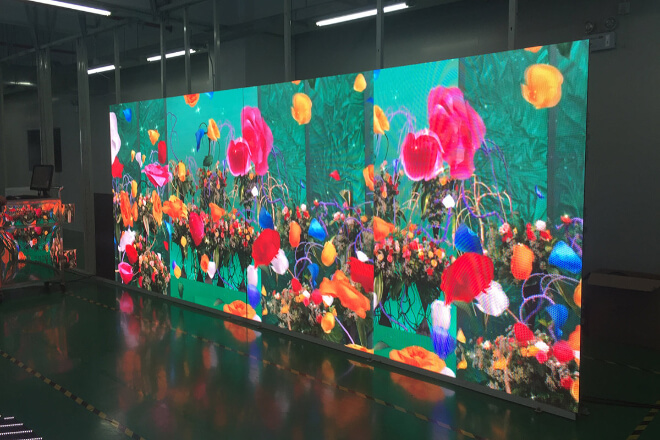
When purchasing pantallas LED, companies typically compare price, brillo, frecuencia de actualización, and display quality. However, one easily overlooked factor is the warranty period.
Faced with products of similar configuration, one supplier offers a two-year warranty, while another offers a three-year warranty.
Which should you choose? Does a longer warranty period necessarily mean more reliable equipment?
In fact, the warranty period not only relates to after-sales service but also affects a company’s procurement costs, operational risks, and long-term return on investment.
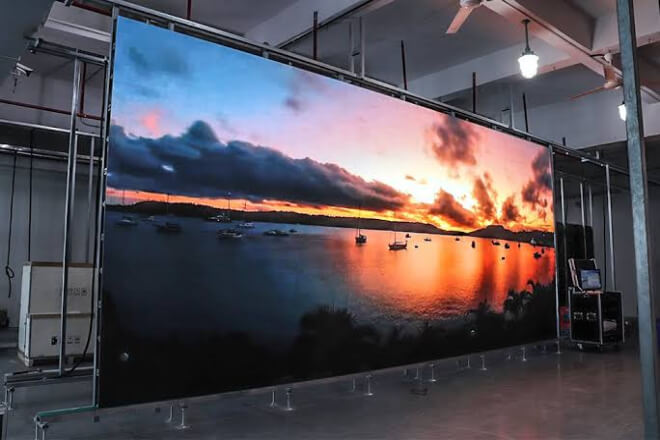
For businesses, purchasing an LED display is not a simple equipment purchase but an investment requiring long-term operation.
Imagine a centro comercial installing a large LED advertising screen, continuously playing brand advertisements from morning to night.
If, after a year of use, the equipment experiences partial blackouts, color anomalies, or power failures, not only will repairs be necessary.
But advertising playback and business activities may also be affected. In this case, warranty service becomes extremely important.
A reasonable warranty period for LED displays can help companies reduce maintenance costs due to equipment failures and minimize the impact of unexpected problems on normal operations.
The following types of projects, in particular, require careful attention to warranty terms:
Commercial advertising screens: Equipment downtime can affect advertising placement and revenue.
Deportes stadium displays: Malfunctions during competitions can impact the audience experience and event operations.
Corporate conference room displays: Equipment stability directly affects meetings, training sessions, and daily communication.
Pantallas LED para exteriores: Long-term exposure to sunlight, rain, and temperature fluctuations places higher demands on product reliability.
Therefore, the warranty period is not just a figure of speech in the contract, but a crucial basis for companies to assess procurement risks.
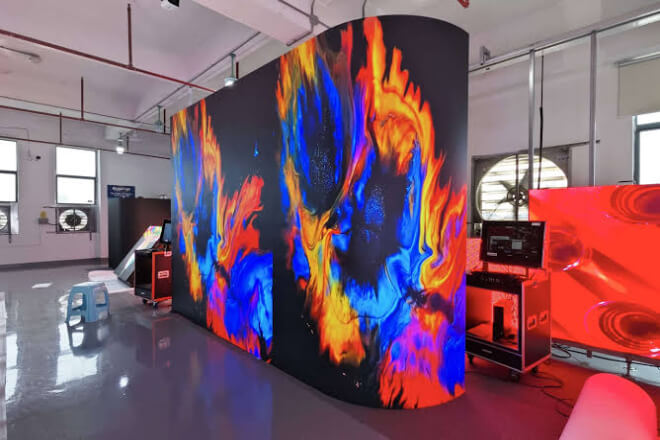
Seeing suppliers promising three, five, or even longer warranties, many procurement personnel might think: This supplier is more reliable!
But don’t jump to conclusions. A longer warranty period does not necessarily mean better after-sales service.
First, companies need to understand which components the warranty covers.
LED displays typically consist of LED chips, driver ICs, fuentes de alimentación, control systems, modules, and cabinets. Warranty coverage may vary between suppliers.
Some only cover major display components, while others offer more comprehensive system-wide coverage.
Secondly, it’s important to pay attention to what situations are excluded from free repairs.
For example, malfunctions caused by improper installation, external force damage, operational errors, or force majeure may not be covered by the standard warranty.
For outdoor projects, it’s also crucial to clarify the responsibility allocation for situations such as water ingress, lightning strikes, and abnormal power supply.
Furthermore, the warranty period does not equate to repair response speed.
For example, if two suppliers offer a three-year warranty, one might provide timely technical support and replacement parts.
While the other might require a longer wait time to resolve issues, resulting in a significantly different user experience.
A truly valuable warranty is not just about a longer duration, but about clear coverage, well-defined responsibilities, and reliable service.
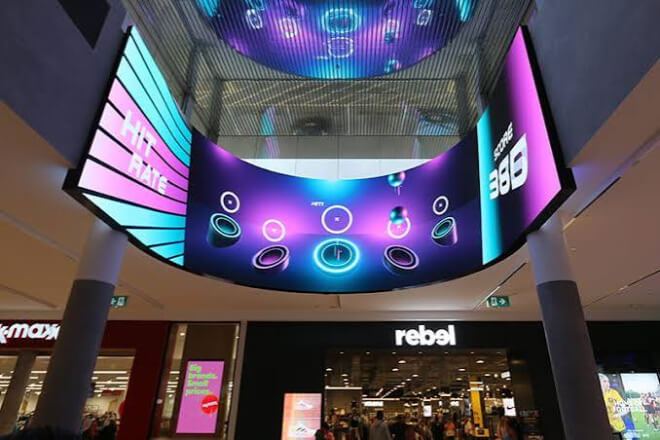
Instead of simply asking the supplier how many years of warranty they offer, it’s more important to thoroughly understand the specific details of the contract. The following aspects deserve close scrutiny.
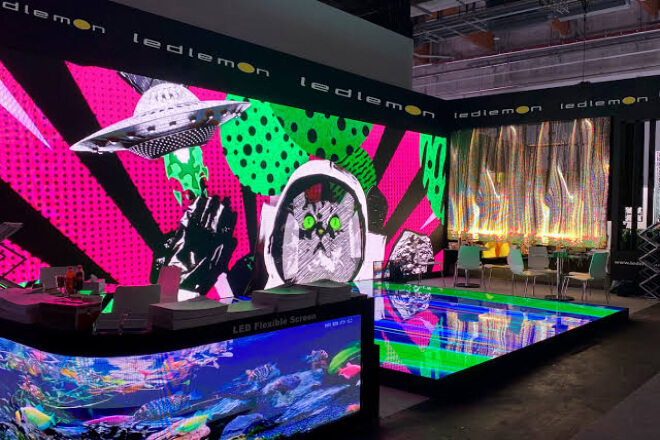
Not all LED display projects require the exact same warranty plan.
The installation environment, usage frequency, and commercial value of the equipment vary, and the key areas of protection that companies focus on will also differ.
- Outdoor advertising projects:
Pantallas LED para exteriores are exposed to sunlight, rain, dust, and temperature changes over long periods.
Companies should focus on understanding the warranty conditions for waterproof and dustproof design, enclosure protection, power supply systems, and related components.
In particular, it is important to confirm how the supplier defines liability in the event of a failure caused by environmental factors.
- Deportes venue projects:
During events, the display may be used for score display, advertising, and on-site interaction. Equipment failure not only affects the visuals but may also disrupt event scheduling.
Therefore, in addition to the warranty period, the emergency repair response, spare parts supply, and on-site technical support capabilities should be carefully examined.
- Corporate conference room projects:
Conference room LED displays typically handle daily meetings, training sessions, and remote communication.
Enterprises should focus on the ease of module replacement, the stability of the control system, and the supplier’s ability to provide continuous technical support.
For leased LED display projects: Greater emphasis should be placed on warranty coverage after high-frequency use.
Leased screens frequently require disassembly, transportation, and reuse, potentially placing higher demands on cabinet connections, power interfaces, and structural components.
During procurement, special attention should be paid to the quality assurance of relevant components and the allocation of responsibility between human-caused damage and normal usage malfunctions.
Therefore, warranty plans should be tailored to the actual application scenario, rather than simply pursuing a longer service life.
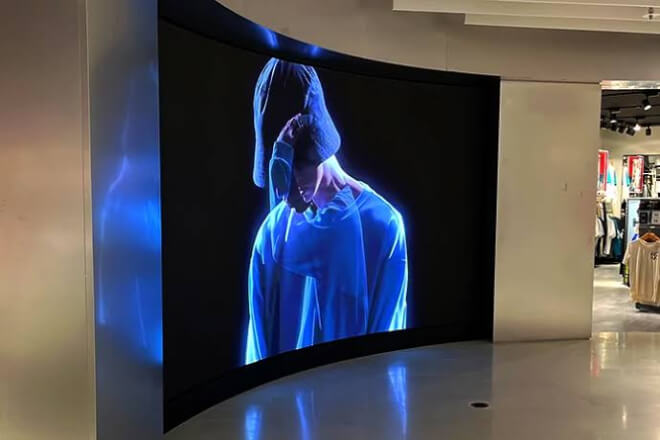
If two suppliers have similar product configurations and prices, warranty service can often help enterprises further determine which supplier is more worthwhile to cooperate with.
However, warranty is only one dimension for evaluating suppliers; the following capabilities should also be considered comprehensively:
Product quality control: Does the supplier possess a complete production testing, aging test, and factory inspection process?
After-sales service capability: Does the supplier have a professional technical team capable of promptly handling equipment malfunctions?
Spare parts supply capability: Can the supplier continuously provide commonly used accessories such as modules, fuentes de alimentación, and driver ICs?
Project experience: Do you have experience delivering similar applications? Can you provide reasonable maintenance advice?
Long-term cooperation capability: After the warranty expires, can you still provide repair, technical consultation, and parts support?
Companies can also request suppliers to provide written warranty policies, service procedures.
And troubleshooting instructions to avoid making grand promises at the time of purchase but lacking clear guidelines when service is actually needed.
For example, suppose two suppliers offer LED displays at similar prices. One promises a longer warranty but lacks a clear on-site service and spare parts policy;
The other has a shorter warranty but provides a clear repair process, technical support, and long-term spare parts support.
For commercial projects requiring continuous operation, the latter may be a more reliable choice.
Purchasing an LED display is not just about buying the equipment itself, but also about the supplier’s ability to provide continuous support over the next few years.


 English
 Español
 简体中文
 Français
 日本語
 한국어
 العربية