
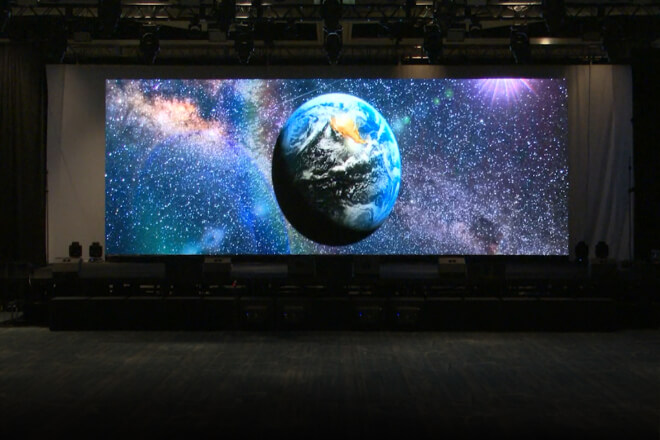
In the past, LED displays were largely seen as “a screen that emits light.”
But today, they are far more than just display tools; they play an increasingly important role in commerce, sports, urban spaces, and even digital experiences.
As technology continues to upgrade, the industry is answering the question: Where will LED显示屏 go next?
In the question of “what are the future directions for the LED display industry?”, greater energy efficiency is undoubtedly a crucial direction.
Because in the future, the competition will not only be about “display quality,” but also “who can save more electricity.”
First, low-power technology will become a key focus of industry upgrades.
For example, more energy-efficient LED chips, high-efficiency driver ICs, and intelligent dimming systems will become increasingly widespread.
Simply put, it’s about upgrading the screen from simply “being able to light up” to “being both bright and energy-efficient.”
Second, helping customers reduce long-term operating costs will become a core competitive advantage. 例如, 购物中心 advertising screen might not seem like much for 12 hours a day.
But over a year, the difference in electricity costs will be significant. For chain stores with dozens of screens, the savings might not just be a few kilowatt-hours of electricity, but a substantial amount of operating costs.
Meanwhile, the green and environmentally friendly trend will drive the industry to continuously move towards energy conservation.
Many government and corporate projects are now increasingly focused on “low carbon” and “sustainability.”
In the future, an LED display screen will not only need to display well, but may also need to answer the question: “Are you environmentally friendly enough?”
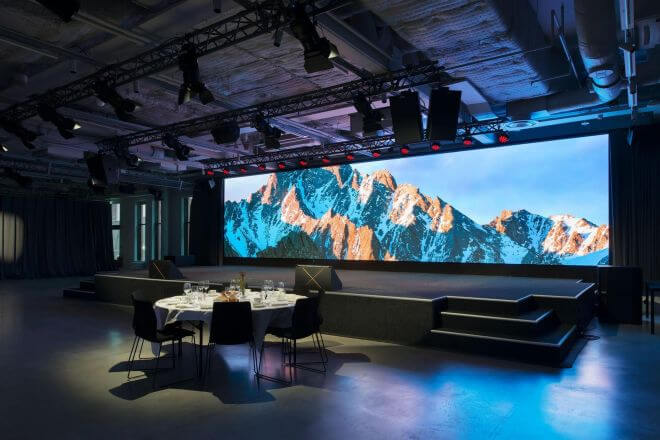
The LED display screen of the future will not just be “a screen that lights up,” but will increasingly resemble a “thinking device”—capable of self-management, providing alerts, and even “predicting potential problems.”
First, remote control and intelligent management will become increasingly widespread. Previously, updating content might have required going to the site and inserting a USB drive.
Now, through a cloud platform, managers can complete content publishing, brightness adjustment, and power on/off control from their office or even their mobile phones.
Simply put, managing the screen will increasingly resemble “managing your social media feed”—a few clicks and it’s done.
Second, intelligent monitoring and fault warnings will reduce the risk of downtime. For example, if a power supply temperature is abnormal.
Or the 亮度 of a module begins to drop, the system can issue an early warning, instead of waiting until the entire screen goes black to discover the problem.
This “early warning” can turn many unexpected failures into “planned handling.”
At the same time, it reduces the burden of manual maintenance and improves operational efficiency.
Previously, after-sales teams might have relied on “human intervention to find problems,” but in the future, the system will “tell you where the problem is.”
Repair personnel will even know which module and 电源 needs to be addressed when they arrive on-site, naturally leading to higher efficiency and less manpower consumption.
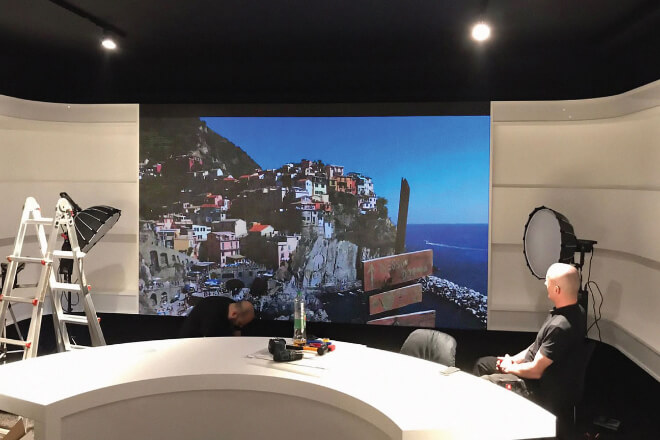
Previously, LED displays were more like “standard answers”: square and rectangular, they looked similar wherever they were installed.
But now and in the future, they are increasingly like “custom-made clothing”—the same thing can be completely transformed according to the scenario.
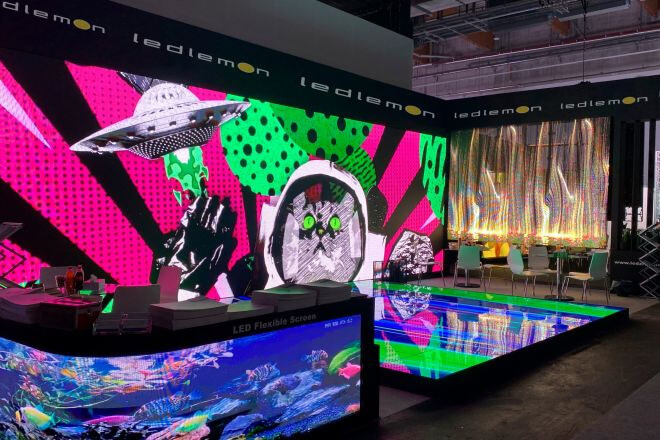
Firstly, the increasing demand for indoor, outdoor, and irregularly shaped scenarios is making the screen’s form increasingly “deformable.”
例如, 购物广场 will no longer just hang a large square screen, but may instead use curved, column-wrapped screens.
在 展览 halls, LED screens might be designed as circular displays, enveloping visitors in a visually stunning panorama. Even 阶段 screens could be height-adjustable and modular dynamic displays.
For example, in cultural tourism projects, some scenic spots use LED screens shaped like waterfalls, where the flowing images resemble real water cascading down.
Easily attracting passersby to stop and take photos—the screens are no longer just displays but have become “part of the attraction.”
Secondly, customized solutions will become increasingly common. For instance, among shopping mall clients, one might want an interactive screen for a festive atmosphere.
Another for a brand advertising corridor, and yet another for a transparent window display. While all appear to be LED screens, they represent three completely different applications.
Simultaneously, the diverse needs of different industries will drive screens to become increasingly flexible.
Stadiums require real-time scores and atmosphere, conference rooms need clear, stable visuals and low interference.
And exhibitions need visual impact and immersive experiences. Screens that still “look the same” are simply insufficient.
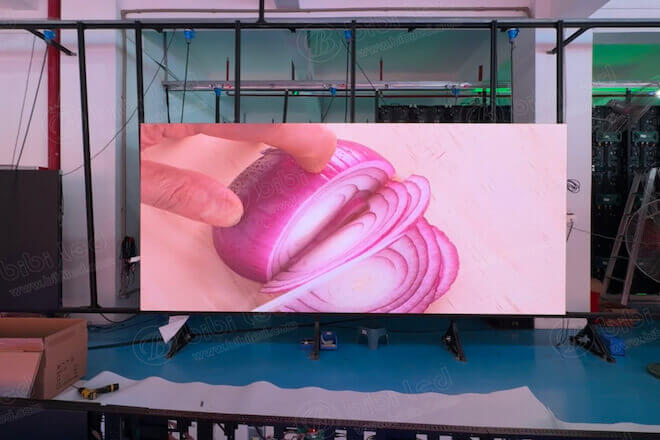
If the previous LED displays solved the problem of “being able to see,” the future goal is to solve the problem of seeing clearly, enjoying the viewing experience.
And seeing a high-end image. High definition will increasingly become a fundamental requirement for the industry.
First, fine-pitch and high-definition displays will continue to improve. For example, from conference rooms to 购物中心 atriums and high-end showrooms, more and more scenarios are pursuing “finer pixels and smoother images.”
For example, previously, a screen appeared as a “picture” from a distance, but as a “dot matrix” up close.
In the future, a screen will appear as a “complete high-definition picture” both from a distance and up close.
Second, high-definition effects will directly enhance brand presentation. For example, when luxury stores use LED screens to display new products, if the image is not detailed enough, the perceived quality will be compromised.
However, if the image is clear enough, even reproducing fabric textures and light and shadow details, the brand’s “premium” image will be directly amplified.
At the same time, the high-end market will have increasingly higher requirements for image quality.
In high-end commercial complexes, brand launches, and car showrooms, the focus has shifted from simply “playing videos” to achieving “television-like sophistication, even surpassing the impact of television.”
Whoever produces the most detailed visuals is more likely to secure high-end projects.
For example, at a car launch, if a new car is displayed on a large LED screen, the high-definition screen can realistically depict the car’s paint reflections, interior details.
And the flow of light, giving viewers the feeling that “the car is right in front of them.” This experience itself is part of the commercial value.
In the past, buying an LED display screen was like “buying a home appliance”—choosing a model, comparing prices, placing an order, and installation was the end of it.
But the future trend is shifting: customers will no longer buy just a screen, but a complete “system that can operate stably for a long time.”
Firstly, the industry is moving from single products to systemic services. For example, a screen is no longer an isolated entity but works in conjunction with a control system, playback system, and signal processing system.
例如,在一个 运动的 stadium, score display, replay system, and advertising switching form a complete, interconnected system, not just a single screen “performing.”
Secondly, end-to-end support, from installation and debugging to control and after-sales service, is becoming increasingly important.
Previously, it might have been an “install and go” approach; now, customers are more concerned with:
Is there anyone to maintain the system afterward?
How long does it take to respond to system problems?
Is content switching convenient?
These service capabilities often have a greater impact on the final experience than the hardware itself.
At the same time, customers are increasingly focusing on long-term partnership value rather than one-off transactions.
例如, 购物广场 or chain brands prefer suppliers to provide continuous upgrades, content optimization.
And system maintenance services, rather than having to find someone new every time a problem arises. The relationship is more like a “partnership,” not a “one-off transaction.”
For example, with the same LED system, one supplier only installs the screen, while another also designs playback schemes, optimizes content pacing.
And provides remote maintenance. In the long run, the latter is clearly more worry-free and more stable.


 English
  Español
  简体中文
简体中文  Français
  日本語
日本語  한국어
한국어  العربية