
Many people understand LED显示屏 maintenance as simply “fixing it when it breaks.”
However, the reality is that by the time the screen actually malfunctions, the losses often extend beyond repair costs; they also include time, operational disruptions, and even brand image.
Truly efficient maintenance isn’t about putting out fires, but about preventing problems from happening in the first place.
Many LED display malfunctions don’t “suddenly break down,” but rather have been subtly signaled before anyone noticed.
Therefore, the significance of regular inspections lies in resolving “small problems” before they become “big troubles.”
First, establish clear daily, weekly, and monthly inspection plans.
For example, check the screen status before turning it on each day, inspect the wiring and control system weekly, and conduct a comprehensive performance test monthly.
It sounds like a “physical checkup,” and it’s quite apt—check regularly to prevent problems at crucial moments.
For example, discovering a dead LED before an event might only take a few minutes to fix; if it’s only discovered during the live broadcast, it becomes visible to the entire audience.
The difference lies in whether or not a prior inspection is conducted.
Secondly, focus on 亮度, color, and display status. Has any area suddenly darkened? Are the colors off? Is the screen flickering?
These problems may seem minor at first, but if ignored, they will become increasingly noticeable.
Often, viewers notice the problem before the equipment itself—”Why does that corner look strange?”
Furthermore, regular inspections can promptly identify common issues such as dead LED displays, color differences, and module malfunctions.
Don’t underestimate a single faulty LED; it might start as a small black dot, but over time, it can become a large black area.
Like people, LED screens suffer from minor problems that, if left untreated, will typically incur higher repair costs.
Most importantly, regular inspections significantly reduce the risk of sudden malfunctions.
After all, nobody wants the screen to suddenly go black before an important match, leaving everyone staring blankly at it.
Many people think LED display maintenance is very “high-tech,” but the first step is often quite simple—clean it.
Don’t underestimate cleaning; its impact on the screen’s condition and lifespan is much greater than you might imagine.
First, regularly clean the screen surface to remove dust and grime. This is especially important for 户外屏幕, those in 购物广场, or those near roads, where dust, raindrops, and fingerprints easily accumulate.
Over time, this not only affects 亮度 and clarity but also gives the image a “filtered” look, turning what should be high-definition into a “nostalgic” image.
For example, many people think, “Why isn’t this screen as bright as before?” After cleaning, they discover—it’s not that it’s dimmer, it’s that it “hasn’t been cleaned in a long time.”
Second, focus on checking the cooling system and ventilation. While LED screens don’t get hot, they are indeed susceptible to stuffiness.
If the cooling fan is blocked or the vents are dusty, the internal temperature can easily rise, affecting the 电源, drivers, and module stability in the long run. Simply put, the screen also needs “breathing space.”
Furthermore, dust accumulation not only affects the appearance but also the internal operation.
Especially on circuit boards, interfaces, and airflow areas, long-term dust accumulation can lead to poor contact, reduced heat dissipation.
and even increased probability of failure. Many screens aren’t “aged and broken,” but rather “burdened by dust.”
The biggest benefit of performing these routine cleaning procedures is extending the lifespan of the equipment.
The same LED screen, if well-maintained, can remain in excellent condition for years; otherwise, it may prematurely enter “retirement mode.”
An LED display screen may appear as a large, solid panel, but its stability is often determined by its seemingly insignificant internal components.
Many malfunctions don’t occur suddenly; rather, a component has been quietly “sounding alarms” for some time. Regularly inspecting key components helps to identify these potential problems early.
First, focus on checking the power supply, wiring, and control system. A stable 电源 determines whether the screen will suddenly malfunction.
Aging or loose wiring determines whether the image will flicker intermittently.
The proper functioning of the control system directly affects the overall stability of the screen.
Simply put, these components are like the “heart and nervous system” of the LED screen, requiring careful attention.
For example, sometimes the screen occasionally goes black, which many people assume is a major malfunction, only to find out it’s just a loose connection at an interface.
Early checks can resolve issues in minutes; delayed detection can cause tension throughout the entire event.
Secondly, regularly test signal transmission stability. Especially for multi-screen or large-scale projects, unstable signals can lead to delays, screen flickering, and desynchronization.
A half-second difference in image quality might seem like a minor stutter, but in a competition, it means “the audience knows the score before the screen.”
Additionally, pay close attention to module aging. LED modules aren’t “forever young”; long-term use will result in brightness decay, color deviation, and even localized dead pixels.
Even if it still lights up, its condition is showing its age. Regular testing helps identify which modules should be retired.
Finally, replace high-risk components proactively. Don’t wait until they’re completely broken, because that often happens “at any time”—prone to problems before events start.
During live broadcasts, or when clients visit. Replacing them early, like changing tires in advance, provides peace of mind.
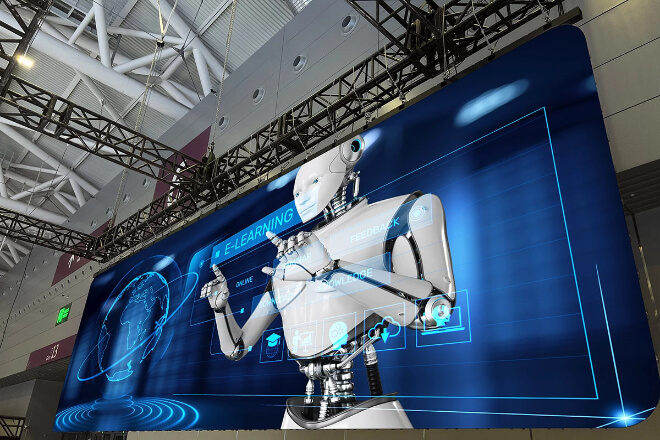
Maintaining LED displays often isn’t about “knowing how to fix it,” but about “being able to fix it quickly.”
After all, a screen malfunction isn’t the scary part; the scary part is when everyone knows there’s a problem, but nobody knows what to do next.
First, a clear troubleshooting process must be established. For example, “Check the power supply first, then the signal, then the control system.” Who is responsible for troubleshooting, coordination, and restoration should be clearly defined beforehand.
This way, when a problem occurs, the team won’t hold an impromptu meeting but will immediately enter action mode.
For example, imagine a scenario: 10 minutes before a competition starts, the screen suddenly goes black. If the process is clear, engineers will immediately begin troubleshooting.
If it’s unclear, they might start by asking, “Does anyone have the control room key?”—and time is wasted.
Second, commonly used spare parts and modules must be readily available. Many faults aren’t actually complex; the problem is “knowing how to fix it, but not having the parts.”
Power modules, receiver cards, ribbon cables, and commonly used modules should be prepared in advance, like a “first-aid kit” in a toolbox—they can be lifesavers in critical moments.
Furthermore, the most direct value of establishing a rapid response mechanism is reducing downtime for maintenance.
The shorter the time from “problem discovery” to “display restoration,” the smaller the impact.
For shopping malls, it means less lost advertising time; for sporting events, it means less awkwardness on-site; for businesses, it means fewer customer questions.
Looking at it on a larger scale, this actually improves overall operational continuity.
An occasional screen malfunction isn’t terrible; what’s terrible is when every malfunction feels like a “system crash.”
With a rapid response mechanism, equipment problems are no longer “accidents,” but simply a “standard procedure.”
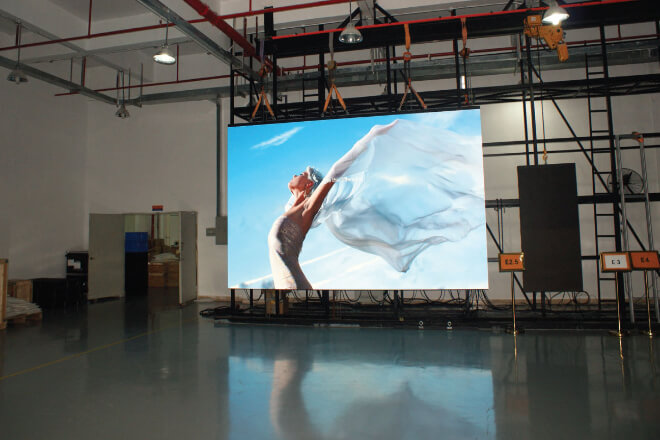
Previously, LED display maintenance often relied on experience: “Was this part of the screen damaged last time?” “That power supply seemed to have been replaced last year?”—relying on human memory is easy to forget.
Relying on intuition is easy to overlook. Now, a better approach is to bring maintenance into the “data-driven era.”
First, a maintenance file can be created for each screen. When it was installed, how long it has been used, which parts have been replaced, and its usual operating status are all recorded.
This transforms it from an “anonymous screen” into a device with a complete “resume,” like giving the screen an “electronic medical record.”
For example, if a screen has experienced problems in the same area twice consecutively, the system can quickly check its records and know, “Oh, this isn’t the first time.”
Troubleshooting becomes much faster, avoiding starting from scratch each time.
Secondly, it’s crucial to record fault and repair history. When the screen went black, which modules were replaced, and which components had a high failure rate?
This accumulated data gradually forms patterns. You’ll find that some problems aren’t “intermittent,” but rather warnings: “I’m failing, replace it soon.”
A further step is leveraging remote monitoring to improve efficiency. Many LED systems now support remote viewing of data such as temperature, voltage, brightness, and online status.
Previously, engineers had to go to the site for a “check,” but now they can diagnose problems from the office. The backend receives alerts before the screen even “cries out.”
The biggest change is shifting from reactive repair to proactive maintenance. Previously, it was “repair when it breaks”; now it’s “address it before it breaks down.”
The difference is like this: Previously, you only called for a tow truck when a car broke down; now, you do maintenance in advance to prevent breakdowns.


 English
  Español
  简体中文
简体中文  Français
  日本語
日本語  한국어
한국어  العربية