
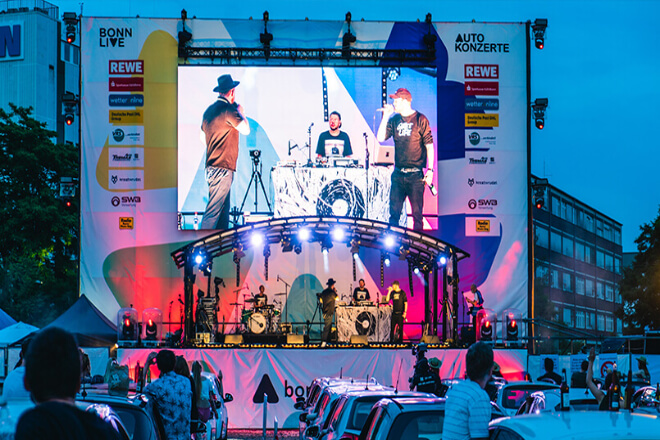
许多 LED显示屏 projects share a common thread: they start off “smoothly.” The designs are attractive, the parameters are professional, and the renderings are stunning.
However, once launched, some become eye-catching “eye-catchers,” while others become always lit, but nobody actually watches.
The difference often isn’t the screen itself, but rather a step in the project where assumptions were taken too seriously.
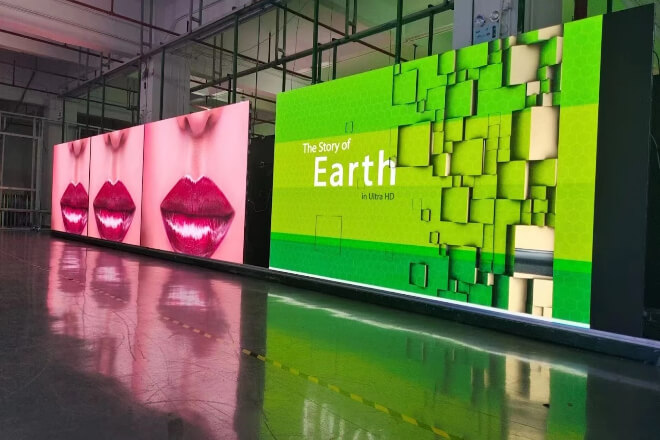
In LED display projects, the easiest pitfall isn’t the equipment itself, but rather a lack of clarity in the initial requirements. Once the direction is wrong, adjustments become increasingly difficult.
First, failing to clearly define the intended use case is the most common problem.
For example, initially saying “make a large screen,” but whether it’s for advertising, sporting events, or conference presentations, if this isn’t clearly defined, the subsequent design can easily go astray.
Advertising screens prioritize exposure, sporting event screens prioritize real-time performance, and conference screens prioritize clarity; the logic is completely different.
Second, unreasonable planning of display size and 观看距离. Some projects suffer from a situation where “the screen is large, but the audience is too close,” resulting in noticeably grainy images.
The reverse is also true—the screen is too small, but the audience is too far away, making the information unclear. This “scale mismatch” directly impacts the final experience.
Furthermore, functional requirements often fail to match actual applications. For example, a complex multi-signal processing system might be configured when only basic information display is needed.
Or, a static solution might be used for scenarios requiring frequent content switching, leading to a clunky user experience or even rendering the functionality unusable.
Finally, frequent modifications later directly increase costs. If the initial design isn’t clear, changing the size, structure, or functionality during construction.
Or installation not only delays the project but may also involve rework and additional material costs.
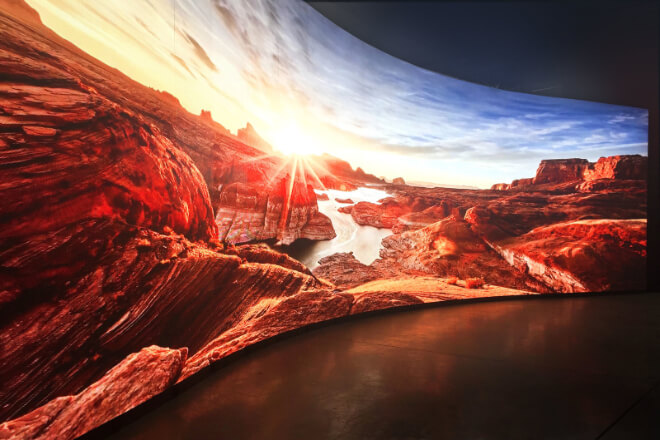
If early LED displays were like “high-end luxury goods,” now they’re more like basic tools that more and more industries can afford and use effectively.
On the one hand, there are direct changes brought about by technological upgrades: increasingly higher 解决, with small-pitch, high-definition.
And even ultra-high-definition technologies becoming more widespread, making it no longer limited to large venues or long-distance viewing scenarios.
Now it can be used comfortably in conference rooms, store windows, and even small showrooms. With more detailed images, its application range naturally expands.
On the other hand, costs are decreasing. This has a very real impact. Previously, many companies considered LED screens “large projects” and were cautious about investing in them.
But now, with mature supply chains and expanded production scale, the same budget can buy larger, clearer, and more stable screens.
As a result, more and more industries are willing to try them, moving from “wanting to use but hesitant” to “being able to use them directly.”
In addition, improved stability is particularly crucial for long-term use scenarios.
Previously, people worried about “whether it will break down” and “how troublesome the maintenance.”
Now, many LED systems can operate stably for extended periods, suitable for 24/7 use, such as in high-intensity scenarios like 购物广场, transportation hubs, and sports venues.
Here’s a very intuitive change: A few years ago, LED screens were more like “equipment only used at events.”
Now, in many places, they’ve become “a screen that’s already there by default.” Like air conditioning, they’re no longer a special feature, but part of the infrastructure.
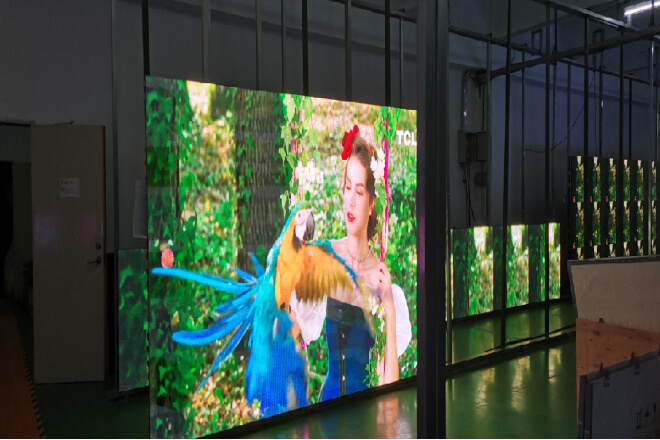
LED displays sometimes suffer a bit of a “mistake”—even with excellent equipment, the final result looks like a “discounted high-end image.” The problem is often not with the screen itself, but with poor installation.
The most common issue is uneven splicing. If the modules aren’t aligned, slight misalignment or inconsistent gaps will appear, making the image look like an “unfinished puzzle” when playing high-definition content.
Especially with 运动的 replays or commercials, what should be a smooth playback looks choppy.
Furthermore, there’s the issue of unreasonable structural design. This is more “hardcore.”
If the support structure is unstable or the load-bearing capacity isn’t properly calculated, the screen may wobble slightly or even deform after long-term use.
Viewers who see the screen shake will feel a slight jolt in their hearts, directly diminishing their immersion.
Then there’s the haphazard wiring, a true “hidden killer.” Messy wiring isn’t just unsightly; it creates headaches for later maintenance.
Sometimes, unstable signals or intermittent screen flickering are simply due to a loose connection in a single wire.
It’s like a bunch of tangled headphone wires—it’s fine until a problem arises, then finding the source is incredibly difficult.
Finally, there’s inadequate protection. Outdoor screens, if not properly waterproofed and dustproofed, might not show immediate effects.
But over time, rain, dust, and temperature fluctuations will cause the screen to slowly deteriorate:
Uneven 亮度, localized darkening, and even pixel loss—it looks like the screen is prematurely retiring.
To illustrate, consider two screens: one meticulously installed with neat wiring, maintaining a stable display even after years.
The other, carelessly installed, might look fine initially, but after a while, uneven brightness becomes apparent, as if the screen is creating its own artistic expression.
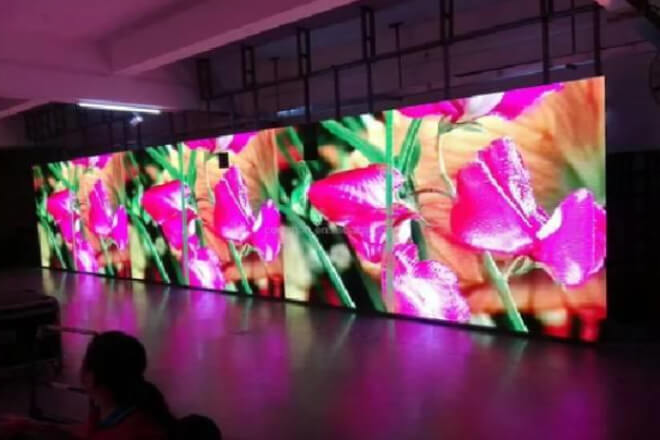
The most regrettable state for many LED displays isn’t that they’re broken, but rather—they’re constantly lit, yet nobody wants to look at them.
They appear to be working, but are actually “idling.” The problem often isn’t with the screen itself, but with the content not being properly managed.
The most common scenario is playing the same content for an extended period. A promotional video plays from the day the screen is installed, and six months later, it’s still the same video.
Viewers go from “glancing at it a couple of times” to “automatically ignoring it.” The screen is still there, but its presence has been diluted.
Another issue is the lack of dynamic updates and strategic content. For example, playing the same information on a loop all day long, regardless of time or location.
Using the same content during peak daytime hours and off-peak hours at night is essentially like using the same poster for all scenarios, naturally making it difficult to attract attention.
More importantly, often the content isn’t designed to be integrated with the context.
For example, playing company introductions in shopping malls, general advertisements at sporting events.
And unclear content logic in exhibition halls—the screen is correct, but the content is “off track.” Viewers glance at it and move on, rarely staying.
Here’s a real-world example: a 购物中心 LED screen that continuously loops “brand introduction + product showcase.”
Initially, people might watch, but after a while, passersby might even feel, “This screen seems to be saying the same thing all the time,” and eventually it becomes just background lighting instead of a communication medium.
The end result is low screen utilization—the equipment is running, but it doesn’t actually generate any communication, conversion, or interactive value; it’s like “a room with the lights on, but no one using it.”
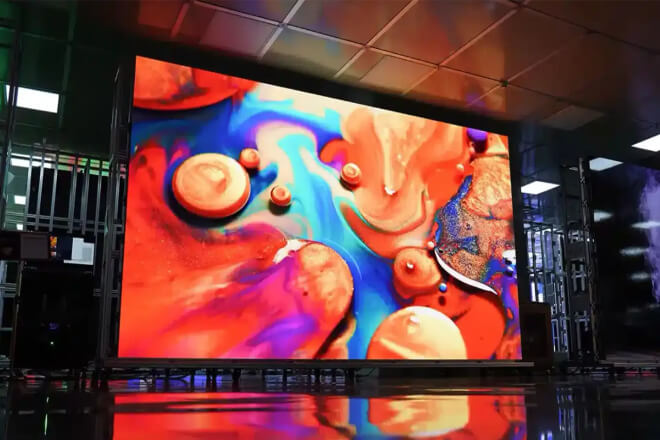
The most easily overlooked aspect of LED displays isn’t “when you buy them,” but “after you’ve used them for a while.”
Many screens initially look great, but over time, they gradually become “still bright, but not very attractive.”
The problem often lies in the lack of systematic post-production management.
First, there’s a lack of regular inspection and maintenance mechanisms. In many cases, repairs are only done “when they break,” rather than “regular checks.”
Small problems like 亮度 decay, individual module malfunctions, and aging wiring, if not detected early, will slowly develop into obvious faults.
It’s like neglecting car maintenance; you only discover a host of problems after driving it for a while.
Second, there’s a lack of timely fault response. If an LED screen malfunctions during a competition, event, or peak period, the lack of a rapid response mechanism can lead to prolonged blackouts or abnormal display.
This not only impacts the user experience but also directly affects the brand and the event’s overall impact. Sometimes the problem itself is minor, but a slow response makes it appear “serious.”
Furthermore, there’s a lack of a unified management platform. If multiple screens are managed separately without a centralized control system.
A “each managing its own” situation arises: content is out of sync, versions are inconsistent, or even one screen is displaying new content while another remains on an older version.
This disconnect significantly reduces the overall professionalism.
For a vivid example: in the same venue, two LED screens, one updated with the latest event footage.
The other still playing yesterday’s advertisements—viewers will immediately think, “Is this system poorly managed?”
Finally, there are long-term effects—a continuous decline in lifespan and performance. Without maintenance, screens gradually dim, develop uneven colors.
And increase dead pixels, resembling “slowly aging electronic devices.” Even if they still function, the visual effect is significantly diminished.


 English
  Español
  简体中文
简体中文  Français
  日本語
日本語  한국어
한국어  العربية