
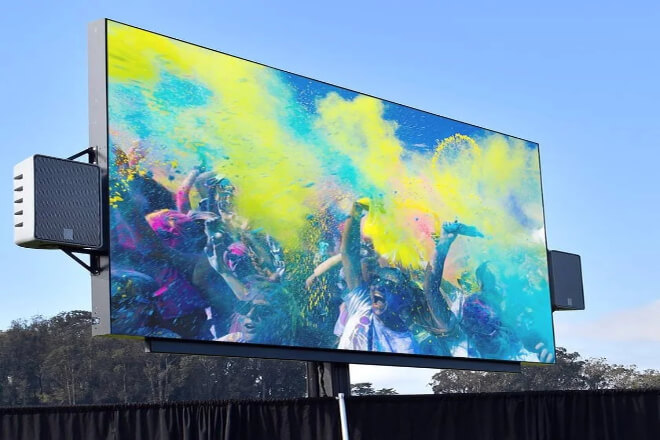
购买时 LED显示屏, many people’s first reaction is: What’s my budget? What size?
But in reality, they find that buying a screen isn’t difficult; buying the “right” screen is the key.
Because choosing the wrong one might not mean it’s unusable, but rather that it “always feels lacking.”
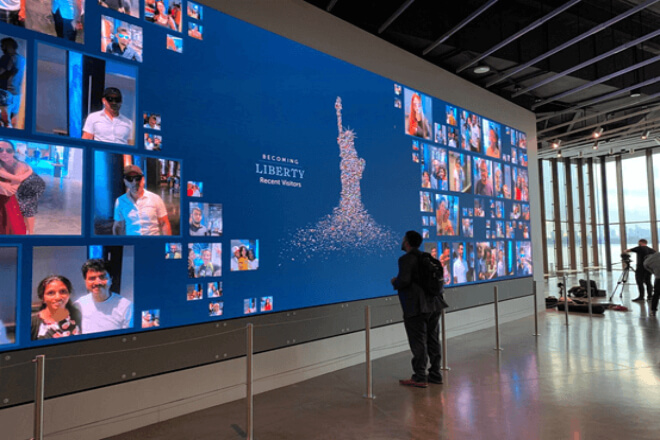
The first step in choosing an LED display screen isn’t looking at specifications or comparing prices.
But answering the question: Where will it be used? Because different scenarios require completely different selection logic.
First, distinguish between outdoor, indoor, and semi-outdoor scenarios. 例如, 户外广告屏 need to consider waterproofing, dustproofing.
And high-temperature resistance; indoor conference screens focus more on clarity and comfortable viewing.
Meanwhile, semi-outdoor scenarios like 购物中心 entrances require finding a balance between brightness and protection. Different environments naturally have different requirements.
Second, clarify the specific purpose: advertising, conferences, events, or retail displays. For example, even with a large screen, a shopping mall advertising screen prioritizes visual impact.
Conference room screens prioritize text clarity; 运动的 event screens need to balance real-time performance and stability.
Retail stores may focus more on flexible content switching. Different uses, completely different priorities.
Furthermore, different scenarios dictate different selection directions. Many projects fail not because of poor equipment, but because the initial scenario assessment was flawed.
For example, applying a conference room-oriented approach to outdoor advertising or using a shopping mall display screen for live sports broadcasts often yields less than satisfactory results.
Finally, remember a simple principle: consider the purpose first, then look at the specifications.
Specifications are the answer, but “where to use it” is the question. If the question isn’t clear, even the most impressive answer is likely to be off-topic.
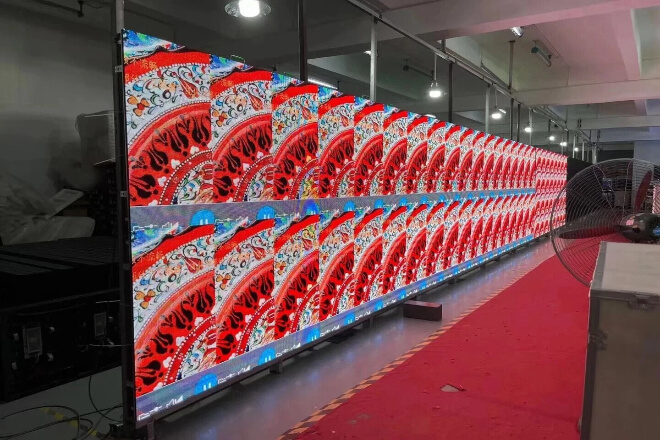
Many people’s first reaction when choosing an LED display is: “The bigger the screen, the better.”
However, bigger doesn’t necessarily mean clearer; viewing distance is the key factor determining the experience.
Choosing the wrong one can lead to the embarrassing situation of “spending a lot of money but not being able to see clearly.”
Firstly, for close-range viewing, prioritize 小间距LED显示屏.
For example, in conference rooms, 展览 halls, and interactive areas in 购物广场, viewers may only be a few meters away from the screen.
If the pixel pitch is too large, the image will easily appear grainy, and the text will lack detail.
Small-pitch screens, on the other hand, make content appear smoother and more comfortable to view up close.
Secondly, for long-distance scenarios, conventional pixel pitch products are preferable.
For example, in stadium stands and outdoor billboards, viewers are often tens of meters or even further away.
In these situations, the human eye is less sensitive to pixelation; what matters is the screen size and the clarity of the information.
Using a conventional pixel pitch is more reasonable and economical.
此外, 像素间距 directly determines the clarity experience. Simply put, the smaller the pixel pitch, the denser the pixels, and the finer the image.
the larger the pixel pitch, the better for viewing from a distance. It’s like comparing a mobile phone screen to an outdoor billboard—one is for “face-to-face viewing,” and the other is for “far-away viewing”—the logic is completely different.
Finally, don’t let “buying a large screen” become “not being able to see clearly.” Many projects’ problems aren’t about the screen not being big enough.
but about “choosing coarse pixels for close proximity,” resulting in a large screen becoming a “giant mosaic.”
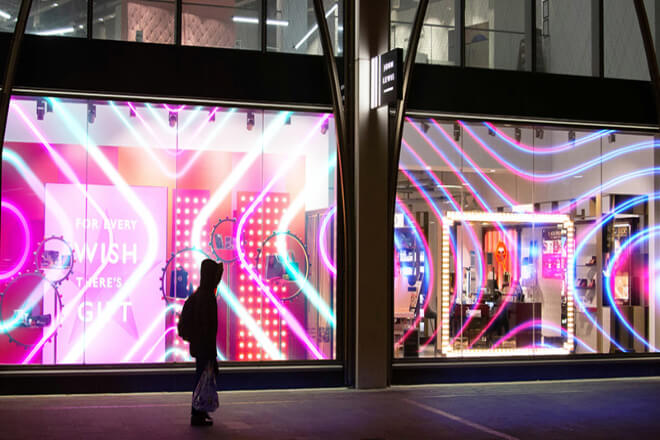
When choosing an LED display, besides “where to install it,” you also need to consider “the environment.”
The same screen faces completely different challenges in different environments. Simply put, the environment determines the configuration, and the configuration determines the effect.
First, for outdoor scenarios, focus on 亮度 and protection rating.
For example, advertising screens in commercial areas and the facades of sports stadiums face sunlight, rain, dust, and even high temperatures every day.
Insufficient brightness will make it difficult to see during the day; insufficient protection rating may cause discomfort on rainy days. Therefore, the keywords for outdoor screens are: bright enough and durable enough.
Second, for indoor scenarios, focus more on detail and viewing comfort. In meeting rooms, 展览 大厅,以及 购物中心 atriums, viewers are usually closer to the screen and spend more time there.
如果 亮度 is too high, it may be “glaring”; if the 解决 is insufficient, it will affect the quality of the content.
Therefore, indoor screens are more about “refinement”—the image needs to be detailed, and the viewing experience comfortable.
At the same time, special environments also require focus on stability and weather resistance.
For example, scenarios like transportation hubs, command centers, and 阶段 rentals may require long-term operation or frequent relocation and installation.
In these cases, the equipment needs to not only “light up,” but also “withstand the load.” Like running a marathon, it’s not just about speed, but also endurance.
Finally, remember this: the environment determines the product configuration. Don’t choose an outdoor screen with indoor thinking.
and don’t use outdoor configurations to “illuminate” the entire conference room—the equipment only truly realizes its value when the scenario is right.
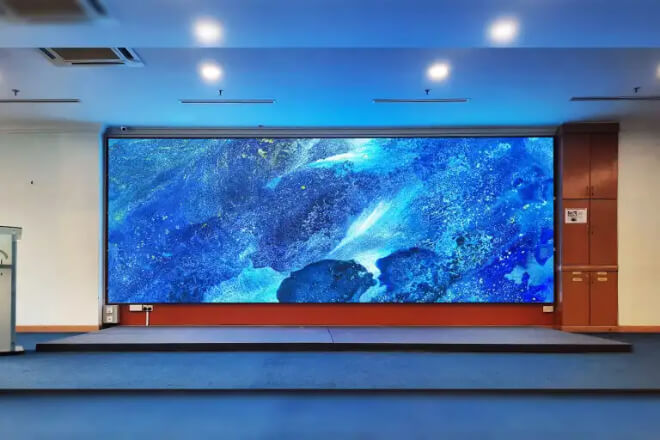
Many people’s first question when choosing an LED display is, “How much?”
This question is certainly important, but if you only focus on the purchase price, you can easily fall into the trap of “buying cheap but using expensive.”
First, the initial purchase cost is only the first step. Buying the screen is just the beginning; installation, debugging, and transportation are all part of the project cost.
Sometimes the initial quote seems low, but various additional costs later on can quietly push the budget beyond your budget.
Second, ongoing maintenance and energy consumption are equally important. For example, the electricity cost difference between a screen running for 10 hours and 20 hours a day will be significant.
If the equipment itself consumes a lot of energy, over time, the electricity meter will “feel” it better than you do.
Add to that the ongoing costs of module replacements and maintenance, and these become long-term expenses.
Meanwhile, stability directly impacts long-term investment. For example, consider two screens: one cheaper but requiring frequent repairs; the other more expensive but operating stably for years.
On the surface, the former seems “cheaper,” but in reality, the combined maintenance costs, downtime losses, and time costs may far exceed the price difference.
Finally, remember this: “cheap” doesn’t necessarily mean cheaper. Buying an LED display screen is more like buying a car—it’s not just about the initial purchase price, but also about fuel consumption, maintenance, and durability.
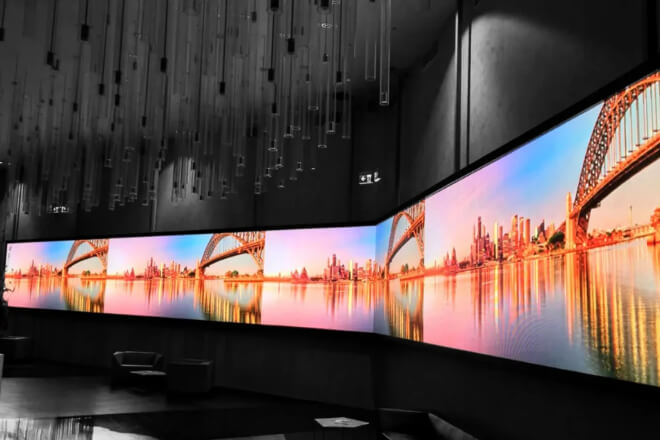
Many people focus on “what screen to buy,” but there’s an even more critical question: who to buy from? Because you’re not just buying a product, but a complete after-sales guarantee.
First, look at case studies, not just quotes. Anyone can send a quote, but the projects they’ve actually completed speak volumes.
For example, have they done projects in 购物广场, stadiums, or conference rooms—similar to your needs?
Having experience means a deeper understanding of the scenario, more lessons learned from mistakes, and a generally more reliable solution.
Secondly, consider after-sales service, not just the product itself. No matter how impressive the screen specifications are, if no one addresses the problem, the user experience will instantly “drop out.”
Especially in scenarios like shopping malls, sporting events, and other events where screen downtime is unacceptable, after-sales support is often more important than product specifications.
After all, when the screen breaks, your biggest concern isn’t “what’s the pixel pitch,” but “who can fix it the fastest.”
Also, consider the service response speed. For example, for the same fault, one supplier says, “We’ll arrange it tomorrow,” while another says. ”
Remote troubleshooting within 30 minutes, on-site repair the same day.” The difference is clear. A faster response means less potential loss.
Finally, remember this: buying a product is also buying assurance. A reliable supplier doesn’t just sell you “a screen,” but comprehensive support from solutions and installation to after-sales service.


 English
  Español
  简体中文
简体中文  Français
  日本語
日本語  한국어
한국어  العربية