
소개

In today’s 스포츠 stadiums, large screens are almost ubiquitous. Are they just for displaying scores? Actually, no.
LED 디스플레이 have become information hubs, visual focal points, atmosphere creators, and can even help you find your seat and understand the event schedule.
Let’s see what important role they play in modern sports stadiums.
목차
Role 1: Serving as a Sports Information Center
In modern 스포츠 stadiums, LED displays are practically the “information center” of the entire event.
Whether it’s football, basketball, or a large-scale multi-sport event, spectators obtain the most important match information through the large screens in the stadium.
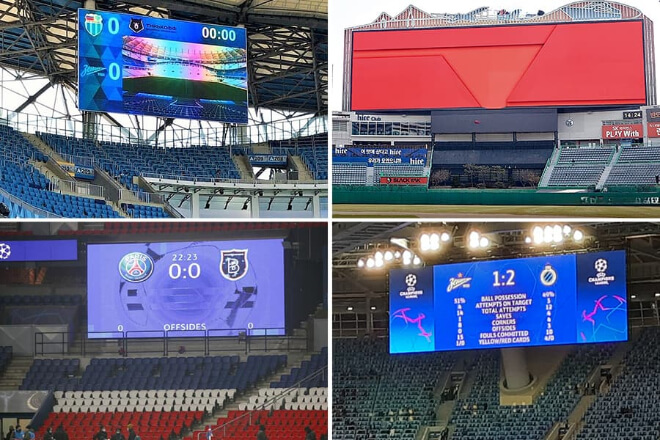
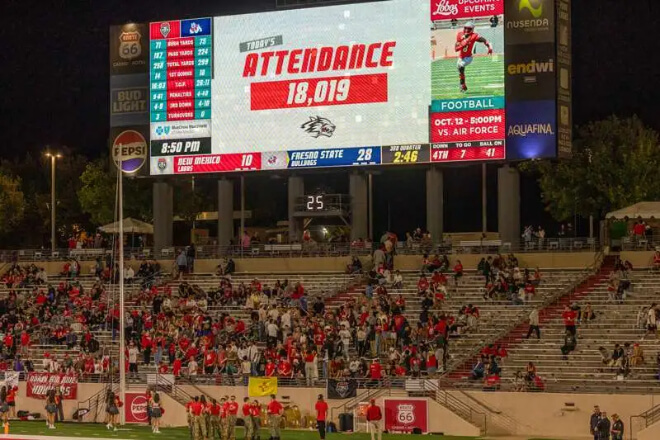
The screens can display scores, match times, foul counts, and various statistics in real time, allowing spectators, even those sitting far from the field, to easily grasp the game’s progress and not miss key information.
Besides basic scores and times, LED 스크린 also present player data and lineup information in a more intuitive way, such as player points, assists, distance traveled, or shooting percentage.
These data are typically displayed through charts, motion graphics, or simple animations, allowing viewers to better understand player performance and the game’s pace while watching.
For example, in a basketball game at Madison Square Garden, the large LED scoreboard suspended in the center not only displays the score and time in real time but also shows player statistics and highlights during timeouts.
In a football game at Wembley Stadium, a giant LED screen plays slow-motion replays after a goal, allowing the audience to see every detail of the goal again.
One of the most exciting features for viewers is the slow-motion replay and highlight reel.
When a spectacular goal, a crucial defensive play, or a controversial call occurs on the field, the LED screen can immediately replay the moment, allowing viewers to relive the excitement.
Often, the replay triggers another burst of cheers from the crowd, further igniting the atmosphere.
In short, LED displays are more than just a tool for displaying scores; they act as a “second perspective” on the game.
They help viewers see details, understand the game, and enrich and engage the entire sporting event viewing experience.
Role 2: The Core of the Stadium's Visual Experience
In modern 스포츠 stadiums, LED displays are no longer just tools for showing scores; they’ve become the “visual protagonists” of the entire arena.
Many large stadiums feature a massive central LED 스크린, complemented by extra-large or circular screens around the stands, ensuring that spectators can easily see the game from any seat.
Before the game starts, the lights dim and the large screen illuminates, instantly drawing the audience’s attention—it’s arguably the most eye-catching visual focal point in the entire stadium.
High-definition LED screens further enhance the viewing experience. The large screens can display live game footage, slow-motion replays, and various highlights.
Allowing viewers to not only see key actions on the court but also “revisit” the exciting moments.
Sometimes, when a beautiful goal or dunk is replayed on the large screen, the audience erupts in cheers again, as if the exciting moment has been reignited.
Many stadiums also use multi-screen(multi-screen interaction) to enhance the atmosphere.
The central screen displays the game footage, while the screens around the stands play ambient animations or spectator footage.
The circular screen continuously scrolls information and visual effects, transforming the entire venue into a giant, dynamic 단계.
Audiences aren’t just watching the game; they’re enveloped in visual and auditory stimulation, creating a far more immersive experience than watching television at home.
Simply put, in modern sports stadiums, LED displays act like “on-site directors,” seamlessly connecting the game footage, audience interaction, and atmosphere.
They not only provide clearer views but also make the entire event more exciting and ceremonial, allowing spectators to immediately feel the unique atmosphere upon entering the stadium.
Role 3: As a Carrier of Commercial Value

In modern 스포츠 stadiums, LED displays are not only a crucial component of game information and visual experience but also a vital commercial platform.
Especially the LED advertising screens encircling the field, which have become almost the most common form of brand display at sporting events.
Spectators constantly see these advertisements while watching the game, and television cameras frequently pan across the field area, resulting in extremely high brand exposure.
Compared to traditional static billboards, the biggest advantage of LED 디스플레이 advertising is its “movement.”
Brands can showcase their advertising content through dynamic videos, animations, or scrolling text, making ads more eye-catching and easier to attract viewers’ attention.
Some ads even integrate with the atmosphere of the event, such as featuring special visual effects during goals, scores.
Or key moments, allowing the ad to blend naturally with the game environment rather than simply being placed there.
Furthermore, large LED screens in stadiums provide even more opportunities for advertising.
During halftime, timeouts, or before the start of the game, large screens often play brand promotional videos, sponsor advertisements, or interactive content.
For example, in National Basketball Association games, the large screens during halftime not only show highlights.
But also display sponsor brands or interactive ads, allowing viewers to access brand information in a relaxed atmosphere.
In short, LED displays transform stadiums from playing fields into giant media platforms.
Brands can display ads through sideline screens, central screens, and multi-screen (multi-screen interaction).
Repeatedly presenting information to both the live audience and television viewers, thereby increasing brand exposure and commercial value.
It can be said that LED screens make sporting events both exciting and commercially viable.
Role 4: Atmosphere Maker
In modern 스포츠 stadiums, LED displays are crucial for creating the right atmosphere for a match.
Often, even before the game begins, the large screens have already set the mood.
For example, when teams enter the field, the screens play exciting opening videos, player introduction animations.
Or clips from team history, combined with music and lighting effects, instantly putting the entire stadium into game mode and igniting the crowd’s emotions.
When the game reaches a crucial moment, the role of the LED 스크린 becomes even more significant.
When a goal, dunk, or key score occurs, the large screens immediately display dazzling visual effects.
These include flame animations, flashing effects, or team logo animations, combined with sound effects and ambient lighting, making that moment even more thrilling and exciting.
Often, spectators even cheer again after seeing the large screen effects, prolonging the atmosphere of the exciting moment.
Furthermore, LED displays can be integrated with music and lighting systems, transforming the entire stadium into a large-scale performance venue.
For example, during timeouts or halftime, the large screen will display interactive footage, dance clips.
Or “audience shots,” allowing the audience to participate and instantly creating a relaxed and lively atmosphere.
In some large stadiums, such as SoFi Stadium, giant LED screens, combined with light shows and music, can transform the match into a visual and auditory feast.
Simply put, LED displays not only allow spectators to see the game clearly but also amplify their emotions.
They make team entrances more spectacular, goal moments more exciting, and timeouts more engaging, ensuring the entire match is vibrant and engaging from start to finish.
For many spectators, this vibrant atmosphere is precisely what makes watching a game at a stadium so addictive.
Role 5: Serving as an Information Service Platform for the Stadium
In modern 경기장, LED displays are more than just “cool big screens”; they act as helpful “assistants” for the audience.
When you enter a large stadium, you might be a first-timer and unsure where your seats are, how to get to the restaurants, or where the restrooms are.
This is where LED information screens come in handy—clearly providing directions and saving you time and effort, helping you find your way directly.
More than that, they act as “safety guardians” for the venue. Before and after games, or during peak hours, LED 스크린 thoughtfully display safety instructions, entry rules.
And even quickly issue emergency notifications in case of unforeseen circumstances, ensuring the safety and peace of mind of spectators.
Compared to the impersonal announcements over the loudspeaker, seeing clear instructions and animated prompts on the screen provides much more reassurance.
Furthermore, LED screens are “event and event preview masters.” Besides the match schedule and game information for the day, they can also preview basketball games, concerts, or themed events for the following weeks.
At Madison Square Garden, for example, the screens not only display game times but also playfully display posters for upcoming concerts, allowing spectators to plan their “check-in” schedules in advance.
In short, the LED information screens in stadiums are like a versatile “concierge” always ready to assist you.
It allows spectators to easily find their seats, access important information, and stay up-to-date on the latest events and activities, making the entire viewing experience smoother, more engaging, and more efficient.
6. 결론
In short, LED displays in sports venues are more than just “big, lit screens.”
They deliver game information, enhance the visual experience, create atmosphere, carry commercial value, and provide venue services, making the viewing process more immersive, enjoyable, and seamless.
It’s fair to say that without them, the modern sports venue experience would be incomplete.
마지막으로 LED 디스플레이에 대한 자세한 내용은 우리에게 연락해주세요.