
소개
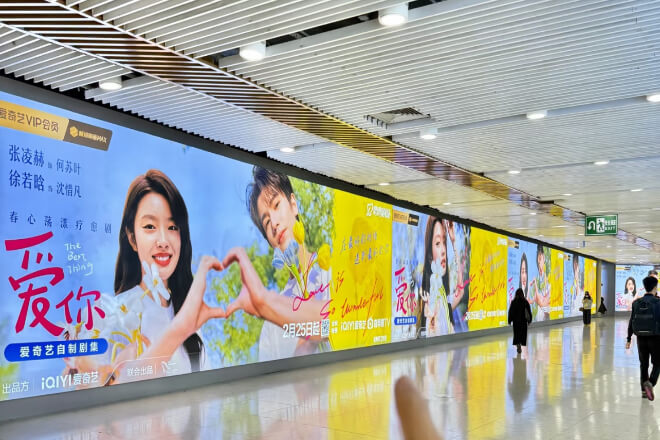
In transportation hubs, the value of information is often reflected in its timeliness, accuracy, and visibility.
It is in this environment that LED 디스플레이 have gradually evolved from simple information display devices into a multi-functional infrastructure.
They are not only found in departure halls and waiting areas, but also extend to wayfinding nodes, commercial spaces, and public service areas.
However, what truly deserves attention is not just “whether there is a screen,” but rather what role it plays in different scenarios.
목차
Application 1: Real-time Release and Unified Display of Transportation Information
In places like 공항 or train stations, information updates sometimes outpace the pace of travelers.
Gate changes or train delays can easily lead to unnecessary detours if information is out of sync. Here, LED displays act as a constantly online “information hub.”
Flight, train, or schedule information can be dynamically updated in real time.
Delays, rebookings, and boarding reminders are presented immediately, allowing travelers to stay informed without repeatedly asking or searching around.
Meanwhile, through multi-screen collaboration, screens in different areas can synchronously output consistent information.
Whether in waiting areas, passageways, or boarding gates, the content displayed is uniform, avoiding conflicting information.
This consistency not only improves information retrieval efficiency but also makes the entire space more orderly.
Passengers don’t need to switch between multiple information sources; a single screen can resolve most questions, resulting in a smoother experience.
Simply put, LED displays are like “real-time navigation + bulletin boards” in transportation scenarios, promptly organizing.
And synchronously outputting constantly changing information, making travel less stressful and more relaxed.
Application 2: Commercial Advertising and Brand Communication in Hub Spaces
~ 안에 공항, train stations, or large transportation hubs, pedestrian traffic itself is a “natural flow.” The key is how to effectively deliver content to passersby within a limited timeframe.
Here, LED 디스플레이 play more of the role of an “efficient communication medium.”
Screens in high-traffic areas naturally have higher exposure value.
Whether in departure halls, waiting areas, or passageways, travelers inadvertently encounter screen content while moving or waiting, thus increasing brand message reach.
Furthermore, by employing time-segmented and area-specific content strategies, screens can work “smarter.”
For example, displaying travel-related content during peak hours and placing ads tailored to specific demographics in designated areas makes the content more relevant to the context, rather than simply repeating content.
Combined with pedestrian flow design, advertising content can appear more naturally in people’s line of sight, increasing the probability of being noticed.
From a broader perspective, this is not just about advertising display, but also about amplifying the commercial value of a space.
LED displays transform what is simply “space to pass through” into “utilizable communication nodes,” giving each passing moment an additional opportunity for exposure.
In short, it’s like turning a transportation hub into a constantly flowing information field, efficiently connecting content and attention within the flow of people.
Application 3: Rapid Dissemination of Public Safety and Emergency Information
In transportation hubs or large public spaces, everything is usually orderly, but in the event of an emergency, the speed of information transmission becomes crucial.
In such situations, whoever can clearly explain “what happened and what to do” first often directly impacts the order on the scene.
LED displays act as a constantly online “real-time broadcaster.” When emergency notices need to be issued, they can be displayed quickly and simultaneously across multiple screens.
This allows people in different areas to see the same information almost at the same time, avoiding situations where some are still guessing while others have already taken action.
Besides the notices themselves, the screens can also play a role in “on-site guidance.” For example, when crowd control is needed, clear prompts can guide people to adjust their routes.
Or, they can remind people to pay attention to safety in specific areas, making the information not only visible but also easier to understand and implement.
Furthermore, the system can continuously update its content based on changing circumstances, rather than simply sending one message and then stopping.
During an emergency, this dynamic adjustment capability ensures that information remains up-to-date, helping to make on-site management more orderly.
In short, in this scenario, LED displays act more like a “real-time updated command assistant,” quickly and uniformly transmitting information at critical moments, reducing chaos and increasing control on-site.
Application 4: Enhancing the Image and Visual Environment of Transportation Hubs
Transportation hubs are not only transitional spaces for people coming and going, but also the “first impression” of a city.
When travelers enter an 공항 or train station, they see not only the functional layout but also the overall atmosphere and image conveyed by the space.
Here, LED 디스플레이 are more like an integral part of shaping the space’s “atmosphere.”
Through reasonable layout and content presentation, LED screens can construct a modern visual interface, adding a layer of technology and visual sophistication to spaces that are originally function-oriented.
The integration of dynamic images with the architectural environment not only enriches the visual expression of the space but also makes the overall environment look more unified, clean, and well-designed.
At the same time, these screens often become visual nodes in the space. Whether it’s a large screen in the center of the lobby or information screens in the corridors.
They inadvertently serve as “landmarks,” guiding people’s gaze and movement paths, making the space easier to understand and use.
From a broader perspective, these visual elements collectively constitute the overall image of a transportation hub, making a transportation space not only “functional” but also “aesthetically pleasing.”
For cities, such hubs are increasingly becoming important windows for showcasing their image.
Simply put, LED displays are not just information tools, but also help spaces establish a more modern and distinctive visual language, giving hubs a “face” beyond their function.
5. 결론
Transportation hubs are essentially spaces where high-density pedestrian and information flows converge.
In such an environment, the value of LED displays is not limited to the displayed content itself.
But lies in how they participate in information transmission, route guidance, commercial communication, and operational management.
When rationally deployed and integrated into the overall system, it not only improves efficiency but also subtly enhances the experience and strengthens order.
From another perspective, it is not simply a display device, but a link between “space, information, and people.”
Finally, if you would like to learn more about LED displays, 우리에게 연락해주세요.
 English
  Español
  简体中文
简体中文  Français
  日本語
日本語  한국어
한국어  العربية