
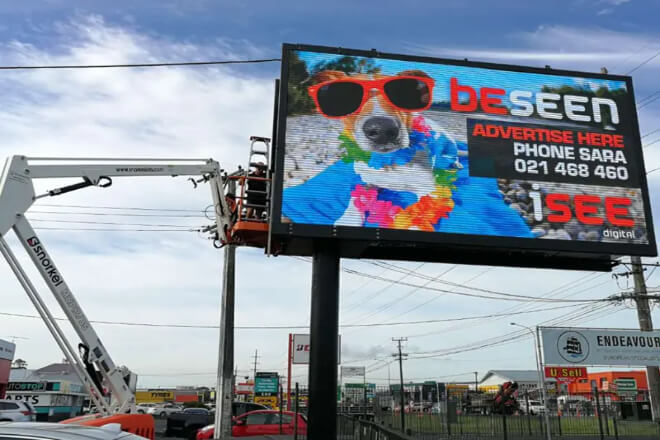
Have you ever wondered how those LED 광고 화면, which operate outdoors year-round, maintain such a clear and stable display?
Exposed to wind, sun, rain, and dust, they endure almost daily, yet the image remains bright and the content stable.
The key lies in routine maintenance. Many people think that once installed, they can be ignored, but without proper maintenance, problems often arise quickly and suddenly.
So, how should 옥외 LED 광고 스크린 be maintained to ensure durability and stability?
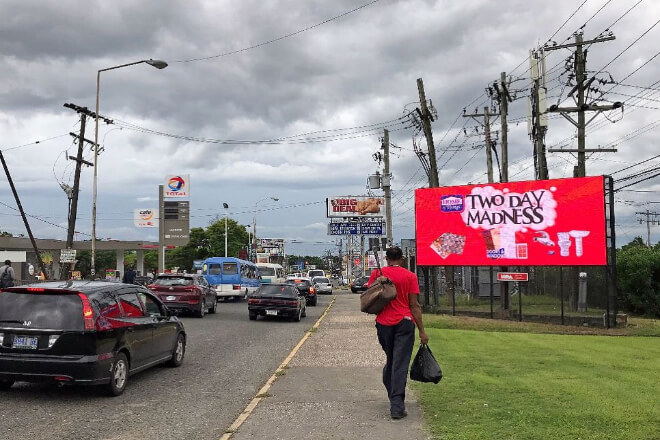
Many people believe that 옥외 LED 광고 스크린 can be used “year-round” after installation.
However, they are more like machines working outdoors for extended periods, constantly “working overtime” under the elements.
They withstand strong sunlight during the day, maintain high 명도 at night, and face dust, rain, humidity, and even temperature fluctuations.
Without routine maintenance, problems such as decreased brightness, graying images, blackouts, and malfunctions can easily occur.
Proper maintenance is, first and foremost, extending the lifespan of the equipment. Regular inspections and cleaning can proactively address minor issues, preventing problems from escalating.
Instead of waiting for screen problems to cause significant repair costs, investing time and effort in routine maintenance is more cost-effective and less stressful.
Furthermore, the screen’s condition directly impacts advertising effectiveness.
Imagine if the screen flickers, has uneven colors, or contains black spots; even the best advertising content will be diminished, potentially damaging the brand image.
Maintaining clear images and stable colors is like adding a filter to the brand, ensuring the content always looks professional and high-quality.
In addition, the outdoor environment is inherently complex. Dust accumulates, moisture can seep in, and extreme temperatures can affect equipment performance.
Therefore, routine maintenance is not just about simple cleaning; it’s about helping the screen adapt to its environment and maintain stable performance.
In short, outdoor LED screens aren’t just installed and forgotten; they require care. Proper maintenance ensures longevity, stable performance, and consistently optimal advertising results.
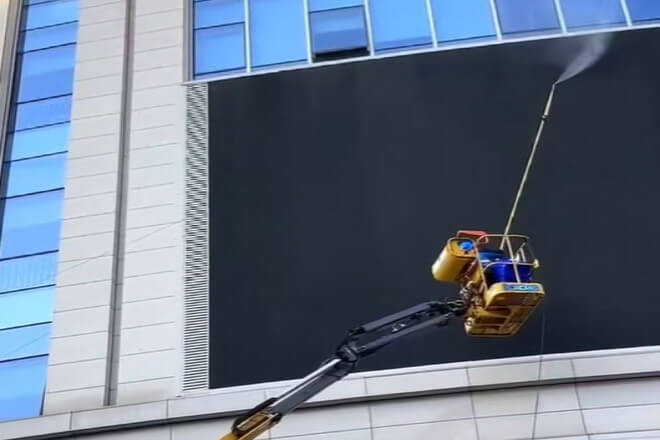
옥외 LED 디스플레이 stand guard outdoors every day, working harder than humans – exposed to wind, sun, and rain.
Over time, dust, rainwater stains, and even occasional bird droppings accumulate on the screen surface.
If not cleaned promptly, the image will become somewhat “dull,” with reduced 명도 and clarity, making it less attractive.
Common problems like dust can be easily addressed by regularly wiping with a soft cleaning cloth or professional tools to prevent further buildup.
Rain streaks, if left untreated, can leave marks after drying. In such cases, a simple cleaning with a specialized cleaning solution can restore the screen’s cleanliness and brightness.
For unexpected bird droppings, it’s recommended to clean them as soon as possible, as they become increasingly difficult to remove and may even be corrosive to the surface, making things worse over time.
However, cleaning should not be done carelessly. Always use professional cleaning tools and mild cleaning solutions.
Never use rough cloths or harsh cleaning agents directly. Otherwise, it’s easy to scratch the screen surface and even affect the internal light-emitting components.
Handle it gently, treating it like a “precision device,” not ordinary glass.
In essence, daily cleaning is like giving the screen a “face wash.” It seems simple, but if done well, the image will be noticeably clearer, brighter, and more attractive.
Consistent cleaning can also extend the screen’s lifespan. A clean screen is not only pleasing to the eye but also enhances advertising effectiveness, keeping content at its best.
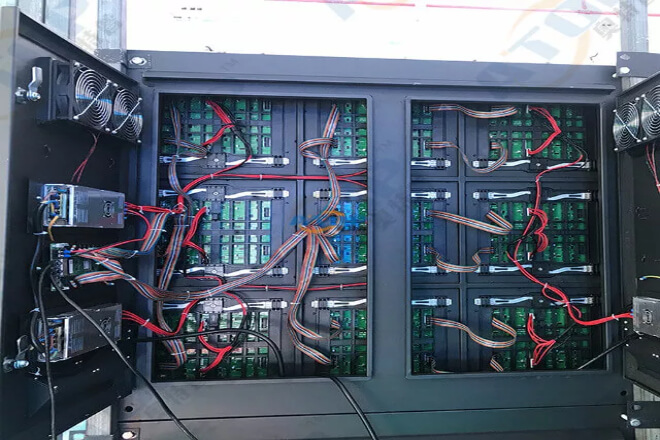
If the LED screen itself is its “face,” then the power supply and wiring are its “blood vessels and heart.”
They may seem inconspicuous at times, but if a problem occurs, the entire screen may stop working.
Therefore, although this step may seem technical, it is crucial and an essential part of routine maintenance that cannot be neglected.
Routine checks can start with the most basic parts, such as the power adapter and plug. Check for looseness, poor contact, or abnormal overheating.
Sometimes, a sudden screen flicker, unstable 명도, or even a brief blackout might indicate a problem stemming from these seemingly minor details. Early detection and intervention can prevent more serious malfunctions.
The wiring is another area prone to hidden risks. The complex outdoor environment, exposed to wind and sun for extended periods, can cause wires to age, their insulation to crack, or their connections to loosen.
Rain or high humidity can easily lead to leaks and short circuits. Therefore, regularly checking the wiring for damage and secure connections is crucial, especially in corners and less noticeable areas.
Furthermore, outdoor equipment is most vulnerable to extreme weather, particularly thunderstorms.
Therefore, lightning and short-circuit protection measures must be in place, such as proper grounding, installing surge protectors, or incorporating protective mechanisms into the circuit design.
These may seem like preventative measures, but they can truly prevent equipment damage and reduce safety risks in critical moments.
You can think of checking the power supply and wiring as giving the LED screen a thorough check-up and maintenance.
Spending a little more time checking these details regularly not only ensures more stable equipment operation but also significantly reduces the probability of unexpected problems.
After all, no matter how good the screen is, it’s useless if the power supply can’t keep up.
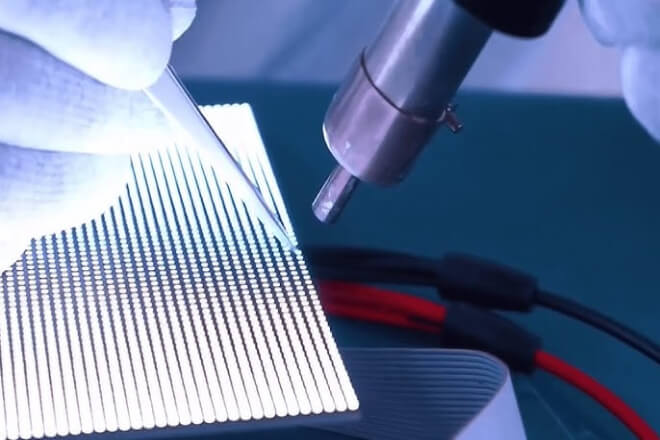
If the entire LED screen is a whole, then each LED 모듈, and even each pixel, is a “detail-oriented” component.
From a distance, it might not be noticeable, but dead pixels, dark spots, or uneven 명도 in certain areas are easily noticed.
Especially when displaying large areas of solid color images, where the unevenness becomes particularly obvious.
Therefore, regularly checking the pixel status is essential. This can be done by testing the screen with images (such as pure white, pure black, or solid color images) to observe for dead pixels, abnormal brightness, or color deviations.
This inspection is not complicated, but it can quickly identify problems, preventing small issues from escalating and affecting the overall viewing experience.
Furthermore, most LED screens now feature a modular design, which is very convenient.
If a problem is found in a certain area, it’s not necessary to modify the entire screen; only the corresponding module needs to be removed and replaced.
However, care must be taken during the operation. Disassemble and install gently to avoid damaging interfaces or surrounding modules, and ensure proper installation; otherwise, poor contact or display instability may occur.
Finally, and very importantly, maintain overall display uniformity.
After replacing a module, perform a simple calibration to ensure the old and new modules are as consistent in brightness and color as possible. This will prevent the image from appearing too spliced.
This step can be considered “detail repair.” While it may not need to be done daily, doing it well will make the entire screen look cleaner and more uniform, resulting in a more professional advertising effect.
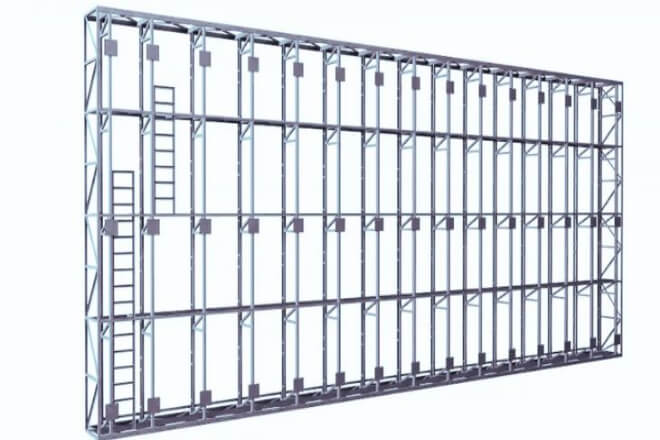
옥외 LED 디스플레이 are not only electronic devices but also large structures exposed to wind, rain, and sun for extended periods.
If the structure is unstable or protection is inadequate, the problem extends beyond display quality and can even pose safety hazards. Therefore, environmental and structural inspections are crucial.
First, focus on the “skeleton” components such as the brackets and fasteners. Over time, screws may loosen, and metal structures may age or slightly deform due to wind and sun exposure.
If not checked regularly, the screen can easily sway and even pose a safety risk during windy weather. Therefore, regular tightening and stability checks are essential.
Additionally, waterproof sealing is crucial. Outdoor environments inevitably experience rain.
If the seal is inadequate, moisture can seep into the screen, easily affecting the circuitry and potentially damaging the device.
Focus on checking seams, corners, and power connectors—areas prone to water ingress—ensuring they are properly sealed.
Extreme weather, such as strong winds, heavy rain, or even snow, puts additional stress on the screen.
Proactive protection, such as reinforcing the structure and checking drainage, can effectively reduce risks. A thorough check before typhoons or severe convective weather provides peace of mind.
Finally, and quite obviously, observe the screen for any tilting or loosening. If the screen’s position changes or it no longer appears perfectly straight, address it immediately to prevent further damage.
In short, this step is like performing a “safety check” on the screen. It’s not just about ensuring it works properly.
But also about guaranteeing its stability in various environments, so you can use it with peace of mind and enjoy a worry-free viewing experience.

It’s normal for 야외 LED 디스플레이 to occasionally “act up,” such as a few dead pixels suddenly appearing, a section going completely dark, or even the entire screen going black.
In these situations, the most important thing isn’t to panic, but to calmly identify the problem. Many situations aren’t as serious as they seem.
For example, if only a portion of the screen is dark or there are dead pixels, you can first check if the corresponding module is loose or try restarting the system.
Sometimes, it’s like an electronic device “freezing”—a restart will restore normal operation.
If the entire screen is dark, first check the power supply for problems, such as power outages, circuit breaker trips, or signal interruptions. These are relatively common “minor issues.”
However, if the problem seems more serious, such as a large area of black screen, abnormally noticeable images, or recurring malfunctions, don’t try to force it.
In this case, it’s time to call in a professional maintenance company. After all, LED screens are not ordinary equipment.
Casually disassembling and testing them can easily turn small problems into big troubles and even pose safety risks.
This step can be understood as “not procrastinating when you need to do it yourself, and not trying to be a professional when necessary.”
Maintaining regular contact with a professional team and conducting periodic checks can help identify many problems before they occur, preventing last-minute breakdowns.
In short, an LED screen is like a constantly working “outdoor employee,” and occasional minor issues are normal.
The key is timely and appropriate handling to ensure continuous and reliable advertising and stable operation of the entire system.
 English
  Español
  简体中文
简体中文  Français
  日本語
日本語  한국어
한국어  العربية