
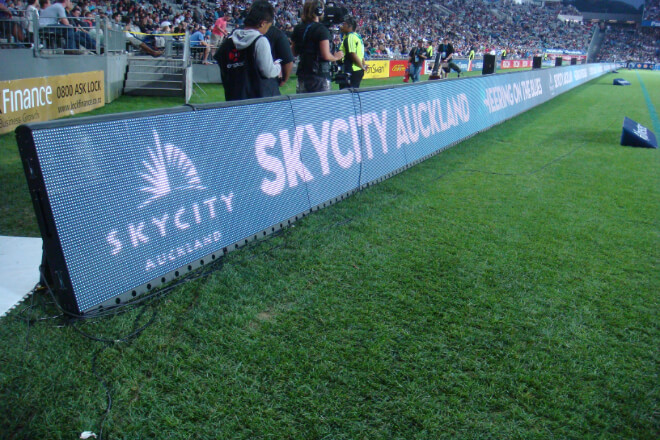
LED advertising screens are becoming increasingly popular in modern advertising. Their advantages are very obvious, mainly reflected in the following aspects:
1) High 명도 and High-Definition Display
Whether it’s the blazing sun of day or the dim light of night, LED advertising screens can clearly present advertising content.
The colors are vibrant and rich, and the text and images are very clear, allowing people to understand the advertising information at a glance.
This high brightness and high definition not only make the advertising content more eye-catching but also effectively attract the attention of passersby, increasing brand exposure.
2) Flexibility and Versatility
LED advertising screens can display various types of content, including text, images, videos, and even animations.
More importantly, businesses can flexibly adjust the content displayed based on different time periods, events, or target audiences.
This flexibility makes advertising not only more diverse but also more precise, delivering the most suitable information for different scenarios and making each advertisement more valuable.
3) Dynamic Updates, On-the-Go Changes
Compared to traditional advertising, one of the biggest advantages of LED advertising screens is their ability to change content at any time.
Advertisements can be updated remotely via the network or control system, eliminating the need for manual replacement of posters or light boxes.
This not only saves manpower and time but also ensures that the advertising content always stays fresh.
Businesses can quickly adjust their promotional strategies based on market dynamics, making their advertising more timely.

In football stadiums, LED advertising screens not only make the games more exciting but also bring considerable revenue to the clubs. Its revenue-generating methods are very intuitive and full of interactivity and fun:
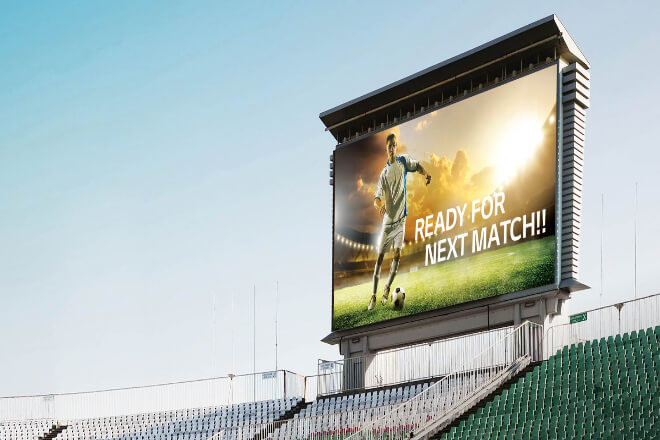
In football stadiums, LED advertising screens not only display advertisements but also enhance their effectiveness through precise targeting, ensuring every advertisement is “worth the investment.” Specifically, this can be achieved through the following aspects:
1) Data Analysis
Modern advertising relies heavily on data support. By analyzing fans’ interests, behaviors, and consumption habits, clubs and advertisers can understand what types of products audiences prefer and which brands they follow.
For example, if fans at a particular match are more interested in sports equipment, then related advertisements can be precisely targeted, ensuring each ad reaches potential consumers and improving campaign efficiency.
2) Audience Segmentation
Not all fans are the same. LED advertising screens can customize personalized advertising content based on different audience types.
For example, younger fans may prefer trendy brands, while families watching the game may be more interested in food and beverages or children’s products.
Through such segmented targeting, advertising messages become more closely aligned with audience needs, naturally resulting in higher attention and memorability.
3) Dynamic Adjustment
Matches are constantly changing, and fans’ attention fluctuates accordingly. LED advertising screens can flexibly adjust advertising content and format based on real-time match progress and audience reactions.
For example, switching advertisements during key goals or timeouts ensures viewers see the message at their most focused moments, improving conversion rates and advertising effectiveness.
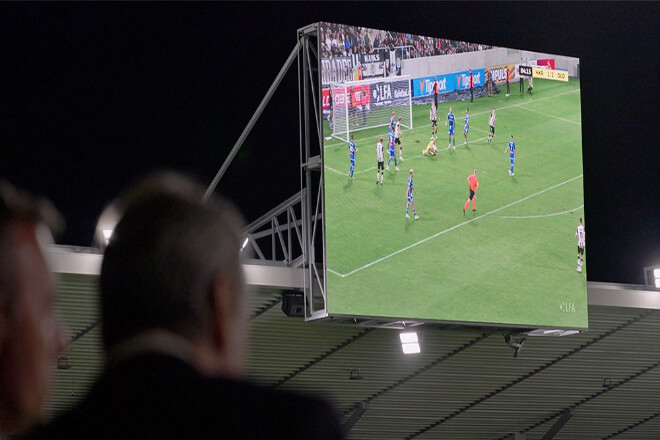
1) Social Media Interaction
LED advertising screens can interact with social media platforms, extending brand reach beyond the venue.
For example, displaying fan comments, messages, or match-related topics during breaks allows on-site audiences to participate in discussions, while simultaneously attracting online users to follow match-related content.
This way, brand exposure extends beyond the on-site audience, reaching more potential customers through social media and enhancing online influence.
2) Combining Online Activities with On-Site Advertising
During the match, LED advertising screens can guide fans to participate in various online activities, such as voting, raffles, or mini-games.
Fans can interact with the brand on-site via their mobile phones, not only having fun but also enhancing their brand affinity and memorability.
This online-offline integration makes advertising more engaging and allows brands to build closer connections with fans.
3) User-Generated Content
Content posted by viewers on social media can also become part of LED screen advertising.
For example, displaying fan selfies, check-ins, creative support messages, or match commentary on the LED screen increases interactivity and makes the advertising more fun and authentic.
Fans seeing their work appear on the big screen will naturally share and discuss it, further amplifying the advertising effect.
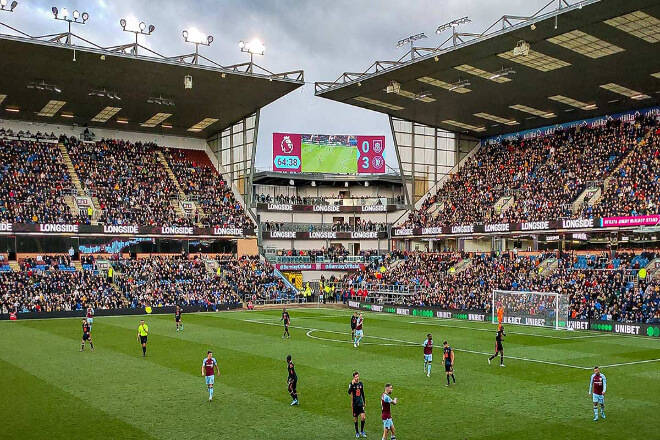
In football stadiums, LED displays are not only used to display advertisements but also to enhance audience engagement and advertising conversion rates through interaction and strategies. The following methods are particularly effective:
1) Real-Time Interactive Advertising
During the match, real-time interactive elements can be set up on the LED screen, such as score predictions, quizzes, or polls.
Fans can participate in the interaction via their mobile phones or on-site touchscreens, increasing the enjoyment of watching the game and making the advertising information more memorable through interaction.
The more engaged the audience, the higher the ad’s attention and memorability.
4) Integrating Ads with Event Content
Combining ad content with exciting moments from the game is an effective way to improve conversion rates.
For example, during goals, corner kicks, or breaks in the game, playing relevant brand ads or creative content themed around the event allows the ad to naturally blend into the game’s rhythm.
This presentation method allows fans to naturally remember brand information while watching the game, improving ad effectiveness.
3) Audience Reward Mechanisms
Encouraging audience interaction through reward mechanisms is also a good way to improve ad performance.
For example, participating in interactive games, voting, or sharing activities can earn fans gifts, discount coupons, or chances to win prizes.
Rewards not only increase audience participation but also make the brand image more relatable to viewers’ lives, further improving ad conversion rates.
In summary, through real-time interaction, content integration, and reward mechanisms, LED displays not only make ads more engaging.
But also increase audience participation, maximizing the value of each ad and achieving a win-win situation for both interaction and commercial benefits.
 English
  Español
  简体中文
简体中文  Français
  日本語
日本語  한국어
한국어  العربية