
소개
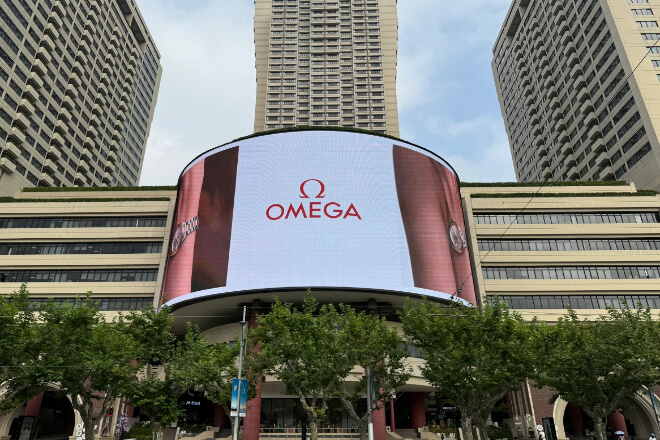
In many commercial spaces, LED 디스플레이 have become almost standard equipment.
However, an interesting phenomenon exists: some screens consistently attract attention and are repeatedly viewed, while others are only glanced at and then ignored.
The difference often lies not in the screen itself, but in whether it truly “retains people’s attention.”
When users are willing to linger for a few more seconds, it not only means their attention has been captured, but also that the space begins to generate value.
목차
1. How can LED displays attract users to stay through visual content?
In practical applications, whether an LED display can “retain people’s attention” largely depends on the design of the content itself, not just the screen’s parameters.
In other words, the device is responsible for “presentation,” while the content is responsible for “attracting.”
First, impactful visuals are often the first step. People’s attention span is short when passing through a space.
A visually contrasting and focused image is more likely to grab attention at first glance, thus creating a brief pause.
Second, dynamic content is more likely to continuously attract attention than static images.
Appropriate animation, rhythmic changes, or image transitions can generate viewers’ interest in “continuing to watch” in a short period, rather than having them glance at it and leave.
Meanwhile, the simpler the content is presented, the more efficient the information delivery. In screen displays, overly complex information can actually slow down comprehension and even cause viewers to quickly skip over it.
Clear hierarchy and highlighted key points are more conducive to lingering and understanding.
Simply put, the key to attracting users to stay is not “how big the screen is,” but “whether the content grabs their attention immediately and makes them want to look at it more.”
The true value of an LED display screen begins to be amplified when the visuals are impactful, rhythmic, and clearly expressive.
2. How can LED displays extend user dwell time in entrance areas?
The entrance area is a crucial node for users, from “passing by” to “entering,” and the role of an LED display screen here is more about acting as a trigger point for “stopping to take a look.”
First, shop windows or entrance locations naturally have a visibility advantage.
If attractive content is placed in this area, it easily creates a reason for users to pause briefly, making those who were just passing by take a second look or even stop to observe.
Second, the combination of content and space directly affects the degree of user dwell time. In short, it’s not just the screen playing content; the content and the space together tell the same story.
When the visuals resonate with the displays, lighting, or brand atmosphere, the overall appeal is more natural and makes people more likely to linger.
From a behavioral perspective, the core value of the entrance area lies in the “first step of conversion.”
LED displays, through dynamic images or rhythmic visual presentations, can attract attention without being intrusive, turning “passing by” into “staying,” and further guiding people into the space.
Simply put, the LED 디스플레이 in the entrance area are not just displaying information, but more like a visual touchpoint that “gently keeps people here.”
When the content is well-designed, strategically placed, and well-integrated with the space, it can effectively attract attention before users even enter.
3. How can LED displays create an immersive experience in a space?
In spatial experiences, LED 디스플레이 are no longer just tools for “playing content,” but rather an integral part of the scene that brings users into it.
When done well, it doesn’t feel like “looking at a screen,” but rather a natural “entering an environment.”
First, multi-screen collaboration helps create a more complete visual atmosphere. When multiple screens form a unified visual rhythm or theme in a space, the user’s attention is naturally guided.
The transition from one area to another becomes more seamless, rather than lingering on a single point.
Second, the integration of content and spatial design is crucial. If the visuals can coordinate with lighting, structure, and movement.
Then the screens are no longer independent entities but rather part of the spatial expression.
Simply put, it’s not “the screens playing content,” but “the space together expressing content.”
At the same time, through reasonable content distribution and spatial guidance, the user’s dwell time can be extended subtly.
Setting different visual focuses in different areas allows users to continuously receive new information.
Or visual changes as they move, naturally extending their dwell time rather than quickly moving through.
Simply put, immersion isn’t created by piling things up, but by multi-screen collaboration, content design, and spatial coordination, gradually drawing users in without them consciously lingering.
4. How can LED displays guide viewing time through content rhythm?
In practice, how long users are willing to stay on screen often depends not only on the quality of the content but also on its presentation rhythm.
A well-designed rhythm makes content easier to watch completely; conversely, even good content may be quickly skimmed over.
First, a segmented content structure makes information easier to understand. Breaking content down into different modules and unfolding it logically allows viewers to follow along naturally.
Instead of being bombarded with a large amount of information at once, this approach helps extend viewing time.
Second, variations in rhythm enhance viewing interest. If the visuals change appropriately at different stages,
For example, switching visual focus, adjusting motion effects, or changing information hierarchy, viewers are more likely to maintain their attention and avoid quickly losing interest.
At the same time, if content remains monotonous or repetitive for a long time, viewers are prone to a “watch and leave” mentality.
Therefore, incorporating appropriate variations into content carousels or structural designs can make the overall viewing experience more layered and less tiring.
Simply put: good content not only needs to be “informative” but also “paced.”
With well-designed pacing, users are more likely to go from “glancing at it” to “watching for a few more seconds.”
5. 결론
The value of an LED display screen is never just about being seen.
The real difference lies in its ability to engage users at the right time, in the right place, with the right content, making them want to stay.
Visual appeal is just the starting point; the coordination of content, pacing, space, and user flow determines the length of time users stay.
When these factors are systematically considered, an LED display screen becomes more than just a display device; it becomes part of the spatial experience.
마지막으로 LED 디스플레이에 대한 자세한 내용은 우리에게 연락해주세요.
 English
  Español
  简体中文
简体中文  Français
  日本語
日本語  한국어
한국어  العربية