
소개
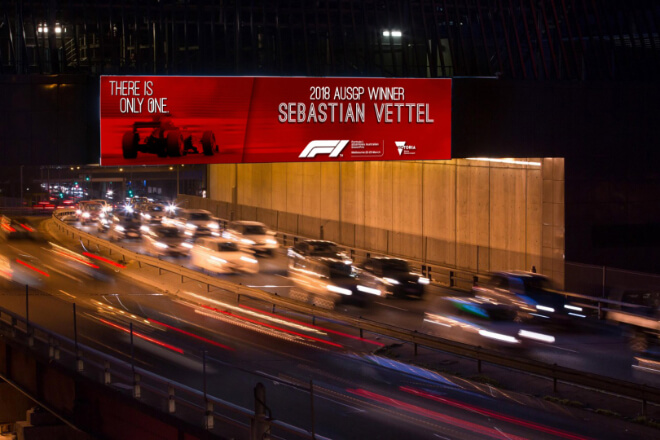
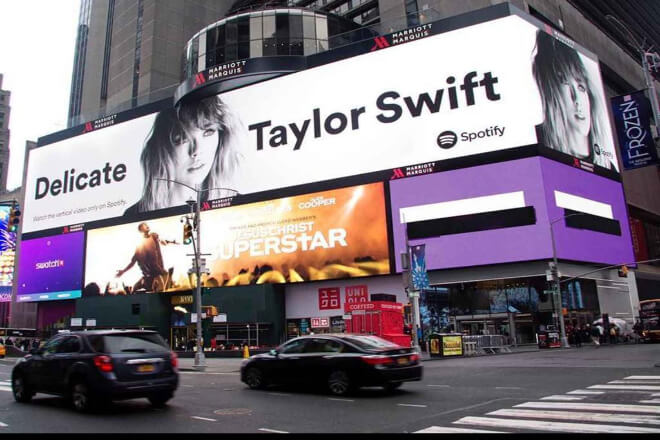
Have you ever noticed those giant LED 광고 화면 on the street?
Whether in 쇼핑몰, subway stations, or city landmarks, they always grab your attention immediately, making you look for a few more seconds.
Why are some advertisements fleeting, while others leave a lasting impression and even make you want to try them out? The answer isn’t just about the size or brightness of the LED screen.
목차
1. Basic Advantages of LED Display Advertising

LED screens are incredibly bright; even the brightest sunlight can’t obscure their brilliance, and at night they look like miniature suns in the night sky.
Imagine driving past a giant screen on a skyscraper in the city center; the advertisement is so clear you can even read the small print without squinting or getting too close.
This is far superior to traditional inkjet or projection advertising; the information directly “hits” your eye, making you remember the brand immediately.
LED screens display colors as vibrant as a rainbow—intense reds, deep blues, and shimmering golds—making you want to look for more.
For example, holiday advertising videos in 쇼핑몰, with their flashing animations and gradient color effects, look like they’re “dancing,” much more interesting than static posters.
Walking down the street, passersby might just be walking by, but the bright, flashing images on LED screens easily make them stop and take a second look.
LED screens can be made in various sizes and shapes, including curved, wraparound, and spliced large screens.
The curved ceiling screens in 공항 and the advertising screens surrounding stadiums seem to have advertising magic built into the ceiling or walls.
Moreover, the content can be changed at any time. Whether it’s holiday promotions, event announcements.
Or the results of the day’s games, it can be updated instantly, changing it whenever you want—very convenient.
Today’s LED screens are not just for “viewing,” they can also be “played with.” Interactive touch screens in shopping malls allow customers to scan codes to receive coupons.
Play mini-games, and enter prize draws. Advertising is no longer just static images, but interactive companions.
Urban outdoor screens can also be remotely updated, switching between different advertisements based on weather, holidays.
Or special events, making the ads seem almost magical. This interactivity and intelligence make the ads more captivating and memorable.
2. How to Choose the Right LED Advertising Screen Type

Choosing an LED advertising screen isn’t about “the bigger the better” or “the brighter the better.”
It depends on where you place it, who it’s for, and what message you want to convey. Here’s a breakdown:
1) Indoor or Outdoor? Consider the Environment First
Moderate brightness, detailed image.
For example, advertising screens in 쇼핑몰 or product display screens at 전시회 don’t need to be directly in the sun to be clearly visible, so the brightness doesn’t need to be too high.
The focus is on color and detail. Like looking at your phone in a coffee shop, a detailed image is enough.
High brightness is essential, and they must be able to withstand wind and rain.
Street screens and building screens face the challenges of sunlight and various weather conditions every day, so the brightness usually needs to be above 5000 nits.
Imagine an advertisement that’s “blindingly bright” even under the blazing sun, forcing passersby to take a look—that’s the power of outdoor LEDs.
2) Consider your screen placement – the scene determines the screen size:
- 쇼핑몰 and indoor showrooms:
People are close to the screen, requiring high resolution and detailed images to showcase every detail of the product.
- Streets and squares:
People are further from the screen, allowing for a larger pixel pitch and a larger screen area so that even fast-moving people can see the information.
- Train stations and 공항:
High foot traffic requires bright, fast-refreshing, and durable screens. Advertising content can be changed frequently to prevent people from missing information after just a second.
- 경기장 and concerts:
Audiences are widely distributed, requiring screens that are visible from a distance while still allowing those seated nearby to see details clearly.
Therefore, wraparound screens or giant screens are often used.
Choosing a screen is like choosing glasses: You see things clearly up close and far away; otherwise, it will be blurry or a waste of money.
Close distance (1-5 meters): Small pixel pitch (P1.5-P2.5) for detailed images.
Medium distance (5-20 meters): Medium pixel pitch (P3-P6) for both clarity and affordability.
Long distance (over 20 meters): A Larger pixel pitch (P8~P16) allows for larger screens and lower costs.
4) Fixed screen or mobile screen? It depends on your needs.
- Fixed screen:
Installed in a fixed location, suitable for long-term advertising and brand exposure, such as large shopping mall screens or street building screens.
Easy to update, remotely controllable, and replaceable whenever desired.
- Mobile screen:
Installed on a vehicle or a movable bracket, it can be moved to different locations, suitable for roadshows, flash mobs, or holiday parades.
Imagine a car with an LED screen mounted on it, driving through the city streets; the advertisement “follows you,” very eye-catching.
3. Design Principles of Creative Advertising Content

Designing LED advertising content is not just about “putting in pictures and text,” but about making it memorable and allowing the advertisement to “speak.” The following principles are crucial:
1) Concise and powerful visual communication
LED screen space and viewer attention are limited, so the core information must be immediately clear.
For example, a 쇼핑몰 promotion advertisement doesn’t need to cram in every detail of the activity.
Simply highlighting the “discount” and “limited-time offer” is sufficient.
Too much text can overwhelm viewers, making it as tiring as looking at a poster with a magnifying glass. Remember: less is more, and focus on the core message.
2) Color Scheme and Graphic Design
Color is the primary tool for attracting attention. Vibrant, high-contrast color combinations can instantly grab the attention of passersby on the street.
For example, red and yellow are both energetic and eye-catching.
Blue and white are refreshing and professional. At the same time, graphic design should be consistent with the brand style, avoiding a “messy” look, and ensuring viewers immediately recognize the brand.
3) Appropriate Combination of Dynamic Video and Static Images
LED screens can display not only static images but also dynamic videos.
Dynamic visuals easily attract attention, but if it’s all animation or video, the information might be “overshadowed.”
A good strategy is: static images handle information delivery, while dynamic elements grab attention.
For example, on shopping mall advertising screens, the main image is a clear product picture, while small animations in corners or edges attract passersby’s attention.
Combining the two yields the best results.
4) Enhancing Engagement with Animation and Interactive Elements
Modern LED screens can be interactive, enhancing the viewer experience.
For example, touchscreens, QR code games, and AR interactions in shopping malls can all get viewers “active,” making advertising more than just something to watch.
It becomes something to participate in.
Animated elements can also add fun, such as making products “jump” or having text flash rhythmically, leaving a deeper impression on viewers.
The more involved the audience is, the better the advertising effect.
4. How to Optimize LED Advertising Screen Content Playback

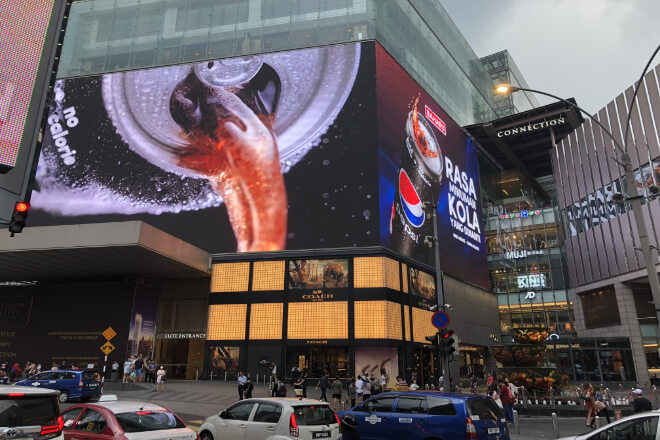
Content cannot simply be placed and played arbitrarily; timing and context are crucial.
Arranging advertising content according to different time periods and audience characteristics maximizes effectiveness.
For example, coffee and breakfast promotions can be played during breakfast hours, fast food or leisure activity information can be played at noon and in the afternoon.
And entertainment or late-night snack advertisements are more suitable in the evening.
Further adjust the content based on the installation location: Shopping malls have longer dwell times, so detailed brand stories or new product introductions can be played.
Subway station visitors walk quickly, so information should be concise and to the point. Through reasonable content updates and scheduling, your advertisements will not only be seen but also remembered.
Modern LED advertising screens are not just for “seeing” but also for “learning.”
By collecting data such as foot traffic, viewing time, and audience age groups, advertising can be more precisely targeted.
For example, if a shopping mall discovers that young people are more interested in new footwear and apparel.
While older people are more interested in health product advertisements, it can play different content at different times to improve ad reach and conversion rates.
Ad frequency or order can also be adjusted based on playback performance.
For example, if an ad is found to be most popular at 4 PM, its playback frequency during that time slot can be increased to make each ad more effective.
LED screens are not just for viewing; they can also be interactive. Interactive elements allow viewers to actively participate in advertising, improving memorability and brand favorability.
Common methods include scanning QR codes to receive coupons, touchscreen mini-games, AR interactions, and even social sharing.
Animation can also add fun. For example, text or images on the screen can dynamically change based on viewer actions, creating a “visible reaction.”
For instance, a shopping mall LED screen can set up a “scan-to-win” activity. After viewers participate, the screen displays a celebratory animation.
This not only attracts participants but also draws onlookers, increasing the advertising’s reach.
The frequency and duration of ad playback also require strategic planning.
Too few plays may cause viewers to miss them; too many plays can easily lead to visual fatigue and aversion.
Generally, it is recommended that each ad be played every 3-5 minutes, adjusting flexibly according to the scenario.
Playback time should also be reasonably controlled: in subway stations, streets, or fast-paced scenarios.
Each ad is recommended to be 5-15 seconds long, highlighting key information in a clear and easily understood manner.
In shopping malls and other places where people spend more time, the duration can be appropriately extended, incorporating more brand stories and interactive content.
A reasonable arrangement of frequency and playback time ensures that ads are seen repeatedly without becoming tiresome, while simultaneously increasing brand exposure.
5. Successful Case Studies: The World's Most Influential LED Advertising Cases
1) Times Square, New York
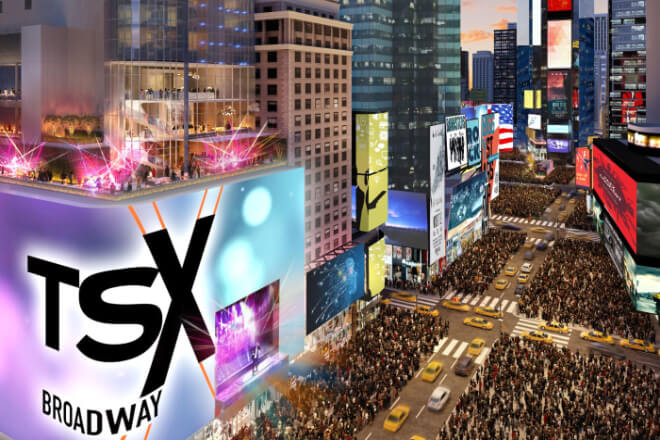
Times Square in New York City is known as the “global mecca of lightbox advertising,” attracting hundreds of thousands of tourists and citizens daily.
The LED screens here are not only enormous but also emphasize dynamic creativity and visual impact.
International brands such as Apple and Nike frequently advertise here, utilizing 3D animation, strong color contrasts, and fast-paced short videos to grab the attention of passersby within seconds.
The advertisements are frequently updated, with special creative elements launched based on holidays, events, or new products.
The screen placement and 해결 are also well-designed to ensure clear visibility for viewers both near and far.
This case demonstrates the reach and visual impact of LED screens in major city landmarks.
2) Shibuya Crossing, Tokyo
Shibuya Crossing in Tokyo is one of the world’s busiest commercial streets and a prime example of LED advertising application.
The advertising content here is highly interactive and creative, often incorporating holiday themes, brand activities, and dynamic animations.
For example, Coca-Cola and Sony advertisements utilize the surrounding environment and pedestrian flow characteristics to play dynamic videos.
Incorporating QR code scanning or AR experiences, allowing viewers to not only watch but also participate in the advertising interaction.
The playback rhythm is reasonable, and the content is highly integrated with the environment. Even at a busy intersection, the advertisements can still capture the attention of every passerby and leave a lasting impression.
This shows that combining LED screens with context and interactivity can enhance brand exposure and social media buzz.
3) Shanghai’s Nanjing Road and Beijing’s Sanlitun
LED advertising in China’s core business districts also performed exceptionally well.
For example, LED screens in shopping malls on Nanjing Road in Shanghai and Sanlitun in Beijing achieve rapid brand exposure through short videos, dynamic animations, and interactive activities.
Cosmetic brands play new product promotional videos on these screens, combined with QR code scanning or mini-games, allowing customers to not only watch advertisements but also participate in the experience.
This strategy has significantly increased brand awareness and sales conversion rates in a short period.
Furthermore, domestic LED advertising emphasizes adjusting content based on time of day and pedestrian traffic: promotional information and interactive activities are played on weekends and evenings.
While brand stories and product displays are shown during weekdays, achieving precise targeting.
6. 결론
LED displays are no longer just tools for displaying information; they can move, speak, and even interact with the audience.
From color matching to animation creativity, to playback strategies and interactive design, every detail can determine whether an advertisement is eye-catching.
Mastering these techniques can transform your advertisement from a street “backdrop” into an eye-catching focal point, making your brand memorable.
Finally, if you would like to learn more about LED displays, 우리에게 연락해주세요.