
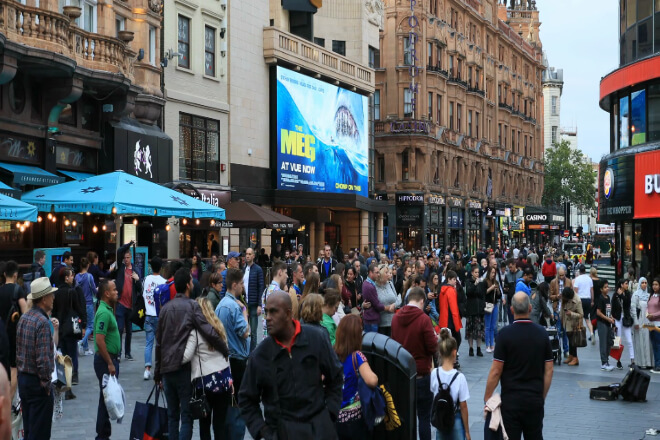
The application of LED displays in outdoor advertising, with its unique advantages, is gradually changing the way urban advertising is presented and its communication effects.
Its core advantages are mainly reflected in the following aspects:
1) High 명도 and strong contrast, achieving all-weather visibility
LED displays can provide brightness and contrast far exceeding traditional advertising, maintaining clear visibility in both bright sunlight during the day and low-light environments at night.
This all-weather visibility characteristic allows advertising information to continuously and efficiently reach the audience, significantly improving the coverage and effectiveness of information dissemination.
2) Large Size and Flexible Forms Enhance Visual Impact
LED displays can be modularly spliced for different scenarios, supporting ultra-large sizes and diverse designs such as irregular shapes and curved surfaces.
Compared to traditional advertising media, their creative and large-scale presentation is more likely to attract public attention.
Forming visual focal points in core urban business districts, transportation hubs, and landmark buildings, thereby strengthening brand exposure and memorability.
3) Dynamic Content and Instant Information Updates
Unlike static advertising, LED displays support various formats such as video, animation, and graphics, making advertising content more expressive and impactful.
Simultaneously, advertisers can update content in real time through a remote control system, flexibly adjusting advertising information according to different times, holidays, or market activities, achieving highly timely and flexible information dissemination.
4) Data-Driven Targeted Advertising for Precise Presentation
With the help of intelligent control systems and big data analysis, LED outdoor advertising can achieve precise targeting based on data such as pedestrian traffic, time periods, and audience profiles.
Advertising content can be displayed on demand and targeted, improving the relevance and conversion rate of communication.
Simultaneously, data feedback evaluates the effectiveness of the campaign, providing a reliable basis for advertising optimisation and decision-making, further highlighting commercial value.
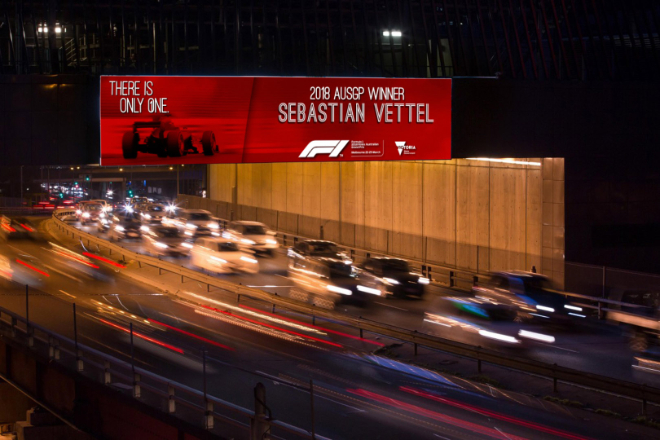
When selecting and using LED displays, technical indicators are crucial to determining advertising effectiveness and long-term operational success.
First, the protection level is the primary factor that must be considered for 실외용 LED 스크린.
Outdoor environments are complex and ever-changing, requiring screens to withstand rain, dust, direct sunlight, and extreme temperatures.
Screens with an IP65 rating or higher are typically chosen to provide waterproofing, dustproofing, and stable operation in high-temperature environments.
For example, in coastal cities or near overpasses, screens with insufficient protection are easily damaged by salt spray from sea breezes or heavy rain.
명도 and colour performance are crucial for attracting attention in outdoor advertising. LED screens must maintain clear images, vibrant colours, and rich detail even under direct sunlight.
For example, in three-dimensional wall advertisements in commercial streets, insufficient brightness can cause even the most beautiful designs to become blurry under sunlight, negatively impacting audience perception of the brand.
High-brightness screens ensure clear and legible images and text even under strong midday sunlight, while maintaining realistic colour reproduction, making dynamic advertisements more impactful.
재생률 and dynamic effects directly affect the viewing experience. When playing videos or animations, a low refresh rate can cause flickering or ghosting, affecting not only the visual experience but also sometimes resulting in interference stripes in photos or videos.
For example, short video ads played in subway stations or bus stops, if the refresh rate is insufficient, will be difficult for passengers to see clearly while they are moving quickly, significantly reducing the effectiveness of the advertisement.
Therefore, high refresh rate LED screens can ensure smooth playback of videos, animations, or scrolling text, making advertisements more vivid and eye-catching.
Energy consumption and energy-saving technologies are also crucial in outdoor LED advertising.
Large screens typically need to operate for extended periods; excessive power consumption will rapidly increase operating costs.
Modern LED screens often employ intelligent brightness adjustment or local brightness optimisation technology, which can automatically adjust brightness according to ambient light.
For example, the screen brightness automatically decreases at night or on cloudy days, saving electricity and extending the screen’s lifespan.
For large billboards or frequently played advertisements, energy-saving technologies can significantly reduce long-term operating costs.
Finally, the installation method is also a crucial factor to consider when choosing technology.
Different scenarios have vastly different installation requirements for screens: some require support pillars, such as large advertising screens along highways.
Some require wall mounting, such as advertising screens on the exterior walls of commercial complexes or inside subway stations; others have movable brackets, suitable for pop-up events or temporary brand promotions.
Choosing the right installation method not only affects the display effect but also relates to safety and ease of maintenance.
For example, when using a movable screen at an event, an unstable bracket can affect image stability and pose safety hazards.
In summary, the protection level, brightness, colour, refresh rate, energy consumption, and installation method of outdoor LED displays are all key factors determining advertising effectiveness, lifespan, and operating costs.
Only by making scientific choices based on specific scenarios and usage needs can the advantages of LED advertising be fully utilised to achieve maximum advertising dissemination.
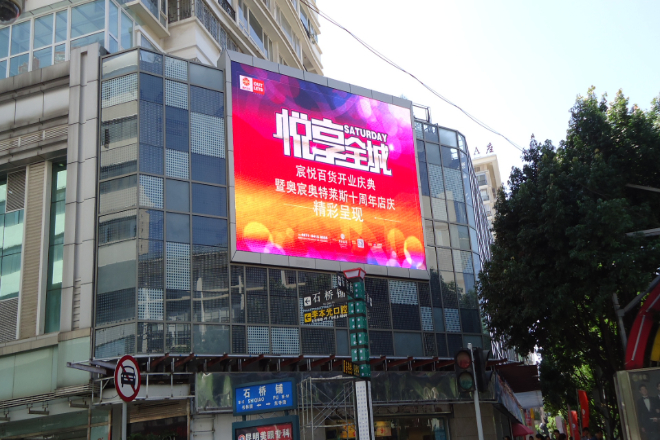
In outdoor LED advertising, no matter how large the screen or how advanced the technology, if the content is not attractive enough, the advertising effect will be difficult to achieve.
Therefore, content operation and placement strategies are particularly important, directly affecting brand exposure and audience attention.

1) Initial Equipment Costs vs. Long-Term Operating Costs
The initial costs of an LED display screen mainly include the screen itself, mounting brackets, power access, and basic construction costs.
Large screens and high-해결 equipment are naturally more expensive, but long-term operating costs are equally important, including electricity bills, daily maintenance, and content update costs.
For example, a super-large screen along a highway may have a high purchase cost.
But if energy-saving design and intelligent brightness adjustment technology are adopted, daily electricity and maintenance costs will be significantly reduced. In the long run, the overall cost-effectiveness of the investment will be higher.
2) Cost-Effectiveness Considerations for High 명도 and High Protection Levels
Outdoor environments are complex and variable, making the selection of high-brightness, high-protection-level LED screens necessary.
Although these screens are more expensive initially, they can guarantee stable operation around the clock, avoiding frequent repairs or replacements due to environmental factors.
For example, in coastal or rainy cities, screens with standard protection levels may require major repairs or even replacement every two to three years.
Screens with IP65 or higher protection levels, while having higher initial costs, have a longer lifespan and lower long-term operating costs, making them more cost-effective.
3) ROI Analysis: Audience Reach, Ad Conversion, Brand Exposure
Measuring the return on investment for LED advertising is crucial for ROI analysis.
Besides the cost of the screen itself, it’s essential to consider the audience reach, ad conversion rates, and brand exposure.
For instance, placing LED screens in prime commercial areas or subway stations can significantly increase ad conversion rates.
And brand exposure compared to the initial investment if it reaches thousands of target viewers daily, resulting in a more substantial ROI.
By analysing screen data from different locations and with varying pedestrian densities, advertisers can better plan their investments, maximising the value of every investment.
4) Investment Differences Between Fixed and Rental Outdoor Screens
Fixed and rental screens each have their advantages and disadvantages.
Fixed screens require a larger initial investment but have lower long-term operating costs, making them suitable for long-term deployments and brand building.
Rental screens offer lower initial investment and greater flexibility, allowing for adjustments to location and content based on event or market demands. However, long-term operating costs can accumulate significantly.
For example, renting a screen is more economical and convenient for a pop-up event or short-term promotion; while for a sustained brand advertising project.
A fixed screen, though requiring a higher initial investment, offers more stable long-term returns.
 English
  Español
  简体中文
简体中文  Français
  日本語
日本語  한국어
한국어  العربية