
Walking into an AI showroom, you’ll notice an interesting phenomenon.
What truly draws people in isn’t a display board filled with technical parameters, but rather a dynamic demonstration, an interactive scenario, or a large, impactful screen.
For AI companies, technology is undoubtedly important, but explaining it clearly is equally crucial. This is why more and more showrooms are choosing LED表示 systems.
AI-related technologies often involve massive amounts of data, algorithms, and application scenarios.
For those unfamiliar with the industry, simply reading text descriptions makes it difficult to quickly grasp their value.
Therefore, more and more companies are utilizing LED表示 systems to transform complex technical content into more intuitive visual displays.
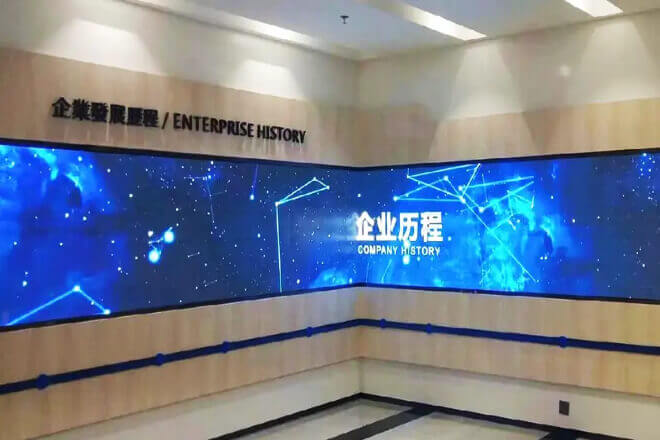
For example, at the entrance of an AI company’s showroom, a large LED video wall can showcase the company’s development history, AI application scenarios, and product solutions.
Dynamic visuals quickly attract visitors’ attention and allow customers to experience the company’s technological strength from the moment they enter the showroom.
In practical demonstrations, LED screens can also help companies make abstract data “visible.”
For example, when showcasing smart manufacturing projects, real-time data, production process animations, and equipment operation visuals can be used.
This allows customers to more clearly understand how AI helps factories improve efficiency; when showcasing smart city solutions, digital maps and dynamic information can be used to display urban management scenarios.
Compared to traditional display boards, the biggest difference with LED display systems is the ease of content updates.
When companies launch new products, add new case studies, or adjust the focus of their presentations to customers, they can directly change the content without needing to recreate a large amount of materials.
Experience centers of some overseas technology companies, automotive brands, and smart manufacturing enterprises utilize large LED screens to create immersive exhibition spaces.
Allowing customers to understand products and technologies through visual experiences rather than simply “listening to introductions.”
Therefore, using LED display systems in AI exhibition halls is not simply replacing walls with screens;
It transforms technology demonstrations from “textual explanations” to “visual experiences,” helping companies more effectively convey brand value and technological advantages.
AI technology is inherently abstract. Many customers, upon first encountering it, may understand the concepts but struggle to visualize its practical applications.
Therefore, corporate showrooms need more than just technical introductions; they need to allow visitors to see and experience the real changes AI brings.
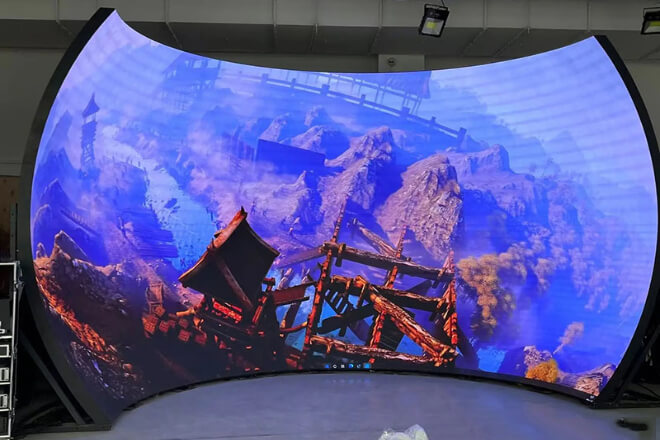
LED表示 systems can connect previously scattered information through multi-screen combinations, forming a complete exhibition space.
For example, the entrance area can showcase the company’s brand and technological strength, the central area can present product features and application cases.
And the experience area can simulate real-world usage environments through dynamic visuals, allowing visitors to understand the company’s solutions step-by-step.
Taking a smart manufacturing showroom as an example, companies can use large LED screens to demonstrate the operation of their factory production lines, including equipment status, production data, and quality inspection processes.
Customers don’t need to review extensive technical documentation to intuitively see how AI participates in production management and improves efficiency.
Beyond viewing, multi-screen systems can also incorporate touchscreens and interactive devices, allowing visitors to participate in the demonstration process.
例えば、 スマートシティ showroom, visitors can click on different areas to view application scenarios such as traffic management, energy dispatching, and urban monitoring, understanding the role of AI in real-world projects.
Some automotive brand experience centers also adopt similar methods, using wraparound LED screens to simulate a driving environment and showcase future applications.
Such as intelligent driving and vehicle connectivity, allowing customers to move from “listening to introductions” to “experiencing firsthand.”
For businesses, the value of immersive experiences lies in reducing communication costs. Complex technologies don’t need extensive explanations;
Instead, through scenarios, visuals, and interactions, customers can more quickly understand the product’s value.
LED display systems thus transform from simple display tools into crucial carriers connecting enterprise technology with customer experience.
Many AI products share a common problem: they are technologically advanced but difficult to explain clearly.
Algorithms, data models, and intelligent analysis may be familiar to professionals.
However, for ordinary customers, it’s difficult to quickly grasp the product’s value from just a few slides or sales presentations.
LEDスクリーン can help businesses make this complex content more intuitive. For example, when demonstrating an AI visual inspection system, it’s not just about saying “it can identify defects.”
Instead, the testing process is displayed in real-time on the screen, showcasing how the camera captures images.
How AI analyzes data, and how the system determines the results, allowing customers to directly see the product’s operational effectiveness.
Videos and animations also play a more effective role in product launches or solution demonstrations.
For example, when a robotics company showcases an intelligent robot, it can use an LED screen to present the robot’s actual applications in factory handling, warehouse management, or service scenarios.
This makes it easier for customers to understand its practical value than simply introducing parameters.
For platform-based products involving large amounts of data, LED screens can also help companies display data changes.
For example, smart factory solutions can display production efficiency, equipment status, and operational data in real time.
Allowing customers to see the changes before and after the AI system goes live, rather than just remaining at the conceptual level.
Some technology companies use large LED screens as an important window for product demonstrations when receiving customers in their showrooms.
Customers can see real-world examples and application effects while touring, making communication smoother and reducing significant explanation costs.
Ultimately, the focus of AI product demonstrations is not on making the technology sound complex.
But on helping customers quickly understand “what problems this technology can solve.” LED screens make product value more easily visible through visuals, data, and scene presentations.
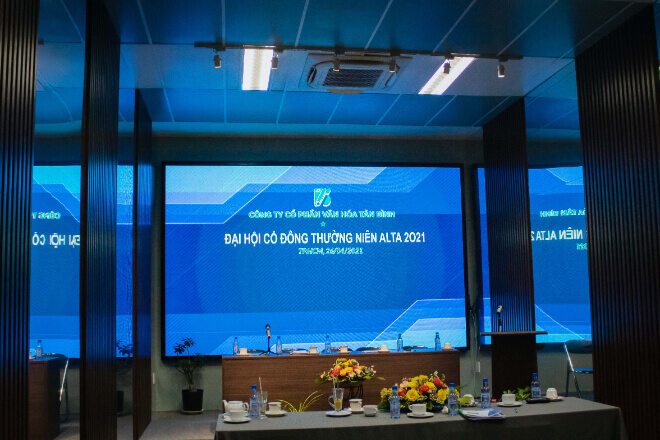
Many corporate showrooms face an awkward problem: they are stunning when first built, but after a year or two, products are upgraded, case studies are added, but the wall content remains outdated.
Changing the display content requires redesigning, reproducing, and installing, which is costly and time-consuming.
LED display systems change this situation. They prevent showroom content from being “one-time renovations that remain unchanged for years.”
But rather a digital space that can be continuously updated according to the company’s development.
For example, an AI company might present completely different focuses when meeting different clients.
For manufacturing clients, it can display implementation cases such as intelligent inspection and automated production;
For financial or government clients, it can switch to solutions such as data analysis and smart management.
Clients see content relevant to their needs, making communication naturally smoother.
New product launches are also a scenario where LED showrooms have a significant advantage.
Previously, launching a new product might require creating entirely new display boards and updating materials;
Now, simply uploading new promotional videos, product animations, or case studies can quickly refresh the large screens in the showroom.
Meanwhile, unified management of multiple areas simplifies showroom operations. Entrance screens attract attention, product areas showcase technical details.
Interactive areas enhance the experience, and different screens can be switched seamlessly to create a complete visitor route.
Some automotive brands and technology companies adjust their showroom content in advance for different events such as new product launches, media visits, and customer visits, allowing the same space to present different display effects.
Ultimately, the value of a smart showroom isn’t just about looking “cool” when it’s built, but more importantly, about its ability to adapt to changes in the company years later.
LED表示 systems act like a “digital update button” for the showroom, keeping the displayed content constantly updated.
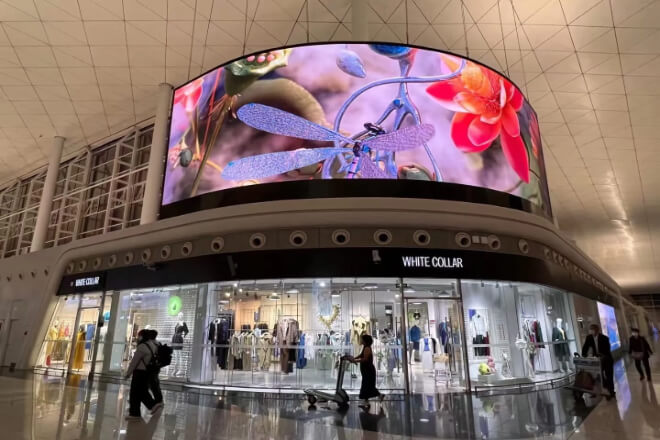
For technology companies, the showroom is not only a place to showcase products but also the first window for customers to understand the company’s strength.
Especially in the AI field, where many companies have similar technological capabilities, how to make customers quickly perceive the differences often depends on the presentation method.
LED display systems can help businesses create a more technologically advanced spatial atmosphere.
Upon entering the showroom, a 大型LEDスクリーン displays the company’s vision, technological applications, and future scenarios.
This is more attention-grabbing than traditional text descriptions and leaves a deeper first impression on customers.
For example, when an AI solutions company receives clients, it can use LED screens to showcase application cases such as smart factories, autonomous driving, and digital cities.
Allowing clients to see not just “what technologies we have,” but “where this technology is already applied and what value it brings.”
Simultaneously, LED display systems can enhance the business reception experience.
When facing important clients or partners, companies can adjust the content of the presentation according to the topic of communication, making the presentation more relevant to the client’s needs.
Compared to fixed promotional materials, this more flexible and intuitive presentation method is more likely to enhance communication effectiveness.
Some international technology companies, automotive brands, and innovation centers use large LED screens to create immersive experience spaces, allowing visitors to feel the brand’s innovative capabilities and future direction during their visit.
Such experiences often build trust more easily than simply introducing the company’s size.
Of course, brand competitiveness is not just about “looking advanced.” The real value lies in using LED display systems to better express a company’s technology, products, and concepts, allowing customers to quickly understand the company’s advantages.
For AI companies, a good showroom not only showcases past achievements but also demonstrates future development possibilities to customers.
LED display systems are becoming an important tool for companies to build differentiated competitiveness.


 English
  Español
  简体中文
简体中文  Français
  日本語
日本語  한국어
한국어  العربية