
Modern commercial displays are no longer simply about installing a screen on an empty wall.
Some brands want their screens to be highly visible, while others prefer to maintain the transparency of the storefront, allowing both products and digital displays to be seen simultaneously.
Transparent LED displays and conventional LEDディスプレイ each have their advantages. Which one is better for commercial displays? The answer depends on what you want customers to see.
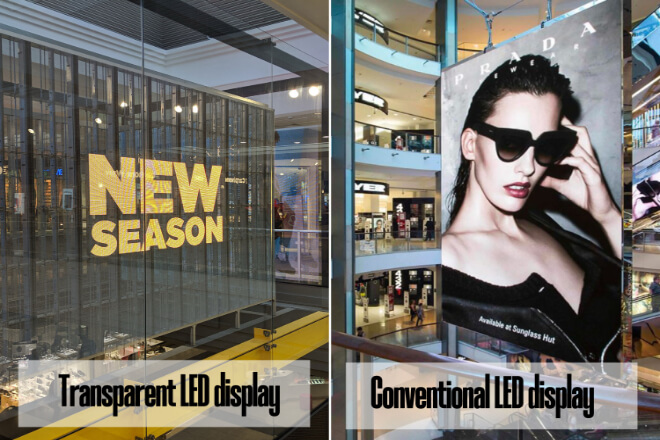
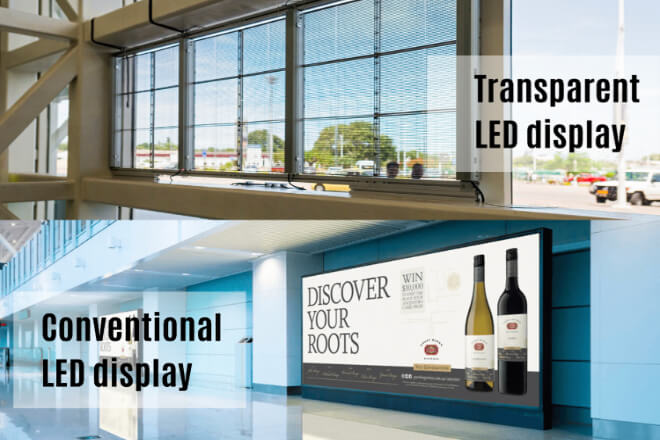
Comparing the two types of screens side-by-side, the most obvious difference is that one allows people to see the space behind the screen, while the other presents a more complete display image.
Transparent LED displays typically use special light strips, wiring, and structural designs to retain a certain amount of light transmission in areas where no content is displayed.
Simply put, it’s like a transparent decoration that can play dynamic images.
For example, a high-end clothing brand might install a transparent LED display inside a glass storefront.
The screen can play videos of models showcasing products, while customers can still see the clothing and the store environment behind the screen.
This is highly attractive to commercial spaces that want to preserve the building’s glass structure while enhancing digital display effects.
2) Conventional LED displays:
Conventional LED displays consist of densely packed, luminous pixels, enabling a more complete display image.
They are suitable for large advertising walls, stage backdrops, brand display walls, and digital decorations within commercial spaces.
For example, a large LED display installed in a ショッピングモール atrium can play brand promotional videos, product advertisements, and dynamic visual content, directly attracting passing consumers.
The difference between the two can be simply understood as follows: Transparent LED displays emphasize the integration of digital content with the real space.
while conventional LED displays emphasize the integrity and visual impact of the image itself.
Therefore, they are not simply upgrades of each other, but rather serve different commercial display needs.
The biggest feature of 透明LEDディスプレイ is their ability to display dynamic content while preserving as much visual transparency as possible within the original space.
This feature is highly valuable for commercial spaces that do not want to be obstructed by traditional displays.
1) ショッピングモール glass windows:
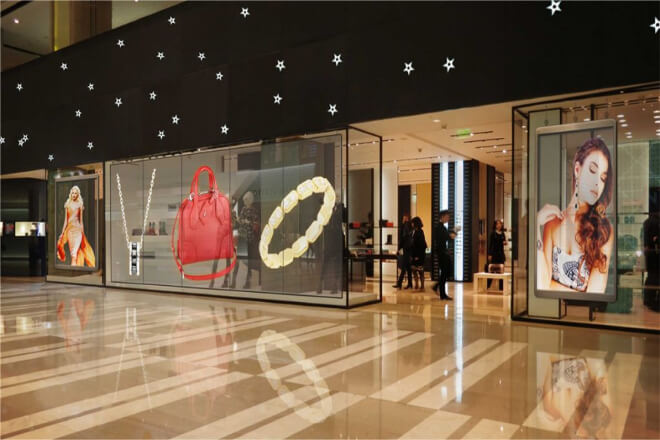
This is a very typical application scenario for transparent LED displays.
For example, a luxury store displays handbags and clothing in its window. Using a conventional LED display might obscure the products behind it.
However, a transparent LED display can play dynamic images in the glass area while allowing customers to see the actual products in the window.
Imagine the screen showing design details of a new product, while the actual product is displayed behind the screen.
Compared to simply playing advertisements, this combination of virtual and real displays is more likely to capture consumer interest.
2) Brand flagship stores:
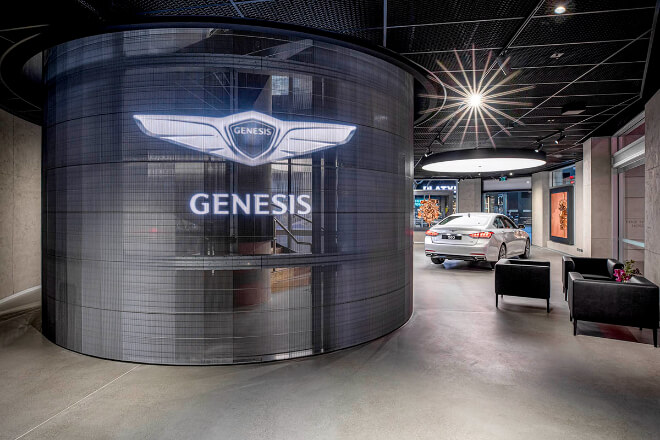
Some brand flagship stores place great importance on spatial design and do not want large-area displays to disrupt the overall decor.
Transparent LED displays can be installed in glass partitions, display windows, or specific spatial structures.
For example, a car brand can display dynamic videos of its vehicles in the glass area of its showroom while maintaining customers’ line of sight to the actual cars.
In this way, the screen serves a brand communication function without completely replacing the physical product display.
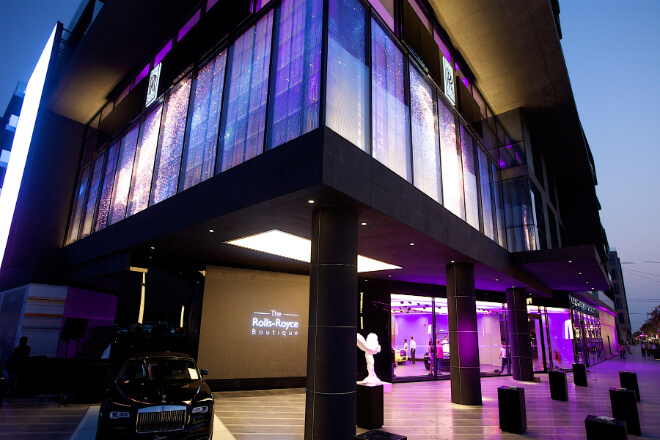
3) Commercial building glass curtain walls:
Some commercial buildings have large glass facades. If you want to increase advertising display functionality without completely blocking natural light and the building’s appearance, transparent LED displays can be considered.
For example, a transparent display area can be installed on the glass curtain wall of a commercial complex.
During the day, some architectural transparency can be maintained, while at night, brand events and dynamic visual content can be played.
However, these projects require special attention to the glass structure, installation method, daytime visibility, and building management requirements.
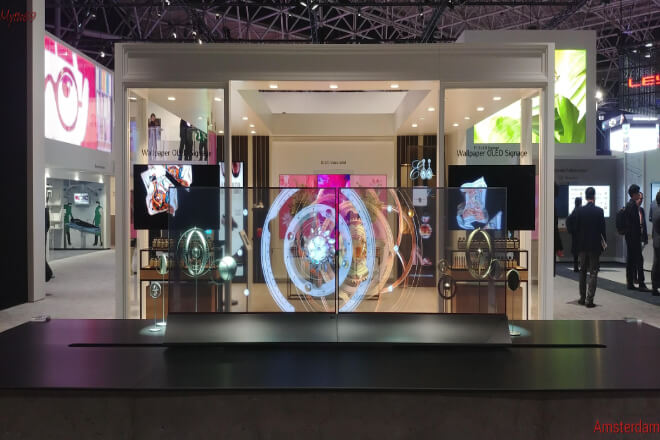
4) 展示会 and brand events:
Transparent LED displays can serve as a display backdrop in new product launches and commercial exhibitions.
For example, products can be placed in front of the screen, while dynamic visual content related to the products is played behind the screen.
Viewers can see both the actual products and enjoy the visual experience of digital content.
This approach is particularly suitable for showcasing automobiles, fashion, electronics, and high-end consumer goods.
It’s important to note that transparent LED displays are not completely invisible. Their light transmission is affected by pixel pitch, structural design, installation environment.
And background lighting. Therefore, on-site testing with samples should be conducted before procurement.
Since transparent LED displays can maintain a sense of openness, why do many shopping malls, brand showrooms, and commercial advertising projects still heavily utilize conventional LED displays?
The reason is simple: sometimes, commercial displays don’t need transparency, but rather a strong visual appeal.
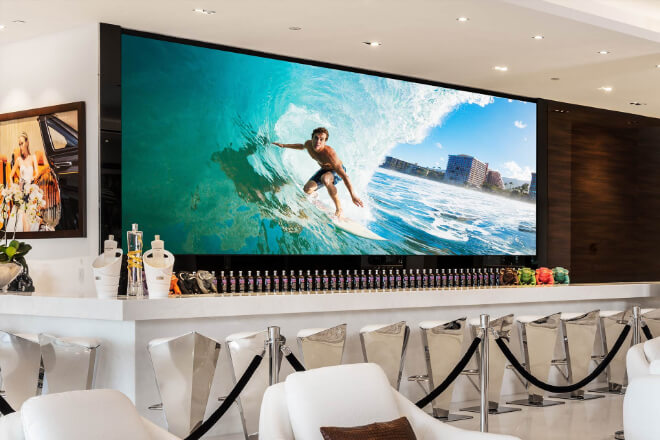
1) Large-scale advertising displays:
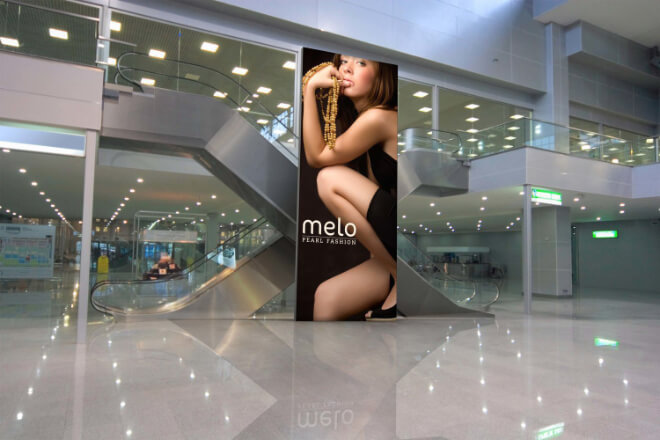
For example, a ショッピングモール atrium needs to install a large advertising screen to play brand promotional videos and commercial event content.
Using a conventional LED display provides a more complete screen area, suitable for displaying colorful videos and large-scale dynamic visuals.
For projects aiming to attract consumer attention from a distance, this solution is often more direct.
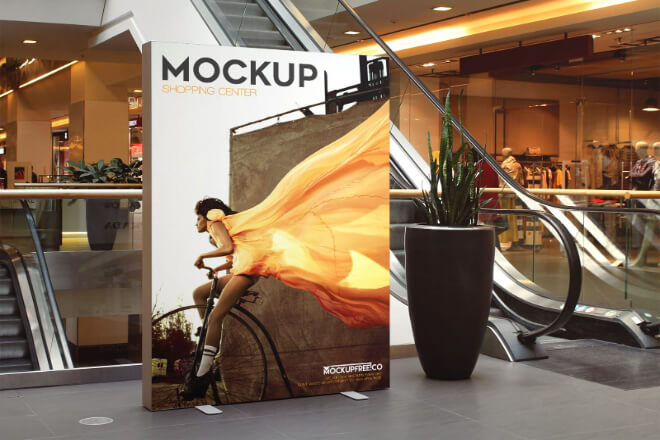
2) Product detail displays:
For example, electronics brands need to showcase details of mobile phone screens, product materials, and functional demonstrations.
Conventional LED displays provide a continuous display area, allowing designers to easily arrange text, images, and video content.
With transparent LED displays, the image may be affected by the light transmission structure and background environment, requiring more careful content processing.
3) Commercial space decoration:
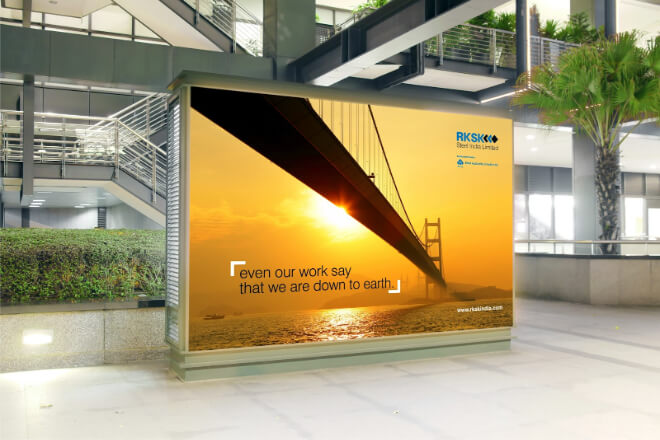
Conventional LED displays can not only be installed on walls, but also combined into curved, circular, and other creative structures through module assembly.
For example, a large retail mall can use LED displays to create a brand-themed backdrop, making the entire space a prominent visual focal point.
This flexibility is crucial for commercial projects that want to transform the atmosphere of a space through digital content.
4) Display in bright environments:
Transparent LED displays, due to their structural requirement to retain a light-transmitting area, are affected by ambient light and background.
Conventional LED displays typically have a more complete light-emitting area, making them more likely to achieve the desired effect in projects requiring high brightness, strong contrast, and large-area display.
Of course, the final performance still depends on product specifications and the specific usage environment.

For business project decision-makers, the choice of screen should not be based solely on appearance.
Some projects seem to have a more futuristic feel with 透明LEDディスプレイ, but in actual use, the image is found to be less clear;
Other projects choose conventional LED displays, achieving excellent display effects, but find that the originally carefully designed glass space is obstructed.
Therefore, it is recommended to compare the following aspects:
When it comes to the actual procurement stage, ask yourself this question first: Do you want customers to see the screen itself, or the display effect created by the screen and the surrounding space?
This question can help businesses narrow down their choices.
If the project needs to maintain a sense of openness and transparency in the glass and space, prioritize 透明LEDディスプレイ.
For example, brand windows, glass curtain walls, car showrooms, and open-plan commercial spaces.
These scenarios share the common characteristic that there is already content worth displaying behind the screen.
If the project needs to highlight advertising visuals and visual impact, prioritize conventional LED displays.
For example, large shopping mall advertising walls, ステージ backdrops, brand display walls, and indoor digital art installations.
These projects place greater emphasis on complete visuals, color reproduction, and visual coverage.
If the project requires both display effects simultaneously, consider using a combination.
For example, a large car brand showroom can install a transparent LED display in the glass entrance area to display brand promotional content.
And install a conventional LED表示 on the main indoor display wall to play car product videos and brand stories.
Having two screens each fulfill different tasks is more reasonable than forcing the use of only one product.
Before finalizing the purchase, several details should be carefully confirmed:
Are the on-site glass and building structure suitable for installation?
Will the transparent screen be clearly visible in strong daylight?
What is the primary viewing distance for the audience?
Is it necessary to display detailed text and product details?
Does the screen content need frequent updates?
Is it easy to maintain after installation?
Does the product comply with local building, electrical, and fire safety requirements?
Especially for transparent LED displays, it is recommended to conduct sample testing in an actual installation environment.
The same screen can present completely different effects under different backgrounds, lighting, and viewing angles.
For commercial projects, the screen should not be just a standalone device, but should complement the space design, brand positioning, and customer experience.


 English
 Español
 简体中文
 Français
 日本語
 한국어
 العربية