

For decades, traditional billboards have occupied a prominent position on city streets.
But with the advent of the digital age, LEDディスプレイ are transforming advertising in a more dynamic and flexible way.
When a stationary billboard meets a screen that tells a story, the competition seems to be getting increasingly interesting.
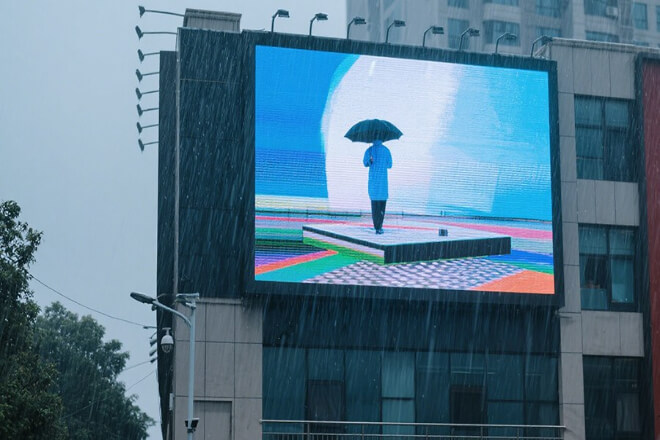
In today’s increasingly attention-grabbing advertising landscape, the difference between static images and dynamic displays is quite significant – one “freezes a sentence,” while the other “continuously tells a story.”
First, traditional billboards rely on fixed images. Once the content is created, it remains largely unchanged.
For example, a poster can only convey one piece of information; if the viewer doesn’t notice it at that moment, they may simply miss it.
In contrast, LEDディスプレイ support video, animation, and even interactive content. The same advertising space can switch between different scenes within seconds:
Product close-ups, usage scenarios, and brand stories appear in rotation, making the information delivery more complete and rhythmic.
More importantly, dynamic content is more likely to attract attention. In densely populated shopping districts or sporting events, people’s gaze is naturally “scanning,” and dynamic images are more likely to “stand out.”
For example, a static logo might be overlooked, but a flowing light and shadow effect or an animation of a product’s explosive presentation is likely to catch someone’s eye.
At the same time, LED displays can improve the efficiency of information delivery. Content that previously required an entire poster can now be broken down into multiple screens presented sequentially:
An opening to attract attention, a middle section to highlight selling points, and a closing to reinforce memory—the logic is clearer, and acceptance is higher.
More interestingly, the human brain is naturally more sensitive to “changing images.” This is why many people, even if they are just passing by, are “captured” for a few seconds by a screen playing a video.
Simply put, the difference can be summarized as: static advertising is “passive display,” while dynamic displays are “active attraction.”
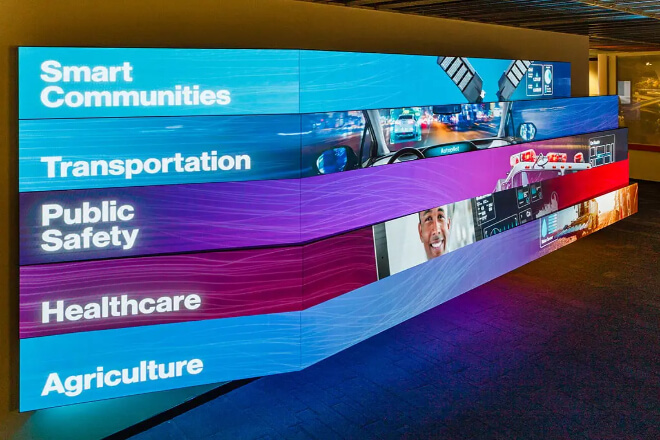
In today’s increasingly fast-paced marketing environment, “who can update content faster” is often more crucial than “how good the content itself is.”
In this respect, LED displays have already established a significant gap with traditional billboards.
Firstly, traditional advertising is costly and time-consuming to change.
Whether it’s replacing shopting mall posters or outdoor lightbox displays, it requires a complete process including design, printing, transportation, and on-site installation.
Sometimes, a simple event update can take several days or even a week; by the time the ads are changed, the event is almost over.
In contrast, LED displays can be updated remotely in real time. A single click in the backend can switch the display in seconds.
For example, if a new product is launched in the morning, the promotional content can be simultaneously displayed on screens in different cities in the afternoon, without any physical replacement.
Furthermore, it can flexibly adapt to promotions and holiday events.
For example, the promotional theme can be switched for Singles’ Day, the holiday visuals can be changed for Mid-Autumn Festival, and even in the event of a sudden trending topic.
The content can be quickly adjusted for “leveraging the trend.” The same screen can constantly “change its identity.”
Even more interestingly, in high-traffic areas, LED screens can even “update as they happen.”
For example, the advertising content can be switched simultaneously the moment a limited-time offer begins, ensuring that the dissemination rhythm and marketing rhythm are perfectly aligned.
In simple terms, the difference between the two can be understood as follows: Traditional advertising is like a “pre-printed newspaper,” while LED displays are like a “constantly updated information screen.”
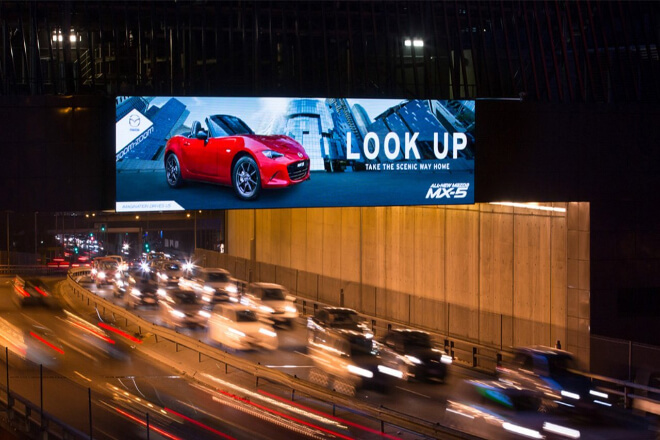
In advertising, “being seen” is only the first step; “being remembered” is the key.
The difference between LED displays and traditional static advertising in this respect often lies in the depth of memory and the duration of attention.
First, dynamic visuals are more likely to enhance brand recall. Compared to a fixed poster, flowing images, changing rhythms, and visual impact are more likely to trigger attention.
For example, an animated effect where a product changes from a static display to “jumping out of the screen” is more likely to leave an impression on viewers.
Second, LEDディスプレイ can precisely target different content across multiple time periods.
The same screen can display content relevant to commuters during the morning rush hour, switch to restaurant promotions at noon, and then switch to entertainment or shopping ads in the evening.
Repeatedly reaching the same user group in different scenarios allows the brand to “make its presence felt” multiple times throughout the day.
At the same time, it can also improve ad reach and interaction rates.
Especially in commercial districts, transportation hubs, or sporting events, dynamic content is more likely to attract passersby to stop for a few seconds, even prompting them to take photos, scan QR codes, or share.
This brief interaction is inherently more valuable than simply “seeing it while passing by.”
More importantly, LED displays can extend brand influence. Advertising isn’t just effective at the moment it plays; it persists in the viewer’s memory even after they leave the scene.
For example, a stunning product animation might still evoke the brand name days later.
Even more interestingly, people often remember not the advertisement itself, but “the scene in which they saw it.”
For instance, a dynamic image flashing in a crowded shopping mall, or a brand visual appearing on a large screen at a sporting event—this combination of “scene + image” creates a stronger memory.
Simply put, the difference can be summarized as: static advertising leaves an “impression,” while dynamic displays leave a “memory fragment.”
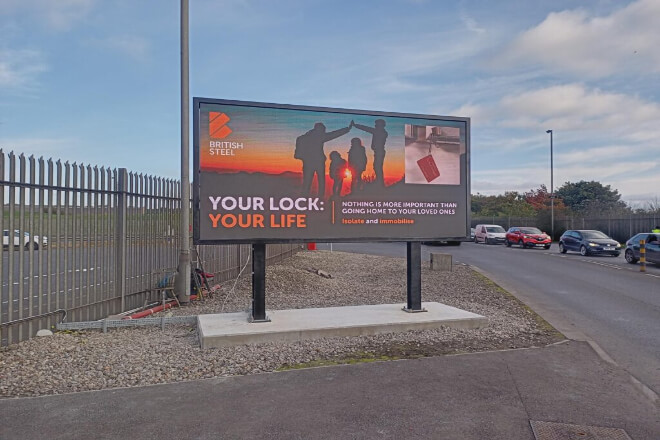
From a one-time investment perspective, LED displays do indeed have a higher cost.
However, when viewed over a longer timeframe, their advantages become very clear—it’s more like “buying equipment” than “buying a one-time advertising space.”
First, traditional advertising is costly to produce and replace. Each content update requires redesign, printing, transportation, and even on-site installation.
Especially for 屋外 LED スクリーン また ショッピングモール light boxes, changing the display is like “starting a new campaign,” incurring significant time and labor costs.
In contrast, LED displays support long-term reuse. Once installed, a screen can be used for many years, requiring only continuous updates to the digital content.
Whether for brand upgrades, holiday marketing, or temporary events, the display can be adjusted online without physical replacement.
Simultaneously, it significantly reduces ongoing operating expenses. There are no frequent printing costs or repeated construction costs, and routine maintenance is relatively stable.
For brands or venues requiring long-term advertising, these savings are substantial.
More importantly, it improves the overall return on investment (ROI). The same LED screen can support countless advertising campaigns:
New product launches, holiday events, brand promotions, and sporting event collaborations can all reuse the same medium, continuously amortizing the “cost per use.”
Even more interestingly, LED displays have a hidden advantage—the more you use them, the more cost-effective they become.
The longer it’s used, the lower the cost per unit exposure, because the screen itself doesn’t incur additional hardware costs due to content changes.
Simply put, the difference can be understood as follows: Traditional advertising is like “buying a new ticket every time,” while LED displays are like “buying a long-term ticket with unlimited content changes.”
In advertising, there’s rarely a question of “which will definitely replace which,” but rather “which is more suitable for the current scenario.”
Traditional advertising and LED displays each have their own strengths.
First, traditional advertising is better suited for fixed, long-term display scenarios. For example, long-term brand image walls, building signage, and road signs.
The content in these areas doesn’t change frequently, prioritizing stability and cost control. Once the design is finalized, it can be used continuously without frequent adjustments.
In contrast, LED displays are better suited for commercial complexes and event scenarios.
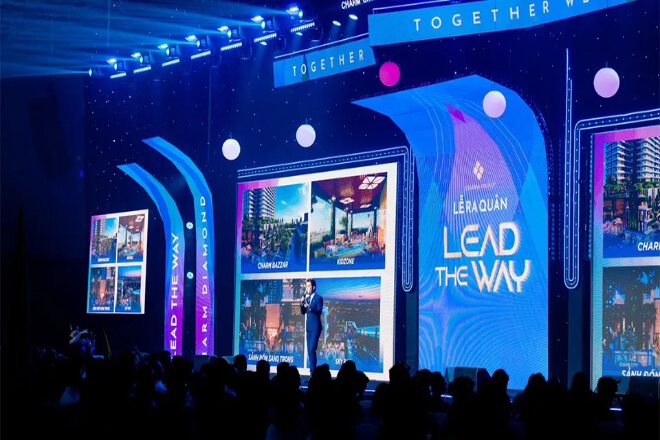
In environments like ショッピングモール atriums, sporting event venues, concert ステージ, and exhibitions, the content needs constant variation, and the pace needs frequent switching.
LED displays can adjust in real-time according to time, pedestrian flow, and event milestones, offering great flexibility.
Meanwhile, LEDs offer even greater advantages in complex scenarios. For example, large shopping malls can use them for brand promotion during the day, and for event promotions at night.
Or during sporting events, content can be switched according to the progress of the game, ensuring the message aligns with the atmosphere and emotions of the audience.
More importantly, the two are not substitutes, but rather upgrades and complements each other.
Traditional advertising addresses the issue of “long-term stable presence,” while LEDs address the issue of “dynamic communication and interactive experience.”
One is responsible for “standing still,” the other for “moving.”
Interestingly, many established commercial spaces already use a combination of both: static advertising provides basic brand awareness.
While LEDs attract attention and generate buzz. One provides the foundation, the other adds value.
Simply put, traditional advertising is a “fixed background,” while LED displays are a “dynamic stage.”


 English
  Español
  简体中文
简体中文  Français
  日本語
日本語  한국어
한국어  العربية