
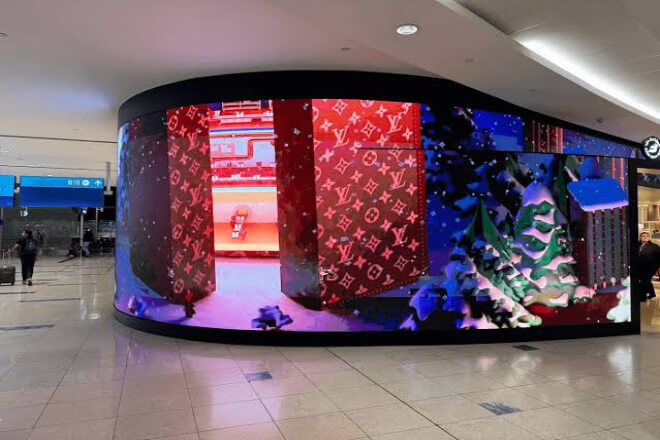
Purchasing an LED display from overseas involves much more than simply selecting a piece of display equipment;
It entails a complex process that includes product configuration, shipping and delivery, local regulatory compliance, installation requirements, and after-sales service.
While a competitive price is a good starting point, the true focus of the purchasing decision should be ensuring that the equipment arrives safely, is installed correctly, and operates reliably over the long term.
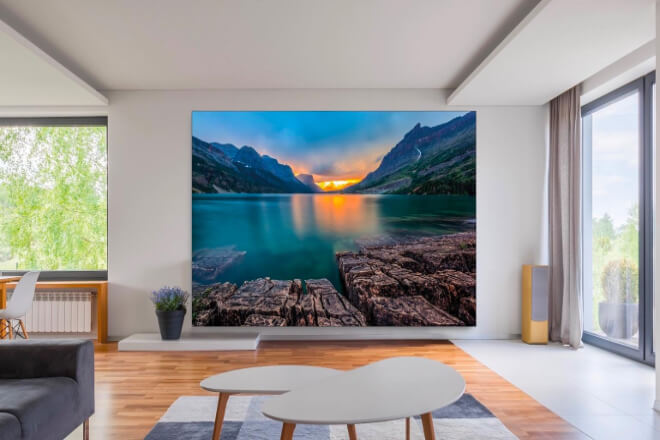
An LED display installed in a European shopping mall, on an outdoor billboard in Southeast Asia, or on a commercial building in the Middle East will face vastly different operating environments.
Therefore, when purchasing an LED display, overseas clients should not merely specify the desired dimensions.
They must also clarify the exact installation location, daily operating hours, and local climatic conditions.
For instance, in parts of Southeast Asia with year-round high temperatures and humidity, outdoor LED displays must prioritize waterproofing, moisture resistance, heat dissipation, and corrosion resistance.
In regions of the Middle East with intense sunlight and high ambient temperatures, displays require high-brightness capabilities to remain visible in strong light, as well as robust heat-dissipation designs.
Conversely, in indoor settings such as European conference rooms or corporate showrooms—where the viewing distance is typically shorter—the clarity and detail of text and images become paramount.
In such cases, the focus should be on pixel pitch, grayscale performance, refresh rate, and color consistency, rather than simply chasing the highest possible brightness.
Before finalizing a purchase, overseas clients should provide the manufacturer with the following details:
設置場所: Indoor, semi-outdoor, or outdoor.
視聴距離: The typical distance between the audience and the screen.
Usage duration: Daily operating hours and whether continuous, long-term operation is required.
環境条件: Local temperature, humidity, sunlight exposure, and weather patterns (wind/rain).
コンテンツタイプ: Whether the display will primarily show text, images, video, or real-time data.
Providing this information acts like an “interview” for the display, helping the manufacturer assess whether the product is suited to the actual operating environment。
Thereby preventing the discovery of unsuitable specifications only after the equipment has arrived.
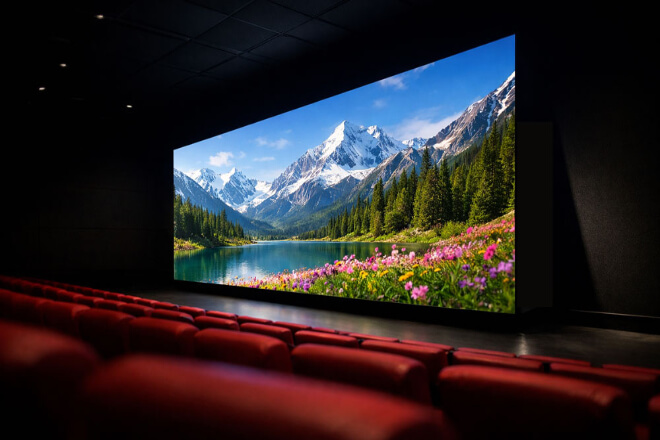
In international procurement, price is often the most immediate point of comparison.
For LED displays of the same dimensions and pixel pitch, quotes from different suppliers can vary significantly.
Opting solely for the lowest-priced product—much like buying a car based only on its size while ignoring the engine and features—can lead to numerous issues during operation.
The cost of an LED display is determined by several core components, including LED beads, driver ICs, power supplies, modules, cabinets, and control systems.
Variations in brand, specifications, and manufacturing processes directly impact display quality, stability, and maintenance costs.
Overseas clients should pay particular attention to the following aspects:
First, ensure the pixel pitch aligns with viewing requirements.
A smaller pixel pitch means a higher pixel density, resulting in sharper images at close range; however, this often comes with a higher procurement cost.
The choice should be based on the screen size and the actual viewing distance, rather than blindly pursuing the smallest possible pitch.
Second, verify that the brightness and refresh rate are appropriate.
For outdoor displays, brightness must be selected based on ambient sunlight conditions, and the unit should feature effective automatic or manual dimming capabilities.
For displays intended for stages, studios, or environments involving video recording, the refresh rate and visual performance during filming are critical.
Third, ensure there is evidence of product quality.
You may request product specifications, test reports, and videos showing the screen in operation. If necessary, arrange for sample testing or a factory inspection.
Additionally, confirm whether the quote includes the control system, power cables, signal cables, spare parts, and other essential accessories.
Since different suppliers may include different items in their quotes, price comparisons are only meaningful when the configuration and delivery standards are consistent.
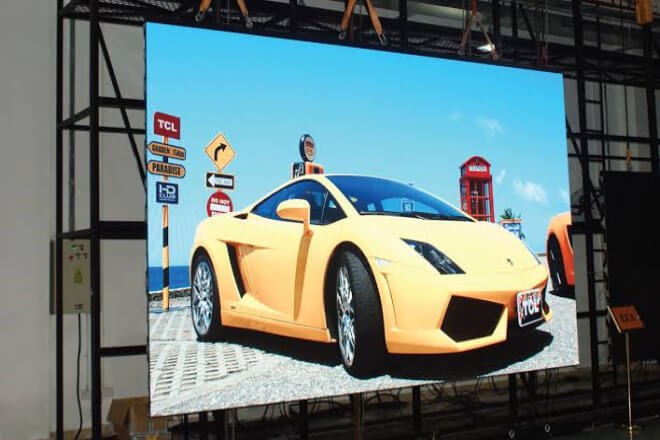
A key difference between domestic and overseas procurement is the need for cross-border logistics.
The completion of manufacturing does not mean the project is halfway to success;
Factors such as packaging, transportation, customs clearance, and local regulatory compliance can significantly affect the final delivery.
Packaging and transportation are the first considerations. LED displays consist of various components.
Such as modules, cabinets, power supplies, and control equipment—some of which are highly sensitive to impact, moisture, and static electricity.
If packaging fails to meet shipping requirements, long-distance ocean freight or repeated handling can increase the risk of product damage.
Therefore, overseas buyers should confirm the packaging method, protective measures for the crates, packing lists, shipping methods, and cargo insurance arrangements well in advance.
For large-scale projects, shipment scheduling should also account for unloading conditions at the project site and the installation sequence.
This helps prevent delays caused by inadequate storage facilities or a lack of site readiness upon the equipment’s arrival.
Next, consider certification and import requirements. Different countries and regions may have distinct regulations regarding safety.
Electromagnetic compatibility (EMC), environmental standards, and import procedures for electronic equipment.
For instance, when entering the EU market, you must determine—based on applicable product regulations—whether conformity assessments and specific labeling requirements apply.
Other nations may also have their own mandatory local certifications, import documentation, or labeling mandates.
It is important to note that not all LED displays require the exact same set of certifications.
Specific requirements depend on factors such as the product type, electrical configuration, control equipment, and the intended destination.
Before making a purchase, overseas clients should inform the manufacturer of the final destination country or region and verify requirements with local importers, customs brokers, or compliance experts.
You certainly do not want to discover that necessary documentation is missing only after the goods have arrived at the port.
While product quality determines whether an LED display functions correctly, installation and after-sales service determine whether the project can be successfully implemented.
Overseas projects often involve construction teams, linguistic environments, and electrical standards that differ from those of the manufacturer.
If technical communication is not handled thoroughly beforehand, issues—such as mismatches in installation structures, power supply conditions.
Or signal connections—can hinder the display’s operation, even if the product itself is flawless.
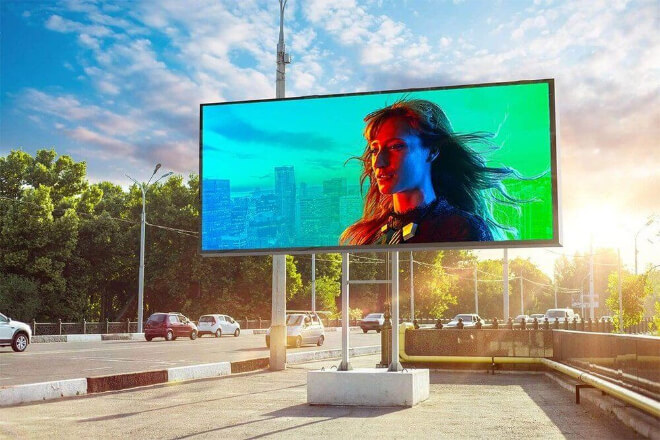
For example, an overseas company might purchase a large outdoor LED advertising screen.
While the manufacturer produces the unit according to the specified dimensions, a failure to verify the load-bearing capacity of the on-site steel structure, installation angles.
Or maintenance access paths could necessitate a complete overhaul of the construction plan.
Consequently, before finalizing a purchase, confirm that the manufacturer can provide installation drawings, structural recommendations, wiring instructions, control system configurations, and commissioning guidance.
For large or complex projects, you should also discuss the possibility of having technical personnel dispatched to the site for support.
Regarding after-sales service, be sure to clarify:
Whether a clear warranty period and scope of coverage are provided.
Can they assist with troubleshooting remotely?
Do they provide technical support in English or other languages required by the client?
Can they ensure a continuous supply of common spare parts, such as modules, power supply units, and receiving cards?
Is there a clear repair and resolution process in place for handling major malfunctions?
Pay special attention to spare parts. International shipping takes time; if a frequently used module breaks and a replacement takes weeks to arrive, the entire screen’s operation could be compromised.
For large-scale projects, purchasing a stock of spare parts in advance is generally a safer approach than scrambling to arrange international shipping after a failure occurs.
Overseas procurement involves many stages, so a supplier’s overall capabilities are often more important than the price of a single product.
A dependable LED display manufacturer should be able to provide support throughout the entire process—from initial design and planning to final delivery and ongoing technical assistance.
First, evaluate the manufacturer’s production capabilities and project experience.
Look at their production environment, quality control procedures, product range, and past overseas projects.
The key isn’t just the number of projects, but whether they have experience with projects similar to yours.
For instance, outdoor advertising screens, stadium displays, and indoor fine-pitch screens each have distinct technical and installation requirements.
Second, assess their communication and technical responsiveness.
Overseas projects often involve time zone differences.
If the manufacturer assigns a dedicated point of contact and a technical team capable of providing timely responses regarding product specifications.
Technical drawings, and delivery logistics, the project will proceed much more smoothly.
Third, clarify contractual terms and delivery responsibilities.
The contract should explicitly detail the product model, specifications, quantity, delivery timeline, packaging methods, warranty terms, payment arrangements, and shipping liabilities.
For international trade, it is also essential to specify the applicable Incoterms (trade terms), the point at which risk transfers, and which party is responsible for associated costs.
Finally, calculate the total cost of the project.
When sourcing LED displays from abroad, you must account for more than just the equipment’s price.
Consider additional expenses such as international shipping, insurance, customs duties, clearance fees, local installation, power infrastructure, system commissioning, and long-term maintenance.
Some suppliers offer lower initial quotes, but these often exclude additional costs;
Others may quote a higher price but provide more comprehensive technical documentation, spare parts, and project support.
Businesses should evaluate the total cost required to get the equipment on-site and fully operational, rather than focusing solely on the initial quoted figure.


 English
 Español
 简体中文
 Français
 日本語
 한국어
 العربية