

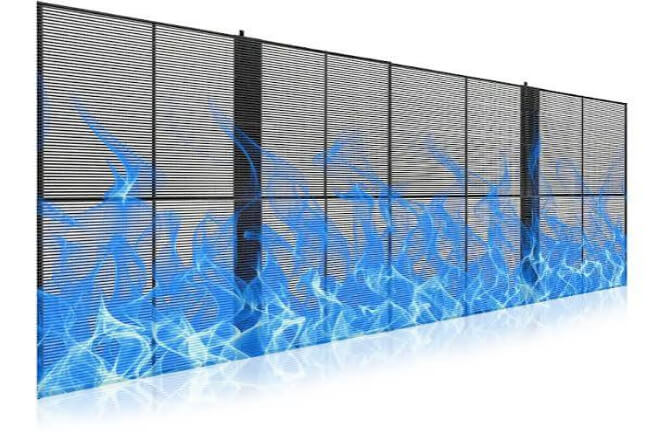
Why are transparent LED screens gaining increasing attention in the retail industry?
Because they solve a problem that plagues brands: they want to amplify their advertisements, but they can’t completely block out the storefront.
Traditional advertising screens make the images eye-catching, but they also obscure the merchandise behind the glass; using ordinary glass makes it difficult to quickly grab the attention of passersby.
透明LEDスクリーン, on the other hand, can play new product announcements, promotions, and brand advertisements while maintaining the openness of the storefront.
For example, a sports brand store can display dynamic visuals of new sneakers in its glass windows.
Passersby can see both eye-catching advertisements and the actual merchandise displayed inside.
What started as simply “looking in the window” gradually transforms into “How much are these shoes?”
Moreover, content updates are more flexible. New products can be launched today, discounts tomorrow, and themes can be changed for holidays—the screen content can be updated directly.
At night, combined with lighting and dynamic visuals, the window maintains its visual appeal.
Therefore, transparent LED screens are transforming traditional shop windows from “static display cases” into talking, dynamic digital marketing windows.
Simply put: the glass draws you in, the LED screen makes you stop. And what retail brands truly want are often those extra few seconds of pause.
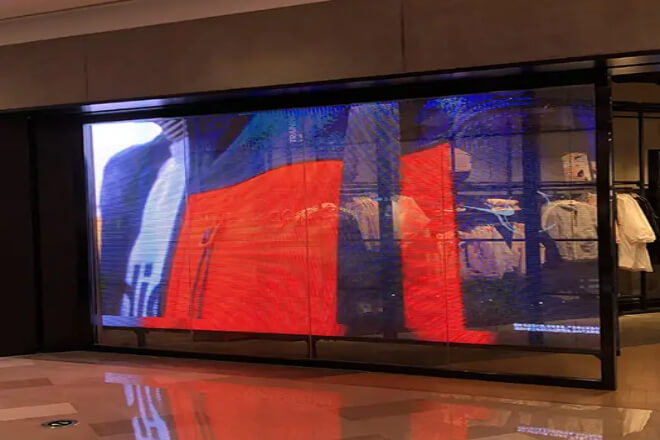
Shopping malls have many glass areas, but there used to be a small problem: displaying advertisements risked blocking light;
Not displaying advertisements seemed wasteful of such a large glass surface. 透明LEDスクリーン offer a more flexible solution.
Areas such as atrium glass, glass curtain walls, and escalator sides can all become application locations for transparent LED screens.
They can display mall events, holiday promotions, and brand advertisements, while maintaining some natural lighting and a sense of spatial transparency, preventing the entire mall from becoming an “electronic wall.”
For example, during Christmas season events, ショッピングモール can display dynamic snowflakes, event countdowns, and brand advertisements on the atrium glass.
From a distance, the glass remains transparent, but the visual effect is completely different. What was once just part of the building is now “operating” on its own.
For shopping mall operators, this change has even more direct commercial value.
Previously, only a limited number of advertising spaces could be utilized;
Now, some previously difficult-to-commercialize glass spaces have the opportunity to become digital advertising resources.
Providing more options for brand collaborations, event promotions, and advertising placements.
Therefore, the value of transparent LED screens is not just “looking thin and light.”
More importantly, it makes shopping malls rethink: can those glass spaces that cannot be easily covered also generate revenue?
The glass is still glass, but now it can finally accept advertising orders.
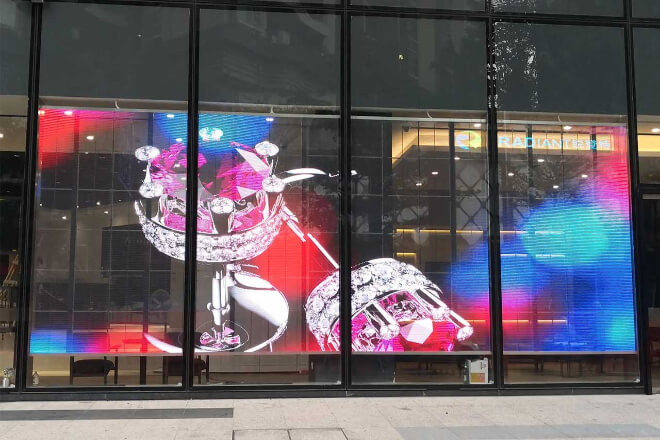
Luxury brand products are inherently attractive, but if the display method remains simply “placed there + a few lights,” it’s somewhat of a waste.
After all, a luxury car is there; the background can’t be too ordinary.
透明LEDスクリーン can be integrated with glass windows, display cases, and product displays, allowing physical products and digital visuals to appear simultaneously.
For example, in a car showroom, a new car is parked in a glass display area. The transparent LED screen can play highlights of the model, lighting effects, brand stories.
And even visual content showcasing the vehicle in different scenarios such as city streets and racetracks.
Viewers can see both the real car and the digital content “telling a story” behind it.
High-end brands such as jewelry and fashion can also adopt similar methods. The screen can display product close-ups, design inspiration, and brand stories, while the physical merchandise remains clearly visible.
The merchandise provides the sense of luxury, the LED screen provides the atmosphere, and together they elevate the overall sense of sophistication.
Compared to traditional large screens directly blocking the product, transparent LED screens are more like adding a “digital filter” to the space.
It won’t completely steal the spotlight from the product, but it can make the entire display environment more technologically advanced and memorable.
Therefore, the advantage of transparent LED screens isn’t that digital content replaces physical products, but rather that they allow both to appear together.
The car is still the same car, the jewelry is still the same jewelry; only now, even their “debut” is being upgraded.
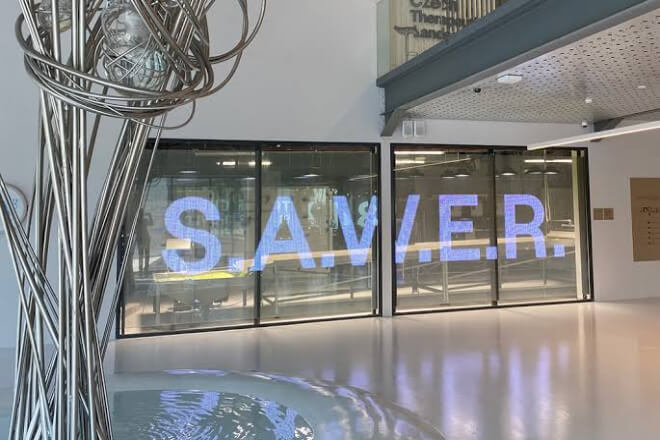
Previously, glass curtain walls primarily served for lighting and decoration, making buildings appear more transparent and modern.
Now, they may have an additional “job”—becoming digital media spaces within the city.
透明LEDスクリーン can be integrated into the facades of commercial buildings, displaying brand advertisements, commercial activities, holiday content.
And even urban cultural images while preserving the transparency of the glass as much as possible.
During the day, it’s still a simple glass building; at night, the curtain wall lights up, and the entire building seems to suddenly don a “digital coat.”
For example, the glass curtain walls of ショッピングモール can display brand promotions and mall events during normal times.
And switch to holiday-themed visuals during festivals such as Christmas and Chinese New Year.
Compared to simply hanging a billboard, this method more easily integrates with the building itself, becoming a visual focal point in the urban nightscape.
For commercial real estate and brands, this also means that previously “unutilized” building facades now have the potential to become new advertising resources.
A pane of glass can serve as both a wall and a media space, significantly increasing space utilization.
Of course, the truly sophisticated approach isn’t about turning the entire building into a giant television.
But rather about making the LED screen content follow the building’s contours, lighting, and structure.
For example, curved curtain walls can complement curved images, and architectural lines can become part of the dynamic content.
Making the advertisement look more like architectural design rather than something later added.
Therefore, future glass curtain walls may not just “let you look inside,” but also provide something to look at when you look up.
A building by day, a canvas at night—this may be the more interesting application of transparent LED screens in urban spaces.
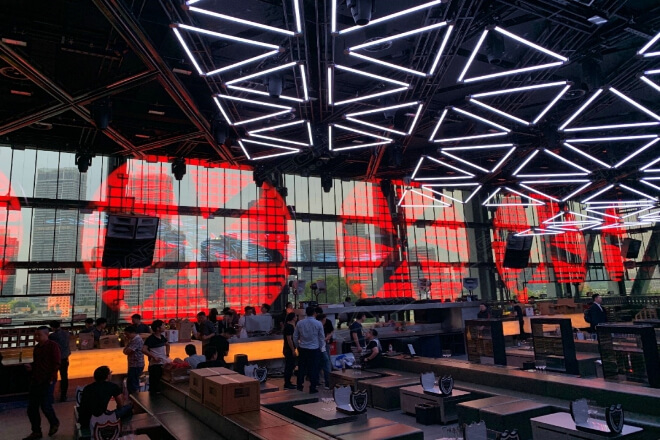
The future of transparent LED screens may not be as simple as ” putting advertisements on glass”.
A more interesting direction is to gradually integrate the screen into the entire commercial space, eventually making people forget it’s a screen altogether.
In the past, transparent LED screens primarily served the functions of window displays and brand advertising, the core being simply “displaying content.”
However, modern commercial spaces increasingly emphasize experience, and screens are now being designed in conjunction with architecture, lighting, booths, and window displays.
For example, a car showroom can integrate transparent LED screens into its glass walls, displaying car information during the day and playing brand visuals at night; when the mall hosts holiday events, the display can be changed to a holiday theme.
The same glass panel can be used for a new product launch one day and a completely different “digital skin” the next.
This approach has transformed transparent LED screens from mere advertising tools into an integral part of the spatial experience.
Consumers see not just “an ad here,” but a more atmospheric scene, one that’s more worth lingering in and taking photos.
Furthermore, content updates are highly flexible; brands can adjust them at any time based on new product launches, promotions, holiday marketing, and even different time periods.
Compared to fixed decorations, digital content is clearly easier to “change its look.”
From retail stores and ショッピングモール to car showrooms, ホテル, and brand experience centers, the application boundaries of transparent LED screens will continue to expand.
Therefore, the truly interesting aspect of transparent LED screens may not be the word “transparent,” but rather how they blur the lines between “screen” and “space.”


 English
  Español
  简体中文
简体中文  Français
  日本語
日本語  한국어
한국어  العربية