

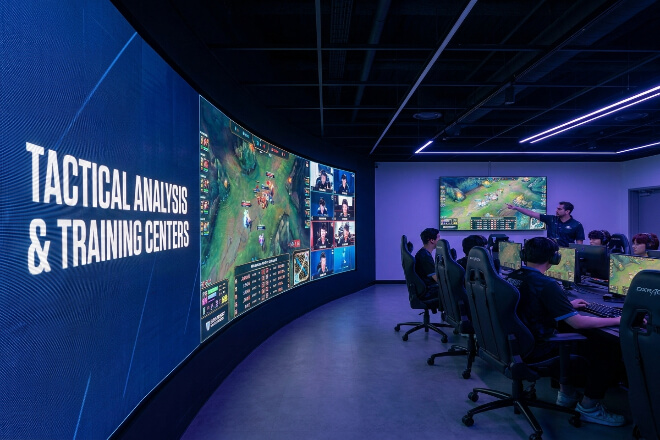
In esports events, viewers’ attention is highly focused on the game visuals and highlight plays. If advertising appears too abruptly, it’s easily ignored or even met with aversion.
The value of LED displays is to make brand exposure as natural as a part of the game.
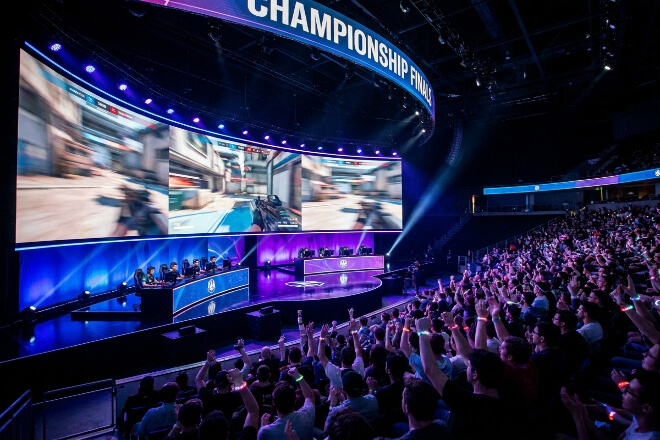
First, large LED screens can continuously display brand content around the main ステージ and competition area.
During player entrances, the draft phase, timeouts, and even while waiting for scores, the background screen will continuously display the sponsor’s visuals.
For example, when a team prepares to start a match, the giant screen behind them might be displaying a slowly transitioning brand animation, thus ensuring exposure “follows the rhythm of the game.”
Second, it can simultaneously reach both the live audience and the live stream viewers.
A key characteristic of esports events is the frequent use of “rapid camera transitions,” with close-ups of players, panoramic stage shots, and audience shots appearing frequently.
These shots are almost always displayed on LED backdrops, allowing brands to naturally integrate into the live stream and achieve simultaneous on-site and online exposure.
Simultaneously, LED displays can increase brand visibility more frequently, but in a smarter way.
Instead of simply repeating the same image, the content changes according to the stage of the match: for example, showing team co-branded visuals at the start, switching to event partner brands mid-game.
And then featuring the main sponsor’s visuals after crucial rounds, allowing the brand to appear repeatedly at different emotional moments without disrupting the viewing experience.
More interestingly, many esports viewers actually “passively remember” the brand.
For example, after an ace, the camera cuts back to the stage, and the background happens to show the sponsor’s animation.
Or, during the countdown to match point, the brand’s visuals appear at the edge of the screen.
Viewers often remember not the advertisement itself, but “the image next to that highlight moment.”
Simply put, in esports events, LED displays transform brand exposure from an advertisement inserted into the match to the brand’s constant presence within the world of the game.
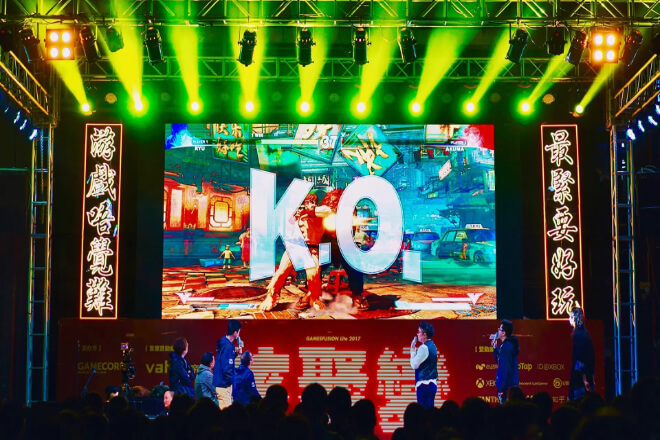
In esports events, the most focused moments for viewers aren’t during commercial breaks, but rather the opening ceremony, player entrances, and every crucial play.
The ingenuity of LED displays lies in “embedding” brand content into these highlight moments, rather than interrupting the game’s flow.
First, brands can integrate their content with the opening ceremony and player entrances.
As teams enter, the main LEDスクリーン simultaneously plays the event’s themed animation and team introductions, while also incorporating sponsor visual elements.
For example, the moment a player walks onto the stage, the background screen switches from the team logo to a brand collaboration animation, allowing exposure to occur naturally at the most ceremonial moment.
Second, advertisements can be tied to highlight reels and key moments. When ACE plays, game-winning comebacks, or crucial team fights occur.
The large screen replays the highlights while integrating brand elements into the borders, background, or transition animations.
This way, viewers focus on “that was amazing,” but the brand has already subtly entered their memory.
Furthermore, the key to this approach is “naturally entering the viewer’s field of vision.”
Viewers aren’t watching advertisements; they’re watching the match replay, the players’ expressions, and their stage reactions.
Brands appear naturally alongside the visuals, without deliberate interruptions, resulting in higher acceptance.
More interestingly, many classic esports moments are actually instances where the brand makes a casual appearance.
For example, a player completes a 1v3 clutch, the entire arena erupts in cheers, and the replay animation plays on the large screen.
Or, after a match point game, the champion’s visuals fill the screen, and the brand is simultaneously integrated into the visual structure.
Viewers remember the match, but the brand is also remembered along with the visuals.
Simply put, the core of this design is: to make advertising no longer “inserted into the match,” but rather “grown into the highlight moments.”
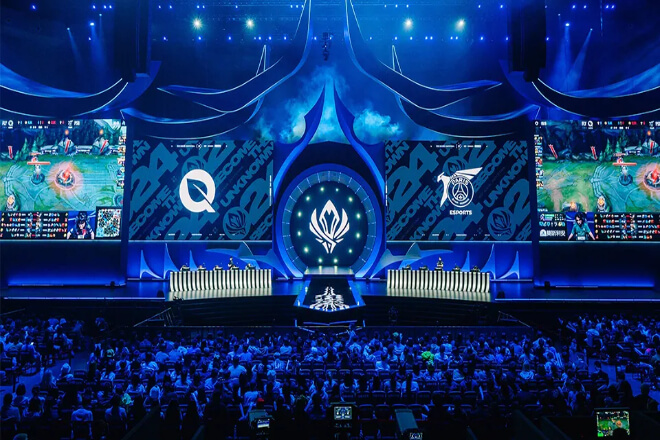
In esports events, the content that truly “spreads” is often not the entire match, but those few moments that make people want to screenshot, record, and share.
One of the values of LED displays is specifically designed to “create these moments” for events.
First, large LED screens can create visually impactful images.
When players complete clutch situations, secure crucial kills, or the match ends, the giant screen simultaneously displays high-energy special effects.
Team animations, and visual branding, creating a richer and more impactful visual experience.
This strong visual impact is inherently suitable for sharing.
Secondly, it naturally provides scenes ideal for screenshots and screen recordings.
For example, the exclusive backgrounds when players enter the arena, the full-screen effects for ACE moments, and the synchronized ステージ lighting and giant screen visuals during victory moments.
These scenes are not only visually appealing but also structurally complete, making them easy to capture as highlight footage.
Furthermore, this content further stimulates secondary dissemination on social media.
On-site audiences film and share on social media, online viewers capture live stream footage and post it in discussion forums.
And short video platforms edit highlight clips… the LED screen provides this foundation of readily shareable material.
Even more interestingly, some iconic esports moments go viral not because of the gameplay itself, but because the visuals are so shareable.
For example, the moment the champion raises the trophy, the background LED screen simultaneously flashes with the team’s theme visuals.
Or, after the match point, the entire arena and the giant screen switch to a victory animation—this visual itself resembles a movie scene.
In short, the role of LED displays in communication is not just to let viewers watch the game, but to make them want to “share the moment.”
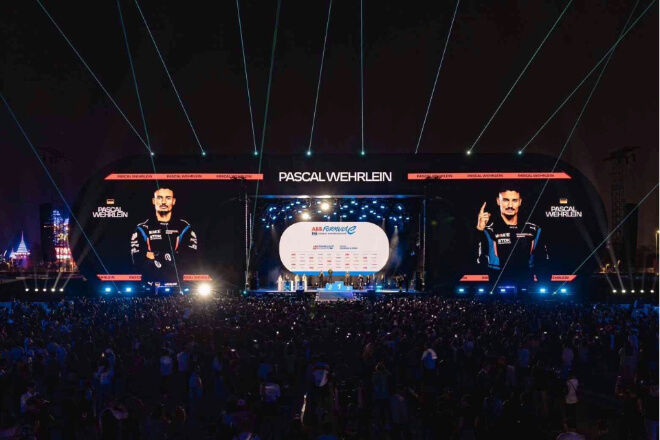
In the commercial system of esports events, the value of LEDディスプレイ lies not only in their size and brightness.
But more importantly, they can operate advertising flexibly like a “content system,” rather than a fixed display board.
First, LED screens support real-time switching of dynamic content. During the event, the backend can adjust the content on the screen at any time.
Such as playing brand promotional videos before the match, switching to a simple logo display during the match, and inserting interactive content during pauses.
This “always-on” capability frees advertising from the limitations of time and format.
Second, it can meet the needs of multi-brand rotation. One screen can serve multiple sponsors:
Brand A receives prominent exposure at the beginning, Brand B is highlighted during the halftime break, and Brand C appears in closing content after the match.
Different brands rotate rhythmically, which is both fair and efficient, and avoids monotonous visuals.
At the same time, LED displays can also be precisely targeted according to the stage of the event. For example, the group stage emphasizes overall event partnerships.
The knockout stage strengthens exposure for the main sponsor; and the final stage focuses on showcasing content linked to core partners and the champion.
Advertising is no longer “evenly distributed,” but rather follows the emotional flow of the match.
More interestingly, this flexibility makes advertising feel more like “part of the event,” rather than forced content.
Viewers don’t see repetitive ads, but rather a constantly changing visual environment as the match progresses.
Simply put, the operation of LED displays can be understood as telling different brand stories on the same screen at different times.
In the business logic of esports events, the most important thing for sponsors is: can their money be seen, remembered, and generate subsequent value for more people?
LED displays are precisely the key tool for turning “exposure” into “continuous revenue.”
First, it can extend advertising exposure time. In a match that can easily last for several hours, LEDスクリーン can repeatedly display brand content throughout pre-match promotions, player entrances, breaks, key pauses, and post-match activities.
It’s not a one-time exposure, but rather “being present throughout the entire match.”
Secondly, it can cover multiple online and offline scenarios. On-site audiences see an immersive large-screen visual experience, live stream viewers see the background image on camera, and short video viewers see edited highlights.
A single LED display can appear simultaneously in the stadium, the live stream, and social media platforms, achieving multi-layered dissemination.
Furthermore, LED displays can strengthen the connection between brands and the event.
For example, when a brand appears in player entrance animations, key replays, or championship celebrations, viewers remember not just the brand itself.
But that “this brand participated in this important competition.” This emotional connection is more valuable than simply displaying a logo.
More interestingly, many sponsors achieve high ROI not because of the most exposure, but because of “perfect timing.”
For example, displaying a brand image during emotional peaks like ace moments, match point games, or championship wins amplifies memorability many times over.
Simply put, the logic behind LED displays’ ROI enhancement is: ensuring exposure is not just “seen,” but “remembered at crucial moments.”


 English
  Español
  简体中文
简体中文  Français
  日本語
日本語  한국어
한국어  العربية