
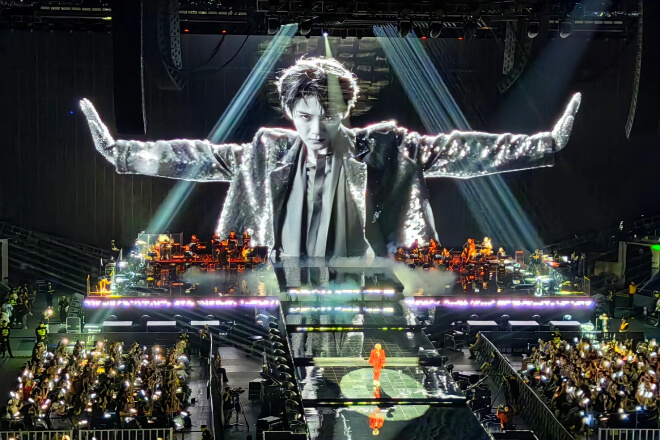
1) Concerts and Large-Scale Events
LED screens for concerts or large-scale events need to be bright, large, and colorful enough to ensure that viewers at a distance can see the content on ステージ, creating a stunning effect.
For example, the LED screen at a large music festival maintained a clear and bright stage image even under outdoor sunlight.
The combination of lighting and video completely immersed the audience in the performance.
2) Corporate Launches and Conference Live Streams
For corporate launches or conference live streams, viewers mainly focus on text, charts, and data.
The advantage of LED screens here is their clear and stable image, ensuring that every piece of information is accurately conveyed.
For example, at a tech company’s new product launch, LED screens were used to display PPT slides and real-time data.
Whether sitting in the front or back row, everyone could clearly see every detail, creating a highly professional atmosphere.
3) Online 教育 or Short Video Live Streaming
Online education or short video live streaming demands high image clarity and low latency.
LED screens need high-definition detail, true colors, and low latency to ensure smooth and natural content display.
For example, an online education platform used LED screens in its live classrooms. When teachers explained experiments or textbook content, the screen details were clear.
And the colors were true, giving students a near-live experience even when they were remotely present.
For decision-makers, LED screens cannot be chosen arbitrarily. Concerts, press conferences, and educational live streams all have different requirements for brightness, size, color, and stability.
Clearly defining the scenario and needs in advance and choosing the right specifications is crucial to achieving the best results for every live stream or event.
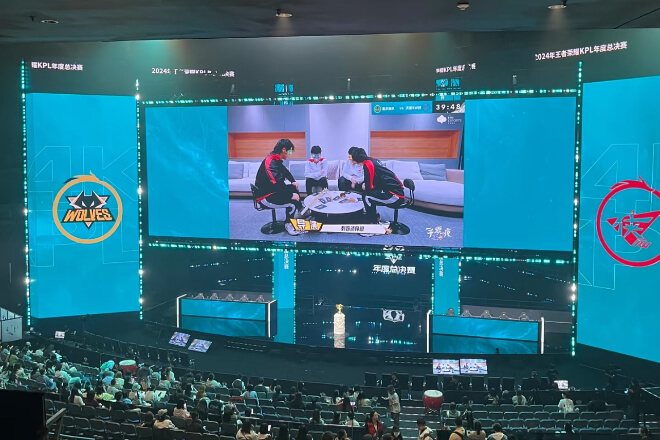
1) High リフレッシュレート and Grayscale Levels
The biggest fear in live streaming is image jitter or ghosting, especially in fast-paced scenes.
High refresh rates and high grayscale levels in LED screens ensure smooth, detailed visuals.
For example, in live concert broadcasts, insufficient refresh rates result in blurry stage movements.
With a high refresh rate LED screen, viewers can clearly see every movement, creating a natural and comfortable viewing experience.
Screen resolution and pixel pitch directly determine image clarity. Blurry, distant objects and grainy details up close negatively impact the viewing experience.
For example, in corporate product launch live streams, high-definition LED screens allow distant viewers to clearly see PPT content.
While closer viewers can see detailed text and charts, resulting in smooth information delivery and a more professional effect.
3) Color Reproduction and Contrast
Inaccurate colors or low contrast make the image appear flat and unattractive.
High color reproduction and high contrast LED screens create richer image layers and a more comfortable visual experience.
For example, when showcasing product details in short video live streams, realistic colors and high contrast allow viewers to directly see materials and colors, making the content more eye-catching.
4) High 輝度 and Environmental Adaptability
Live streaming environments can be complex, with strong stage lighting or direct sunlight potentially affecting the viewing experience.
High-brightness LED screens ensure clear images while adapting to various lighting conditions.
For example, at outdoor concerts or live events, even under strong daylight, viewers can clearly see the stage content, maintaining the quality of the live stream.
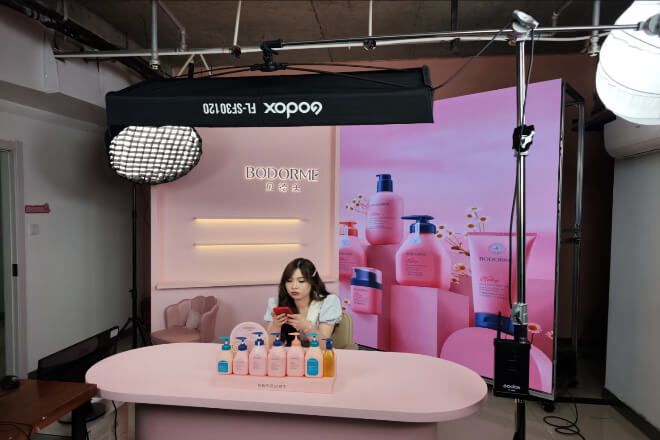
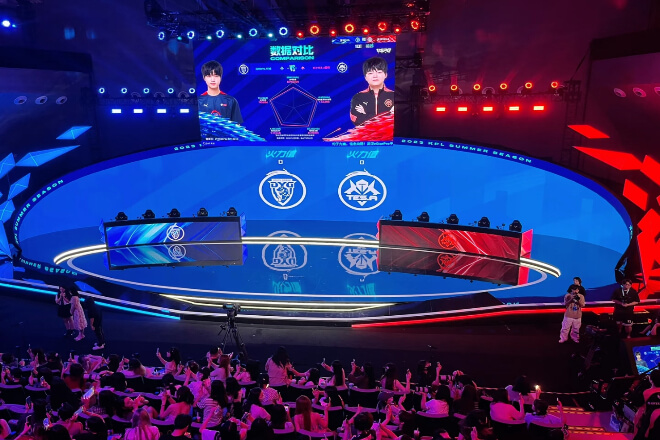
1) Dynamic Visuals and Animation Effects
The dynamic visuals and animation effects of LED screens can quickly capture the audience’s attention and guide their focus to key content.
For example, at concerts or product launches, scrolling text, flashing animations.
Or product display effects on the screen can naturally draw the audience’s attention to the ステージ or display area, thus enhancing the overall experience.
2) Real-time Interaction
Beyond simply watching, interaction can make the audience more engaged.
LED screens can display real-time data, live comments, or voting results, giving the audience a sense of participation.
For example, in a beverage brand’s pop-up event, the LED screen displayed voting results and interactive mini-games.
Allowing the audience to play while watching the screen, greatly increasing their participation and adding fun and memorable moments.
3) Content Optimization
No matter how large or dazzling an LED screen is, it will be difficult to achieve its effect if the content is unsuitable.
By designing the layout, animation rhythm, and color scheme appropriately, every frame can be captivating.
For example, at a company launch event, when showcasing product features and data on an LED screen.
Content optimization broke down complex information into intuitive animations, making it easier for the audience to understand and enhancing the brand’s professionalism.
For decision-makers, while choosing an LED screen is important, matching the content with the screen is even more crucial.
A small screen paired with excellent content can often be more effective than a large screen simply displaying static images.
Planning the content presentation format in advance and ensuring proper coordination between the screen and interactive design is essential to maximizing the visual and communicative value of each event.

1) Initial Investment and Long-Term Value
While the initial investment in LED displays is high, their long-term, multi-scenario use value is considerable.
Whether for roadshows, press conferences, concerts, or online live streams, they can be reused repeatedly, reducing temporary rental costs for each event.
For example, one company purchased a portable LED screen and used it for roadshows and press conferences in multiple cities within just one year, cumulatively improving brand exposure and audience experience.
Compared to frequent equipment rentals, the cost recovery speed is much faster.
2) Comparison with Traditional Equipment
Compared to traditional projectors, televisions, or ordinary screens, LED screens have a significant advantage in live streaming and large-scale events.
It boasts high 輝度, clear image quality, and can be spliced into ultra-large screens.
It is also highly stable, unaffected by prolonged continuous playback or complex lighting environments.
For example, in outdoor concerts or large-scale live broadcasts, LED screens ensure that viewers at both near and far can clearly see the image, a feat difficult to achieve with traditional projectors or televisions.
3) Investment Assessment
For decision-makers, purchasing LED screens is not just about buying equipment; it’s an investment in enhancing brand image and audience experience.
Assessment can be based on factors such as brand exposure, audience engagement, event efficiency, and content presentation effectiveness.
Properly planning usage scenarios and content design to maximize the value of each event ensures a high return on investment, making every penny worthwhile.
 English
  Español
  简体中文
简体中文  Français
  日本語
日本語  한국어
한국어  العربية