
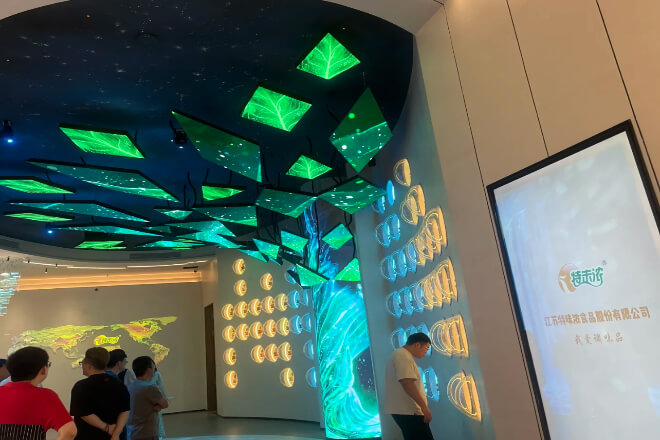
If someone told you that an LED display could “grow into a tree,” would you consider it a screen or an art installation?
伝統的 LEDスクリーン are responsible for “displaying content,” while tree-shaped LED screens are attempting something else—first becoming part of the space, then fulfilling the display function.
This also makes us rethink: Is the shape of an LED screen really limited to “rectangular”?
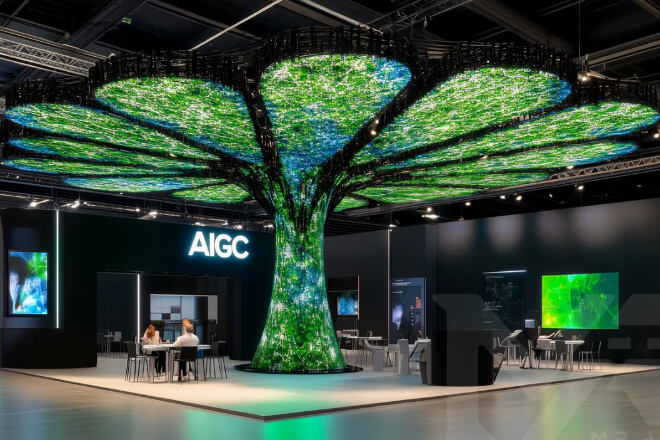
Who says LEDディスプレイ must be square? If a screen can “grow into a tree,” it might bring more than just a display effect; it could become a visual focal point for the entire space.
The biggest feature of tree-shaped LED displays is that they directly break away from the traditional rectangular screen mold.
The trunk, branches, and even the crown can be integrated into the LEDディスプレイモジュール, giving the screen a natural feel while also possessing a touch of art and technology.
例えば、 ショッピングモール atrium, a “digital tree” several meters tall can become the centerpiece of the space.
During the day, it looks like an art installation; at night, when lit up, starlight, flowers, and even brand animations can flow on the branches.
Customers might initially just be passing by, but upon seeing it, they might be tempted to stop and take a photo.
For brand spaces, this shape also makes it easier to establish a connection with the theme.
Eco-friendly brands can use digital trees to showcase forests, plants, and nature, while technology brands can use branches to create visual effects like data streams and light.
The tree shape itself is part of the visual, not just a simple support for the image.
This is what makes 創造的な LED ディスプレイ interesting: they are both display devices and spatial decorations, and can even become part of the scene itself.
Therefore, making LED displays in a tree shape isn’t simply about pursuing a “strange shape.”
The real value lies in transforming the screen from “something that displays content” into the content itself.
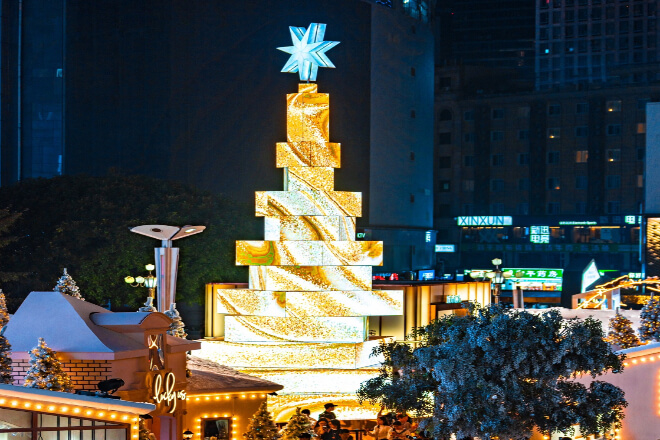
Tree-shaped LED displays have a significant advantage: they are essentially installations.
Therefore, they don’t need to be placed like traditional “advertising screens”; many spaces can be designed around them.
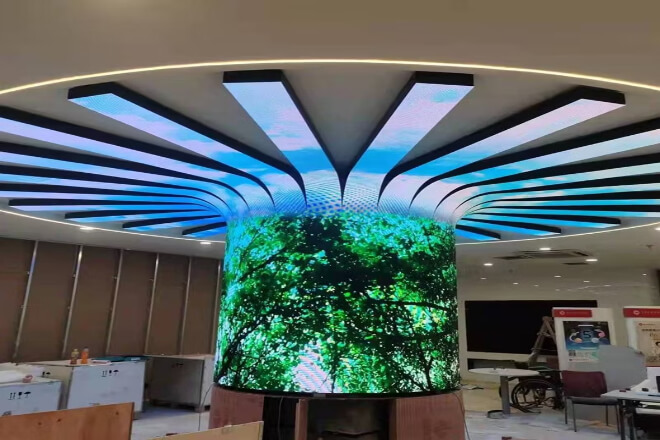
If a tree-shaped LED display only plays the same set of images every day, it might quickly become a “tree that never changes its clothes.”
What’s truly interesting is allowing it to constantly change with time and context.
In spring, it can be filled with digital cherry blossoms; in summer, it transforms into lush green leaves;
In autumn, golden leaves fall; and in winter, it evokes a snowy wonderland. No need for renovations; a single tree can “perform” all four seasons.
Brand content can also be more naturally integrated. For example, tech brands can let light flow upwards from the roots, converging to form their logo;
Environmental brands can start with a small seed, allowing the tree in the image to slowly grow, weaving the brand story within it.
Compared to simply placing the logo in the center of the screen, this approach is clearly more memorable.
During holidays and events, the tree-shaped LED display can also be “dressed up” at any time.
At Christmas, it becomes a glowing Christmas tree; during the Spring Festival, it’s adorned with digital lanterns;
And during events, it can display real-time themes, event information, or on-site greetings.
At night, the imagination can truly take flight. During the day, it remains a quiet “digital tree,” but after dark, the branches can slowly transform into a forest, a starry sky, or even a miniature light show.
With interactive features, the leaves light up as viewers approach, light flows along the branches as they pass, and the display can even change based on the flow of people.
At this point, it’s not just “playing content,” but greeting the audience.
Therefore, the truly attractive aspect of a tree-shaped LED display isn’t just that it “looks like a tree.”
But that it can change its appearance with the seasons, tell a brand’s story, change the theme of an event, and even adapt to the audience.
The shape makes the tree-shaped LED display a tree, while the content determines the tree’s “mood” each day.
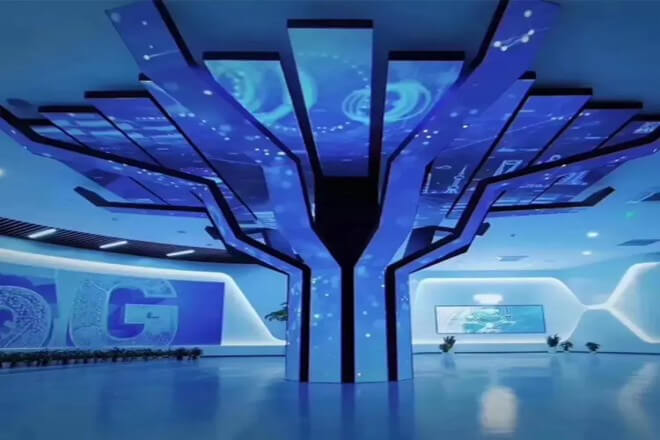
A tree-shaped LED display isn’t simply a collection of ordinary LEDモジュール pieced together to form a tree. A truly beautiful tree requires a comprehensive design, from structure to visual elements.
First, the proportions of the trunk and branches must be determined based on the site’s height and space size.
For example, in a high-ceilinged atrium of a ショッピングモール, the branches can extend upwards; if the space is small, avoid making it a “giant tree king”; otherwise, the visual focus will be lost, and the space will feel cramped.
Another advantage of the tree structure is that it can be viewed from multiple angles.
When placed in a shopping mall atrium or the center of an 展示 hall, viewers passing by from different directions can see dynamic content from different angles, naturally resulting in wider visual coverage.
Simultaneously, the LEDモジュール, support structure, and maintenance methods must be coordinated in advance.
After all, for a tree to grow beautifully, its future “pruning” must also be considered.
画素ピッチ is selected based on 視聴距離; closer viewing requires finer detail, while longer viewing prioritizes overall image quality.
Content cannot be copied from ordinary rectangular screens; it’s best to create a custom mapping based on the shape of the trunk and branches, allowing light to truly grow and diffuse along the branches.
Therefore, customizing a tree-shaped LED display is not just about “making a tree,” but about allowing the structure, display, and content to grow together into a tree.
It’s not about piecing together LED displays to form a tree, but about truly “growing” the LED display into a tree.
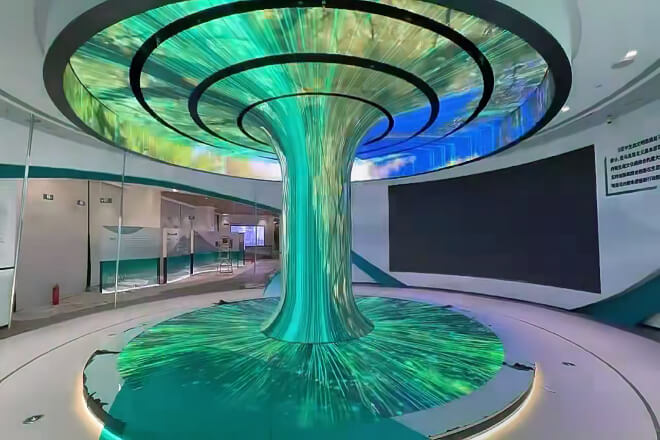
If a tree-shaped LED display only provides an initial “wow” moment during installation, and then no one watches it afterward, it’s more like an expensive decorative item.
A truly valuable tree-shaped LED display can first become a brand’s visual symbol. A unique tree design combined with consistent brand elements will, over time, allow customers to associate the tree with the brand.
It also boasts built-in “check-in” appeal. Dynamic lighting, seasonal changes, and interactive effects encourage customers to take photos and share them online.
Brands don’t need to constantly shout “Welcome to check in!”; the installation itself generates buzz.
More importantly, the content can be continuously updated. Advertisements, collaborations, holiday themes, product launches…
The same tree can constantly “change its clothes”—today it’s a Christmas tree, tomorrow it might be a digital forest.
Therefore, the truly valuable tree-shaped LED display isn’t just something that amazes people on the day of installation, but something that people still want to walk over to see, take a picture, and share a year later.
Only by remaining consistently visible can a tree-shaped LED display truly transform from decoration into an asset.


 English
  Español
  简体中文
简体中文  Français
  日本語
日本語  한국어
한국어  العربية