

Many clients hesitate when first considering Afficheurs LED: they seem expensive, but will they actually recoup their investment?
Interestingly, the same screen can be a cost burden for some, while others see it as a tool for consistently generating business.
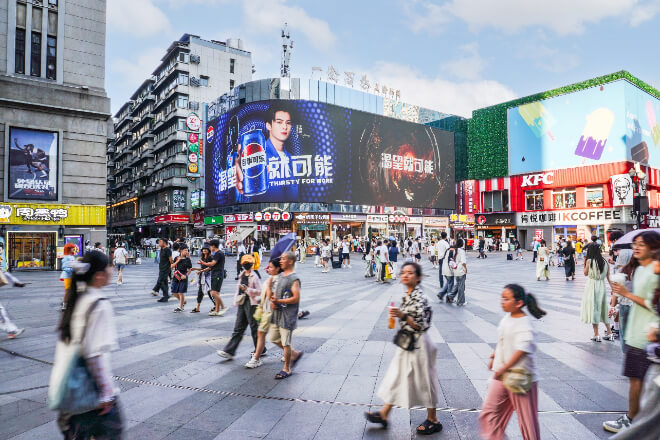
The most direct way to determine if an LED display screen is worth investing in is simply this: can it help you “get seen by more people”?
First, a high-frequency, recurring display of brand and event information is one of its core values.
Unlike static posters, Afficheurs LED can continuously change content, such as promoting new products during the day, hosting events at night, and changing themes for holidays.
Allowing the same screen to “play a role multiple times” throughout the day, making exposure no longer a one-off event.
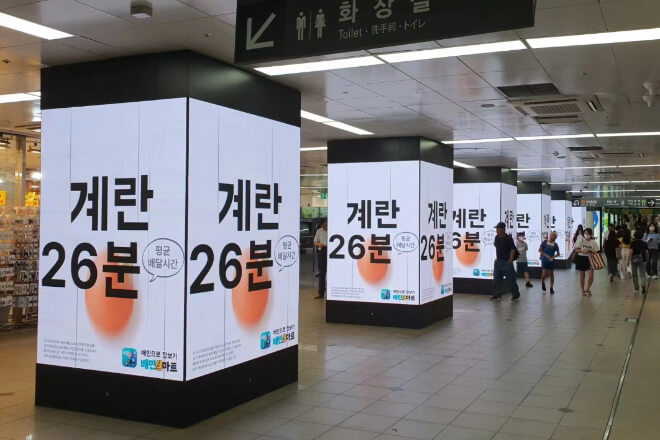
For a very relatable example: a large screen at a centre commercial entrance might display a coffee brand in the morning, switch to restaurant discounts at noon.
And then become a performance advertisement in the evening—people passing by three times might see completely different content.
Secondly, it can significantly increase the exposure of stores, shopping malls, or venues. Especially in high-traffic areas, LED screens are often not “selectively viewed,” but rather “seen by passersby.”
Compared to advertisements that require active viewing, they act as a “visual magnet” that continuously attracts attention.
More interestingly, some well-located large screens even become “landmark-level communication points.”
For example, when making appointments, people might say, “Let’s meet at that entrance where they put the giant advertising screen.” The screen itself becomes part of the location.
Simultaneously, it amplifies brand communication effects. Dynamic visuals, strong visual impact, and repeated exposure make brands easier to remember, rather than “forgotten after seeing.”
Especially for event information, high-frequency playback continuously reinforces user impressions.
Simply put, the core of commercial exposure is not “whether there is an advertising space,” but “whether this location can be continuously seen.”
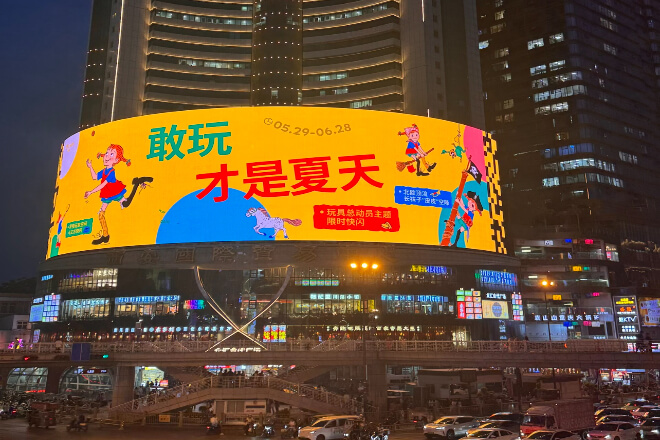
If “exposure” is simply getting people to see you, then “conversion” is getting people to actually walk in and even take out their wallets.
First, the most direct effect of dynamic content is to “hold onto passersby.” Compared to static posters, Écrans LED are dynamic, storytelling.
For example, a lively new product showcase, a countdown to a limited-time discount, or a holiday-themed animation can easily make passersby slow down and take a look.
For a very real scenario: a pedestrian rushing to the subway station might see a screen displaying “Last Hour Discount + High-Energy Visuals,” and their pace might shift from “just passing by” to “Let’s take a look first.”
Secondly, it can further guide store entry and purchasing behavior. For example, the screen can directly display the store location, promotional information, popular products.
Or even use phrases like “What’s happening in the store right now” to enhance its appeal, creating the feeling that “it’s worth checking out.”
Even more interestingly, this conversion often happens “spontaneously.”
It’s not a forceful push, but rather a combination of visual stimulation and information prompts that makes people feel, “Since I’m already here, I might as well go in and take a look.”
This subtle shift in decision-making is especially crucial in centres commerciaux and commercial streets.
For example, a restaurant’s LED screen displays “best-selling set meals + real-life food close-ups.”
Passersby who were initially just looking for food are drawn in by the visuals and end up sitting down.
Finally, it can indirectly improve overall sales conversion rates. This is because LED screens not only influence individual customer behavior but also continuously affect foot traffic structure—longer dwell time.
Higher probability of entering the store, and more impulse purchases, ultimately reflected in overall revenue changes.
Simply put, the value of an LED screen is not just “making people see you,” but “making people want to come to you.”
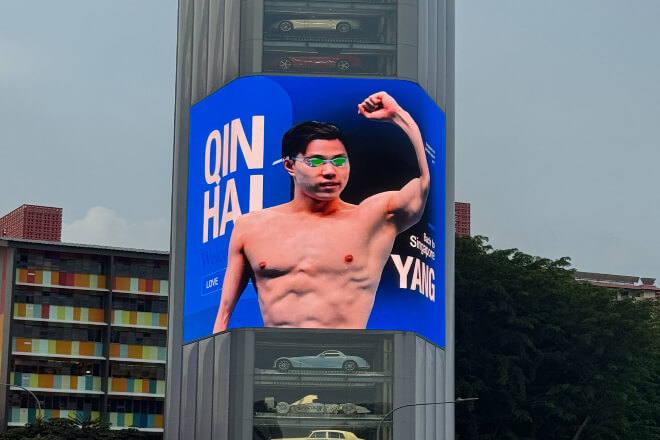
If an LED screen is merely a “self-use display tool,” its value remains at the first level; however, once it begins to open up advertising space to the public, it becomes a “shining asset” that continuously generates cash flow.
Firstly, the most direct way to monetize a screen is by leasing out advertising space. A large screen located at a shopping mall entrance, landmark plaza.
Or core traffic flow area is itself a natural traffic entry point. Brands can advertise by day, week, or even time slot, achieving “multiple monetizations from the same screen.”
To illustrate, consider this example: during the day, it displays coffee brand ads; at lunchtime, it switches to restaurant discounts;
And in the evening, it becomes a performance advertisement—the same location is used by different businesses in rotation, but the screen remains constantly operational.
Secondly, multi-tenant shared commercial value is a crucial profit model for LED screens. Compared to traditional fixed billboards that are tied to a single client long-term.
LED displays can flexibly allocate time slots, allowing different brands to “share exposure resources” at different times.
This is like a building with many shops, and the screen is the “golden corridor” where foot traffic always flows.
Even more interestingly, this model creates a “queueing effect.” Large-screen advertising spaces in popular locations sometimes require advance booking because brands discover that even a few seconds of exposure in the right spot can generate significant attention.
Simultaneously, it increases sustainable revenue streams. As long as foot traffic and exposure continue, advertising demand will persist, unlike one-off projects that “end after completion.”
For operators, this revenue structure is more stable and easier to plan for in the long term.
To illustrate, consider a typical scenario: a commercial LED screen might be used by a dozen brands in rotation each day. It’s not simply “selling an advertisement,” but rather continuously “renting out attention.”
In short, the profit logic of LED screens isn’t about selling equipment upfront, but about continuously renting out “visual traffic.”
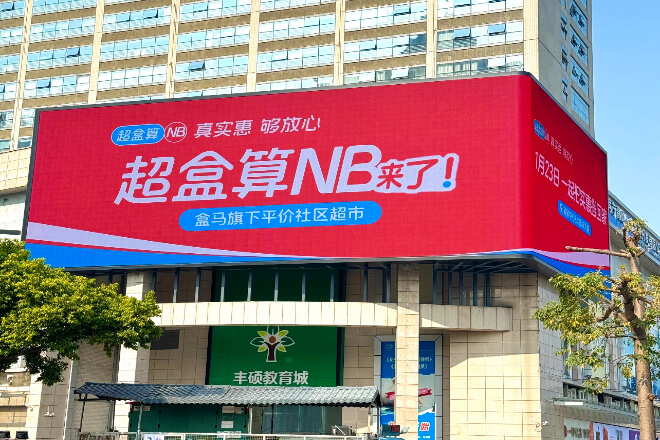
If you only look at “how much it cost when you bought it,” you’ve only told half the story of LED screens.
What truly determines whether it’s cost-effective is how much cost pressure remains after several years of use.
First, long lifespan and controllable maintenance costs are key advantages. With proper use and maintenance, LED screens can operate stably for a long time without frequent complete equipment replacements.
Often, only partial module maintenance is needed, rather than a complete overhaul, making long-term operation more predictable.
For a concrete example, with a stable solution like a shopping mall screen, you might only need to replace a few modules occasionally over several years.
But the overall display will still function normally, instead of frequent downtime and reinstallation.
Secondly, energy consumption and content update costs are relatively low. Content updates can largely be completed remotely, eliminating the need for repeated production of physical materials.
Furthermore, energy consumption can be optimized with proper luminosité control. Compared to constantly printing posters and frequently changing lightbox displays, this digital update method is much lighter.
More interestingly, this low update cost brings a hidden advantage—faster operational pace. If there’s an event today, content can be updated today, without waiting for production cycles or worrying about inventory waste.
Looking further ahead, the cost advantage becomes increasingly apparent over the long term.
While the initial investment may seem high, the average cost per day and per exposure is diluted over time, ultimately resulting in a “more cost-effective over time” structure.
To illustrate with a more relatable scenario: a screen may seem “quite expensive” in the first year.
But if used stably for five years, displaying ads, attracting customers, and hosting events daily, the cost per exposure becomes surprisingly low.
In short, the cost logic of LED screens isn’t about “how expensive it is to buy,” but rather “how expensive it becomes over time.”
Determining whether an LED display screen is worth investing in shouldn’t just be based on “where it’s currently used,” but more importantly, on its ability to be adaptable and functional wherever needed.
First, it should be stably adaptable to various scenarios, including commercial complexes, sports stadiums, and corporate lobbies.
Used for brand exposure in centres commerciaux, live des sports broadcasts in sports stadiums, and image displays in corporate lobbies, the same technology system can switch between different “identities.”
For a clear example: during the day, it can play promotional advertisements in a shopping mall atrium.
At night, it can become the main screen for a sporting event in a stadium in the same city. The logic remains the same; only the “content changes.”
Second, it has strong adaptability to different indoor and outdoor environments. Indoor scenes prioritize clarity and color performance, while outdoor scenes rely more on brightness and environmental resistance.
Through different configuration combinations, Afficheurs LED can freely switch between “brightly lit commercial areas” and “dark stages,” without being limited by a single environment.
More interestingly, this adaptability makes it a “universal visual infrastructure.” Just like a single system can simultaneously serve exhibitions, sporting events.
And press conferences, different scenarios simply involve different methods of invocation, rather than requiring a complete replacement of equipment.
Looking further ahead, it also boasts strong scalability, adapting to future upgrade needs. For example, it can be upgraded gradually from single-screen to multi-screen (multi-screen linkage).
From static displays to interactive content, from local control to cloud management, rather than starting from scratch.
To give a more vivid example: an LED screen in a company lobby, used today to display brand introductions, can be integrated into a data visualization system in the future.
And upgraded into a multi-screen interactive display center—the equipment remains the same, but the capabilities keep evolving.
Simply put, the value of an LED screen is not just “where it can be used,” but “where else it can be used.”


 English
  Español
  简体中文
简体中文  Français
  日本語
日本語  한국어
한국어  العربية