
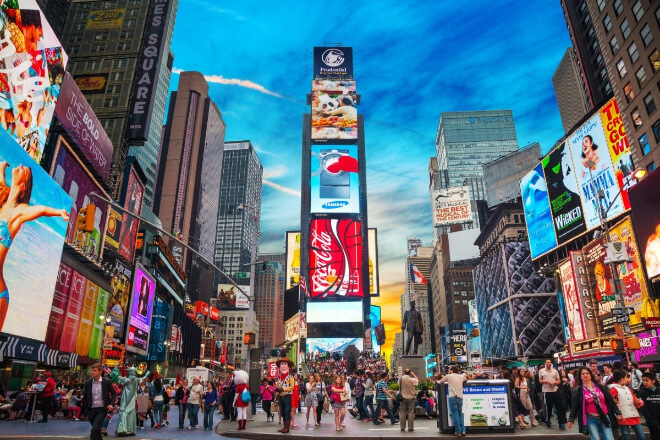
Many people, when first encountering Afficheurs LED, categorize them as “costs”: purchase costs, installation costs, maintenance costs.
However, from another perspective, it’s actually a medium that can continuously “work”—it’s just that whether it generates revenue depends on how you use it.
When the usage changes, the nature of the cost begins to shift.
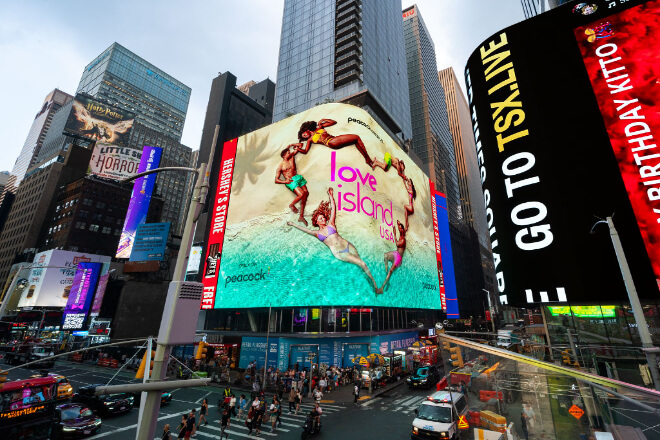
In high-traffic areas, LED displays are somewhat like “the most profitable electronic landlords”—if the location is good and there’s a lot of foot traffic, it starts collecting rent continuously.
Places like centre commercial entrances, commercial streets, subway entrances, aéroports, and transportation hubs are characterized by a large number of people passing through repeatedly.
In these situations, a sufficiently eye-catching LED screen naturally becomes a highly sought-after location for brands.
Compared to traditional static advertising, LED screens have a clear advantage: they are dynamic.
Dynamic videos, animation transitions, and rhythmic visuals are inherently more likely to attract attention.
Often, people are simply walking with their heads down, but the sudden appearance or movement of a large screen can easily divert their attention.
Consider a real-world scenario: a large screen in a shopping mall atrium plays coffee ads in the morning, hot pot promotions at noon, and new movie advertisements in the evening.
The screen remains the same, but the content keeps changing, with brands rotating.
For the operator, this is like “renting a shop to many people simultaneously,” naturally increasing revenue per unit of time.
This is precisely where LED displays are particularly well-suited for advertising monetization—a single screen can be sold repeatedly.
Traditional advertising spaces typically only accommodate one brand at a time, but LED screens can rotate content and time slots.
Sold to brand A in the morning, brand B in the afternoon, and another event ad in the evening. The screen never stops working, so the revenue is always online.
More importantly, it’s not a “one-time profit, and then it’s over” model. Many clients initially feel they are buying equipment, but after operating it for a while.
They realize that the screen is more like a long-term “digital employee”—attracting brands, displaying ads, and continuously generating revenue every day.
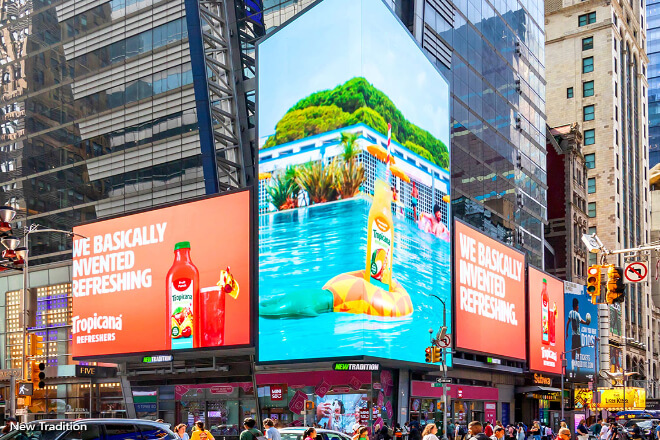
Many stores used to simply “display products for people to see”; however, with the advent of LED displays, stores are gradually becoming more proactive in “driving sales.”
Especially in shop windows and in-store settings, the greatest value of Écrans LED isn’t just aesthetics, but their ability to genuinely influence consumers’ purchasing decisions.
Compared to static posters, dynamic visuals are more likely to attract attention and more effectively “showcase” the product.
For example, in a sports brand store, the LED screen in the window is continuously playing images of running shoes being worn, slow-motion workouts, and real-life usage scenarios.
Passersby who might initially just be browsing are easily tempted to “go in and take a look” after seeing the sporty atmosphere depicted. The first step in conversion has already begun.
Once inside the store, the LED display can continue to “push” the store forward. For example, it can display real-time, limited-time discounts.
New product recommendations, best-selling rankings, or even directly show product usage effects.
Many consumers initially hesitate, but when the screen displays messages like “Only 2 hours left in today’s promotion,” their decision-making speed often increases significantly.
Furthermore, LED screens are particularly suitable for enhancing the product’s contextual appeal. Static displays only tell you “what it is,” but dynamic content tells you “how it feels to use.”
Especially in industries like apparel, cosmetics, electronics, and food and beverage, once the visuals convey a usage scenario, the product instantly becomes more “attractive.”
From a business perspective, this is also a significant shift—in the past, in-store displays were largely just about renovation costs.
Now, LED displays are more like “salespeople who know how to sell.” They not only attract attention but also explain the product, create an atmosphere, and drive sales.
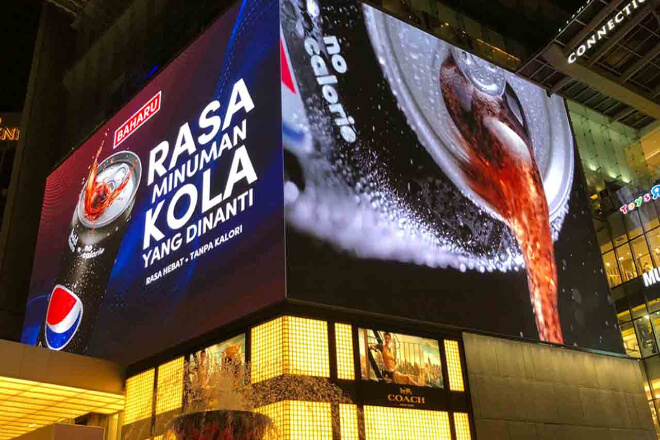
Many clients initially treat LED displays as “permanent fixed billboards”—content is displayed for months on end.
As a result, while the screen remains lit, it gradually enters a state where “everyone gets used to not seeing it.”
The key to truly maximizing the value of LED screens is not “having a screen,” but rather “how to effectively operate the content.”
One of the biggest advantages of LED displays is the ability to change and adjust content at any time.
Different time periods, holidays, and events can be quickly adapted to different content, allowing the same screen to perform different tasks throughout the day.
For example, in the morning, as soon as the mall opens, the screen displays breakfast, coffee, and commuting-related content.
At noon, it switches to restaurant discounts and pop-up events; and in the evening, it becomes entertainment, nighttime consumption, or brand promotions.
The screen remains the same, but the content rhythm completely adapts to the changing flow of people.
The same applies to holidays. While traditional materials may still be waiting to be redesigned and installed, the LED screen has already switched to a holiday theme.
For example, it can switch to red-themed content for Chinese New Year, romantic interactive visuals for Valentine’s Day.
And enter “full-screen promotion mode” during major sales events. The faster the content is updated, the less “idle” the screen becomes.
The biggest benefit of this operating method is that it significantly improves screen utilization. Previously, a screen might have simply been used to “display a single advertisement.”
Now, it’s more like a 24/7 online digital operating space that can continuously switch between brands, events, and marketing themes.
From a business perspective, this also means that the output value per unit of screen is increasing.
The same screen, if its content is flexibly adjusted according to the scene, foot traffic, and time, will often generate significantly higher exposure, interaction, and conversions than a “fixed playback.”
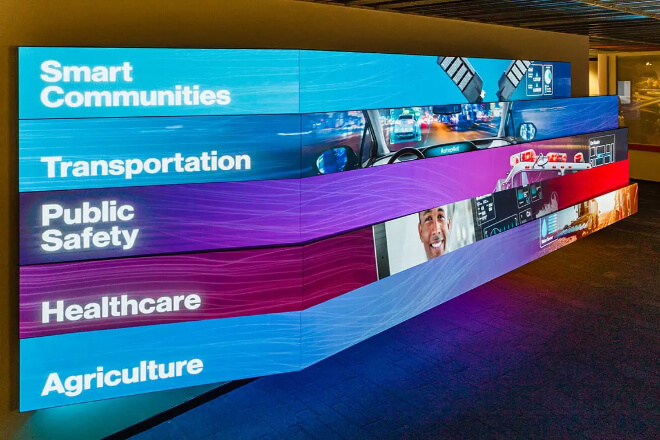
There’s a very real rule with LED displays: the same content placed correctly is a “plus,” but placed incorrectly, it can turn viewers into passersby.
First, different scenarios truly require different “speaking styles.” For example, on LED screens in shopping districts, you can see high-paced content like “limited-time discounts” and “new product launches.”
But if the same “clearance sale” appears at a high-end car launch event, the atmosphere might be a bit like a formal dinner party suddenly interrupted by the hawking of vendors at a market.
Another example is sports scenarios, where LED content must be “exciting.” Large screens in football or basketball stadiums, if they only display static product introductions, are easily overlooked by viewers.
But if they are replaced with “goal moments + brand visuals + rhythmic lighting,” viewers will feel it’s part of the game, not an advertisement.
Second, scene matching can significantly improve audience relevance. For example, displaying suitcase ads at aéroports, des sports equipment ads at gyms, and gaming peripheral ads in esports arenas.
This feeling of “you happen to see what you need in this specific setting” makes viewers more likely to take a second look. It’s like: you were just passing by, but the content suddenly seems to be talking to you.
Furthermore, customized settings enhance immersion. At an exposition, if the LED screen content matches the space design and the style of the exhibits.
Vewers will naturally perceive it as part of the overall experience, rather than thinking, “An ad was suddenly crammed in here.” In some art exhibitions, the LED screen itself is part of the artwork.
Finally, it avoids the “bland effect” of generic materials. Many brands’ problem isn’t a lack of LED advertising, but rather that their content is too versatile—it works anywhere.
But it never really resonates. Viewers often only have one thought after watching: “I feel like I’ve seen it before, but I can’t remember it.”
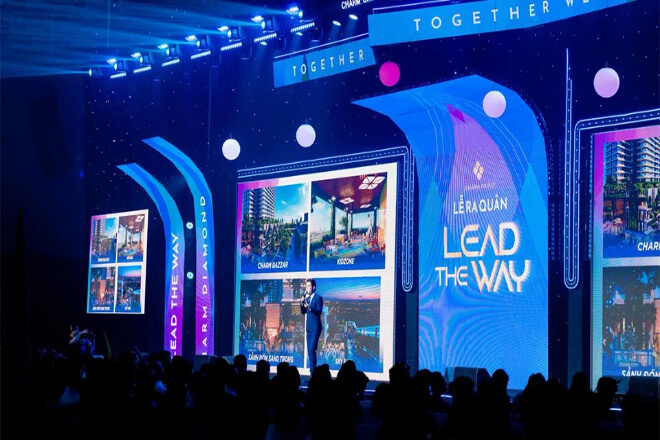
Today’s LED displays are no longer just something to “glance at and forget,” but rather an entry point that “casually takes people online.”
First, it forms a closed-loop communication system with social media. For example, if someone sees a dazzling LED naked-eye 3D advertisement in a centre commercial (with an effect like a giant whale swimming out of the screen).
Many people’s first reaction isn’t to walk away, but to take out their phone to shoot a video and post it on WeChat Moments or Instagram.
The brand has thus completed a “live attraction +…” The secondary dissemination of “online diffusion”—what you see once at the event may be seen thousands of times online.
Secondly, it guides viewers to scan QR codes, follow, or participate in activities.
For example, LED screens at sporting events might pop up during halftime with messages like “Scan the QR code to participate in a lucky draw and win jerseys/tickets,” or at concerts, there might be a message like “Vote for the next encore song.”
Audiences who were initially just watching for entertainment are easily drawn in by the visuals and readily scan the code to participate.
It’s like: you might just glance at something, but end up being “casually” pulled into the event.
Simultaneously, this method can convert offline exposure into online traffic.
For example, at a car brand launch event, an LED screen might display a “Test Drive Appointment QR Code,” which attendees can scan on the spot to make an appointment.
Or, a shopping mall’s LED screen might play a new product advertisement, with a QR code displayed next to it… Add a “Click to enter the online store” link.
This way, the screen doesn’t just display products, but directly “sends” people to a mini-program/app.
Finally, it expands the revenue stream. Previously, LED screens mainly sold “playtime,” but now they’re increasingly selling “attention + conversion capabilities.”
Whoever can convert on-site audiences into online users gains a sustainable monetization path.


 English
  Español
  简体中文
简体中文  Français
  日本語
日本語  한국어
한국어  العربية