

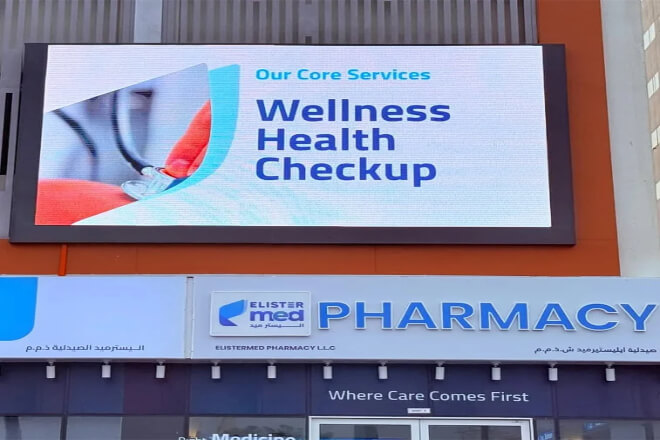
In the outpatient lobby, pantallas LED act like a “super guide who never falls asleep,” displaying important information at any time.
So patients don’t have to look around aimlessly or constantly ask staff.
First, they display real-time registration and call-up information. The screen can synchronously update the registration status, waiting numbers, and call-up progress for each department.
For example, a patient who has just registered and sat down to rest can look up and see “Next number:
A1024, please go to the cardiology department on the 3rd floor,” eliminating the need to ask for directions—saving time and effort.
Second, they display the treatment process and precautions. Information such as examination instructions, payment procedures, and precautions for physical examinations can be displayed in a scrolling manner.
For example, a screen might display a message like, “Please remove metal jewelry before the ECG examination,” allowing patients to prepare in advance while waiting in line and avoiding last-minute panic.
Next, it reduces the workload of human consultants. Previously, the information desk was constantly asked, “Where is the registration point? Which window? When will my number be called?”
Now, the LED screen clearly presents common questions, allowing staff to focus on handling more complex issues instead of repeatedly answering “basic questions.”
Finally, it improves patient efficiency. Clearly visible information reduces unnecessary detours for patients, making waiting more orderly and naturally reducing anxiety.
For example, during peak hours, the screen updates the window status in real time, and everyone queues according to the prompts, resulting in a well-organized lobby.
In short, LED displays allow information to “distribute itself, eliminating the need to constantly ask people,” making things easier and more convenient for both patients and staff—instantly improving efficiency!
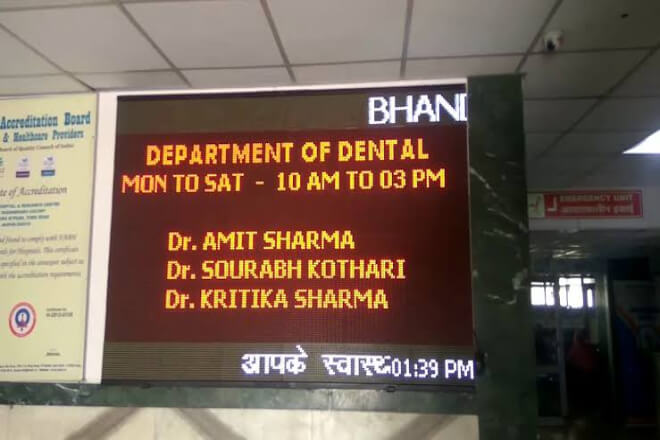
In hospital guidance areas, pantallas LED act like a “glowing, dynamic map,” making complex floor and department information clear at a glance, reducing patient confusion and the need to ask for directions.
First, they clearly display departmental distribution information. Large screens can use zoning maps or dynamic floor guides to show the location of each department.
Such as internal medicine on the 2nd floor, pediatrics on the 3rd floor, and radiology on the basement level.
For example, upon entering, a patient can immediately see “Orthopedics → Elevator on the left to the 4th floor,” which is more intuitive than a paper map.
Second, they provide route navigation and floor guidance. LED screens can use animated arrows or highlighted paths to guide patients to their destinations more quickly.
For example, “From the current guidance desk → turn right → go straight → elevator upstairs,” and can even offer “shortest route” and “accessible route” options, making it more user-friendly for the elderly or those with mobility issues.
Furthermore, they reduce patient search time. Many patients are visiting the hospital for the first time and are unfamiliar with the layout, easily getting lost while asking for directions.
After LED screens directly visualize routes, patients no longer need to repeatedly ask staff, significantly reducing the time spent finding departments and making the overall flow of patients smoother.
Finally, it improves the overall hospital service experience. When information becomes clear and paths become intuitive, patients’ anxiety decreases significantly.
For example, during peak hours, people no longer crowd at the information desk to ask for directions.
But instead follow the screen’s guidance to different areas, making the entire hospital appear more orderly.
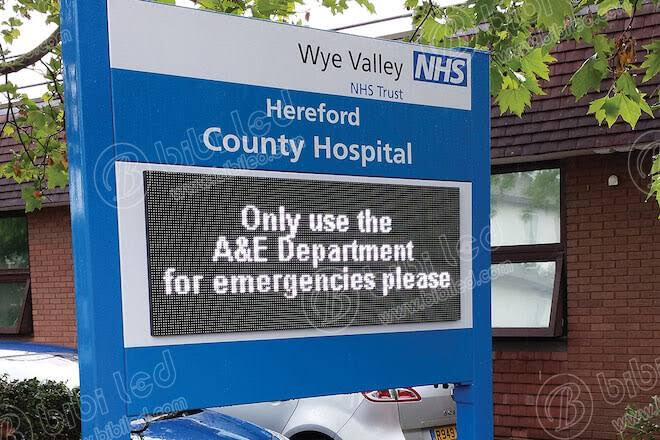
In hospital waiting areas, waiting is often the most anxious part. pantallas LED act like a “smart assistant,” providing information while alleviating boredom and anxiety.
Firstly, they can play health education content. The screens can loop practical health tips, disease prevention knowledge, or lifestyle suggestions, allowing patients to learn about health while waiting.
For example, an LED screen displaying “Spring Cold Prevention Tips” is both interesting and practical, making waiting less of a tedious experience.
Secondly, they can display real-time queue progress. Patients can clearly see their number and waiting time, reducing anxiety about the unknown.
For example, LED displays show real-time updates of “next number called” and “estimated waiting time,” keeping patients informed and reducing anxiety by minimizing inquiries to the front desk.
This combination of information and content also enhances the comfort of the waiting environment. Dynamic visuals, soft colors, and a well-paced content presentation are key.
They attract more attention than monotonous notice boards, making waiting times feel shorter.
Patients not only receive information but also have their emotions easily guided, thus improving their overall healthcare experience.
In short, LED displays in waiting areas are not just “information transmitters” but also helpful tools for improving the waiting experience, making waiting less tedious.
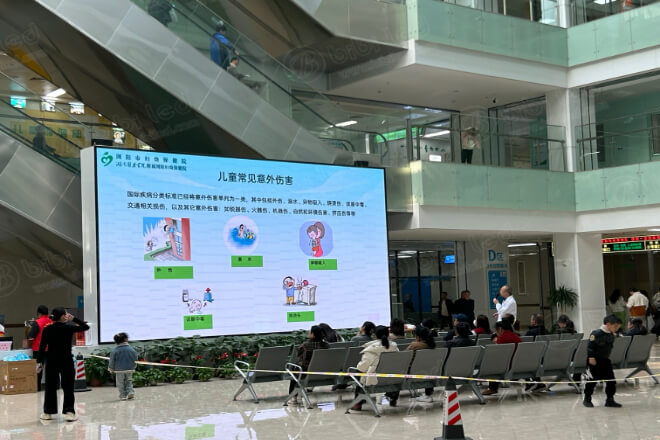
In hospital meeting rooms and training settings, LED displays are no longer just tools for “showing PowerPoint presentations.” They make communication more intuitive, efficient, and professional.
Firstly, they support academic conferences and remote consultations. Large LED screens allow experts to see remote doctors, patient information, and case discussions on the same screen.
Remote communication is virtually latency-free, making cross-regional medical consultations and academic discussions feel like they are taking place in the same meeting room.
For example, in multi-hospital remote consultations, one party raises a question, and the other instantly annotates images, making communication more direct and faster.
Secondly, it provides a high-definition display of medical imaging data. LED screens can clearly display X-rays, CT scans, MRIs, and other images with high resolución and accurate color.
Doctors are no longer limited by small screens or projector resolution when explaining lesions and interpreting data.
Trainees or department members can more intuitively understand case details, greatly improving learning efficiency.
Simultaneously, this display method can also improve internal management efficiency. Hospital training, departmental meetings, and even surgical plan discussions can all use pantallas led to display processes, progress.
And key data, helping managers quickly convey information and follow up on decisions.
Content integrated on a large screen reduces communication errors caused by information fragmentation.
In short, the value of LED displays in meeting and training scenarios is: making medical communication more intuitive, information clearer.
And discussions more efficient, making professional exchanges truly “visible and quickly understood.”
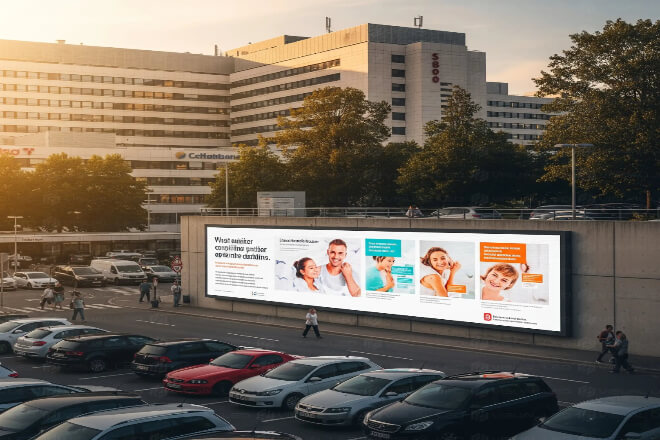
In hospital promotional areas, LED displays are not merely information tools, but also crucial media for shaping a modern image and enhancing public trust.
Primero, pantallas LED can showcase the hospital’s specialized departments and achievements.
The screens can dynamically play introductions to key departments, advanced equipment displays.
And significant medical breakthroughs, allowing patients and visitors to intuitively understand the hospital’s strengths.
For example, an LED screen showcasing a cancer center’s high-end equipment and successful cases is more persuasive and leaves a stronger impression than simple text or brochures.
Second, they can publish public welfare activities and health information. The screens not only provide information about the hospital itself but can also broadcast free clinics.
Health lectures, and science videos, making the hospital’s image more relatable to the public.
Simultaneously, they reinforce the brand concept of “caring for health.”
For example, animated promotional videos for children’s vaccinations are both vivid and heartwarming, allowing parents and children to participate interactively.
Furthermore, this modern display method enhances the hospital’s overall image.
The combination of dynamic content and high-brightness images on LED screens gives the space a more technological.
And professional feel, conveying to visitors the impression that the hospital is “professional, modern, and trustworthy.”
For the public, visual impact and information clarity make hospitals easier to remember and recognize.
Simply put, LED displays in a hospital’s promotional area act like a dynamic business card: they not only showcase strength and professionalism but also.
Through fun and interactivity, help the public understand the hospital’s value, enhance trust, and improve brand image.


 English
  Español
  简体中文
简体中文  Français
  日本語
日本語  한국어
한국어  العربية