

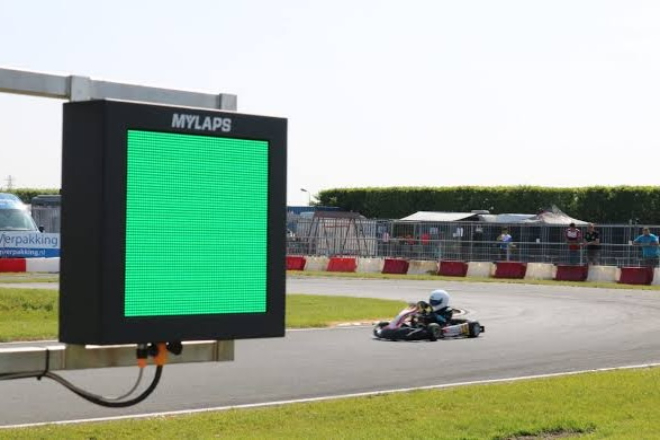
The area next to the track is a common location for installing LED displays, suitable for displaying race information, lap times, rankings, event announcements, and brand advertising.
However, this is also an area with frequent vehicle traffic and a high risk of collisions, so the display effect alone cannot be the sole focus.
If the screen is installed next to a straight or near a corner, the first step is to assess the vehicle’s trajectory, the potential collision range, and the spectator’s activity area.
The screen and its supporting structure must not encroach on the track’s safety space, nor interfere with guardrails, buffer zones, or emergency exits.
For locations near the track, consider installing it in a relatively safe and easily accessible area outside of protective structures.
If the venue needs to display information at a lower position, the external protective structure, equipment mounting methods.
And maintenance conditions should be carefully evaluated, rather than simply installing ordinary indoor screens in areas easily accessible to vehicles.
Regarding the displayed content, trackside LED displays are suitable for highlighting concise and rapidly changing information.
For example, current rankings, fastest lap times, and remaining race time can all be presented with clear numbers and a striking visual layout.
Distancia de visualización is equally important. If spectators are primarily positioned a few meters to a dozen meters from the track perimeter.
The appropriate screen size and pixel pitch should be selected based on the actual distance to ensure key information can be quickly identified.
Furthermore, karting venues may experience tire wear particles, dust, and continuous vibration.
Companies should confirm the equipment’s protection level, heat dissipation conditions, and structural stability based on the installation location.
The primary consideration for trackside pantallas LED is safety and reliability; visual appeal is secondary. Only by not interfering with track operation can they truly enhance the racing experience.
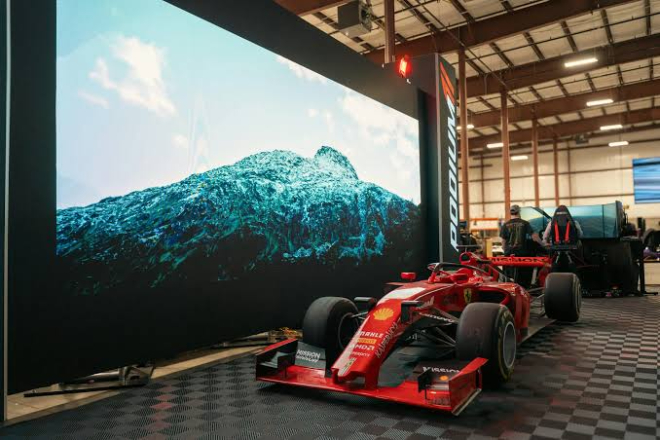
For karting tracks, timing and ranking displays are often more effective at engaging customers than traditional advertising.
Imagine a customer has just finished a race; what do they most want to know? Usually, it’s not the promotional video the track played, but their lap time, ranking, and how far behind their friends are.
Therefore, dedicated pantallas LED near the timing area, pit lane, or track exit can be considered to show real-time race data and results.
The focus of these screens is not on complex visual effects, but on clear information, timely updates, and stable operation.
The screens can display the current fastest lap time, driver rankings, lap times, and race results, and can also display a summary of results after the race.
If the track frequently hosts group events or corporate races, team rankings, race rounds, and winner information can also be displayed as needed, adding a sense of occasion to the race.
It’s important to note that LED displays do not automatically generate accurate timing data. They need to be connected to the track’s timing system or race management software.
Before purchasing, system interfaces, data formats, update delays, and troubleshooting methods should be confirmed to avoid untimely results updates or display errors.
The screen layout should also be as simple as possible. Ranking information should have a clear visual hierarchy, allowing customers to quickly find their names, numbers, or scores.
For viewers at a distance, too much small text and complex animations can reduce readability.
Furthermore, if the venue needs to display individual scores, data usage and privacy management should be considered to avoid unauthorized disclosure of unnecessary personal information.
For operators, the value of timing and ranking LED displays lies in making race results more intuitive, motivating customers to challenge their own scores, and adding fun to interactions among friends.
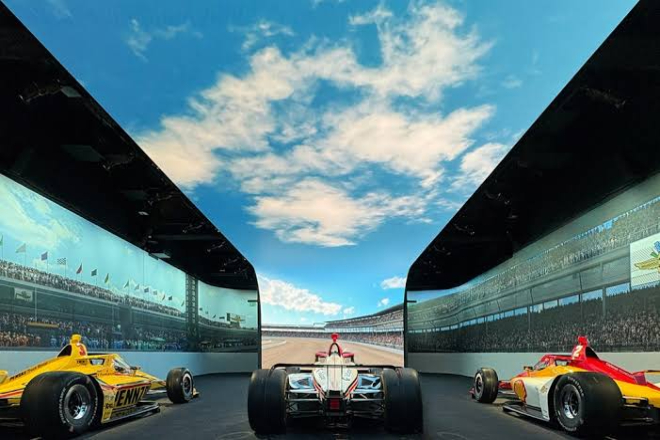
If the venue wants to create a more race-like experience, large LED displays can be planned in the spectator area, start/finish line, or main viewing areas.
Unlike the information screens along the track, these locations are more suitable for tasks such as live race broadcasts, race replays, brand displays, and creating an atmosphere.
For example, installing a main display screen near the start/finish line can showcase race footage, driver introductions, and event themes.
When a competitor crosses the finish line, the screen, in conjunction with the on-site emcee, lighting, and sound systems, enhances the ceremonial feel of the race.
If the venue has a spectator lounge or catering area, pantallas LED can also broadcast live track footage, allowing customers temporarily off the track to follow the race.
However, larger LED displays are not always better. Companies need to determine the size based on the venue’s width, spectator seating positions, viewing distance, and building height.
An overly large screen may cramp the space and affect the layout of other equipment; an unsuitable installation location may result in obstruction by pillars, railings, or other structures.
Tamaño de píxel also needs to be matched to the viewing distance. If spectators will be viewing race replays and details up close, greater attention should be paid to image sharpness;
If the screen is primarily used to showcase the race atmosphere from a distance, then size, pixel pitch, and budget should be comprehensively evaluated.
For venues requiring live streaming, video signal transmission, image latency, and camera performance should also be tested.
The fast-moving go-karts have high requirements for dynamic images, requiring the screen, video processing equipment, and signal system to work in coordination.
In addition, the screen content should be consistent with the venue’s style. During daily operations, it can display competition information and event content.
While during major events, it can switch to live broadcasts, rankings, and brand-themed displays, allowing the same equipment to adapt to different operational scenarios.
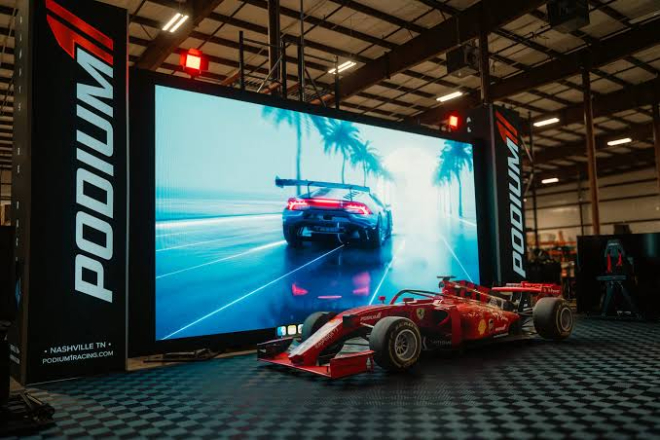
Karting venues may need brand promotion, entrance decoration, and photo opportunities in addition to displaying competition information. Different types of LED displays can fulfill different tasks.
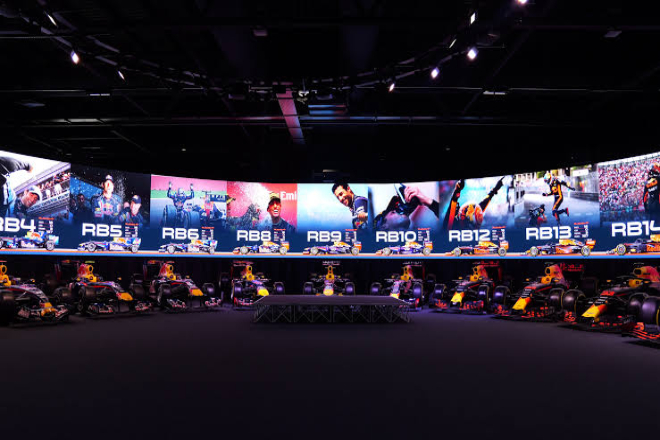
pantallas LED in go-karting tracks are typically distributed across multiple areas.
Purchasing and managing each screen independently can complicate subsequent content updates and maintenance. Therefore, businesses should plan from an overall operational perspective.
First, clarify the purpose of each screen.
Information screens along the track display race data, timing screens show results, the main screen in the spectator area displays race footage and atmosphere, and entrance screens handle brand display and event promotion.
Clearly defining the purpose allows for reasonable budget allocation and product specification selection.
Second, assess the site environment.
Different locations face varying risks of collisions, dust, vibration, and heat dissipation.
Businesses should determine the equipment’s protection level and mounting method based on the installation environment and have a professional team assess structural safety.
Screens and their wiring must not obstruct track operation, emergency evacuation, or pedestrian access.
Third, plan the control and data systems.
If timing and ranking screens need to connect to the event system, interface compatibility and data update methods should be confirmed in advance.
For multi-screen venues, centralized management of content can be considered to improve daily operations and event switching efficiency.
Fourth, calculate long-term costs.
The procurement budget should not only include the screen itself, but also consider the supporting structure, control system, power supply, installation and commissioning, content production, energy consumption, and maintenance costs.
For venues requiring high-frequency operation, spare parts supply and after-sales response capabilities are particularly important.
Finally, consider future event changes.
If the venue plans to host corporate team-building activities, youth competitions, brand events, or professional competitions, appropriate system expansion capabilities should be reserved.
Rather than configuring a large number of high-specification devices at once, it’s better to prioritize meeting core needs and then gradually upgrade based on actual operational results.
The most suitable go-karting LED display solution is not the one with the most screens.
But rather the one that can operate safely, clearly display competition information, and continuously create experiential value for the venue.


 English
 Español
 简体中文
 Français
 日本語
 한국어
 العربية