

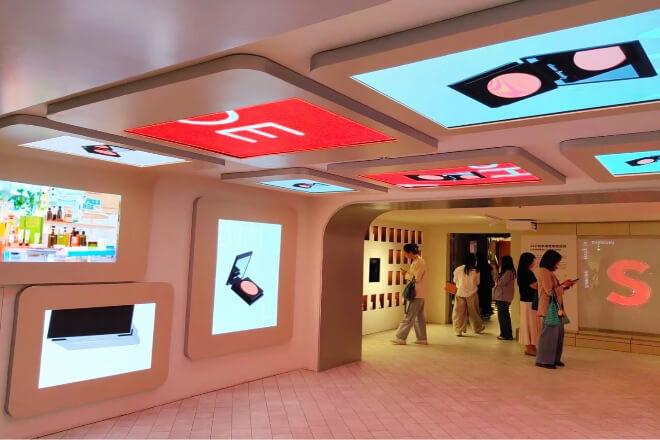
When browsing trade shows, visitors are actually quite discerning.
A large exhibición hall may have hundreds of booths. If a booth lacks distinctive features, many people may only pass by for a few seconds, not even noticing the brand name.
Therefore, how to make visitors want to stop is a question every exhibitor considers.
Traditional display boards and posters can certainly convey information, but their biggest limitation is that they are “static.”
When viewed from a distance, a fixed image is easily lost among various booth designs.
pantallas LED can change this.
For example, when a new energy vehicle company participates in an auto show.
It can play videos at the booth entrance showcasing high-speed vehicle driving, intelligent driving tests, and in-car technology experiences.
Before visitors even approach, they are immediately drawn in by the dynamic visuals and can then learn more about the vehicle.
For technology companies, LED screens can also display product operation processes, data changes, or real-world application examples.
Compared to display boards filled with specifications, a 30-second video often allows visitors to quickly grasp the product’s value.
Furthermore, LED displays can help establish a “visual memory point” for the booth. After many large exhibitions, visitors may not remember how many posters they saw.
But a large, technologically advanced screen or a creative, dynamic presentation is much more likely to leave an impression.
For instance, some brands at the Consumer Electronics Show (CES) use large LED walls to create immersive entrances.
Allowing visitors to experience the technological atmosphere the brand wants to convey even before entering the exhibition area.
For exhibitors, LED displays are not just about enlarging content; more importantly, they are about giving the booth an attractive “opening.”
Once visitors are willing to stop and look, the real opportunities for communication and cooperation begin.
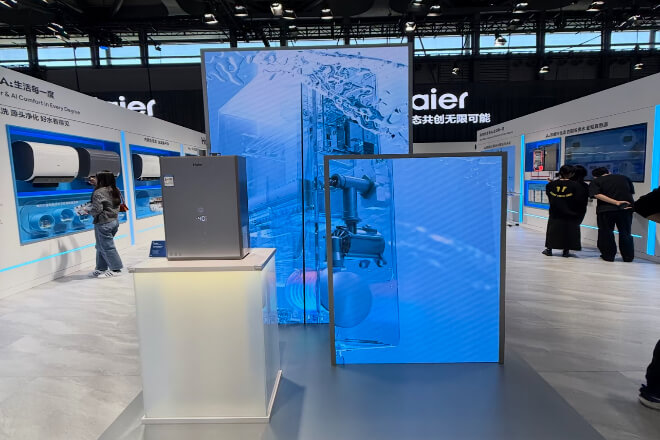
At trade shows, many companies encounter a common problem: their products have clear advantages, but visitors struggle to understand them quickly enough.
This is especially true for technology products, industrial equipment, and new energy products, where many selling points aren’t immediately apparent.
Displaying all parameters, functions, and technological advantages on a single board easily turns the product into an “information wall,” attracting visitors who leave after a few seconds.
LED displays can help companies make complex selling points more intuitive.
For example, a smart device company showcasing an automated machine might find it difficult to explain its workflow with just the physical machine.
Un Pantalla LED can play videos of the machine in operation and animations of the production process, allowing visitors to quickly see how it works and what problems it solves.
For products like automobiles and consumer electronics, LED displays can showcase more content than physical objects can.
For instance, car booths can display intelligent driving scenarios and in-vehicle technological features;
Mobile phone brands can showcase screen effects, imaging capabilities, and usage scenarios, making product advantages easier to understand.
Furthermore, combining LED screens with physical displays enhances the on-site experience. Visitors see not just a product on a display stand, but a complete usage scenario.
For example, home appliance brands can use LED backdrops to showcase home application environments, allowing consumers to imagine how the products would look in real life.
At some large international trade shows, many brands utilize large LED screens to create product experience zones.
The screen tells the story, while the physical products allow visitors to experience them up close.
Combined, the booth is no longer just a “product display,” but more like a small experience center.
For exhibitors, the greatest value of LED displays lies in transforming “what functions the product has” into “what value the product brings.”
When visitors understand the product more quickly, opportunities for communication and sales naturally increase.
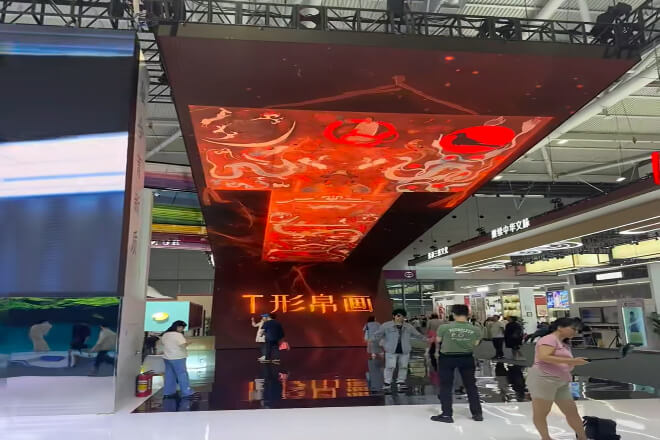
Today’s trade shows are no longer simply about “displaying products and distributing brochures.”
Faced with increasingly beautifully designed booths, companies often find that a single poster or a few display cases are insufficient to make a lasting impression.
Many brands are starting to use LED displays to transform their booths into interactive, storytelling experiential spaces.
Large-size LED walls can first and foremost change the overall visual atmosphere of the booth.
For example, a car brand participating in an auto show can use a circular LED screen to create a futuristic city backdrop, immersing visitors in a future driving environment for their vehicles.
A travel brand can use a massive LED wall to showcase destination scenery, allowing visitors to experience the travel atmosphere even before setting off.
Beyond single large screens, multiple LED screens working together can create a stronger sense of immersion.
For example, technology companies can have different screens in different areas showcasing the brand’s development history, product technology, and application cases, forming a complete tour route.
Visitors are not simply “looking at a product,” but rather stepping into a brand story.
Furthermore, the content switching capabilities of LED displays allow booths to adjust their focus according to different stages.
In the morning, brand introductions can be played, while in the afternoon, new product launches can be introduced.
During the event, real-time interactive elements and visitor feedback can also be displayed.
Large brand booths at some international exhibitions utilize LED walls, transparent LED screens.
And even irregularly shaped LED screens to create unique spatial effects, prompting visitors to stop and take photos to share.
For exhibitors, the value of LED displays goes beyond simply making the booth more aesthetically pleasing; it helps the brand create a “memorable moment.”
When visitors leave the exhibition hall and still remember that special booth, a truly differentiated experience is achieved.
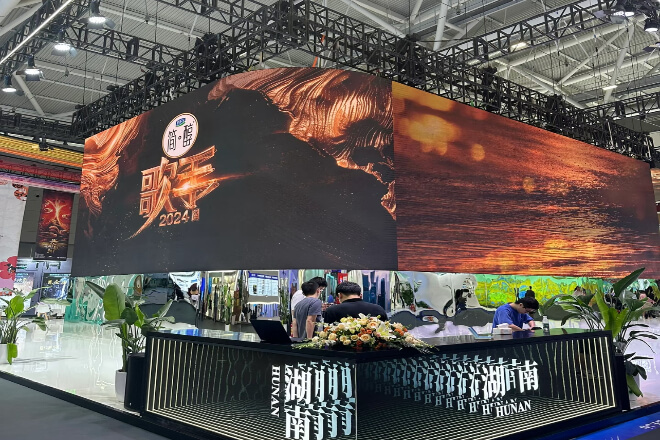
Business negotiations at trade shows often determine future cooperation opportunities.
However, sales personnel often encounter a problem when facing clients: after explaining the product for a long time, the client still hasn’t formed a clear impression.
Especially when dealing with complex solutions, engineering projects, or technical products, it’s difficult to quickly demonstrate a company’s strength with just verbal introductions and a few pages of materials.
En este caso, pantallas LED can become a “demonstration tool” in business communication.
For example, when an LED display company participates in an industry exhibition, it can use a large screen in the negotiation area to showcase past completed project cases.
Including application scenarios such as aeropuertos, estadios, and commercial centers, allowing clients to more intuitively understand the actual effects of the product.
For companies in industrial equipment and intelligent systems, LED screens can also be used to play solution videos, product operation processes, and customer case studies.
When sales personnel explain, they don’t need to spend a lot of time describing complex processes;
They only need to use the screen images for explanation, making communication much clearer.
At the same time, LED displays can also enhance clients’ trust in the company.
For example, when clients sit down for discussions, the background LED screen displays global project distribution, partner brands, or success stories.
This visual information subtly reinforces the company’s strength, allowing clients to quickly establish trust.
Compared to traditional printed materials, the biggest advantage of LED displays lies in their greater content flexibility.
Different clients and project needs can be quickly switched to corresponding case studies, making communication more precise.
En el exhibición‘s business area, LED displays are not just display screens, but also like “digital assistants” for sales personnel.
They help companies simplify complex information and make it easier for clients to see the value of cooperation.
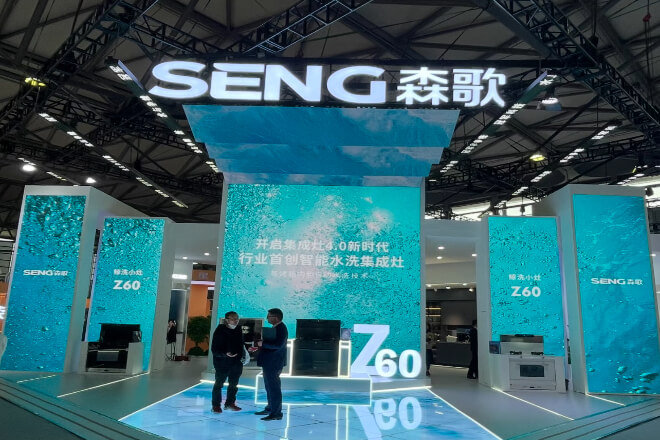
Many companies invest heavily in booth design and promotional content creation when participating in exhibicións, hoping to gain more exposure in just a few days.
However, after the exhibition, much of the display material ceases to serve its purpose and can no longer generate value.
The advantage of LED displays is that they are not disposable display tools.
After the exhibition, companies can reuse LED displays in other scenarios.
Such as corporate showrooms, customer reception areas, conference centers, or brand experience spaces, allowing the previously invested equipment to continue to play a role.
For example, a manufacturing company might use a large LED screen at an exhibition to showcase its factory production processes, global project case studies, and product application videos.
After the exhibition, this display system can be moved back to the headquarters showroom for customer and partner visits, allowing more people to understand the company’s strength.
For companies that frequently participate in industry events, pantallas LED can also be used for new product launches, company annual meetings, training activities, and other scenarios.
A high-quality display system doesn’t need to be repurchased for each event, reducing long-term advertising costs.
Furthermore, the content on LED displays can be continuously updated.
A company might showcase new products this year, and next year it can switch to industry case studies, brand stories.
Or the latest technologies, allowing the equipment to continuously generate new value as the company develops.
For companies, LED displays shouldn’t just be “temporary actors” at exhibitions, but rather long-term brand display assets.
From a single exhibition investment to multiple application scenarios, it helps companies transform short-term exposure into sustained influence.


 English
  Español
  简体中文
简体中文  Français
  日本語
日本語  한국어
한국어  العربية