
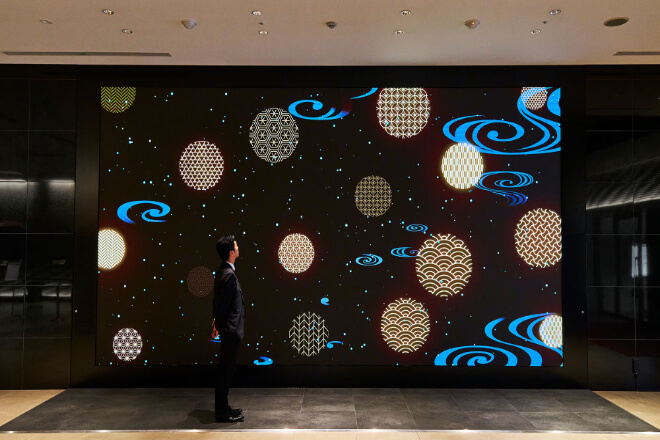
Many Pantalla LED projects face problems not with the equipment itself, but with “why design it this way?”
The same screen can have vastly different effects; some simply light up, while others captivate viewers for seconds.
The difference often lies not in the specifications, but in whether the overall design revolves around “attractiveness” from the outset.
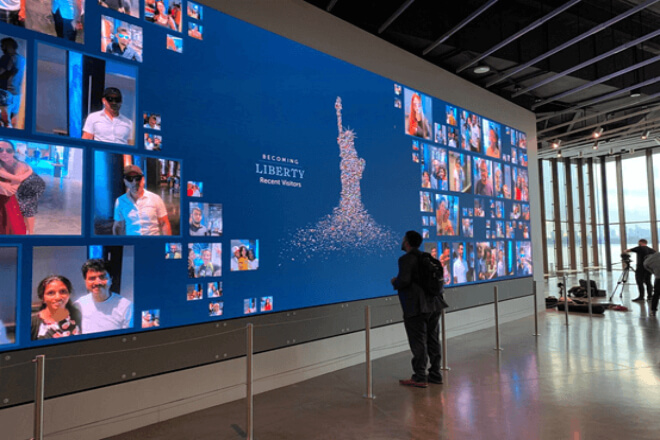
Before using an Pantalla LED, the most crucial step isn’t “where to install it,” but “what is it intended to do?”
If the objective is unclear, even the best screen can easily become “just a device playing content.”
First, clarify the purpose based on the different scenarios. For example, in commercial areas, the focus is on attracting foot traffic; at exhibiciones, the emphasis is on information delivery.
In sports stadiums, the goal is to create an atmosphere; in stores, the focus is on promotion and conversion.
Different scenarios require completely different logics; you can’t use the same content for everything.
Second, clarify the core objective: is it to attract attention, deliver information, or enhance the atmosphere?
For example, the same screen can be a “customer magnet” at a store entrance, a “guide” at an exhibition, and an “emotion amplifier” in a stadium.
Different positioning requires completely different content design approaches.
Going a step further, the display logic should be designed around audience behavior. If the audience is “passing by,” the content should be short, fast-paced, and eye-catching.
If they are “staying,” the amount of information and interactive content can be increased; if they are “immersive,” the pace and atmosphere can be strengthened.
For a practical example: at the entrance of a shopping district, if a long video is simply played on a loop, most people will probably only glance at it and walk away.
But if a “3-second eye-catching + quick information point” design is created based on the flow of people, the effect will be significantly better.
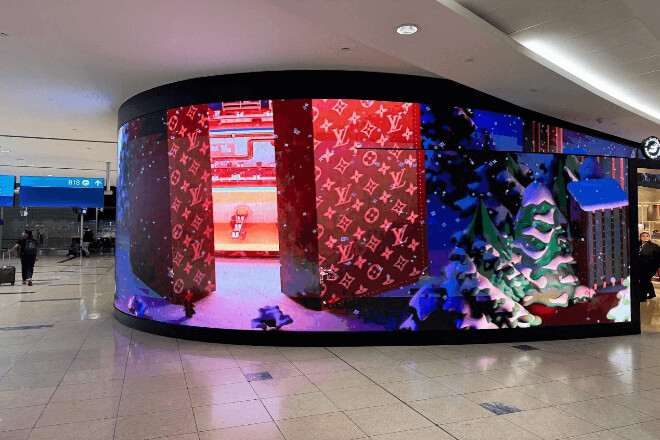
The LED display issue is actually a bit like “choosing the center escenario for a space”—if the location is wrong, even the most brilliant content is easily overlooked by passersby.
First, the size and proportion must be just right—”eye-catching but not overwhelming.” Too small, and it’s like a background panel, easily overlooked.
Too large, and it’s like a giant screen suddenly appearing in front of you, creating a sense of pressure. Ideally, it should draw the eye as soon as someone enters the space.
Then there’s the form and installation method. It can be wall-mounted, becoming part of the space; or it can be suspended, gently “pressing down” on the line of sight from above.
Even an irregularly shaped structure can give the screen itself a “design presence.” In short, the goal is the same: to make it look like a part of the space, not a “hard-installed device.”
For a very real scenario: in a centro comercial atrium, a vertical screen is more noticeable than a horizontal one because people’s eyes naturally scan upwards as they enter, instantly “locking onto the target.”
Another example is at a store entrance. If the screen is placed at a corner or directly opposite the entrance, it’s like “someone standing at the door greeting you”—you might not stop, but you’ll definitely glance at it first.
Finally, there’s “first impression.” Simply put, can it make people look at it the moment they enter, instead of looking at the lights, the floor, or the ceiling?
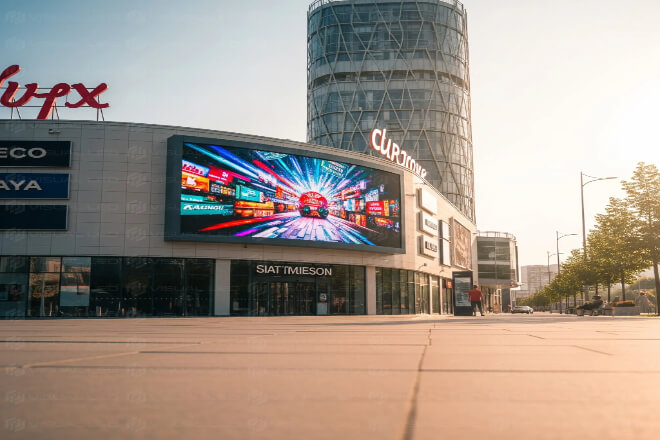
If the LED screen is the “escenario,” then the content is the “performance itself.” No matter how beautiful the stage, if the content is mediocre, it’s difficult to truly capture people’s attention.
First, use dynamic videos and rhythm to enhance appeal. Static images are easily overlooked, but once there’s rhythm, variation, and a slight “storyline,” people’s attention will naturally linger longer.
For example, a change in movement or rhythm will subconsciously make passersby look for a few seconds longer.
Second, customize content according to the scenario, rather than using a “one-size-fits-all” approach. Commercial areas can emphasize visual impact and promotional information.
Exhibitions can focus on explanation and information delivery, stadiums can emphasize rhythm and atmosphere, and stores can prioritize conversion guidance.
Different scenarios require different “tones” for the content.
For a concrete example: For new product promotions, a fast-paced short video can attract attention in a shopping mall.
While a concise message with discounts at a store entrance allows people to “understand and then walk in.”
Furthermore, the information hierarchy must be clear. It’s not about piling all the content together, but about prioritizing: first grab attention, then provide information.
And finally guide action. Like storytelling, it needs rhythm; the audience will quickly get tired of it.
Finally, continuous updates are crucial to avoid visual fatigue. Even the best content becomes “background noise” if it remains unchanged.
Appropriately updating the visuals and adjusting the pace is like giving the screen a “change of scenery,” keeping the audience engaged and entertained.
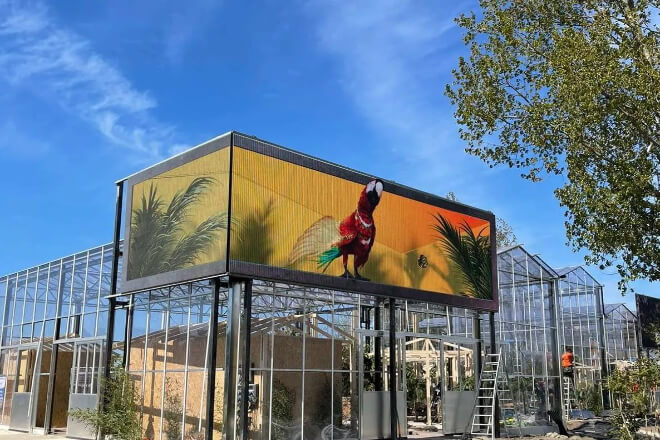
The real appeal of pantallas LED isn’t just about their own bright appearance, but their ability to “coordinate” with the entire space. It’s no longer a standalone screen, but more like a key actor on stage.
First, there’s the coordination with lighting and sound. When the lights dim and the music speeds up, the screen’s visuals adjust accordingly.
This synchronized change in sound, light, and image instantly creates a vibrant atmosphere, as if the entire space is “getting into character.”
Then there’s multi-screen collaboration. The main screen highlights the key points, while the side screens supplement or extend the content.
And different screens can even “relay” playback. It’s not just one screen displaying content; the entire space is telling the same story.
For a vivid example: before the event begins, the venue is relatively quiet. Suddenly, the lights dim, the music starts to play rhythmically.
The main screen lights up with the opening video, and the side screens expand their displays simultaneously.
The entire space instantly transforms from a “normal venue” to “stage mode,” and the audience is naturally drawn in.
Furthermore, by switching content according to time or event—for example, focusing on information display during the day, atmosphere creation at night.
And interactive content during events—the screen acts like a person who “speaks according to the occasion,” saying different things at different times.
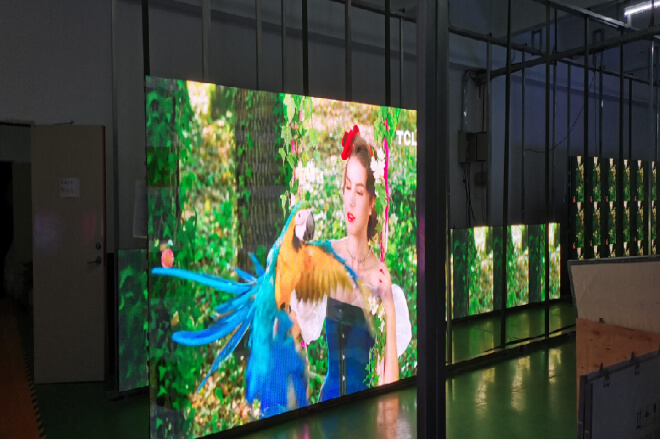
Ultimately, LED displays shouldn’t just aim for a “spectacular look.” They also need to consider “stability in use and maintenance costs.”
Otherwise, a stunning initial impression will lead to budget constraints later on.
The first step is to control the balance between budget and effect. It’s not about bigger or brighter; it’s about being “just enough and expressive.”
Just like ordering food, it’s not about having a table full of fancy dishes, but about enjoying the food, being visually comfortable, and avoiding waste.
Secondly, there are installation and maintenance costs. Complex, high-difficulty solutions may seem sophisticated initially.
But if maintenance requires dismantling large sections frequently, it becomes “maintenance work more frequent than usage.”
Therefore, costs should be considered upfront, not added later.
A very real example: some projects initially use super-large screens for visual appeal, but later module replacements and wiring repairs become cumbersome.
Making each maintenance session feel like a “mini-engineering site,” ultimately affecting normal use.
Next is system stability, which is actually more important than “looks good.” If a screen frequently lags, goes black.
Or requires frequent restarts, even the best content will be diminished. Stable operation is the foundation for long-term use.
Finally, there’s long-term availability and continuous operational capability. A good LED solution isn’t “installed and done with.”
But rather should be continuously usable, easily updatable, and have controllable maintenance costs, making it a true long-term asset, not a one-time display tool.


 English
  Español
  简体中文
简体中文  Français
  日本語
日本語  한국어
한국어  العربية