
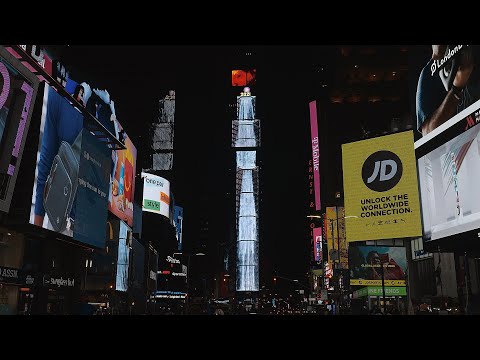
In business districts, where there’s a lot of information and people, the real issue isn’t “whether there’s display space,” but “how to get people to take a second look.”
The role of pantallas LED is to seize “priority of attention” in such environments.
First, place them in the most densely populated areas, such as main passageways, centro comercial entrances.
And near subway exits—places where “people are bound to pass by.” This way, it doesn’t need to actively seek people out; people will naturally pass by.
Gradually, it becomes a subtle presence—you may not stop to look closely, but you can hardly ignore it completely.
It’s somewhat like a “visual landmark” in the city, reminding you: this place is bustling.
Here’s a very real scenario: People are just exiting the subway station, initially walking with their heads down in their own directions.
But then a bright, dynamic screen lights up ahead, and everyone unconsciously looks up for a glance.
It’s not a deliberate stop, but just a casual glance. This initial look constitutes the first exposure.
What’s even more interesting is that after repeatedly passing by, the screen becomes increasingly “familiar.”
The first time it’s “There’s a big screen,” the second time it’s “Oh, there’s an event here,” and the third time it might become “I remember there was a rather eye-catching screen over there.” Memory is built up little by little like this.
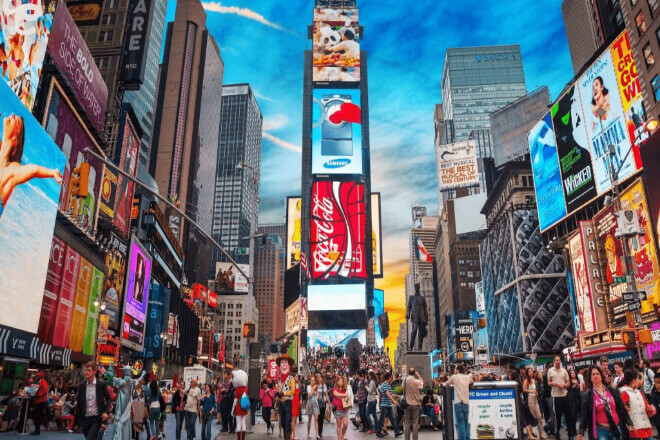
In an environment where visual information is already “flying everywhere,” content alone isn’t enough to be remembered; sometimes, you need to “look different.”
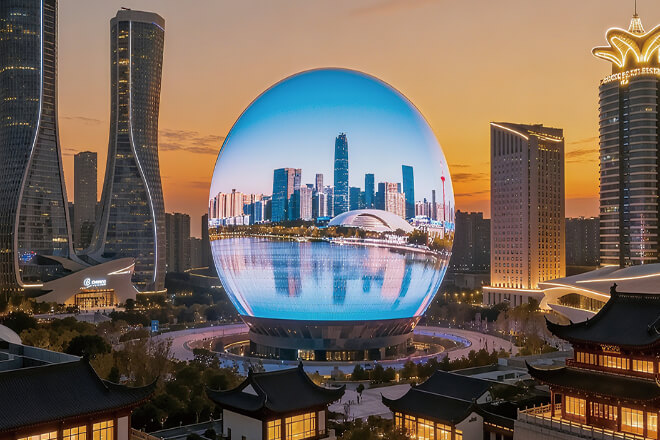
This is the value of oversized and irregularly shaped designs. Once an pantalla LED is made curved, wraparound.
Or integrated with the architectural structure, it’s no longer just a “screen,” but rather a visually significant installation within the space.
The logic is simple: while others have square, “regular” displays, if yours suddenly appears curved, edged, and extending outwards.
The first reaction of passersby isn’t “to look at the content,” but rather “What is this? It’s so eye-catching!”
A vivid example: a typical centro comercial exterior might just be a flat advertising screen, glanced at as people pass by.
But if it’s a curved screen that extends along the building’s curvature, the image “flows” across the wall like water.
And people will subconsciously look for a couple more seconds, perhaps even taking out their phones to take a picture.
Another example is corner buildings. If the LED screen is designed as an “angle-encircling extension,” from a distance, it looks like a luminous building shell.
Before the content is even clear, the building itself is already memorable.
Gradually, it becomes a very interesting phenomenon: people might not remember what the advertisement was.
But they will remember “there was a very special, very bright, very different screen there.”
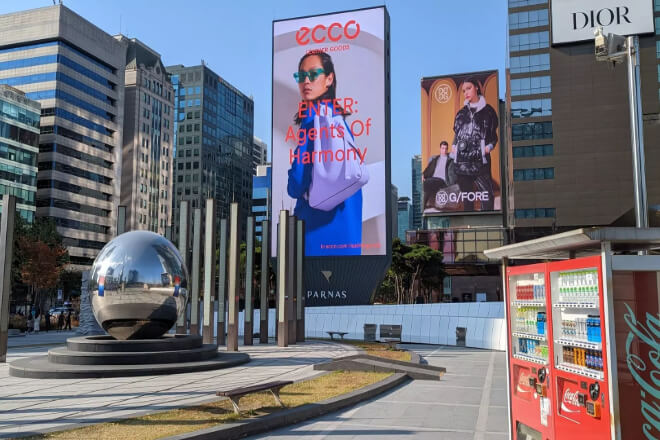
Si pantallas LED only show advertisements, they are easily perceived as “background noise.” But once the content is done right, it becomes a “speaking” window into the city.
First, it needs to be linked to the city’s culture. It’s not about randomly placing generic materials, but rather incorporating landmarks, street rhythms.
And local characteristics to give the visuals a “local” feel. In this way, the screen isn’t just a screen, but rather the city greeting people.
Second, there’s the switching between holiday and event content. Normally, it might be relatively “normal,” but during holidays, it suddenly becomes very atmospheric:
The lights become more vibrant, the visuals more lively, the rhythm more intense, and the mood of the entire street is lifted.
For a vivid example: normally, walking through a shopping district, you see regular advertising rotations.
But during holidays, the LED screens start playing synchronized themed animations and limited-edition visual effects.
Making the whole street feel like it’s “suddenly changed filters,” even lightening the mood of passersby.
Furthermore, there’s brand expression. If a brand consistently uses a uniform visual language, such as fixed color schemes, rhythms.
And visual symbols, people will eventually develop a sense of “familiarity.” Even without clearly seeing the content, you’ll feel, “I think I’ve seen this before.”
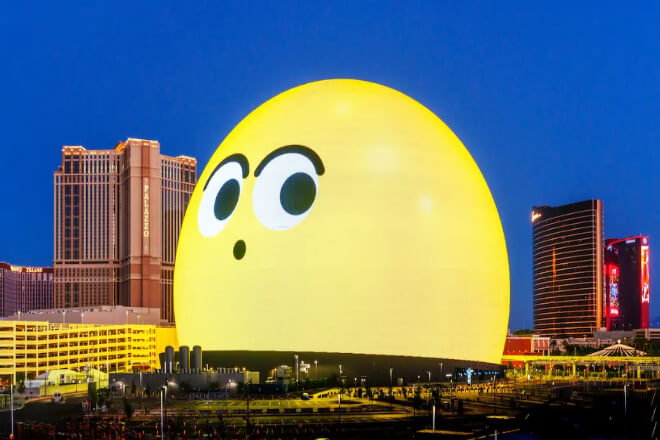
At night, the rules of competition in the city become very simple—whoever is brighter, more dynamic.
And more easily seen is more easily remembered. LED displays are perfect “high-presence players” at night.
First, nighttime itself has an added advantage. As the light dims, the human eye’s sensitivity to brillo and movement increases significantly.
When a large screen lights up at this time, it’s like an animation suddenly “starting” in a quiet background—it’s hard to ignore.
Second, there’s the coordination with city lights. It doesn’t emit light alone, but rather works with streetlights and building lights to create a cohesive image, somewhat like the city “changing its nighttime skin.”
The screen provides the movement, the lights provide the atmosphere; together, the whole street becomes more rhythmic.
For a very real example: strolling through a shopping district at night, you might be just taking a normal walk.
But when you reach a large screen, the images start changing, the colors shift, and you’ll subconsciously slow down.
It’s not that you’re drawn to see the advertisements, but rather, “This image is quite appealing.”
Further down the line, these locations easily become “naturally inviting” spots. People take photos, check in, and casually post on social media.
The screen gradually transforms from a “display tool” into a “backdrop + photo scene generator.”
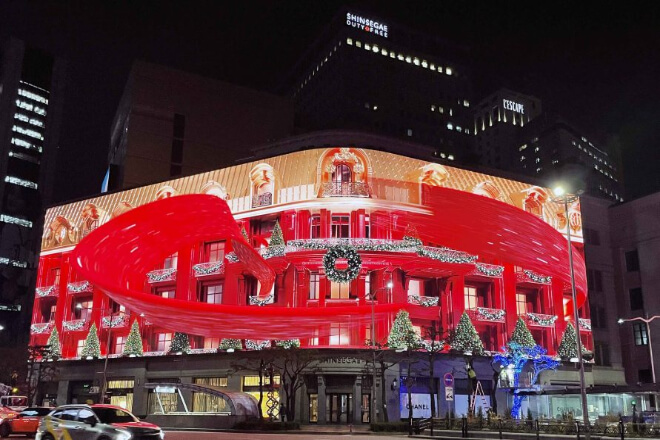
The true value of an pantalla LED lies not in how “attractive it is when it’s lit,” but in whether “people remember it after it’s been lit for a long time.”
First, there’s the need for continuous and stable content operation. It’s not about changing content daily, but about consistent, rhythmic updates to keep it “alive.”
Sometimes it’s routine information, sometimes it’s holiday content, sometimes it’s brand expression—gradually building a stable presence.
For example, the first time someone passes by, they might just “see a big screen,” but after passing by ten times.
They’ll subconsciously say, “What’s that screen showing today?” At this point, it has transformed from a device into a “familiar presence.”
Second, there’s social media dissemination. As long as the visuals are distinctive and atmospheric enough, people will easily take photos and share them.
Often, viral spread isn’t planned; it’s triggered by something simply “looking good.”
For example, a dynamic video at night, a themed visual for a festival, or a scene where architecture and the screen blend seamlessly can all be captured in short videos or photos and spread naturally on social media.
Gradually, the screen transcends being just a “playback device” and begins to acquire a certain urban identity.
Some use it as a meeting point, others as a photo backdrop, and still others even use it to indicate directions.


 English
  Español
  简体中文
简体中文  Français
  日本語
日本語  한국어
한국어  العربية