
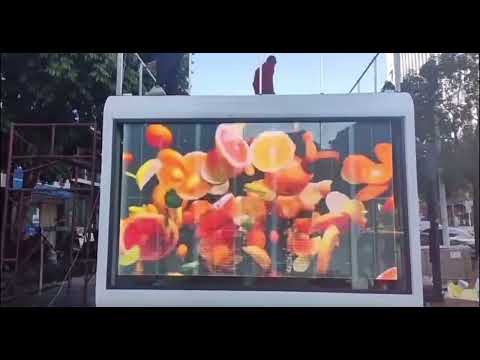
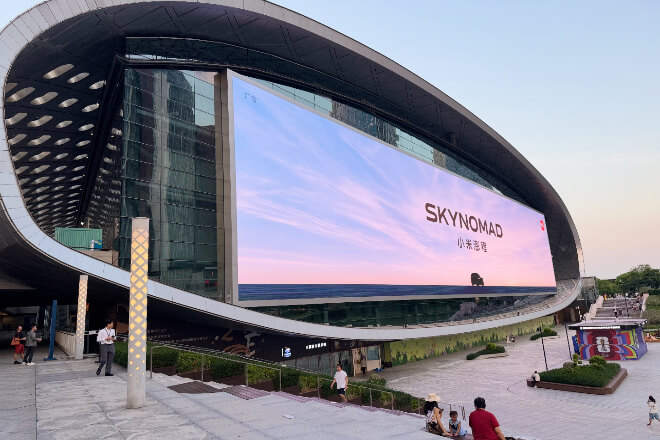
Many cities, when undertaking downtown renewal, have moved beyond simply “restoring the old as it was.”
More importantly, they aim to revitalise previously less populated neighbourhoods.
在这个过程中, LED显示屏 are appearing in more and more urban spaces. What used to be just a sign at building entrances can now become a dynamic information display window, showcasing city events, commercial promotions, and holiday announcements.
For example, some US cities install LED screens in pedestrian streets and at the entrances of shopping plazas in old city centres.
During the Christmas season, they can display information about holiday events and light shows, and when hosting music festivals or art exhibitions.
They can quickly switch between events, letting visitors know “what’s happening here.”
Las Vegas is a prime example. Large LED displays throughout the city serve not only for commercial advertising but also as a key visual element attracting tourists.
Many visitors arrive before even entering 酒店 or entertainment venues, already drawn in by the dynamic visuals in the streets, willing to stop, take photos, and explore.
For revitalised old urban areas, LED displays offer a new form of expression. They don’t require altering the entire building structure, yet they can bring more variety to streets, plazas, and commercial spaces.
Previously, urban landmarks were more about “glancing at them”; now, digital spaces aim to encourage people to “stop, participate, and share.” This is the value of LED displays in urban renewal projects.
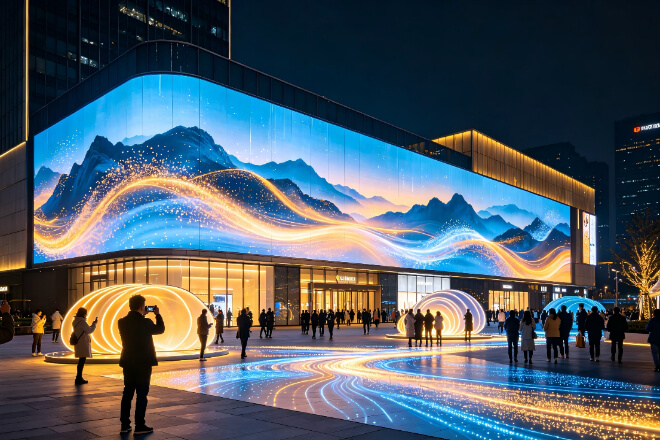
Many urban renewal projects don’t simply demolish old buildings and replace them with new ones; they aim to preserve the original character while adding new commercial value.
This also brings new application opportunities for LED displays.
For example, some old warehouses and factories have been transformed into art centres, restaurants, commercial spaces, or exhibition halls.
The original brick walls, steel beams, and industrial style have been preserved, but digital art, brand displays, and interactive experiences have been incorporated into the spaces, revitalising these old buildings for younger consumers.
However, old buildings often share a common characteristic: irregular spatial structures.
Some walls are curved, some entrances have limited height, and some areas retain the original columns and structures. Installing ordinary LED screens might disrupt the building’s original design.
In these cases, 柔性LED屏幕, transparent LED screens, or custom-shaped screens are more suitable.
For example, in transforming an old factory into a digital art gallery, the original walls and steel frames don’t need major alterations.
Simply installing LED display installations that complement the space’s characteristics can transform an ordinary space into an immersive experience area.
Visitors entering no longer see just an old building, but a combination of historical elements and digital visuals.
In some European cities, old train stations and industrial plants, after being converted into cultural venues.
Also utilise LED display and digital content to create new visual effects at night, becoming popular spots for tourists to take photos and share on social media.
For older buildings, the greatest value of LED displays lies not in “replacing the original,” but in adding new forms of expression without compromising the building’s character.
Old buildings retain a sense of history, while LED displays allow these spaces to continue to tell new stories.
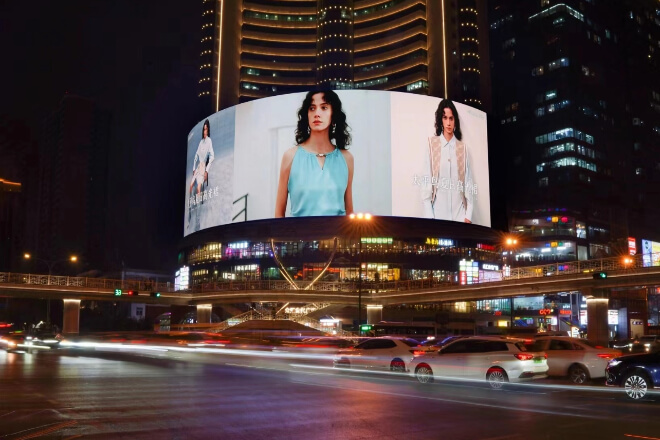
Many large urban complexes are no longer just places to “shop.”
A single project may include 购物广场, office buildings, 酒店, apartments, restaurants, and entertainment venues.
Different people come here for different reasons: some are rushing to work, some are meeting friends for dinner, and some are attending exhibitions or events.
In this case, how to quickly transmit information becomes a practical problem.
For example, in a large commercial complex, the office area might need to display meeting schedules, floor guides, and company information in the morning;
In the afternoon, the shopping area could switch to displaying new product promotions, brand activities, and special offers;
And in the evening, the entertainment area could display performance times and event announcements.
The advantage of LED displays lies here—the content can be flexibly adjusted according to different areas and times.
For example, in some overseas shopping malls, large LED screens at entrances typically serve to attract customers and display brand activities and visual content;
Digital screens in parking lots and elevator lobbies are more often used for route guidance and service information;
Large screens in event plazas can also temporarily transform into live performances or interactive displays.
This flexibility is also crucial for operators. For instance, if a mall suddenly hosts a weekend market, the content only needs to be updated in the backend.
And screens in all areas can simultaneously notify consumers, eliminating the need for large-scale production of printed materials.
Therefore, the need for digital display systems in mixed-use projects is not simply about “looking more technological.”
More importantly, as a space becomes increasingly crowded with people and different scenarios, LED displays can help operators deliver the right information to the right place at the right time.
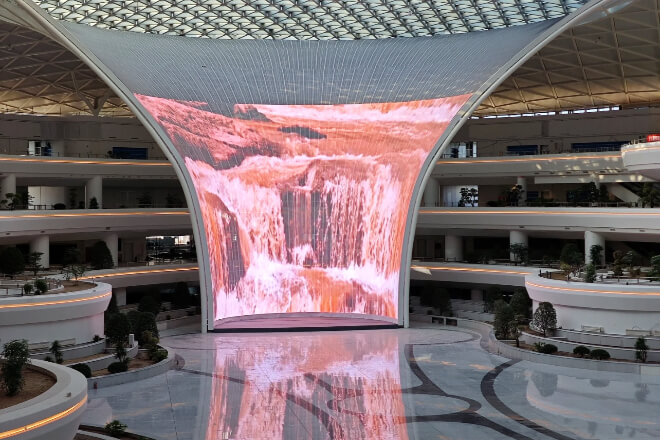
For people who take the subway, bus, or train daily, the most pressing concerns are often not how beautiful the station is, but rather:
How many minutes until the train arrives? What if I need to change platforms? Which exit is the fastest?
With the upgrading of urban transportation systems, LED displays are taking on an increasingly important role in providing information services.
For example, after subway station renovations, the LED screens in the station halls no longer just display simple route maps, but can update train arrival times, transfer reminders, and passenger flow information in real time.
During morning rush hour, when a particular line is congested, operators can also use the screens to remind passengers to choose alternative routes, reducing congestion within the station.
This need is even more pronounced at 机场 and train stations. For instance, if flights are delayed, gates are changed, or trains change platforms.
Many passengers might have already gone the wrong way if staff still rely on announcements and paper notices.
With synchronised updates on LED information screens, passengers can see the changes immediately.
Some large train stations in Tokyo, Japan, are good examples. With a large number of commuters and tourists passing through daily.
The station’s digital display system continuously updates train operation status, transfer routes, and service information.
For first-time foreign tourists, clear screen prompts are easier to understand than complex signs.
Furthermore, LED displays give transportation hubs more extended value. Besides displaying vehicle information, they can also display weather alerts, city events, safety tips.
And other content, transforming stations from simple “passage spaces” into windows into the city’s information network.
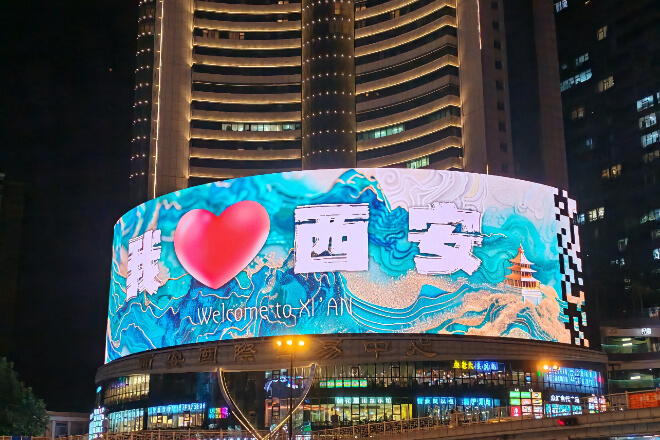
In the past, city squares were often just places to pass by. But now, more and more cities want to truly revitalise these public spaces, and LED displays are becoming an important part of this.
For example, a city centre square can normally display city promotions, cultural events, and commercial information;
During major events like the World Cup and the Olympics, large screens can transform into outdoor viewing areas, attracting citizens to gather and watch the games.
Cities like Paris and London utilise public spaces to create temporary viewing areas during large events.
Giant LED screens allow people who don’t enter the venues to experience the atmosphere of the event.
After the event, these screens can quickly switch content for music festivals, art 展览, city celebrations, and other activities.
Waterfront areas and tourist districts present similar scenarios. For example, at night, riverside areas can use LED screens combined with lighting to display urban cultural content.
Attracting tourists to linger; during festivals, the theme can be quickly switched to create different atmospheres.
For city managers, one of the biggest advantages of LED displays is their flexibility.
Temporary markets, performances, or charity events don’t require rebuilding complex information display systems; simply updating the content allows a space to quickly switch uses.


 English
  Español
  简体中文
简体中文  Français
  日本語
日本語  한국어
한국어  العربية