
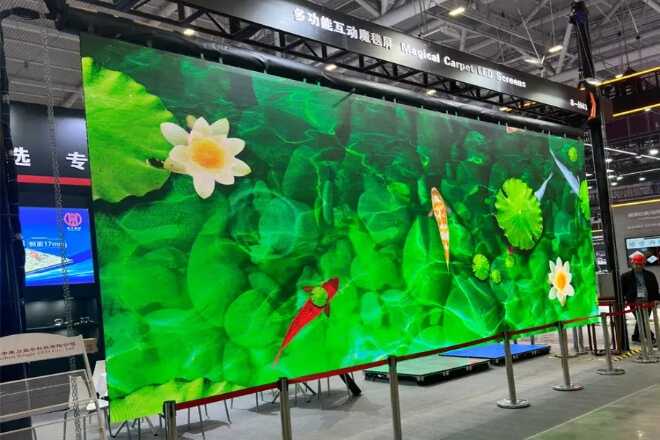
Once the LED显示屏 is installed, lit, and the image appears normal, is the project finished?
Actually, many problems only appear gradually after a period of use. The 亮度 may decrease, some areas of the display may be abnormal, or the image quality may become increasingly “off.”
To keep an LED display in good condition, installation is only the first step; subsequent use and maintenance are equally important.
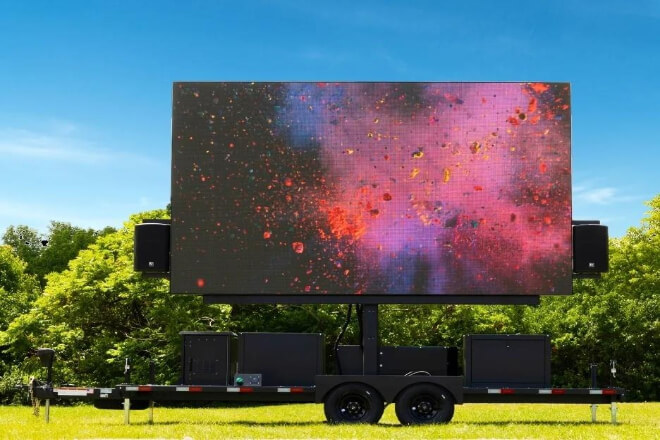
The most troublesome situation with LED displays isn’t necessarily “complete failure,” but rather a dim area one day, a few flickers the next, and then suddenly it’s working normally again by the time maintenance personnel arrive.
Therefore, daily operational checks are crucial.
For example, LED screens in 购物广场 operate for over ten hours a day. Staff can quickly check after turning them on:
Are there any areas of blackout, inconsistent colours, or stuttering during image transitions? Many small problems can be detected by the naked eye much earlier.
Higher 亮度 isn’t always better. 户外LED屏 require high brightness during the day, but keeping them “at full power” at night is not only glaring but also increases the long-term stress on the screen.
Adjusting brightness automatically or periodically based on ambient light is more suitable.
Furthermore, LED displays are also susceptible to overworking.
Especially in hot weather, prolonged high-brightness operation without proper heat dissipation will cause internal temperatures to rise continuously, increasing the probability of screen malfunctions.
The operating environment is equally important. Outdoor screens need to be protected from rain and heat dissipation, while indoor screens need to be mindful of dust and humidity.
Ultimately, stable operation of LED displays doesn’t rely on “repairing only when it breaks down.”
Regularly checking the operating status and adjusting brightness and usage methods can often prevent many embarrassing situations like sudden screen blackouts.
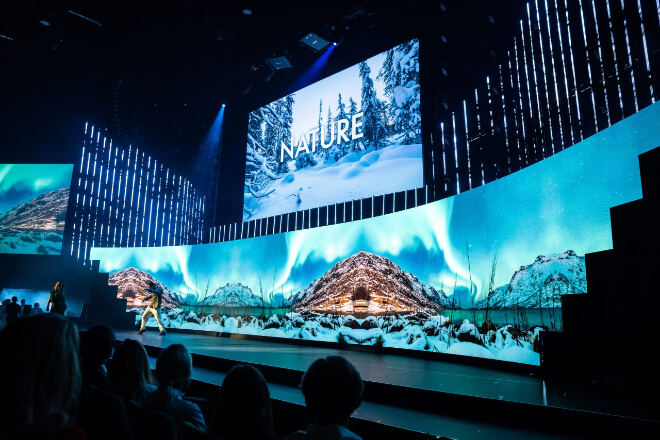
LED displays are somewhat like cars; normal operation doesn’t mean they can be ignored. Many problems initially appear as minor issues.
For example, two or three dark spots on a large LED screen in a 购物中心 atrium are almost invisible from a distance, leading staff to easily assume, “Let’s just keep using it.”
However, after a few months, the dark spots increase, and adjacent LED模组 begin to show colour differences.
What could have been solved by replacing a small component may eventually require addressing an entire area.
Therefore, regular inspection of LED modules, cables, and connectors is essential. This is especially true for outdoor LED advertising screens;
After a hot summer or a prolonged rainy season, pay close attention to whether the interfaces are loose and whether the inside of the cabinet is damp.
Dust is also an easily overlooked issue. For example, LED screens in stadiums accumulate dust over time, naturally reducing their heat dissipation.
Just like a computer fan filled with dust, it might initially “hold on,” but over time, its operation becomes unstable.
If you notice bright spots, dark spots, or localised flickering, address them as soon as possible.
Don’t wait until the day of an important event, when customers stand in front of the screen asking, “Why is there a dark patch here?” before contacting maintenance.
The lifespan of an LED display screen is often not shortened suddenly, but rather accumulated gradually from a series of small problems.
Regular maintenance is about preventing these small problems from growing.
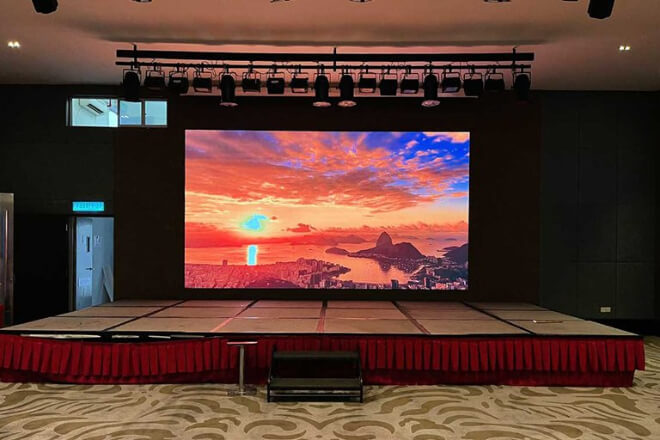
The same LED显示屏 screen placed in a shopping mall and a football field obviously cannot use the same display method.
Just like a mobile phone screen, the brightness will definitely be different under bright sunlight and when lying in bed at night.
The most obvious difference for 户外LED屏幕 is brightness. For example, in the midday sun during summer, if the brightness is too low.
The advertisement will look like it’s covered in a layer of dust, while maintaining maximum brightness at night might force passersby to squint.
Adjusting the 亮度 according to the ambient light makes the image more comfortable.
室内LED屏幕, on the other hand, need to consider viewing distance. For example, in bank lobbies and conference rooms, viewers are closer to the screen.
If the brightness is too high and the colours too saturated, watching for ten minutes might cause eye strain.
Appropriately reducing brightness and adjusting the colours to be more natural is more practical than simply pursuing “brighter and more impactful.”
In commercial settings, the playback rhythm is also important. People walk quickly at mall entrances;
If an advertisement lasts two minutes, many people might not even see the brand name before walking past. Shorter ads with key points appearing earlier are easier to remember.
运动的 events and performances are another matter.
For example, if a football match is being broadcast live and the LED screen suddenly freezes for half a second, tens of thousands of spectators might notice the problem simultaneously.
These scenarios naturally place higher demands on image stability, refresh rate, and system performance.
There’s no single, universally applicable parameter set for LED display performance. The screen’s location, target audience, and viewing duration often determine its optimal settings.
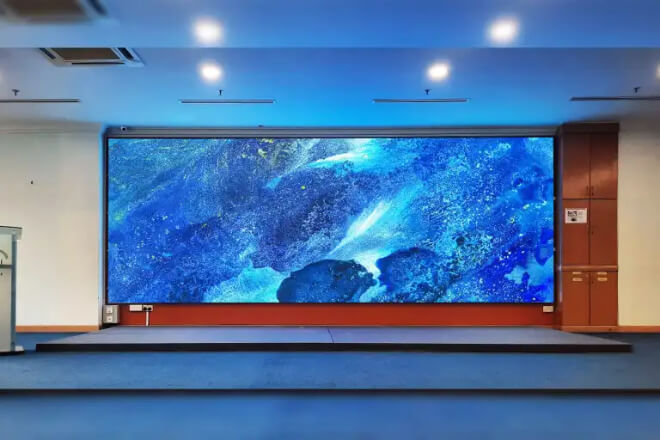
Many LED displays have sound hardware, but after a period of use, viewers become accustomed to their presence.
The reason is simple: the content hasn’t changed in a long time. Like a poster that’s been on in a mall for six months, it loses its appeal.
Therefore, content management is crucial for the long-term operation of LED显示屏.
For example, if a large LED screen in a 购物中心 only plays the same brand advertisement on a loop every day, customers might initially notice, but after a month, most will likely ignore it.
Regularly updating with new products, events, and holiday-themed content is essential to keeping the screen fresh.
Different scenarios require different content rhythms. For instance, a hotel lobby LED screen can display breakfast and city tourism information in the morning.
Switch to conference and event introductions in the afternoon, and showcase dining offers or nighttime services in the evening.
Ensuring the screen truly serves the needs of the day’s customers.
Furthermore, content quality directly impacts the viewing experience. A low-解决 image placed on a large screen of tens of square meters easily becomes blurry and distorted;
Only high-quality video, animation effects, and reasonable graphic design can fully leverage the advantages of the large size of an LED screen.
Of course, content updates are not as simple as “changing a picture.” Adjusting content according to seasons, holidays, events.
And even weather changes is essential to transforming the LED screen from a fixed display tool into a digital window that continuously attracts viewers’ attention.
The value of an LED screen depends not only on its size but also on whether the content displayed on it each day is engaging enough to keep viewers watching for even a few seconds.
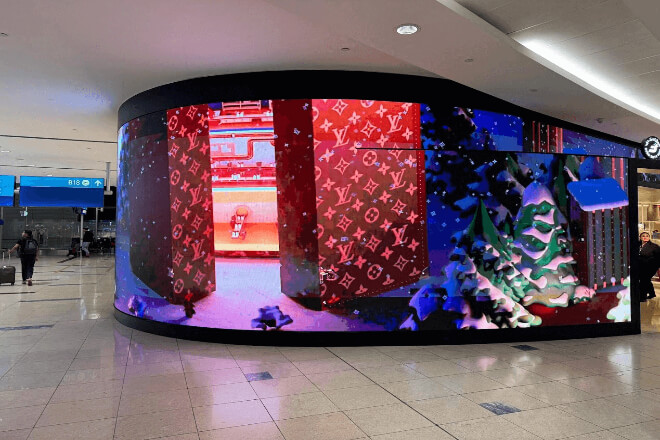
Many LED display projects are not finished after purchase; the real long-term cost impacts lie in subsequent use and maintenance.
例如,一个 LED广告屏 on the exterior wall of a shopping mall might play for over ten hours a day.
Initially, it might only be a few LED displays experiencing a decrease in brightness or a slight colour difference in the image.
If left unattended, this could develop into a wider display problem over time, eventually requiring repairs and potentially disrupting normal advertising playback.
Therefore, establishing a regular inspection plan is crucial. Staff can periodically check the screen’s status, including module displays, wiring connections, power systems, and heat dissipation.
户外LED屏, in particular, require timely checks after exposure to high temperatures, heavy rain, and dusty environments.
Some projects now incorporate intelligent monitoring systems, shifting maintenance beyond manual problem detection.
For example, LED information screens in 机场 or transportation hubs allow for real-time monitoring of equipment operation.
When an area experiences abnormal temperature, 亮度 changes, or signal problems, management can proactively address the issue.
This shifts from “repairing after a problem occurs” to “preventing and resolving problems.”
For instance, if abnormalities in the backup power supply or certain modules are detected before a large concert.
The issue can be resolved before the event begins, rather than discovering a screen malfunction only after tens of thousands of attendees have entered.
In the long run, professional management not only reduces maintenance frequency but also extends the lifespan of the LED display, allowing the equipment to truly realise its value.
The cost of an LED display is not just about the initial purchase price but also how many years it can operate stably. Effective management is key to reducing long-term investment.


 English
  Español
  简体中文
简体中文  Français
  日本語
日本語  한국어
한국어  العربية