

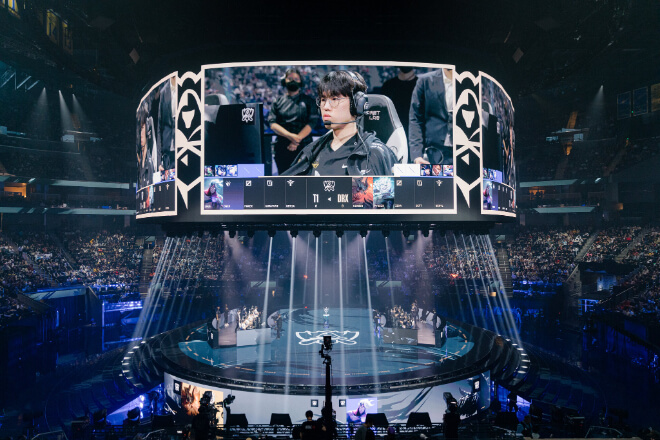
At esports events, the main 阶段 LED screen is essentially the “center of attention.” Whether it’s CS2, MOBA, or other games, its core function is simple: to make the match appear bigger, clearer, and more impactful.
First, it can present real-time gameplay in high definition.
Players’ first-person perspectives, global observer feeds, and key round transitions can all be displayed simultaneously on the main screen, ensuring that viewers.
Whether seated in the front row or the top seats, can see the same clear gameplay content.
Second, the large screen excels at highlighting crucial moments of kills and team fights. When an ACE occurs, a comeback from a clutch situation, or a team fight erupts, the image is instantly magnified.
Combined with special effects and replays, what might have been a few seconds of action becomes a shared “highlight moment” witnessed by the entire audience.
Often, the cheers of the crowd are ignited by this single screen.
Simultaneously, it significantly enhances the viewing experience for viewers at a distance. In large venues, it’s difficult for those in the back rows to clearly see the players’ screens or stage details.
However, through the main LED屏幕, they can still clearly see every gunfight, every skill release, and won’t miss any key moments.
Even more interestingly, the large screen makes “complex matches” easier to understand.
Score changes, round progress, and tactical advancements are all presented intuitively on the same screen, allowing viewers unfamiliar with the game to keep up with the pace of the match.
Simply put, the main stage LED screen’s role is to upgrade the match from “visible” to “visually stunning.”
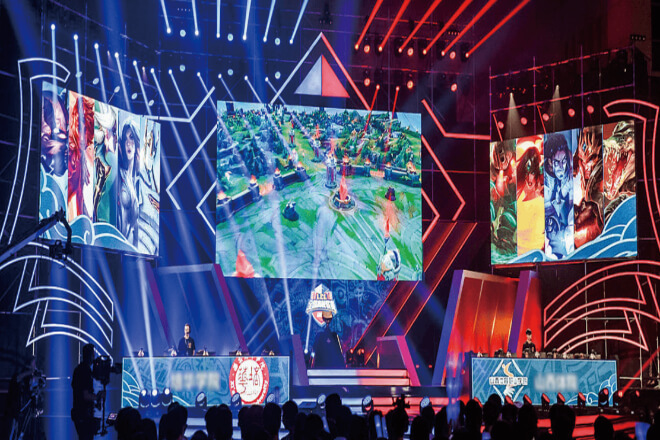
In esports events, the 阶段 background LED display is not just a “decorative screen”; it’s more like an entrance connecting the real-world arena and the game world.
First, it can recreate the game’s theme and visual style. Different games possess distinct “worldviews and atmospheres.”
For example, CS2 leans towards a realistic tactical style, MOBAs towards a fantasy epic style, and FPS games towards a futuristic sci-fi style.
The background LED显示屏 directly brings these styles to the event through map elements, character visual symbols, and themed animations, allowing the audience to immediately recognize “which game is playing.”
Secondly, it unifies the visual language with the event’s brand packaging design. The event logo, team elements, and sponsor visuals don’t operate independently but are integrated into the same stage visuals.
For example, when a team enters, the background screen simultaneously switches to its exclusive theme color and dynamic textures, giving the entire stage a “re-skinned” feel.
Meanwhile, dynamic effects are key to creating immersion. Flames, energy flows, digital particles, and map expansion animations—these constantly changing visual effects bring the entire stage to life, rather than leaving it as a static background.
The audience feels less like watching a match and more like being enveloped in a running game environment.
Even more interestingly, when the lighting, sound effects, and LED display screen work in unison, the atmosphere is instantly amplified.
For example, when the match point arrives, the background darkens, the special effects shrink, and the pace speeds up, drawing almost everyone’s attention to the screen.
Simply put, the role of the stage background LED display is to allow the audience to not just “watch the game,” but to “enter the game world.”
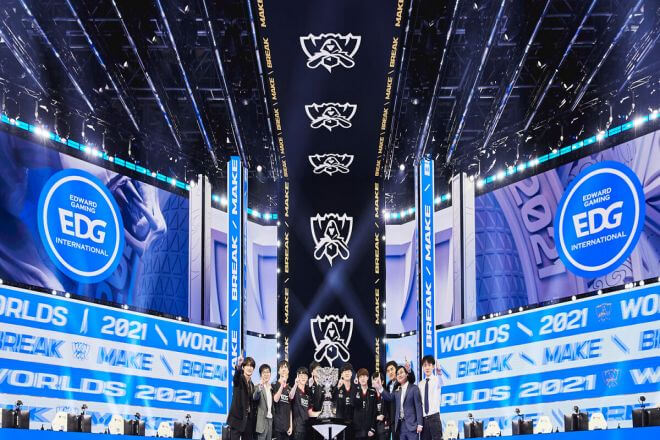
在里面 阶段 upgrades for esports events, the emergence of surround LED screens can be said to have directly upgraded “watching the game” to “being surrounded by the game.”
First, by displaying the event content from multiple angles, it prevents the audience from simply “looking at a screen directly in front of them,” but rather from being covered by visual information from the left, right, and even behind.
For example, the main screen is in the center, while the side screens simultaneously display player perspectives, data panels.
Or tactical maps, allowing information to enter the field of vision from different directions at the same time.
Second, it creates a very strong immersive visual effect. When the image is no longer confined to a single screen but extends to the sides and even the top of the stage.
The audience naturally feels that “the entire space is playing the game,” and the visual boundaries are significantly weakened.
At the same time, this design significantly enhances the tension and immersion of the event.
Especially in crucial rounds or match points, when the surround screen displays countdowns, score changes.
And special effects animations simultaneously, viewers are easily drawn into the emotions, even unconsciously holding their breath as they await the outcome.
More interestingly, this immersive experience amplifies the audience’s sense of “live participation.”
You’re not just sitting in the stands watching the game; you’re pulled into the heart of a live battlefield—surrounded by information, visuals, and dynamic changes.
Simply put, the experience offered by the surround LED屏幕 can be summarized as: it’s not you watching the game, but the game “surrounding” you.
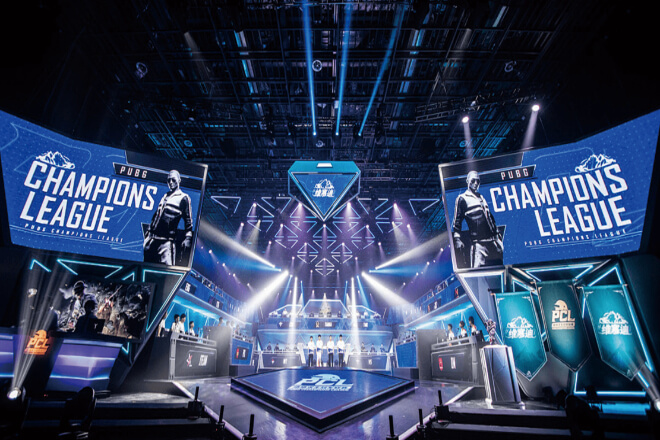
In esports events, many viewers “enjoy watching,” but not necessarily “understand.”
The role of real-time data and battle situation LED displays is to transform complex matches into clear and readable “information maps.”
First, the large screen can clearly display scores and economic data. This basic information may seem simple, but they are crucial in fast-paced games like CS2.
For example, which side has a greater economic advantage, whether a long-range gun round is possible, and whether the next round is a crucial point—viewers can judge the course of the game at a glance.
其次, LED显示屏 provide real-time updates on team status information, such as player survival status, equipment status, and round win/loss trends.
This constantly updated information allows viewers to quickly follow the pace of the game without relying on commentary.
Simultaneously, it helps viewers understand changes in the game’s rhythm.
For example, if one side wins several rounds in a row, the data changes on the big screen will visually show “the advantage is widening.”
Or if the economy suddenly collapses, it will immediately show “the situation is about to enter a critical turning point.”
More interestingly, this information often creates a sense of “participatory viewing” for the audience. Many people will watch the data on the big screen while discussing with friends:
“Should we buy a sniper rifle this round?” “Can we turn this economic gap around?” The game is no longer just about watching, but about analyzing and making judgments together.
Simply put, the core value of LED data display is: to transform viewers from “spectators” to “those who can understand and even analyze.”
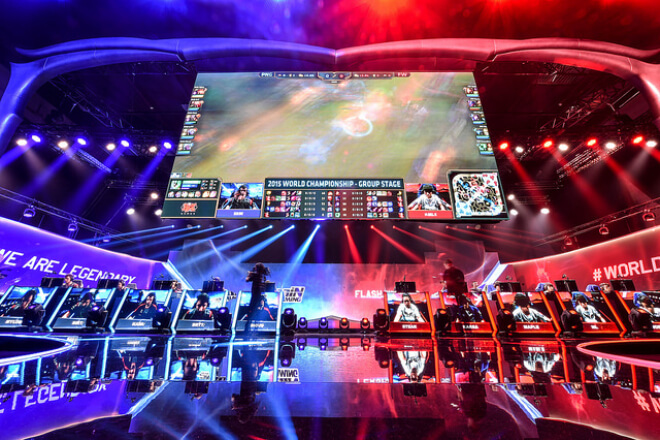
At esports events, the truly “goosebump-inducing” moment is often not a single large screen image, but the instant when the LED screen + lighting + sound effects work together.
First, the synchronized changes between the LED屏幕 and the lighting system bring the entire 阶段 to life.
For example, when the visuals switch from a cool-toned tactical interface to a high-energy team battle.
The lighting simultaneously changes from cool white to alternating red and blue, creating a noticeable shift in the atmosphere rather than just the screen changing.
Second, it creates a progressive emotional flow in sync with the game’s pace.
The opening is steady, gradually accelerating in the mid-game, and in crucial rounds, the screen effects intensify and the lighting frequency increases.
Making the entire venue feel like it’s “pulling with the heartbeat of the game.”
Even without seeing the statistics, viewers can sense that this game is no easy feat.
This synergy also enhances the sense of ritual at key moments.
For example, in match point, a 1vX clutch, or the moment the champion is crowned, the LED screen instantly fills with special effects.
The lights converge and focus on the center of the stage, all visual resources pointing to a single point, making this moment “must be remembered.”
Even more interestingly, this design creates an experience where the audience is “driven by emotion.”
You might be simply watching the game, but at a certain moment, the lights dim, the screen brightens, the entire audience holds their breath—and then erupts in a collective gasp.
In short, the core effect of this synergy is not just watching the game unfold, but being “surrounded by the emotions of the game.”


 English
  Español
  简体中文
简体中文  Français
  日本語
日本語  한국어
한국어  العربية