

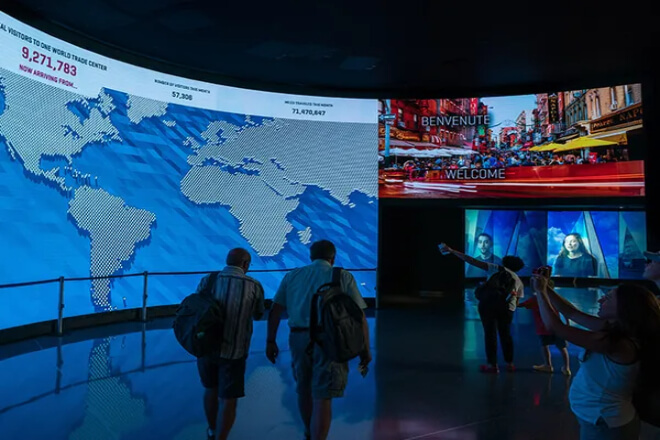
For military 博物馆 and history 展览, enabling visitors to truly understand a piece of history has always been a significant challenge in exhibition design.
Many pieces of precious equipment, photographs, and documents themselves carry rich information.
But if simply displayed, visitors may only remain at the level of “having seen” them, finding it difficult to delve into the stories behind them.
The addition of LED显示屏 allows for a more powerful way of expressing this historical content.
For example, when displaying tanks, aircraft, or military equipment, LED screens can simultaneously play historical images, battle data.
And the evolution of the equipment, allowing visitors to understand their role in a real environment, rather than simply seeing a cold exhibit.
For World War II memorials, military museums, or war history exhibitions, dynamic images can also help recreate the historical context of the time.
An old photograph, a timeline of a major battle, or an introduction to a historical figure can all be presented more intuitively through LED screens, making it easier for visitors to connect emotionally.
Compared to traditional text displays, LED screens add a sense of “being there” to historical exhibits.
Visitors don’t just stand in front of display cases reading information; guided by visual content, they gain a deeper understanding of the stories and historical significance behind the equipment.
For overseas military museums, LED screens are not just a display tool, but also a bridge connecting the past and present, allowing history to be seen and understood, not just displayed.
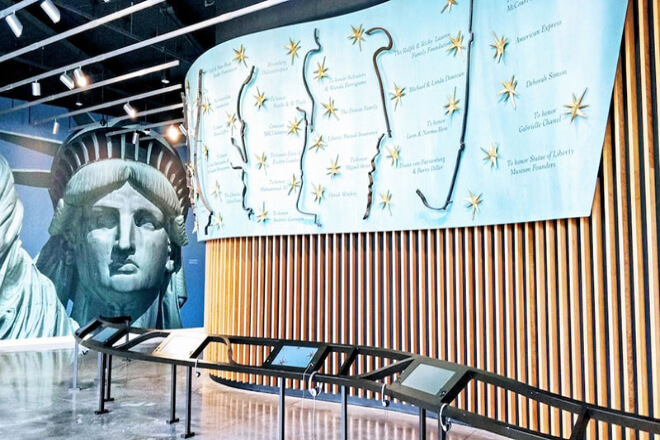
Some content in military history exhibits cannot be understood at a glance.
The progression of a battle, the working principles of equipment, and the development and evolution of military technology—relying solely on textual explanations.
And static images- may leave many visitors struggling to form a complete understanding even after reading the introduction.
LED屏幕 can make this complex information more intuitive.
For example, when showcasing a classic battle, an LED screen can use dynamic maps to recreate the route of action, displaying timelines, strategic changes, and key moments, allowing visitors to better understand the course of events.
For military equipment displays, LED screens can use animation and data visualization to explain equipment structure, technical features.
And operating principles, transforming complex technical information into more easily understandable visual content.
This display method is particularly suitable for overseas military museums, national defense education centers, and memorial halls.
Visitors of different ages and backgrounds can quickly understand history and technology through visuals without having to deal with large amounts of technical text.
The value of LED displays is like providing a “visual translator” for complex military knowledge.
It transforms difficult-to-understand information into visible content, allowing visitors not only to know what happened but also to more easily understand why it is important.
For military museums and history galleries, displaying history is not just about “putting things on display.”
More and more galleries are beginning to consider: how to truly allow visitors to step into history, rather than just standing in front of display cases reading descriptions.
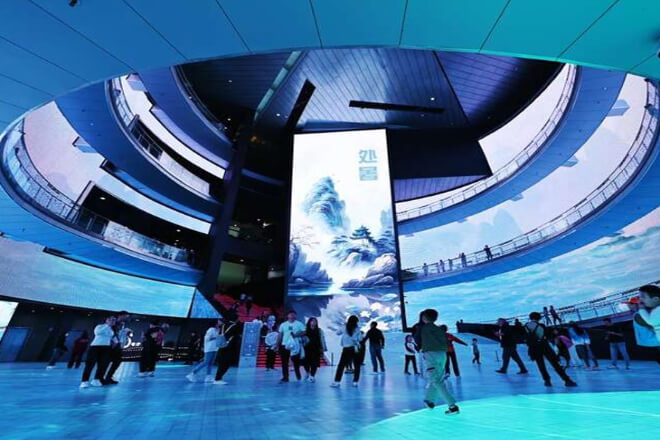
LED displays can help create a stronger sense of immersion in military exhibition spaces.
Through the combination of large LED屏幕, interactive systems, and spatial design, galleries can recreate different historical scenes.
For example, by simulating battlefield environments and historical events through dynamic visuals.
Or showcasing military training scenarios, visitors can transform from “spectators” into active participants.
Compared to traditional display methods, this digital experience is more likely to attract younger audiences.
Visitors can learn about equipment information, participate in simulations, and even experience the atmosphere of a historical period through visual effects, making distant history more intuitive.
For military memorials, war museums, and national defense education centers, immersive displays also enhance the overall value of the visit.
It not only increases the attractiveness of exhibitions but also makes historical content easier to remember and disseminate.
LED displays are like opening a “window to time.” They cannot truly take people back to the past, but through digital technology, past stories can be presented in a more realistic way.
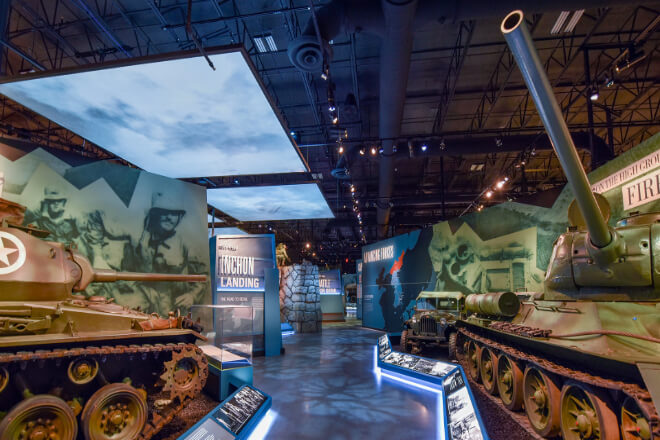
Each area in a military exhibition hall has its own “mission.”
The entrance area needs to attract visitors, the themed 展览 areas need to tell historical stories, and the command simulation area needs to display more complex information.
If each area relies solely on traditional display panels, it is difficult to meet the expectations of modern audiences for an experiential experience.
The flexibility of LED displays perfectly solves this problem.
In the entrance hall, large LED屏幕 can play historical footage, themed videos, or exhibition introductions, allowing visitors to quickly experience the exhibition atmosphere upon entering the space.
In themed exhibition areas, LED screens can complement physical exhibits, displaying battle backgrounds.
Equipment information, and historical events, giving exhibits more than just “placed there”—they tell more stories.
In the command simulation area, LED displays can also present maps, data analysis, real-time information.
And other content, helping visitors understand military operations and technical principles more intuitively.
More importantly, the exhibition content can be updated at any time.
Whether it’s a new themed exhibition, a commemorative event, or a special display project, it can be quickly switched by adjusting the digital content, without frequently modifying the entire space.
For military exhibition halls, LED displays are like a “transformable exhibition space.”
Today it can tell history, tomorrow it can provide interactive experiences, giving limited exhibition space more possibilities.
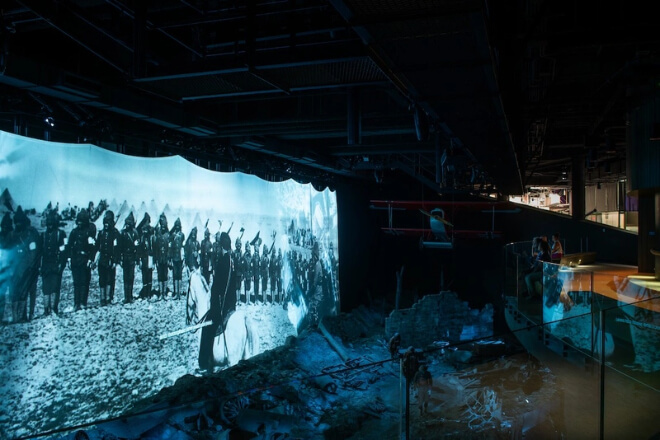
For overseas military exhibition halls, modern displays are no longer just about “placing more exhibits.”
As visitor expectations rise, exhibition halls need more flexible and efficient ways to manage content, ensuring historical displays keep pace with the times.
LED显示屏 offer military exhibition halls the possibility of digital upgrades.
Through digital content management systems, staff can remotely update screen content, whether adding historical data, adjusting exhibition themes, or announcing special events, without frequently replacing physical display panels.
This is especially convenient for large military museums, memorial halls, and multi-area exhibition spaces.
Simultaneously, LED displays can be integrated with interactive systems, data displays, and other digital technologies, transforming exhibitions from one-way viewing into a richer experience.
For example, visitors can learn about historical events through dynamic maps and view equipment information through digital content, making the exhibition more engaging.
Compared to traditional display methods, digital LED displays also make exhibition hall operations more flexible.
Faced with different themed 展览 and special commemorative events, the space can quickly adjust visual content to maintain long-term appeal.
For modern military exhibition halls, LED displays are not only upgrading the “display effect” but also the “operation method.”
They enable continuous updates to historical content and transform the exhibition hall from a static space into a constantly evolving digital display platform.


 English
  Español
  简体中文
简体中文  Français
  日本語
日本語  한국어
한국어  العربية