
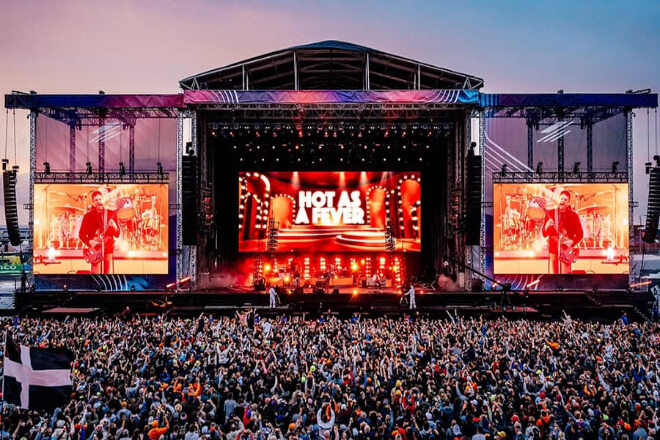
Walk into a ショッピングモール, studio, or city square, and have you noticed those particularly eye-catching large screens?
A single screen is sometimes insufficient, especially when businesses want to create a large-scale event or something creative. This is where the flexible splicing capability of LED displays comes in handy.
It can combine several screens to form a huge display wall, creating curved, circular, or even oddly shaped geometric forms, resulting in a more stunning visual effect and perfectly fitting the space design.
Imagine a shopping mall atrium where a curved LED screen, coupled with dynamic animations and dazzling lights, instantly attracts passersby to stop, take photos.
And share them on social media; festivals, advertisements, and interactive information become vivid and engaging.
で 展示 halls or studios, the screen’s size and proportion can be freely adjusted to suit the ステージ layout, ensuring the image isn’t cut in half or has blank corners, resulting in a more complete display.
Even in city squares, creatively spliced LED screens can become new urban highlights, displaying information while resembling large-scale art installations that draw attention.
The biggest advantage of flexible splicing is its high degree of freedom; it can be freely combined according to space and event needs.
Whether for commercial promotions, festivals, or public information displays, LED screens can be used in countless ways to create visually stunning and engaging effects that are memorable.
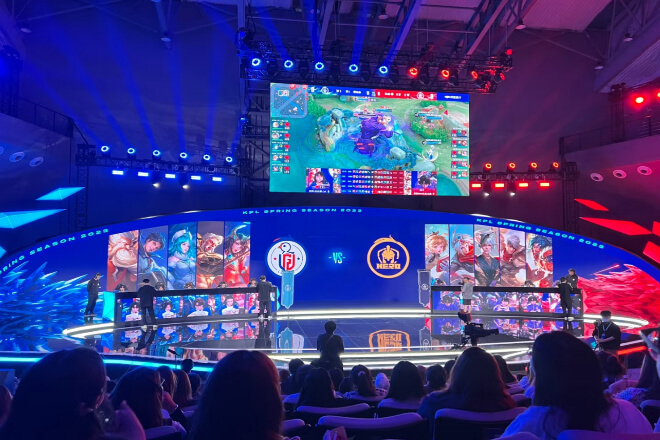
A single screen can be attractive, but when multiple LED screens simultaneously play the same content, the visual impact is entirely different.
Imagine walking into an 展示 hall or large ショッピングモール, where several screens simultaneously play a cool, dynamic advertisement or immersive animation.
The picture is smooth and lag-free, instantly capturing everyone’s attention.
LED displays support multi-screen synchronous playback, ensuring perfect alignment of images, eliminating misalignment and the awkward situation of one screen lagging behind.
Whether playing large-scale dynamic advertisements, interactive exhibition content, or data visualizations in the control center, the screens maintain consistency, providing viewers with a complete and coherent picture.
This synchronization not only enhances the viewing experience but also significantly strengthens the visual impact.
For example, at music festivals or concerts, multiple LED screens simultaneously displaying stage visual effects instantly ignite the atmosphere of the entire venue.
In commercial exhibitions or public events, a multi-screen (linked) display of brand content can also leave a lasting impression.
Simply put, multi-screen synchronous playback upgrades LED screens from a single display tool into a stunning visual stage, providing viewers with a thrilling and memorable experience.
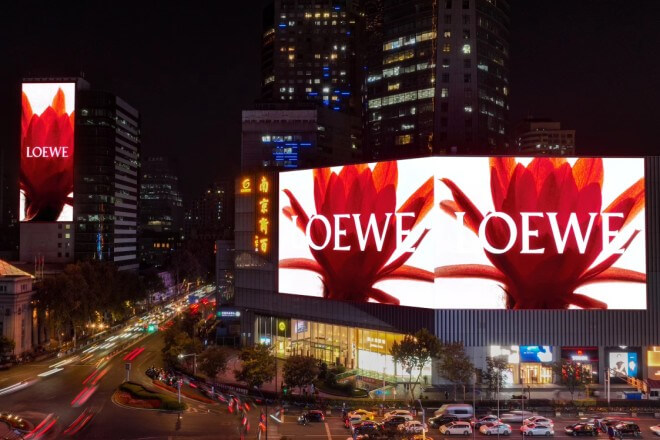
Large LED screens are typically composed of hundreds or even thousands of small modules, especially in ショッピングモール atriums, studios, or city squares, where the entire screen resembles a giant jigsaw puzzle.
Previously, if a module malfunctioned, the entire screen might have had to be dismantled for repair, which was not only time-consuming but also easily affected the overall display effect.
However, the modular design of modern LED displays has completely solved this problem, making maintenance simple and efficient.
Each LED module is an independent unit; only the faulty module is replaced, without the need to dismantle the entire wall. This not only facilitates maintenance but also significantly reduces downtime.
Imagine playing festival advertisements in a shopping mall or displaying city event information in a square.
If a section of the screen temporarily malfunctions, with the modular design, technicians can fix it in minutes.
The audience will barely notice the interruption, and the entire display will remain smooth.
Modular design also has another great advantage: strong scalability. If you want to increase the screen area, create larger shapes.
Or do creative splicing at events in the future, you only need to add new modules; there’s no need to reinstall the entire screen.
Even during long-term use, modules can be upgraded individually as technology advances, ensuring the screen maintains optimal image quality and functionality.
In summary, the modular design makes LED displays both durable and flexible, offering low maintenance costs and allowing for easy upgrades and expansions, thus extending the screen’s lifespan and investment value.
Simultaneously, it guarantees viewers always experience a complete and immersive visual experience, making displays not only beautiful but also smarter and more reliable.
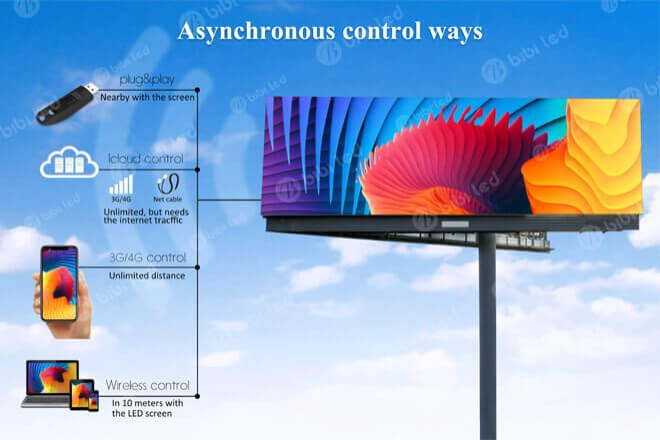
Each screen requires updating content, adjusting brightness, and calibrating colors.
If staff had to manually operate each screen individually, it would be time-consuming and prone to synchronization issues or inconsistent settings.
However, the remote control function of LED displays makes this much easier.
Through control software, administrators can remotely update screen content from the office or even from home, and centrally schedule playback across multiple screens.
For example, during holiday promotions in ショッピングモール, an advertising schedule can be pre-arranged, with automatic switching at designated times.
で 展示 halls or science 博物館, animations, videos, or displays played on multiple screens can run synchronously without any lag or misalignment, resulting in a more complete and professional overall effect.
Besides content management, screen 輝度 adjustment, color correction, and playback order can all be performed remotely from the backend.
If the sunlight is strong during the day and screen brightness needs to be increased, a simple system adjustment is all that’s required.
At night, when the environment is darker, brightness can be appropriately reduced without needing to go to the site for adjustments. This saves manpower and ensures the screens always maintain optimal display quality.
More importantly, the advantages of remote management become even more apparent as the number of screens increases.
Administrators can simultaneously view the operational status of all screens within a single system, quickly identify and address problems, and avoid the need to physically inspect equipment.
For shopping malls, corporate showrooms, or public information screens in cities, this centralized management method is both efficient and worry-free.
In short, remote control is like equipping LED screens with an “intelligent command system.”
Regardless of the number or location of screens, they can be easily managed, ensuring stable and efficient multi-screen displays while maintaining a unified and smooth visual effect.
 English
  Español
  简体中文
简体中文  Français
  日本語
日本語  한국어
한국어  العربية