
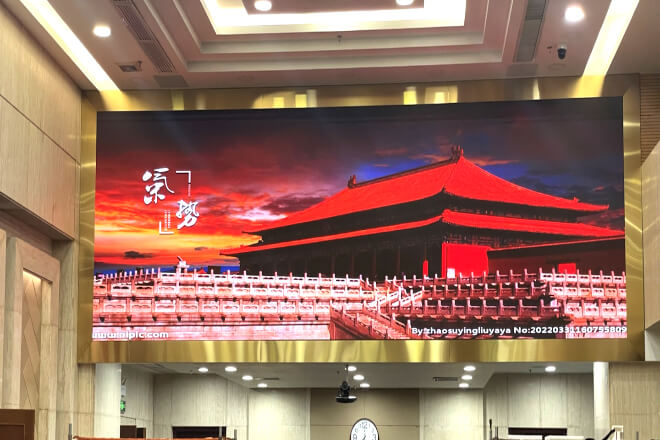
In the dissemination of government information, LED displays can be understood as a “real-time updated public information window.”
Making previously static announcements more timely, intuitive, and easily noticed by the public.
First, government announcements and notices can be conveyed more efficiently.
Content such as policy reminders, service guides, and temporary notices can be presented on 大型LEDスクリーン in graphic or dynamic formats.
Making key information immediately apparent. The public can quickly obtain crucial information without repeated searching.
Second, the coverage and timeliness of information are significantly improved.
Compared to traditional bulletin boards, LED displays can be deployed in lobbies, traffic junctions, or public areas.
And support real-time content updates, ensuring information “appears” immediately when needed, reducing the inconvenience caused by information delays.
Simultaneously, they replace traditional static publicity methods to a certain extent. Paper posters or fixed display boards are slow to update and require frequent maintenance.
While LED screens can flexibly switch content, adjusting the displayed information according to time periods or different groups of people.
Making the dissemination method more lightweight and dynamic.
Overall, LED displays transform government information from “posting” to “dynamically broadcasting.”
Not only improving dissemination efficiency but also making the process of information access for the public more natural and convenient.
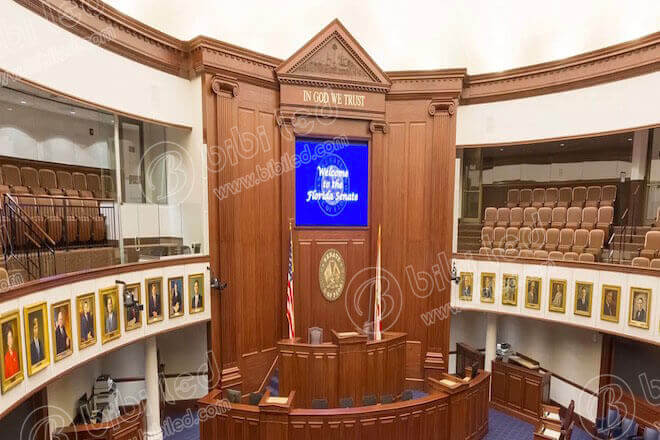
In emergency command scenarios, time and information are “efficiency itself.”
The role of LED displays is more like quickly piecing together scattered clues into a clear overall picture, giving the commander greater confidence.
First, information on emergencies can be released quickly and immediately. When an emergency occurs, the LED screen can quickly switch content, displaying the latest notices, on-site dynamics.
Or progress of the response simultaneously, reducing delays caused by layers of transmission and ensuring information reaches those who need it faster.
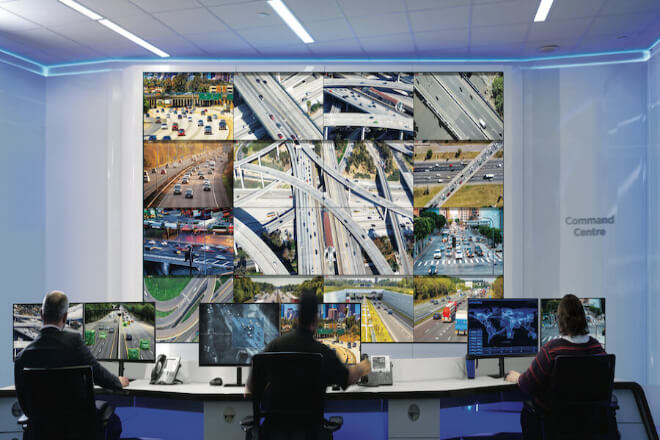
Secondly, centralized data display is achieved in the command center. Monitoring footage, map information, and on-site feedback from different systems can be uniformly displayed on a large screen.
Command personnel no longer need to switch between multiple terminals to simultaneously grasp the overall situation, improving the consistency of judgment.
Simultaneously, overall emergency response efficiency is improved. When information is summarized more intuitively, and communication paths are shorter, collaboration between departments becomes smoother.
The “time lag” between information reception and decision execution is significantly reduced, resulting in faster response and more consistent action.
Simply put, LED displays here are not just “display devices,” but more like an “information magnifying glass” and “dispatch center” for emergency command.
Making complex situations more visible and the decision-making process more efficient and orderly.
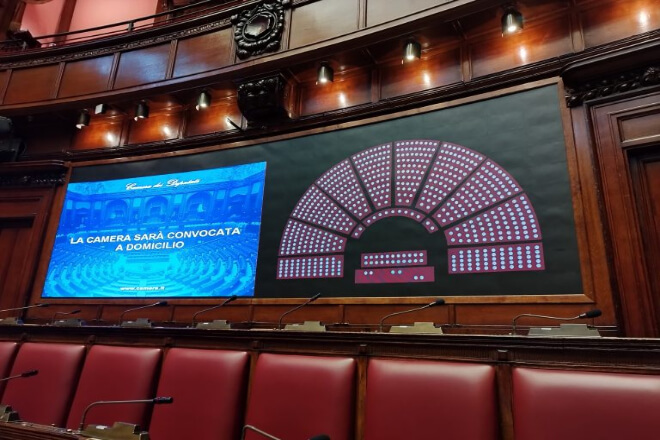
In government service scenarios, LED displays are like “silent guides,” clearly presenting processes, information, and instructions, making it smoother and easier for the public to handle affairs.
Firstly, they are used for information guidance and process display in government service halls.
Whether it’s window layout, service procedures, queuing information, or important notes, LED screens can display everything clearly.
Helping visitors quickly find the appropriate window, reducing inquiries and back-and-forth movement, and making the process more orderly.
Secondly, it effectively improves citizen efficiency. Through real-time updated queuing information, service progress prompts, and processing guidance, citizens can better manage their waiting time.
They can also understand the required materials and procedures in advance, transforming “repeated inquiries” into “following the instructions,” naturally improving overall efficiency.
Simultaneously, it enhances service transparency. When the processing procedures, waiting times, and service information are all publicly displayed on the screen, the information becomes more visual and standardized.
This helps reduce information asymmetry, giving the public a clearer expectation of the processing progress and rules, thereby increasing overall trust.
In short, LED displays upgrade government services from “personally guided” to “self-service visual guidance.”
Improving efficiency while making the service process more transparent, smooth, and perceptible.
In urban communication and image presentation, LED displays are becoming a more intuitive and impactful medium, presenting policy information, urban culture, and overall image to the public in a more “visible” way.
Firstly, they are more efficient in policy interpretation and public information dissemination.
Policies, notices, and public information closely related to citizens’ lives can be displayed on 大型LEDスクリーン in graphic or dynamic formats.
This transforms content that was originally more “documentary” into more easily understood expressions.
Making information delivery more than just “announcement”—it’s more noticeable and comprehensible.
Secondly, they contribute to showcasing the city’s image and culture. Large LED screens can be used to play city promotional videos, cultural events, and landmark displays.
They create visual focal points in transportation hubs or public spaces, allowing visitors and local residents to experience the city’s cultural character and development in their daily environment.
Simultaneously, they enhance the city’s overall digital image. When cities widely apply digital information display methods in public spaces,
It not only reflects the modernization of information dissemination but also, to a certain extent, reflects the refinement of urban management and the level of technological application, giving the city a more “intelligent” visual appearance.
In short, LED displays not only “broadcast content” but also participate in urban narratives, integrating information dissemination, cultural expression, and image shaping, ensuring the city remains “visible” in its daily operations.
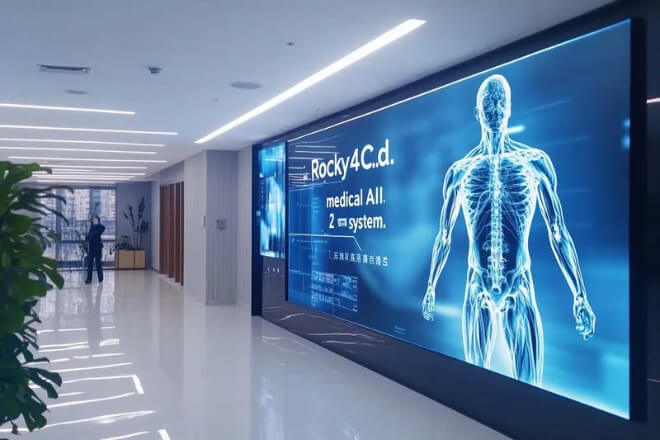
In digital transformation, LED displays can be understood as a window that transforms “invisible data” into “visible images.”
Making information not just something stored in systems but something that can be intuitively understood and used.
First, they offer greater intuitiveness in data visualization and system integration. Data from different business systems can be accessed and aggregated, presenting a unified view on a large screen.
For example, operational status, statistical information, or business progress no longer require switching between multiple platforms; a single screen provides a comprehensive overview.
Second, they better serve the operation of smart 政府 と スマートシティ. LED screens often serve as a front-end display element, connecting the back-end data platform with actual application scenarios.
This allows the city’s operational status and public service conditions to be presented more clearly.
Creating a collaborative experience where “data runs in the back-end, and information is viewed on the front end.”
Simultaneously, it helps improve management and decision-making efficiency. When key data is displayed in a centralized, visual format, managers can grasp crucial information more quickly.
Reducing time spent on data processing and reporting, and focusing more on analysis and judgment, making the decision-making process more efficient and evidence-based.
In this context, LED displays are not merely “display terminals,” but rather “visual entry points” within a digital system, simplifying and clarifying complex data relationships.
And extending digitalization from the system level to actual management and decision-making scenarios.
 English
  Español
  简体中文
简体中文  Français
  日本語
日本語  한국어
한국어  العربية