
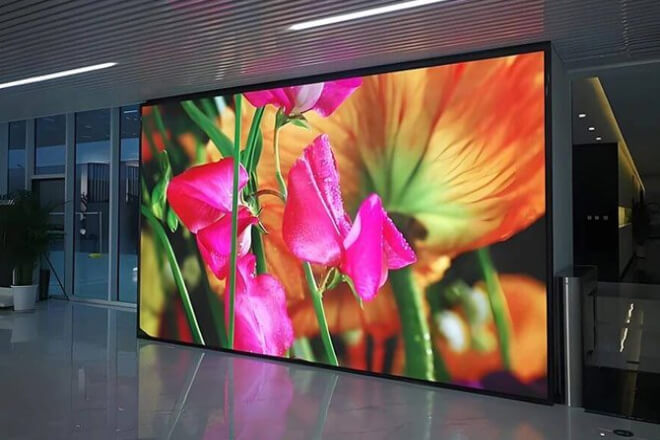
Enterprise-level LEDディスプレイ may sound like just a simple equipment purchase. But anyone who has actually worked on such projects knows it’s more like a systems engineering project.
From selection and installation to later use, misjudging any step can amplify problems later.
Therefore, the key isn’t “what screen to buy,” but rather whether you’ve considered all the potential issues beforehand.
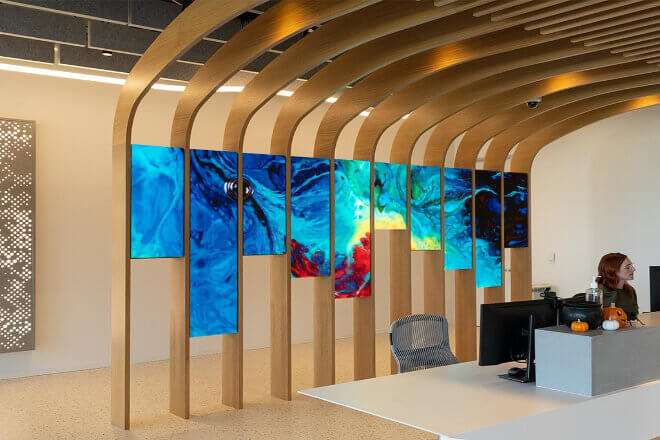
Many people initially think: “It’s just buying a big screen, right? Install it, make it light up, and play content, isn’t that enough?”
But once you enter the realm of enterprise-level applications, you’ll quickly discover that it’s far more complex than you imagine.
First, it’s not a short-term “flash sale,” but a long-term “resident employee.” Enterprise-level LED displays typically need to operate stably for many years.
If a problem occurs, it’s not just a simple screen freeze; it could directly interrupt meetings, affect presentations, or even dampen the atmosphere of important occasions.
Second, it often involves cross-departmental collaboration. IT professionals care about system compatibility and stability; marketing focuses on the attractiveness of the display.
Administration considers the rationality of installation and space allocation; and management ensures the final presentation aligns with the company image.
Thus, a single screen quietly transforms into a small project.
Even more interestingly, its identity is “upgrading.” It’s no longer just a tool for displaying content, but the core of meeting communication.
A window for data presentation, and even, in some scenarios, directly impacting decision-making efficiency.
Simply put, it has evolved from a “screen” into a “productivity tool.”
Finally, and most realistically, a wrong choice can have significant consequences. Inappropriate size, unsatisfactory effects, system incompatibility…
These problems won’t disappear on their own; they will only constantly remind you of your initial decision during daily use.
Therefore, while enterprise-level LED displays may seem like a simple hardware upgrade, they are actually more like an “invisible engineering project.”
But the good news is—once planned correctly, the efficiency gains and professional enhancements they bring are absolutely worth the price.
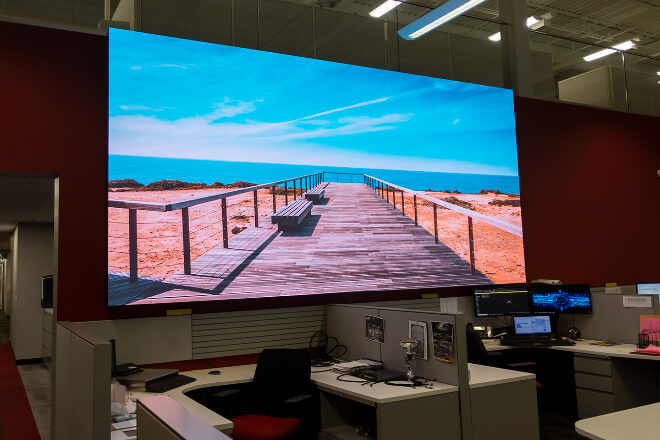
A common pitfall in enterprise-level LED projects is attempting to solve all scenarios with a single solution.
It sounds efficient, but in practice, the result is often—it can be used everywhere, but it’s not good enough anywhere.
First, different spaces have completely different requirements for display quality.
Conference rooms emphasize clarity and detail, lobbies prioritize visual impact, and command centers require dense information and stable display over extended periods.
Using the same standard for all spaces will likely result in “meetings that aren’t clear enough, and lobbies that aren’t bright enough.”
Second, 視聴距離 と ピクセルピッチ must be matched. Using a large-pitch screen at close range will result in noticeable pixelation.
Using a high-density screen at a distance will lead to unnecessary cost waste. Simply put, a screen isn’t better the finer it is; it needs to be “just right.”
Furthermore, environmental factors cannot be ignored. Indoor, outdoor, and semi-outdoor environments have different requirements for 輝度 and protection levels.
Insufficient brightness in strong light will make the screen virtually invisible, while excessive brightness indoors can easily cause eye strain.
Therefore, the truly effective approach is not to find a “one-size-fits-all” solution, but to match it to the specific scenario.
In short, the key to enterprise-level LED displays is not “choosing the best,” but choosing the most suitable one.
Only by understanding the space, the audience, and the usage patterns can a screen be both aesthetically pleasing and functional, rather than looking high-end but feeling awkward to use.
Many companies, when choosing LED displays, first look at “brightness” and “clarity.” However, what truly differentiates them is often not the initial effect, but rather stability over time.
初め、 解決 and clarity must match the needs from the outset. Meeting presentations, data analysis, and remote video require great detail.
Insufficient resolution may be acceptable in the short term, but it will negatively impact efficiency and user experience in the long run.
Second, brightness decay after prolonged operation is also crucial. Enterprise-grade screens typically require high-frequency use.
If brightness decreases significantly over time, the image quality will gradually deteriorate, affecting the overall viewing experience and potentially necessitating premature equipment replacement.
Furthermore, color consistency and display uniformity are essential.
A screen may look great initially, but if different areas have inconsistent colors or uneven brightness, over time, it will create a noticeable “stitching” effect, negatively impacting a professional image.
Another easily underestimated factor is ambient light interference. Strong light, reflections, and indoor lighting layout all affect the actual viewing experience.
Without prior consideration, the screen may perform well at some times but become “unremarkable” at others.
Simply put, the stability of an enterprise-grade LED display isn’t just about “looking good today,” but about maintaining consistent performance every day and every use.
Only by properly considering resolution, brightness decay, color performance, and environmental adaptation can the screen truly become a reliable long-term tool, rather than “amazing when first installed, but ordinary after prolonged use.”
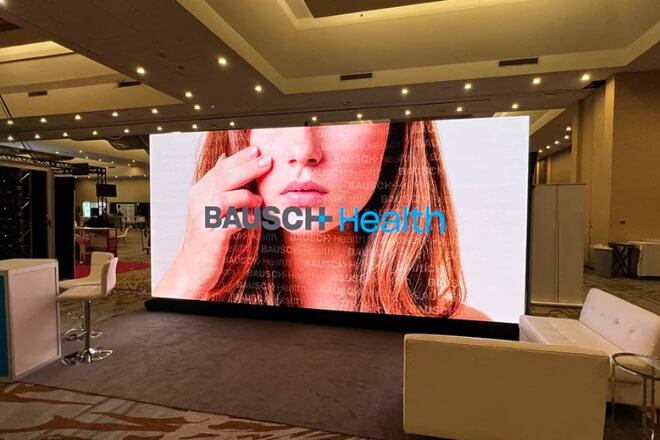
Enterprise-grade LED displays aren’t “ready to use after purchase”; they’re more like a long-term partner—requiring daily care, occasional adjustments, and must be reliable and efficient.
First, remote monitoring and management are essential. You can’t go to the server room or meeting room every day to check the screen’s status.
Remote monitoring is like installing a “health checkup machine” on the screen, allowing for immediate detection and even remote troubleshooting of problems.
Second, convenient daily maintenance is crucial. LED modules have a long lifespan, but dust accumulation, power supply aging, and signal abnormalities are common problems.
If each maintenance is treated like disassembling a household appliance, the company’s time and costs are wasted.
Furthermore, troubleshooting and response efficiency are crucial. Corporate meetings, presentations, or data centers cannot tolerate screen “malfunctions.”
Black screens or flickering must be addressed quickly. A slow-responding supplier is equivalent to rendering the screen “unemployed” for a period.
Finally, the unified management capability of multi-screen systems cannot be ignored. Many companies don’t use just one screen, but multiple screens working collaboratively.
Unified management of playback content, 輝度、 と 解決 adjustment maintains visual consistency and saves operating costs.
Simply put, the operation and management of enterprise-level LED displays is not “laissez-faire,” but rather requires meticulous management, like caring for reliable employees.
Good operation and maintenance ensure long-term stable operation of the screen; poor management can render even the most expensive and high-end equipment useless.
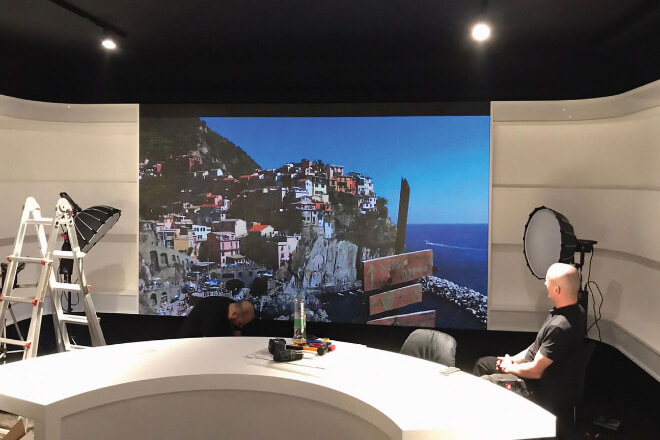
Many companies’ first reaction when choosing LED displays is price, but what truly differentiates them is long-term cost.
Some solutions may seem “cost-effective” at first glance, but in the long run, they become “continuous expenses.”
First, it’s crucial to balance initial investment with long-term operating costs. A low-priced solution might seem attractive initially, but frequent maintenance, decreased performance, or the need for upgrades can actually increase the overall cost.
Instead of saving money up front, it’s better to choose a more stable and sustainable solution from the start.
Second, energy consumption and electricity costs cannot be ignored. Enterprise-level LED screens typically operate for extended periods.
If power consumption is high, monthly electricity bills become a continuous expense. Choosing a more energy-efficient solution is more cost-effective in the long run.
Next are maintenance and replacement costs. Module wear and tear, parts replacement, and labor costs are all hidden costs.
Instability and increased maintenance frequency not only cost money but also disrupt normal operation.
Finally, the return on investment (ROI) must be assessed. An LED display is not just a cost but also a tool—does it improve meeting efficiency? Does it enhance the presentation? Does it optimize business communication?
These “invisible returns” are often the key to determining whether the investment is worthwhile.
In short, cost control for enterprise-grade LED displays isn’t just about “buying cheap,” but about ensuring longevity, stability, and value.
Choosing the right solution makes costs manageable; choosing the wrong solution can gradually erode your budget over time.
 English
  Español
  简体中文
简体中文  Français
  日本語
日本語  한국어
한국어  العربية