
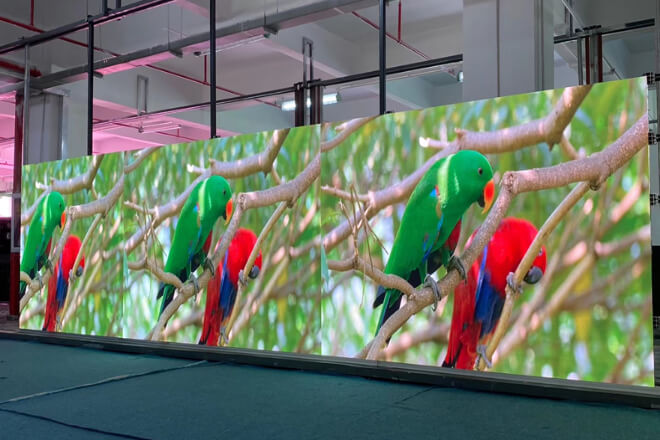
In many project discussions, 小さいピクセル ピッチの LED ディスプレイ are easily considered the “best-in-class” option.
However, the reality is—not all scenarios require such a “precise” screen.
Sometimes, the issue isn’t whether to choose small pixel pitch, but rather: is this scenario truly necessary?
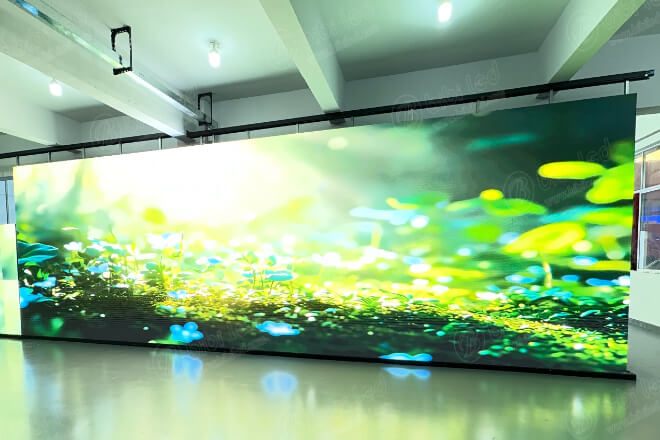
When choosing an LED display, start with a simple question: will the audience “glance at it from afar” or “get closer for a closer look”? If the latter, then small pixel pitch LED displays are the way to go.
When people are close to the screen, the details of the image are magnified.
もし 解決 is insufficient, graininess or noticeable pixels can easily appear, affecting the overall viewing experience.
This detail issue is even more pronounced in scenarios requiring prolonged viewing.
For example, in conference rooms or command centers, viewers are often close to the screen, not only looking at the image but also reading text, data, and even small charts.
If the image isn’t sharp enough, it will affect the efficiency of information comprehension and make the visual experience less comfortable.
This is where the advantages of small pixel pitch LED displays become apparent—the image is more detailed, the edges are smoother, and there’s no noticeable “graininess” even up close.
Simply put, if your usage scenario involves “sitting close, viewing for extended periods.
And seeing details,” then you should likely prioritize small pixel pitch LED displays, as they excel at this type of “close-up, detailed viewing” task.
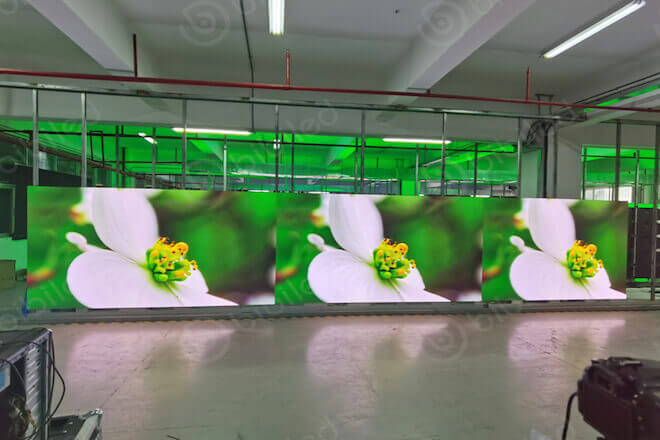
When choosing an LED display, first ask yourself: Do you “just want to look from a distance,” or do you “need to stare at every detail up close”? Different answers lead to different screen choices.
If your screen primarily displays high-definition images and videos, or contains a large amount of text, data, and charts.
Then a regular LED screen may not be sufficient—the image may be blurry and grainy, especially when viewers are close to the screen, making them more likely to have reservations.
For example, in a conference room, command center, or 展示 hall, people need to clearly see data and text and even observe image details up close.
A regular LED screen might force you to squint or get too close, leading to eye strain over time and a significantly reduced viewing experience.
This is where small pixel pitch LED displays come in handy: their small pixel pitch results in a delicate image with smooth edges, eliminating pixelation even up close.
Text, charts, and images are clearly visible, and viewing them for extended periods is less tiring on the eyes.
Simply put, if your usage scenario involves “a large amount of information, many details, and close proximity to the screen,” then definitely choose small pixel pitch LED displays.
If you primarily view from a distance and don’t have high image quality requirements, a regular LED screen is perfectly adequate and saves costs.
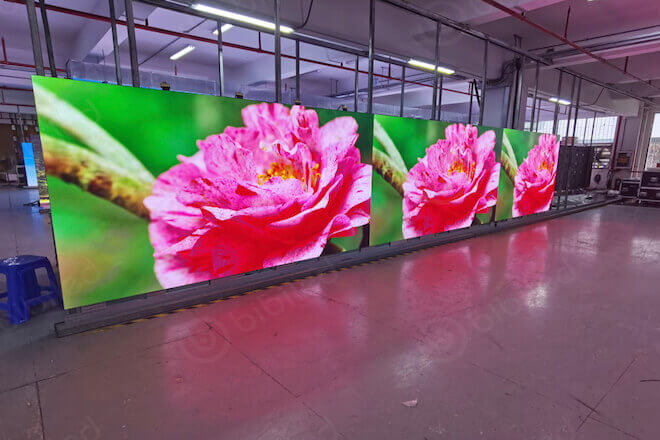
When choosing an LED display, another very practical question arises: will it be used occasionally, or will it operate “year-round”?
If it’s just for event displays and occasional content playback, a regular LED screen is generally sufficient.
However, in scenarios like monitoring centers, dispatch halls, and command platforms, the screen often needs to operate continuously for long periods, even more than ten hours a day, making the requirements completely different.
Imagine: a large screen in a dispatch center displaying various data, monitoring footage, and system information in real time.
If the image is unstable, the 輝度 is inconsistent, or a malfunction occurs, it not only affects the user experience but could even impact work decisions.
At this point, stability and consistency become essential.
The advantages of small pixel pitch LED displays in these scenarios are obvious—more stable operation.
Better image consistency, suitability for long-term continuous use, and better able to withstand the pressure of high-frequency use.
Simply put, if your screen is a core tool that you use every day and cannot afford to malfunction, then small pixel pitch LED displays are highly recommended.
If it’s just for auxiliary displays and used infrequently, a regular LED screen is sufficient.
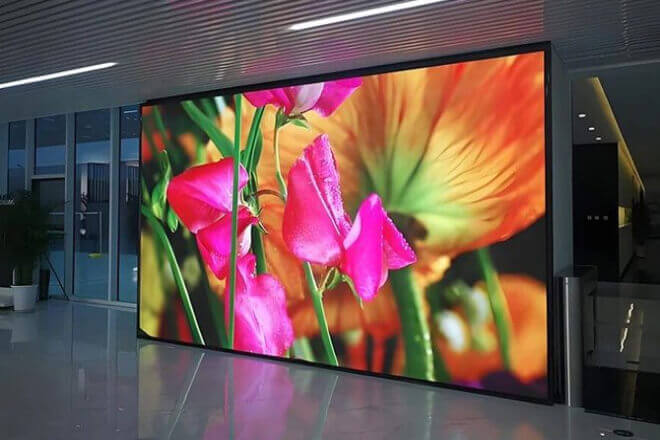
Besides visibility, some scenarios also ask: Does this screen look good? Can it blend into the space?
For ordinary use, a screen that lights up and displays content is enough; but in 展示 halls, high-end conference rooms.
Or public display spaces, the screen is not just a tool, but also an integral part of the space.
For example, in an exhibition hall, a clean, detailed screen without obvious seams makes the space appear more sophisticated and technologically advanced.
Conversely, if the image is fragmented or lacks detail, it easily lowers the overall quality.
Similarly, in high-end conference spaces, a clear and unified visual effect directly impacts a professional image.
This is where the advantages of small pixel pitch LED displays become apparent: the image is more detailed, the splicing effect is weaker, and the overall look is more unified.
Making it more suitable as a replacement for traditional splicing screens to create a unified visual effect.
Simply put, if your scenario requires “presenting a good image and looking good,” then small pixel pitch LED displays are more suitable.
If functionality is the priority and overall visual requirements are not high, ordinary LED screens are perfectly adequate.
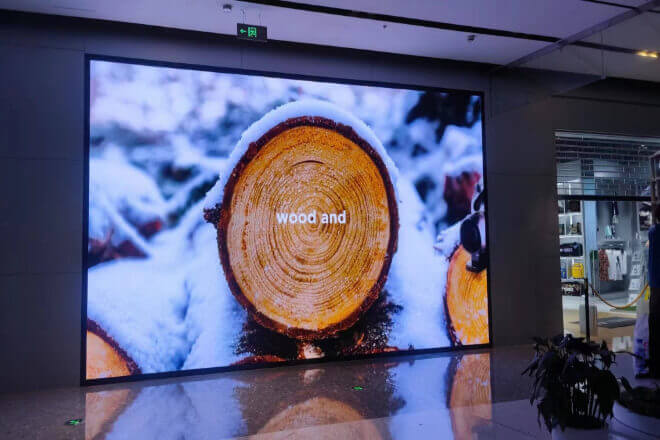
Even the most advanced 小さいピクセル ピッチの LED ディスプレイ require you to consider whether your budget and manpower are sufficient.
After all, high precision and high image quality mean higher costs, not only the purchase price but also long-term usage and maintenance expenses.
Besides the initial investment, long-term maintenance costs must also be considered: electricity bills, maintenance, upgrades, or parts replacements are all practical factors that must be included in the budget.
Without a professional team or maintenance plan, minor screen problems can slow down the entire user experience and even affect work efficiency.
Therefore, before making a purchase, it is recommended to ask yourself a few questions: Is my budget sufficient? Can your team handle daily maintenance? Is the long-term operating cost acceptable?
If the answer to both is yes, then small pixel pitch LED displays are definitely a worthwhile, high-quality investment—they easily deliver clear images, close-up details, and an immersive experience.
However, if resources are limited or the screen isn’t used frequently, you can start with a regular LED screen.
This will meet your basic needs while saving on your budget, allowing you to upgrade to fine-pitch LED displays when conditions allow.
In short: no matter how advanced the technology, you must act within your means and ensure your investment matches your actual needs.
This will ensure peace of mind when buying and smooth use, achieving both aesthetic appeal and practicality.
 English
  Español
  简体中文
简体中文  Français
  日本語
日本語  한국어
한국어  العربية